Blog

  • PEBC EXAM RESULTS 2025

    Key notes:

    1. Learn about the pebc exam dates 2025

    2. Understand the complete PEBC examination pattern

    3. PEBC EXAM PREPARATION -PEBC EVALUATING EXAM PEBC QUALIFYING EXAM

    To work as a pharmacist in canada pharmacist from anywhere in the world need to pass the exam called pebc exam within 3 attempts

    Pebc exam is conducted by the pharmacy examining board of canada Pebc exam has 2 parts

    1.PEBC Evaluating EXAM

    2.PEBC Qualifying Exam

    List of content

    1. PEBC exam dates 2025 for pharmacist

    https://www.eliteexpertise.com.au/

    Watch more about the dates

    https://youtube.com/shorts/eQuA4_nf9os?feature=share

    How to prepare for pebc exam ?

    Pharmacist can prepare for the pebc exam by using the below mentioned tips:-

    1.Have a proper study plan

    2.Have a strong knowledge about the exam pattern and the syllabus

    3 DO as many as mock test

    4 Learn from expert guidance who train you well you may consider Eliteexpertise as your option as the directors are kaps qualified and working clinical pharmacist in Australia

    Canadapharmacist from Anywhere in the world PEBC EXAM PHARMACIST 2025 #canada #india #punjab #viral

    Final advice ➖While preparing for the pebc exam know about the dates centres properly as pebc exam has only 3 attempts its a not a easy way choose wisely and happy learning

    About the Author

    Krupa Karamchand

    Content Writer | Elite Expertise

    Krupa Karamchand is a B. Pharm graduate and KAPS-qualified pharmacist with over 7 years of experience in the pharmaceutical field. As an experienced SEO content writer, she combines her in-depth healthcare knowledge with proven digital strategies to create informative, engaging, and search engine–optimized blogs. Krupa is passionate about making complex medical topics easy to understand and accessible to all readers.

    Follow On

  • Essential Guide to the OPRA Exam 2025: Dates, Fees, and Preparation

    OPRA Exam 2025

    The OPRA Exam (Overseas Pharmacist Readiness Assessment) is your key to becoming a licensed pharmacist in Australia, New Zealand .Replacing the old KAPS exam in March 2025, OPRA is designed to assess real-world pharmaceutical skills aligned with Australian healthcare standards.

    In this complete guide, you will discover everything you need to know, from the OPRA exam structure and syllabus to coaching benefits, fees, and expert preparation tips. Most importantly, you will learn how Elite Expertise can help you pass the exam on your first attempt.

    Passing the OPRA Exam is not just about hard work; it is about smart preparation, clinical insights, and the right mentorship. That’s where Elite Expertise comes in, the world’s most trusted OPRA coaching institute with a 90% + first attempt success rate.

    What is the OPRA Exam? Previously known as the KAPS Exam

    The Overseas Pharmacist Readiness Assessment examination is a licensure exam conducted by the Australian Pharmacy Council (APC). It evaluates how well the international pharmacists are prepared to deliver pharmaceutical care in Australia,NewZealand It replaces the old KAPS exam (Knowledge Assessment of Pharmaceutical Sciences), focusing more on practical application, patient care, and real-world problem solving.

    The purpose of the exam is to assess whether candidates have the necessary knowledge and understanding of the biomedical, pharmaceutical, and clinical sciences underlying the practice of pharmacy in Australia.

    Why was the OPRA Exam introduced?

    Before March 2025, overseas pharmacists had to clear the KAPS exam, which emphasized rote learning and theoretical knowledge. However, in a fast-evolving healthcare system like Australia’s, Pharmacists are expected to make clinical decisions, interact with patients, and ensure medication safety in the Australian Healthcare system.

    Thus, the Australian Pharmacy Council (APC) changed the assessment procedure by launching the OPRA exam, which truly reflects the demand of modern pharmacy practice in Australia.

    What is the difference? OPRA VS KAPS

    Result: OPRA exam is more student-friendly, time-efficient, and aligned with what pharmacists do in practice.

    What are the key features -Eligibility criteria and the OPRA exam Structure?

    • Candidates must hold a Bachelor of Pharmacy or Doctor of Pharmacy degree with a valid degree certificate to be eligible for the OPRA exam as an academic qualification.

    • Proof of active registration with the pharmacy council of your home country, or at least eligibility to register, is needed

    • Experience in the field is not mandatory

    • There is a specific registration period for applying for each OPRA exam in a year

    • The OPRA exam consists of 120 multiple-choice questions and has a duration of 2.5 hours.

    • It is a computer-based online exam

    • No negative marking

    • passing criteria is determined by Rasch methodology

    • There is no limit on the number of attempts

    • There is no age limit for attempting the OPRA exam

    • Validity of the examination is 3 years

    • Candidates may reschedule their OPRA exam within the current registration period using the Candidate Portal.

    • Candidates can take the OPRA exam at approved test centres worldwide, including various cities in India.

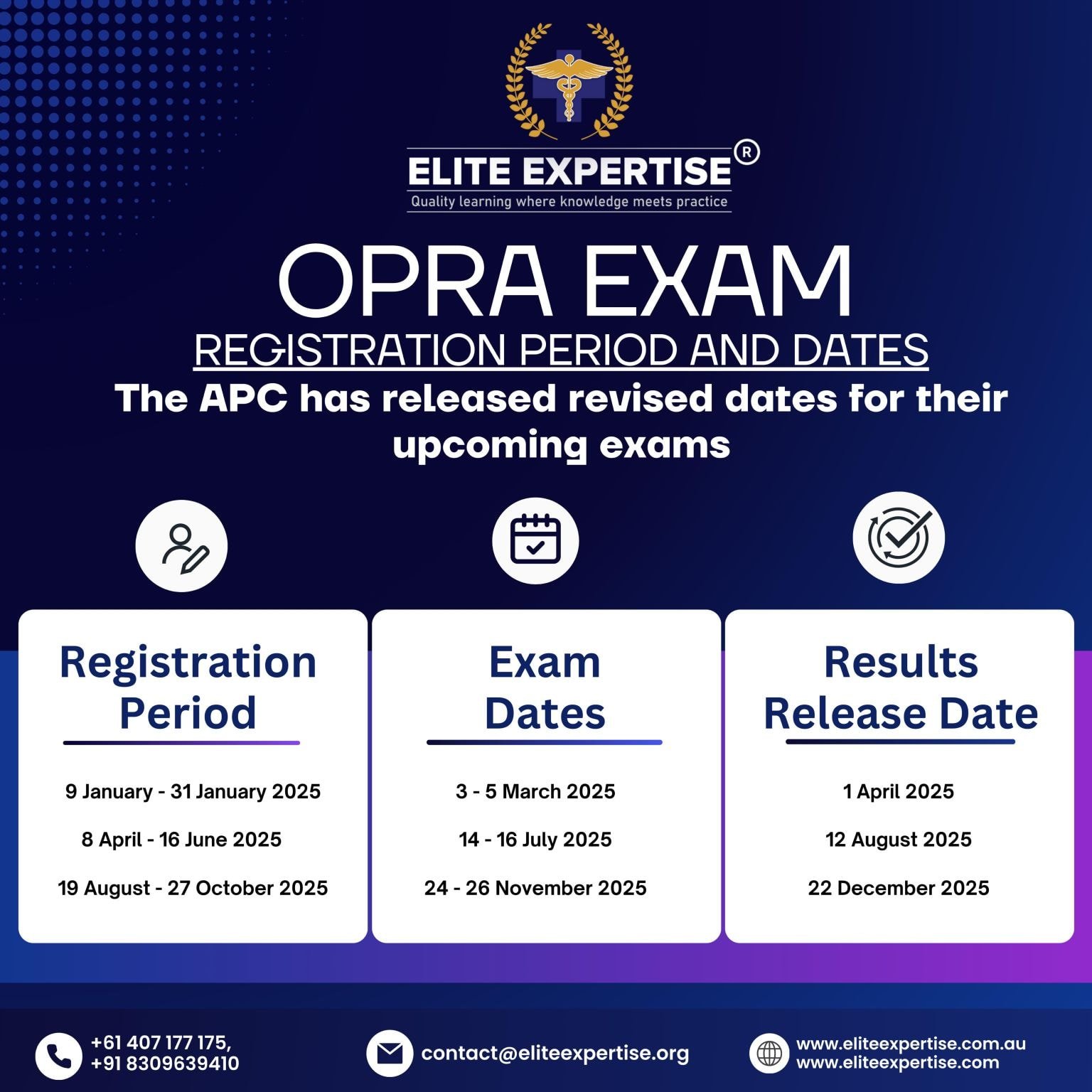
    • First Results of the March 2025 OPRA exam were released on April 1, 2025.

    • Successful candidates can use the OPRA exam results to apply for registration with the Pharmacy Board of the Australian Pharmacy Council (APC)

    • You can retake the OPRA exam without the need for another eligibility check after failing.

    What are the OPRA Exam content Areas as per the Australian Pharmacy Council?

    The exam syllabus covers mainly 5 major content areas, designed to assess knowledge across pharmaceutical sciences and patient care

    Percentage weightage of each content area with topics outlined

    Detailed syllabus table

    What are the OPRA exam dates in 2025 for Australia & New Zealand

    Let’s have a look at the important dates for 2025

    The image showcases a webpage dedicated to the OPRA exam preparation course, featuring information about registration fees, exam dates, and eligibility criteria for overseas pharmacists. It highlights the structured OPRA preparation course, practice tests, and mock exams to help candidates succeed in the overseas pharmacist readiness assessment.

    What are the English proficiency requirements after the OPRA exam 2025?

    Australia recognizes several English language tests for healthcare professionals for further professional registration to demonstrate English language proficiency, including:\

    1. Cambridge (C1 Advanced or C2 Proficiency)\

    2. IELTS (Academic)\

    3. OET (Occupational English Test)\

    4. PTE Academic (Pearson Test of English)\

    5. TOEFL iBT (Internet-Based Test)

    Here is a table summarizing the English proficiency requirements after the OPRA Exam 2025 for overseas pharmacists:

    What are the OPRA Preparation strategies at a glance?

    Wondering how to crack OPRA on your first attempt from your home country?

    Here is a quick road map:

    • Understand the syllabus and format. Check out our FREE downloadable OPRA syllabus format

    • It’s recommended to practice 120 sample questions in a timed manner to prepare for the OPRA exam.

    • Practice time management

    • Study from industry experts

    • Solve case-study-based MCQS

    • Attempt a practice test conducted online with detailed feedback in the actual exam environment

    • Join expert-led comprehensive OPRA exam courses, such as those offered by Elite Expertise

    • Stay consistent and track your progress weekly

    Hear it from our OPRA EXAM PASSED CANDIDATES :

    https://www.youtube.com/watch?v=TuO_H0_jfzk&t=477s

    https://www.youtube.com/watch?v=AjoGSpUDDD8&t=40s

    Why choose Elite Expertise for your OPRA Journey?

    When it comes to passing the OPRA exam on your first attempt, having the right guidance and resources can make all the difference. Elite Expertise is a trusted name among overseas-trained pharmacists, offering comprehensive, results-driven preparation programs tailored to the unique demands of the OPRA Exam. We also help the candidates with the registration process

    Elite Expertise goes beyond just teaching, it empowers candidates to think critically, apply knowledge,e and approach case-based scenarios with confidence

    Let’s see what we offer at a glance

    Final thoughts:

    The OPRA Exam preparation can be overwhelming, but with structured guidance and consistent effort, and smart strategies, you can pass it on the first attempt in 2025. Start your journey today by choosing the right resources and mentorship.

    Join our FREE webinar and understand the OPRA exam in depth.

    About the Author

    Krupa Karamchand

    Content Writer | Elite Expertise

    Krupa Karamchand is a B. Pharm graduate and KAPS-qualified pharmacist with over 7 years of experience in the pharmaceutical field. As an experienced SEO content writer, she combines her in-depth healthcare knowledge with proven digital strategies to create informative, engaging, and search engine–optimized blogs. Krupa is passionate about making complex medical topics easy to understand and accessible to all readers.

    Follow On

  • PSI Exam for Pakistani Pharmacists, TCQR Pathway

    PSI Exam For Pakistani Pharmacist

    The Pharmaceutical Society of Ireland (PSI) Exam is one of the most important steps for a Pakistani pharmacist to become certified and practice his or her profession in Ireland. The most widely used pathway of such candidates is the PSI TCQR pathway.

    The Third Country Qualification Recognition (TCQR) route is meant to be followed by pharmacists whose qualification is not within the European Union (EU) or European Economic Area (EEA) and Pakistan is one of them. Such a process qualifies internationally trained pharmacists so that they can practice in Ireland.

    TCQR pathway is a well-planned and comprehensive procedure to make sure that pharmacists acquired their qualifications in a country not belonging to the European Union (EU) or European Economic Area (EEA) have all the possible tools to become a fully qualified pharmacist able to meet the professional standards set in Ireland.

    Exam Image

    PSI Exam for Pakistani Pharmacists: Guide to Application Submission

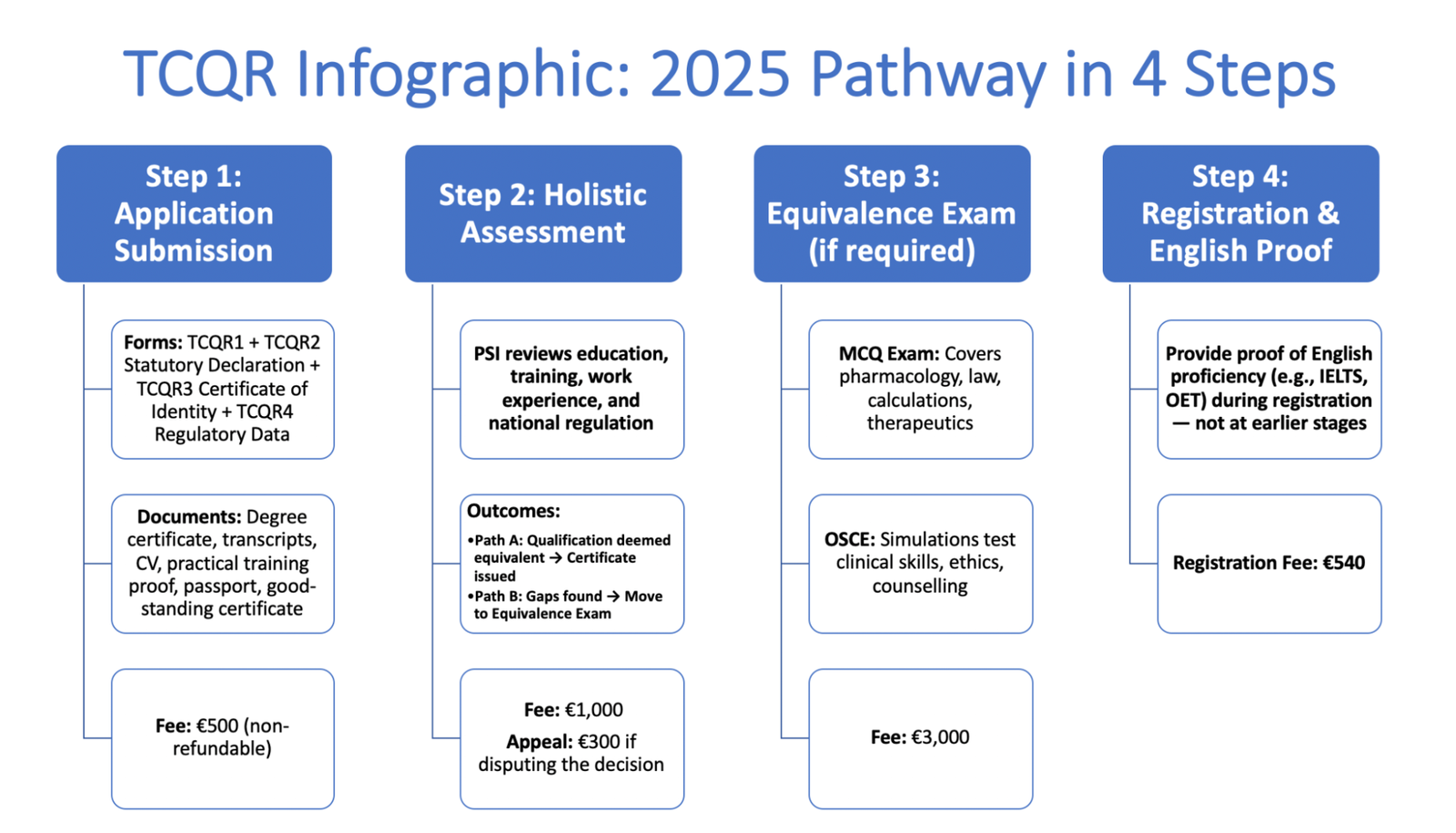
    The first step to be taken by the pharmacists is that they have to fill an official application to the Pharmaceutical Society of Ireland (PSI). This application should be supported with a number of documents, among other things, evidence of professional qualification, proof of pharmacy education, and pharmacy qualifications, an elaborate curriculum vitae (CV), certificate of good standing of the regulatory body in the home country of the applicant (e.g. Pakistan), which demonstrates compliance with the regulatory framework of the applicant’s home country, and evidence of practical training.

    Application Form and Fees (Stage 1)

    TCQR process commences with the filling-in of TCQR1 application to the PSI. Applicants must:

    Get a TCQR1 form on the official PSI site and complete it.

      Submit essential supporting documents, including:

    • TCQR2 Statutory Declaration Form

    • TCQR3 Certificate of Identity FormTCQR4 Regulatory Data Form

    • Academic transcripts

    • Proof of pharmacy qualifications (degree certificate)

    • Curriculum vitae (CV)

    • Passport copy

    • Evidence of practical training

    • Birth certificate

    • Certificate of current registration and good standing from the home country (e.g., Pakistan)

      Fee: €500 (non-refundable)The applications are valid up to six months and lack of full documentations within the time frame might lead to rejection.

    2. Holistic Assessment (Stage 2)

    Once your application is accepted, the Holistic Assessment evaluates:

    • Educational background (e.g. education length and format)

    • Amount and type of training in pharmacy

    • Regulatory controls in home country of the applicant

    Based on this assessment, PSI will decide whether:

    • You qualify by Irish standards (Path A) you are given a Certificate of Qualification Appropriate for Practice, OR

    • There are gaps that have to be filled by using an Equivalence Examination (Path B)

    Fee: €1,000Appeal Fee: €300 (if you wish to contest a decision)

    3. Equivalence Examination (if required)

    In case PSI finds gaps, then you will have to go through the Equivalence Exam that will evaluate your skills to address the requirements of an Irish pharmacist.

    The exam consists of:

      MCQ (Multiple-Choice Questions)Examines in pharmacology, law of pharmacy, pharmaceutical calculations, patient safety, clinical therapeutics.

      OSCE (Objective Structured Clinical Examination)Evaluates the pharmacy practitioner skills in situations that simulate pharmacy practices. You can be expected to do things like patient counseling, ethical decision making, and medication management.

      Fee: €3,000Depending on the result of the holistic assessment, you may be asked to complete either one or both components.

    4. Registration and English Language Proof

    After you pass the Equivalence Exam (where applicable) then you are able to apply to the PSI to become a registered professional.

      English language proficiency (e.g., IELTS, OET) is only required at the registration stage, not during earlier TCQR stages.

      Proficiency should be proven with the required scores of professional communication as per PSI.

      Registration Fee: €540Once registered, you are legally allowed to practice pharmacy in Ireland.

    Counselling

    Eligibility Criteria for Pakistani Pharmacists

    Pakistani pharmacists should be able to qualify to TCQR pathway by fulfilling the following criteria:

    Educational Requirements: Graduates of Pharm D (particularly of such countries as USA and Canada) were previously the only people who could qualify. But now, PSI accepts:

    • Bachelor of Pharmacy (B. Pharm)

    • Master of Pharmacy (M. Pharm)

    • Doctor of Pharmacy (Pharm. D)

    NARIC Ireland advises about the academic recognition of a foreign qualification in terms of the comparison, where possible, to a major award type and level on the Irish National Framework of Qualifications (NFQ).

    The PSI does not specifically specify that a NARIC evaluation is required in respect of the TCQR pathway. Rather, they do their own thorough evaluation of your qualifications.

    Nevertheless, in case your degree is not a clear equivalent of the Irish standards, PSI can require additional verification. In these applications, it would be helpful to get a NARIC Ireland (QQI) statement of comparability to make up your application.

    Professional Registration: Candidates should be registered as pharmacists with the authority of the country of Pakistan or any other country.

    Documentation: They are required to submit academic transcripts, copies of syllabus, registration certificates and certificates of good standing.

    Language Proficiency: Language proficiency in English may be requested at the registration phase, and not during the qualification recognition phase.

    Preparation for exam

    The PSI Equivalence Examination

    The PSI Equivalence Examination checks the qualification of an applicant against the Irish standards. The test is divided into two:

    Multiple-Choice Question (MCQ) Examination: This is a written examination which tests subjects in these areas pharmacology, pharmacy practice and pharmaceutical calculations.

    Objective Structured Clinical Examination (OSCE): It is a practical examination that consists of simulated conditions in pharmacies to evaluate the clinical skills and decision making capacity.

    Depending on the result of the holistic assessment, the applicants will be invited to pass both components or only one of them.

    Competitive Salaries and Benefits

    A career as a pharmacist in Ireland means that international pharmacists not only have the chance of working in a respected healthcare system, but they will have access to competitive salaries and a full benefit package. In Ireland, pharmacists have one of the highest median pay in the entire Europe and are normally paid anything between 60,000 to 80,000 euros annually.

    Along with competitive salary, the pharmacists also receive high paid vacation leaves, sick leaves, maternity or paternity leaves, which helps them maintain a good work-life balance.

    The benefits of the PSI registration process also lead to a continuous professional growth, networking and the support of the Pharmaceutical Society of Ireland. Foreign pharmacists can now effortlessly go through the TCQR procedure with the assistance of organizations such as Elite Expertise that will enable them to go through the process. Such assistance assists them to overcome the difficulties and reap the benefits of practicing pharmacy in Ireland.

    TCQR pathway does not only clear the existing obstacles in the way of overseas pharmacists but also opens the door of a fruitful career with great job prospects and good salaries as well as a favorable professional climate to pharmacists in Ireland.

    TCQR Pathway

    Costs Involved in the TCQR Pathway

    The 2025 TCQR pathway and exam structure have major changes introduced by the PSI. These are important changes that are expected to eliminate the past obstacles to international pharmacists so that they can find it easy to begin their careers in Ireland.

    The TCQR process was to make the process of registration easy for the candidates. TCQR pathway is a process that identifies that the overseas qualifications are on par with the Irish standards which is necessary to enable registration and practice in Ireland.

    The TCQR pathway involves several fees:

    TCQR Pathway fees

    Preparation Tips for the PSI Exam

    In order to pass PSI Equivalence Examination, the following preparation strategies can be considered:

    Know the Syllabus: Get to know the syllabus of the MCQ and the OSCE. Pay attention to such areas as pharmacology, pharmacy law, care of patients, and pharmaceutical calculations.

    Practice Clinical Scenarios: You will participate in mock OSCEs in order to enhance your practical skills and decision-making.

    Increase English Proficiency: Where necessary, train and meet the acceptable standard in an English language proficiency test.

    Get Advice: Take preparatory classes in institutions such as Elite Expertise, that offer special training to international pharmacists. Seek personalised guidance to address your specific needs during the preparation process.

    Role of Elite Expertise in PSI Exam Preparation

    Elite Expertise, guided by Mrs. Harika Bheemavarapu and Mr. Arief Mohammad, provides special programs that would help Pakistani pharmacists go through the TCQR pathway. The services that they offer include:

    Blueprint-Aligned Curriculum: Courses that align with the most current syllabus of the PSI examination.

    Practice-Oriented Learning: Focus on the case-based learning and practice examinations to practice the real life situation.

    Flexible Learning Options: This refers to availability of the live and recorded sessions to fit with different schedules.

    Expert Mentorship: Advice of the professionals, experienced faculty members that offer personal assistance in the preparation process.

    To know more and to enroll into their programs visit the official site of Elite Expertise.

    Final Thoughts

    TCQR pathway of PSI is a chance that gives Pakistani pharmacists an opportunity to practice in Ireland which is a country that has a strong healthcare system and professional opportunities. With good understanding of the process, qualification requirements and right preparation of the examinations, pharmacists can then follow this path with ease and build their careers in other countries.

    In order to learn more and to start the application process, check the official website of Pharmaceutical Society of Ireland.

    This blog is intended for educational and informational purposes only. While we aim to provide accurate and current information regarding the PSI TCQR pathway and registration process for Pakistani pharmacists, regulatory requirements, fees, and procedures are subject to change by the Pharmaceutical Society of Ireland (PSI) and other official bodies. Readers are strongly encouraged to verify all information through the official PSI website or authorized sources before making decisions. Elite Expertise does not provide legal or immigration services but offers academic support and exam preparation guidance for internationally trained pharmacists.

    ⚠️ Disclaimer

    About the Author

    Sahana Rao

    Sahana Chinthapatla is renowned for her expertise in scientific and medical writing, backed by an MPharm in Pharmacology and years of experience in research analysis and scientific writing.

    As the Head Business Writer at Elite Expertise, she provides insightful and well-researched content on KAPS, OPRA, PEBC, PSI and global pharmacy pathways, guiding aspiring pharmacists in their professional journeys.

    Follow On

    Head Business Writer | Elite Expertise

  • How to Pass the OPRA Exam on First Attempt – Top Tips & Strategy for November 2025

    OPRA in First Attempt

    The Overseas Pharmacists Readiness Assessment (OPRA) exam is a crucial milestone for internationally qualified pharmacists aspiring to work as a pharmacist in Australia and New Zealand.

    Passing this challenging exam on the first attempt is possible with the right preparation strategy mindset and support.

    In this blog, we will share the personal journey of aspirants who passed the OPRA exam on their first attempt , including study tips, preparation resources, and the expert coaching that helped them succeed.

    What is the preparation strategy in a glance to successfully clear OPRA in the first attempt?

    There are few reference of our OPRA achievers:

    https://www.youtube.com/watch?v=AjoGSpUDDD8

    https://www.youtube.com/watch?v=RzXJMpMy1ZQ

    Let’s see now – What is the OPRA Exam?

    The Overseas Pharmacist Readiness Assessment (OPRA) exam is conducted by Australian Pharmacy council (APC) as part of the pharmacy registration pathway for overseas-trained pharmacists.

    It assesses your readiness to enter supervised practice (Internship) in Australia.

    The OPRA exam is relatively new alternative for old KAPS (knowledge assessment of pharmaceutical science) and offers a more practical, scenario based approach for the questions

    The OPRA exam includes:

    • Multiple choice questions on various topics of pharmacy

    • Exam is scenario based questions to test your critical thinking and patient care skills

    What is the exam format and eligibility criteria for the OPRA exam?

    What is the purpose of the OPRA Exam?

    The OPRA Exam assesses whether a candidate possesses the clinical knowledge, ethical understanding and problem solving skill required to work safely and efficiently in the Australian healthcare system. It aims to reflect real-world practice more closely than traditional exams, which is why it is mainly focused on case-based scenarios.

    Passing the OPRA exam allows internationally trained pharmacists to:

    • Proceed directly for internship with valid visa

    • Can apply for permanent residency directly with the skills outcome letter

    • Apply for provisional license with AHPRA

    • Eventually sit for Australian Intern pharmacists Oral and Written exams and get general registration and work as a fully registered pharmacist in Australia.

    What are the main content areas of the OPRA Exam?

    Why Candidates Choose OPRA Pathway?

    For pharmacists trained overseas, the OPRA (Outcomes-based Assessment for Registration as a Pharmacist in Australia) pathway offers a fast-track, cost-effective route to kickstart your career in Australia. Unlike traditional options such as enrolling in a student visa program, which often requires significant time and financial investment, the OPRA pathway simplifies the journey

    • Faster processing and quicker entry to workforce

    • Lower cost compared to study based visa

    • No need to undertake a full post graduation degree again

    • Direct skills assessment and registration focused bathway

    If you’re a qualified pharmacist looking to practice in Australia, choosing OPRA can help you achieve your professional goals sooner and smarter.

    What to do on the day of the exam?

    On the day of exam, candidate star suggested to:

    • Stay calm and reach the exam center early

    • Read each question carefully

    • Flag difficult questions and come back before the timer ends

    The real difference will be how confidently the candidate is able to apply the knowledge, it will be cultivated only by doing tons of mock tests while you prepare.

    What are the real tips to pass the OPRA exam on the First attempt?

    Join a reputed coaching center, such as Elite Expertise, who give comprehensive preparation course for OPRA Exam

    • Practice Australian Guidelines and laws

    • Solve previous OPRA style questions

    • Do time-based mocks in a real exam simulation

    • Stay consistent and manage time

    Why to choose Elite Expertise for OPRA Preparation?

    Elite expertise help international graduates with:

    • Live and recorded sessions by industry experts-Mr. Arief Mohammad and Mrs. Harika Bheemavarapu-accredited consultant clinical pharmacist in Australia

    • 100+ legal and case study discussion

    • feedback driven mock assessment

    • Personalized study plan

    • 24*7 connect with the admin team

    Learn more about about the course at www.eliteexpertise.com

    Conclusion:

    The OPRA exam preparation can be intimidating at first, but with structured preparation , proper guidance and the right mindset, it’s absolutely possible to pass it on the first attempt. Start early, stay committed and choose the best resource-this will be the key to success.

    This blog is intended for informational and educational purposes only. The content provided reflects current guidelines, visa pathways, and pharmacist registration processes in Australia as of June 2025. Regulatory requirements, internship eligibility, and employment procedures are subject to change by official bodies such as the Australian Pharmacy Council (APC), the Pharmacy Board of Australia (Ahpra), and the Department of Home Affairs. Readers are strongly encouraged to consult official sources for the most accurate and up-to-date information. Elite Expertise does not offer legal or immigration advice but provides academic preparation and professional support for internationally qualified pharmacists.

    ⚠️ Disclaimer

    About the Author

    Krupa Karamchand

    Content Writer | Elite Expertise

    Krupa Karamchand is a B. Pharm graduate and KAPS-qualified pharmacist with over 7 years of experience in the pharmaceutical field. As an experienced SEO content writer, she combines her in-depth healthcare knowledge with proven digital strategies to create informative, engaging, and search engine–optimized blogs. Krupa is passionate about making complex medical topics easy to understand and accessible to all readers.

    Follow On

  • Australian Intern pharmacist-What is Australian intern oral exam

    What is autsralian intern oral exam what after opra exam

    The Australian Intern Pharmacist Oral examination is a challenge for every intern pharmacist in Australia. It’s the final and most crucial step to become a fully registered pharmacist. It ensures that interns not only understand the theory but can confidently apply their knowledge and skills to safely practice in Australian real-world settings, especially when it comes to decision making, ethics and patient care.

    This blog post will walk you through the eligibility requirements, exam structure, preparation strategies, and expert coaching options, so you can tackle the exam with clarity and confidence.

    What is the Australian intern pharmacist Oral examination?

    This oral exam is conducted by the Pharmacy Board of Australia. It is designed to evaluate the interns on the basis of their practical skills. The skills considered are:

    • Clinical knowledge

    • Ability to communicate effectively

    • Legal and ethical understandings

    • Problem-solving capabilities in pharmacy practice

    Unlike the written exam, the oral exam mimics the day-to-day scenarios the pharmacists face, such as dealing with medication errors, counselling patients, or responding to ethical issues. Interns must demonstrate not only what they know, but how they would act as independent pharmacists in those situations.

    Who needs to take the oral exam?

    You will need to take the intern oral exam if:

    • You are completing your internship year in Australia

    • You have passed intern written exam conducted by Australian Pharmacy council (APC)

    • You are on your path to get general registration with AHPRA

    This exam is mandatory for international or domestic interns seeking general registration with AHPRA (Australian Health Practitioners Regulation Agency)

    What are the Eligibility Criteria (Updated for 2025)?

    To be eligible to sit the intern oral exam, you must meet the following criteria.

    1. Provisional Registration : You must be provisionally registered with the Pharmacy Board of Australia.

    2. Supervised practice hours: You must complete at least 75% of internship hours (1,181 hours out of 1575) before the exam period begins

    3. Pass the intern Written Exam: you need a valid pass in the intern written examination, which remains valid for 18 months

    4. Application Form: you must submit the APOE 60 form (application for a pharmacy intern to be a candidate for an oral examination (practice)) in the state where you completed your internship

    Always refer to the Pharmacy Board of Australia for the latest updates, especially in the light of any changes or administrative adjustments

    What is the exam format and structure of the exam?

    The exam is divided into 3 core parts, lasting a total of 35 minutes

    • Part A: Primary healthcare

    • Part B: legal and professional practice

    • Part C: Problem solving and communication

    1. Part A: Primary Healthcare (10 minutes, No references allowed)

    Conducted as a role play, where you manage a patient’s minor health issues (eg: eye infection, rash or pain)

    You are assessed on:

    • Structured patients interview

    • Medications history taking

    • OTC recommendations

    • Communication and lifestyle advice

    2. Part B: Legal and Professional Practice
    (5 minutes, No reference allowed)

    This is a non-role play discussion on pharmacy law and professional standards.

    You must:

    • Interpret legal requirements and ethical responsibilities

    • Manage risk and professional obligations

    • Justify your course of action in cases like forged prescriptions or verbal orders

    3. Part C: Problem solving and communication (20 minutes, reference allowed)

    A role-play where you analyze a prescription alongside the patient’s medication history to identify and resolve:

    • Drug interactions

    • Dosing errors

    • Contraindications

    • Treatment duplications

    You are evaluated on:

    • Patient history taking skills

    • Clinical reasoning and safety assessment

    • Effective patient and prescriber communication

    • Use of pharmacy references (eg: AMH, APF)

    Note: Only part C allows the use of reference materials. However, AI tools or search engine usage (eg: google) is strictly prohibited)

    How is the Exam assessed?

    The exam measures your competence using the National Competency Standards Framework for Pharmacists in Australia (2016). There are six standards that are assessed:

    1. Professionalism in practice

    2. Ethical and legal conduct

    3. Effective communication

    4. Patient-centered medication management

    5. Clinical problem solving

    6. Implementation of treatment plans

    Examiners will ask:
    • Is patient harm avoided ?

    • Was the advice safe, clear and clinically sound?

    • Are legal obligations met?

    What are the preparation tips for success?

    Know the competencies:

    Familiarize yourself with each of six competency standards. Review legal codes, ethical guidelines, and practice case scenarios

    Master the clinical content:
    • Study AMH (australian Medical handbook)

    • Practice primary care scenarios (cough, constipation, UTI etc)

    • Review schedule, prescription validity, PBS law

    Sharpen your communication skills
    • Practice role-plays with mentors

    • Focus on empathy, cultural awareness, and plain language

    • Use open-ended questions and check understanding

    Use checklists
    • Medication history template

    • Counselling checklists

    • Adverse drug reaction tools

    Reference practice:

    For Part C, ensure your references are book marked or saved, searching on the spot is not allowed.

    How Elite Expertise can help you as a guide to succeed in the exam?

    At Elite expertise, we specialize in training pharmacy interns and overseas candidates to pass Australia’s registration exams such as OPRA Exam, Australian Intern written and oral exams. Our program includes:

    • Mock oral exam simulations-gain real-time experience with structured mock tests that reflect the actual assessment format

    • Interactive Role-play case discussion-improve clinical communications and problem solving skills with peer-to peer or educator-led role plays

    • Legal and ethical case coaching-Master the clinical, critical legal and professional standards expected by the Pharmacy Board of Australia

    • Led by experts educators like Mr. Arief Mohammad and Mrs. Harika Bheemavarapu-both accredited consultant clinical pharmacists in Australia with extensive experience in teaching for the past 8 years . They have a student centric approach which will prepare the interns with confidence to handle the exam with ease.

    What to expect on exam day?

    • Bring photo ID and your approved references (only for part C)

    • Follow exam rules, unauthorized devices, AI tool or misconduct will lead to disqualification

    • Results are mailed after Board certification, usually a few weeks later.

    What to do If you need to reschedule or appeal?

    If you face any emergencies or need to reschedule, you can contact AHPRA with supporting documents within 2 business days of your exam date.

    If you believe your exam was compromised due to improper procedure, you may lodge an appeal-starting with an internal review, followed by an external panel if needed.

    Final takeaway

    The Australian Intern Pharmacist oral exam isn’t just a hurdle, it’s your final step to become a fully registered, confident, competent pharmacist in Australian Pharmacy.

    • Be prepared,

    • Be ethical

    • Be patient focused

    And when in doubt, get trained with experts who understand the path to success!

    Krupa Karamchand is a B. Pharm graduate and KAPS-qualified pharmacist with over 7 years of experience in the pharmaceutical field. As an experienced SEO content writer, she combines her in-depth healthcare knowledge with proven digital strategies to create informative, engaging, and search engine–optimized blogs. Krupa is passionate about making complex medical topics easy to understand and accessible to all readers.

    Follow On

    About the Author

    Krupa Karamchand

    Content Writer | Elite Expertise

  • How to Find an Internship as an Intern Pharmacist After KAPS or OPRA in Australia

    Becoming a registered pharmacist in Australia as an internationally qualified candidate is a journey that requires dedication, perseverance, and preparation. After successfully clearing the OPRA (Overseas Pharmacists Readiness Assessment) exam or KAPS (Knowledge Assessment of Pharmaceutical Science) exam, the next crucial step is completing the internship. This phase will give you hands-on experience under supervision and prepare you for independent pharmacy practice.

    But how do you find the right internship opportunity in Australia? In this blog post, we will cover everything you need to know, from eligibility requirements and the application process to top employers, and career tips to land your pharmacy internship successfully.

    Let’s understand the role of the internship in the registration pathway: Key takeaways for pharmacy practice

    Once you pass either the KAPS or OPRA exam, you are eligible to apply for provisional registration with the Pharmacy Board of Australia (PBA). This makes you eligible to work under supervision in a pharmacy setting as an intern pharmacist. Pharmacy Intern hours are typically of 1575 hours (approximately one year) which should be completed under a fully registered pharmacist.

    Your internship is not just a formality. It is an essential part of your learning, and practice pharmacy where you:

    • Apply theoretical knowledge to real-life pharmacy practice

    • Build your clinical and communication skills

    • Learn regulatory, legal and ethical aspects of pharmacy in Australia.

    • Prepare for the Australian Intern Written and Oral Exam

    What are the Eligibility criteria to start your internship and practice in Australia?

    Before you start to apply for intern roles, make sure you meet the following criteria:

    Step 1: Pass OPRA exam (KAPS exam is replaced by OPRA Exam from March 2025)
    • Candidates must have successfully cleared either KAPS or OPRA Exam. these exams are conducted by Australian Pharmacy council This exam is a key licensure exam for practicing as an intern in Australia and New Zealand.

    • Applicants who hold an internationally trained, 4-year pharmacy degree, and active registration at the home country as a licensed pharmacist are eligible to attempt this exam.

    Step 2: Complete English Language exam Proficiency:

    Applicants must meet the AHPRA English language requirements through:

    • OET : minimum Grade B in Reading, listening and speaking & C in writing

    • IELTS: minimum 7 band each module

    • PTE: 66 in Reading, Listening and Speaking & 56 in Writing

    Result should be recent and typically within the last 2 years

    Step 3: Get provisional registration with AHPRA
    • Apply for provisional registration via AHPRA portal.

    • This will allow the candidates to legally start practicing as an intern in Australia.

    • Police clearance and good standing certificate is mandatory for the provisional registration

    How to find Internship opportunities as an Intern Pharmacist and grow pharmacy career?

    Hospital Pharmacy internship

    Hospital internships are structured and offer diverse clinical exposure. Some popular hospitals that regularly recruit intern pharmacists include:

    • Royal Brisbane and women’s Hospital (Queensland)

    • The Alfred and Royal Melbourne Hospital (Victoria)

    • Royal Prince Alfred Hospital (New South wales)

    • Fiona Stanley hospital (Western Australia) and many more

    Application timeline: hospital internships are competitive and often open between May and August for the following year’s intake.

    Visit individual state health websites or apply via Pharmacy intern recruitment portals like South Australia Pharmacy, Queensland Health, NSW Health

    Community Pharmacies

    These offer flexible roles and patient interaction in real-world retail settings. Some top community pharmacy chain includes:

    • Chemist warehouse-Australia’s largest retail pharmacy dealer

    • TerryWhite Chemmart

    • Priceline Pharmacy

    • Amcal

    • Start pharmacy

    • Discount Pharmacy

    • Other standalone pharmacies

    How to apply:
    • Use their career page on official websites-Major pharmacies in Australia may not post job listings on online platforms but may have them on their own websites You will need sponsorship to be eligible to work in Australia initially.

      Walk into local pharmacies with your resume

    • Use online job portals like seek, indeed, jora and LinkedIn jobs

    • Get referral jobs from the employees already working

    Pro tip: regional and rural areas are often offering placements and have a higher acceptance rate or may offer sponsorship visas for overseas trained pharmacists

    Employers in regional areas offer candidates jobs along with relocation benefits and probably other benefits such as housing aligned with national competency standards framework

    The demand for pharmacists is quite high in regional areas of Australia due to fewer applicants. Most OPRA cleared candidates go for the 482 Temporary Skill Shortage (TSS) visa. You can opt for a 489 Regional visa if you are ready to work in regional areas of Australia.

    You must ensure that the employer you are applying with falls under the category of Temporary Skill Shortage (TSS) visa (subclass 482) for sponsorship

    Intern Training Program (ITPs) and placement support

    Interns must enroll in an intern training program (ITP) accredited by the Pharmacy Board of Australia. These providers sometime help with placements:

    • PSA (Pharmaceutical society of AUstralia)

    • Guild Intern Training

    • Monash University

    • University of Sydney

    These programs combine online course work, workshops, and exam preparation to support your internship journey.

    What are the documents required for internship applications for intern pharmacist in Australia?

    The internship experience must include appropriate supervised practice that meets all the eligibility criteria for general registration.

    What are the tips to land your internship faster? Finding internship opportunites for pharmacists in Australia

    Several pharmacies and pharmaceutical companies in Australia are often on the lookout for interns.

    A one-year internship is mandatory to get unrestricted registration in Australia after passing the OPRA exam. You can apply to thousands of pharmacy jobs in Australia on portals like Seek, Indeed, and Glassdoor

    • Apply early: the first step is to start applying at least 6 months in advance. Most internships are filled quickly, especially in major cities

    • Follow Up: After submitting your application, follow up with an email or call within a week

    • Practice interviews: Be ready and well prepared with scenario based questions and a communication skills assessment

    • Be flexible with locations: accepting roles in rural or regional areas may increase the chance

    • Network with pharmacists: attend or participate local pharmacy event, webinars or join pharmacy Facebook/Link din groups for assistance

    • Tailor your resume: Avoid generic templates, highlight relevant skills and achievements, and your commitment to Australian standards

    What happens after an internship?

    Upon completing the ITPs, and internship, it is a major milestone., but not the final step. To become a fully registered pharmacist, applicants must meet few key requirements:

    • Pass the Australian intern written and oral exam

    • Apply for General registration with AHPRA

    • Work as a fully registered pharmacist in Australia with a large number of job opportunities

    Need help with the Intern Written and Oral exam? Elite Expertise can guide you

    Preparing for a high stake exam day can be overwhelming. But Elite Expertise offers you a structured training, expert advice , details regarding required documents, support and confidence needed to succeed

    Why choose Elite Expertise?

    Elite expertise is a trusted institute for internationally qualified pharmacists aiming to build careers in Australia, New Zealand, Canada and Ireland. Our courses are designed specifically for overseas pharmacists for careful planning to bridge knowledge gaps and succeed in regulatory assessment and the registration process for visa options

    What we offer:
    For Australian Intern written Exam:
    • Updated clinical content aligned with Pharmacy Board of Australia

    • Timed mock exams and practice sessions

    • Focus on patient safety, calculations and case-study based scenario

    For Australian Intern Oral exam:
    • Role-play simulations based on real AHPRA oral stations scenarios

    • Communication building skills and case interpretations

    • Legal, ethical and clinical problem skills development

    Meet our lead educators:

    Mr. Arief Mohammad: accredited consultant clinical pharmacist in Melbourne

    A highly-respected clinical educator with a successful pharmacy career, with extensive experience training overseas pharmacists for Australian licensure exams

    Mrs. Harika Bheemavarapu: Accredited clinical consultant pharmacist in Melbourne

    A dedicated Australian pharmacist with high expertise in simplifying complex topics and calculations.

    Final Thoughts:

    Securing an internship as an Intern Pharmacist in Australia after passing the KAPS/OPRA exam is your gateway to becoming a fully registered pharmacist. Whether you choose a hospital or community setting, being proactive, prepared and fully flexible will help you find the right opportunity.

    Australia offers a wealth of professional and personal growth for pharmacists in their pharmacy career, and your internship is just the beginning of that rewarding journey

    This blog is intended for informational and educational purposes only. The content provided reflects current guidelines, visa pathways, and pharmacist registration processes in Australia as of June 2025. Regulatory requirements, internship eligibility, and employment procedures are subject to change by official bodies such as the Australian Pharmacy Council (APC), the Pharmacy Board of Australia (Ahpra), and the Department of Home Affairs. Readers are strongly encouraged to consult official sources for the most accurate and up-to-date information. Elite Expertise does not offer legal or immigration advice but provides academic preparation and professional support for internationally qualified pharmacists.

    ⚠️ Disclaimer

    About the Author

    Krupa Karamchand

    Content Writer | Elite Expertise

    Krupa Karamchand is a B. Pharm graduate and KAPS-qualified pharmacist with over 7 years of experience in the pharmaceutical field. As an experienced SEO content writer, she combines her in-depth healthcare knowledge with proven digital strategies to create informative, engaging, and search engine–optimized blogs. Krupa is passionate about making complex medical topics easy to understand and accessible to all readers.

    Follow On

  • How to Prepare for the NAPLEX: Study Tips, Materials & Strategy in 2025 for students aiming to succeed the examination process

    This content will provide guidance and requirements for every steps of the examination process

    Preparing for the NAPLEX (North American Pharmacist Licensure Examination) is a critical step for foreign-educated pharmacists who aim to become licensed pharmacists in the United States. This examination will evaluate both knowledge and clinical judgment, including the general evaluation report. Developing a focused and efficient study strategy is essential. In this guide, we will break down everything you need to know from the exam format to effective study tips and best preparation materials, including the FPGEC certification process, to help you succeed.

    Understand the Examination process-

    including the certification, application, registration process, and licensure requirements for pharmacists in the USA.

    The NAPLEX is an examination designed to determine whether candidates possess the knowledge, judgment, and skills necessary to practice pharmacy at an entry-level of competence, as part of the examination process. This examination is conducted to evaluate pharmacy graduates and pharmacists who wish to obtain a license as a registered pharmacist in the United States.

    Before diving into preparation, it’s crucial to understand the NAPLEX structure and content, as well as the FPGEC application requirements, like the e-profile, such as the FPGEC scores and TOEFL IBT:

    Number of questions: 250 questions, multiple choice, computerized examination

    The exam assesses three fundamental areas of competence: managing drug therapy, safely and accurately preparing and dispensing medications, and providing drug information while promoting public health.

    Exam duration: 6 hours (two optional ten minutes scheduled breaks)

    Question format: Multiple-choice questions (250 questions)-50 questions on the exam are pretest questions and will not affect the score.

    Scoring: will be reported as Pass or Fail. Previously, the NAPLEX was on a scaled score range of 0-150, and the minimum passing score was 75

    Registered pharmacist in the USA

    What is the Eligibility of the NAPLEX Exam to become a registered pharmacist in the USA?

    To be eligible for the NAPLEX exam and ultimately obtain a pharmacy license and certification, international pharmacists must have a degree proof from an ACPE-accredited pharmacy program, a complete set of internship hours, and provide an Educational credential evaluation report, including a general evaluation report, while adhering to specific state board requirements, including the registration process:

    Here is what to satisfy for NAPLEX eligibility criteria for the examination process, which includes passing the required assessments.

    Education: graduate from an accredited pharmacy school accredited with the Accreditation Council for Pharmacy Education (ACPE) or an equivalent degree which is equivalent to U. S standards

    TOEFL iBT: international pharmacists need to pass this exam to prove their proficiency in English for international pharmacists

    Apply through the Online FPGEC application for further process

    Passing the FPGEE (Foreign Pharmacy Graduate Equivalency Examination) is a requirement for international pharmacists to demonstrate their basic knowledge. After completing all these steps, the FPGEC certification will be approved for the applicants.

    After completing the requirements of the NABP, applicants can go to the next steps

    Character certificate is approved for background check

    Internship: fulfill the requirements and submit the records

    Documentation: Provide the necessary documents to validate your qualifications, including a certified photocopy of documents of international pharmacists, for completing the application process

    Some state-specific eligibility requirements are also there, such as the Jurisprudence exam, like MPJE, to assess the understanding of law.

    What is the Application and Documentation process for international pharmacists, including the documents required, aiming to obtain a pharmacy license through NAPLEX?

    Application to the board: For international pharmacists, begin with application to the board of pharmacy in the state where you seek licensure. Each board has distinct processes.

    Register with NABP: Students can create an account with NABP(National Association of Boards of Pharmacy) and register for the exam. You will receive an acceptance notification in your NABP e-profile

    Documentation: Submit official transcripts, proof of degree, and the fee payments as part of the documentation process for international pharmacists to complete the process.

    Authorization to Test (ATT): Once the application is approved, applicants will be granted with an ATT, which allows them to schedule the exam within a specific time frame, usually 90 days

    Scheduling the exam: Students can schedule the test through Pearson VUE, the official testing center of NAPLEX.

    What is the NAPLEX Syllabus?

    The NAPLEX course exam syllabus is extensively divided into 3 major categories, including topics relevant to the pharmacy degree and related to passing scores.

    NAPLEX Part 1 (56%)-Evaluates pharmacotherapy to assure safe and effective therapeutic outcomes. This section covers the historical background of the disease, laboratory findings, therapeutic agents, therapeutic categories, administration of the drug, precautionary measures, prescribed dose, and additional information.

    NAPLEX Part 2 (33%)-Assess safe and accurate preparation and dispensing of medication. This part deals with the safety around the proper medication, general procedures including management of medication, physical actions and reaction of various drugs, specific names, availability ratio composition and more.

    NAPLEX Part 3 (11%)-assess recommended, and provided health care information that promotes public health. This part includes the assessment of healthcare and necessary recommendations with regards to the public health, various appliances in surgical sense, other general medical procedures, handling emergency cases, immunization programs etc.

    What is the Content Domain For NAPLEX Exam?

    What are the frequently asked questions about NAPLEX?

    What if I fail NAPLEX as an international pharmacist?

    Students are allowed to take 5 attempts of the NAPLEX, which is essential in the pharmacy profession, and are valid for 5 years from the exam date.

    Can I give the NAPLEX in India as an international graduate?

    No, you have to give the examination from the USA only.

    Is Pharm. D from India, Valid in USA as an international graduate?

    Yes, Pharm. D from India is valid in USA

    How much does the NAPLEX cost for international graduate?

    Is NAPLEX hard for international graduates?

    NAPLEX is as difficult as any other competitive evaluations, and pharmacy graduates and pharmacists need to pass the NAPLEX course as part of the pharmacist licensure process in the pharmacy profession with strategic NAPLEX prep and a structured study plan.

    Which English exam is accepted?

    TOEFL iBT is accepted for international pharmacists.

    How to create a personalized study plan?
    • Assess your knowledge: use a diagnostic test to identify weak area

    • Set a timeline: Ideally, dedicate 8-12 weeks for focused study plan

    • Break it down: allocate specific days for each topic

    • Include breaks: allow short breaks to avoid burnout, weekly revision sessions

    • Track progress: use checklists or planning apps to stay accountable

    What are the recommended study materials for NAPLEX for international graduates?

    This includes resources from educational credential evaluators linked to pharmacy school and comprehensive NAPLEX review materials. Candidates can book for a NAPLEX Course also for better preparation.

    Selecting high-yield study resources can make or break your preparation. Some trusted options include:

    • Rxprep: contains comprehensive content, detailed explanations, and practice-style questions. They offers video lectures too

    • UWorld RxPrep online course: it covers all key topics including clinical topics, calculations, compounding, biostatistics, and more.

    • McGraw-Hill’s NAPLEX Review guide: content and case study-based question bank with two online practice modules

    • NABP’s Pre-NAPLEX and NAPLEX Advantage: provides valuable practice and insights into the format and content. Various Pharmacy websites also provide details regarding NAPLEX

    • Prepare for TOEFL iBT with the online resources. there are various TOEFL iBT certification courses which will prepare students for the English proficiency examination

    What are the effective study tips and strategies for naplex prep to tackle the most challenging NAPLEX questions that require a thorough review before the exam date to successfully practice pharmacy?
    • Active recall and spaced repetition: use Anki or Quizlet to review flashcards daily

    • Master Calculation early: Ensure strong math skills in dosing, compounding and kinetics

    • Summarize each topic: write brief notes or concept maps to reinforce understanding

    • Use multimedia tools: watch video lecture or listen to podcast for flexible learning

    • Join study groups: teaching others is a great way to retain information

    Mindset and exam day readiness

    Mental preparations is an important as academic preparation

    • Stay calm: practice mindfulness or meditation to manage stress

    • Sleep well: ensure at least 7-8 hours of sleep before the exam

    • Arrive early: know your test center location and arrive 30-45 minutes early

    • Eat right: have a light, healthy meal before the exam

    • Don’t panic on the exam day: trust the preparation

    Conclusion:

    Passing the NAPLEX requires a combination of smart study strategies, reliable resources, and mental readiness to become a licensed pharmacist . With a personalized plan, consistent practice and the right support system, including the steps involved in understanding the pharmacist licensure process and fpgec certification process, you can ace the NAPLEX, and move forward in your pharmacy career.

    Start early, stay consistent and believe in your ability to succeed in order to practice pharmacy effectively.

    The information provided in this article is intended for general guidance and educational purposes only. While every effort has been made to ensure accuracy, examination processes, fees, and licensure requirements are subject to change based on updates from the National Association of Boards of Pharmacy (NABP) and individual state boards. International pharmacists are advised to consult the official NABP website, state board regulations, and certified credential evaluation services for the most up-to-date and personalized guidance. Elite Expertise does not claim affiliation with NABP but offers independent educational support for pharmacy graduates.

    ⚠️ Disclaimer

    About the Author

    Krupa Karamchand

    Content Writer | Elite Expertise

    Krupa Karamchand is a B. Pharm graduate and KAPS-qualified pharmacist with over 7 years of experience in the pharmaceutical field. As an experienced SEO content writer, she combines her in-depth healthcare knowledge with proven digital strategies to create informative, engaging, and search engine–optimized blogs. Krupa is passionate about making complex medical topics easy to understand and accessible to all readers.

    Follow On
  • Your Essential Guide to Australian Pharmacist Intern Written and Oral Exams

    Pharmacy Intern Guide

    If you are a pharmacy intern in Australia, or an internationally qualified pharmacist working towards registration, then Australian Intern written and oral exams are the final milestone on your journey. These assessments, conducted by the Australian Pharmacy Council (APC) and the Pharmacy Board of Australiaare designed to evaluate your clinical competence, legal understanding, communication skills and ability to practice safely and independently. Whether you have recently completed the OPRA Exam or are nearing the end of your supervised practice, understanding the structure, content and importance of exams is very crucial to your success. In this guide, we break down everything you need to know, and how Elite Expertise can help you clear both exams with confidence on your first attempt.

    What is the Australian Intern written Exam?

    The Australian intern written exam is conducted by APC , assesses your ability to apply clinical knowledge and pharmacy law in practical situations. It is often the first major exam interns take after completing around 75% of their supervised practice hours. to attempt the intern written exam, candidate must be provisionally registered with the Pharmacy Board of Australia

    This exam evaluates whether you are ready to:

    • Make safe, evidence based decisions aligned with medication management

    • Dispense medication accurately

    • Counsel patients effectively

    • Work with Australian legal and ethical framework at Australian healthcare settings

    • Medication management strategy

    What are the Key exam format and Structure of Australian Intern Written Exam

    These MCQs are designed to simulate real-world pharmacy practice scenarios with a culturally responsive approach, across various domains, such as hospital pharmacy, community settings, and aged care.

    What are the content areas covered in the intern written exam?

    The APC blueprint of exam includes topics such as:

    • Clinical pharmacy: managing common conditions, pharmacotherapy, adverse effects

    • Legal and ethical practice: dispensing regulations, PBs knowledge, documentation

    • Communication and counselling: Patient safety, cultural competency

    • Calculations: Dosage, conversions, compounding

    • Drug interactions: safety, contraindications, monitoring parameters

    What are the exam dates and location for the intern written exam?

    Test centers in Australia:

    • Adelaide

    • Brisbane

    • Canberra

    • Darwin

    • Hobart

    • Melbourne

    • Perth

    • Sydney

    • Townsville

    What are the fees and rescheduling fee for the exam in the candidate portal for the intern written examination?

    What is Australian Intern Oral Exam (Conducted by Pharmacy Board of Australia)

    This Exam is the final assessment for pharmacy interns to get their final general registration. It is administered under the regulatory oversight of AHPRA. It is designed to assess an intern’s ability to apply their knowledge and skills to practical pharmacy situations and is a key step towards full registration in Australia.

    Those exam simulates real-time, high-stakes pharmacy situations and assesses your ability to:

    • Communicate effectively and prepare efficiently

    • Prepare to Solve problems under pressure

    • Demonstrate clinical judgement and ethics

    • Delivers safe patient care for well-being

    What is the Exam content and Format of Intern Oral Exam?

    • Total duration: approximately 35 minutes

    • Mode: In person

    • It involves a panel of assessors who pose questions based on various pharmacy practice scenarios

    • The exam is conducted at designated testing centers across Australia.

    What are the key differences between Australian Intern written and Oral Exam?

    • The Oral exam focuses on practical application of knowledge, while the written exam access the theoretical knowledge

    • The oral exam is conducted by Pharmacy Board of australia, and written exam is conducted by Australian Pharmacy council

    • Both exams are open book exams, candidates can carry authorized resources such as Australian Medicines handbook (AMH) and more. They can use these books to prepare for the exams as well

    How Elite Expertise Can Help You Succeed?

    At Elite Expertise, we specialize in helping pharmacy interns to pass the Australian Intern Written and Oral exams with expert guidance from our beloved trainers and directors-Mr. Arife Mohammad & Mrs. Harika Bheemavarapu, accredited consultant clinical pharmacists in Australia. With real-world related preparation and personalized mentorship, our candidates are able to attempt the exam with confidence.

    What we offer:
    For intern written exam:
    • Full coverage of APC exam content blueprint and exam strategies

    • Primary care study materials

    • 1000+ practice questions and MCQs and mock tests

    • hand written reference material aligned with the sample paper

    • Timed mock exams and assignments aligned with patient care

    • Calculation with required formulations and applicable legal framework crash sessions

    • Professional law and ethical preparation in Australian healthcare setting with supporting documents

    For intern Oral Exam
    • Comprehensive Oral Syllabus coverage for medicines management

    • Mock oral exams with detailed feedback to improve practical skills

    • patient centred Roleplay-based training in counselling and dispensing

    • Clinical reasoning and ethical scenario training in therapeutic areas

    • Communication coaching for confidence under pressure

    • Common law requirements

    What happens after you pass both the Intern written and oral exams?

    Once you pass both the examinations, complete your supervised practice hours with provisionally registered status and then apply for general registration with AHPRA,. It will make you eligible to work as a fully registered pharmacist at various settings such as:

    • Community pharmacies

    • Hospital pharmacies

    • Clinical research to promote health with regulatory knowledge

    • Rural and remote aged care settings, etc

    Final thoughts:

    The Australian Intern exams are a crucial step, but you don’t have to face it all alone.

    These exams evaluate the interns competence in applying their knowledge and skills to real-world scenarios. It ensures that the interns can practice safely and effectively in the Australian healthcare system. At Elite Expertise, we are committed to help the candidates to navigate the entire registration process.

    Explore our exam preparation courses and free learning resources at www.eliteexpertise.com.au

    This blog is intended for educational and informational purposes only. The information provided regarding the Australian Intern Written and Oral Exams, exam dates, eligibility criteria, content areas, and associated fees is based on publicly available details as of June 2025. Exam structures, registration procedures, and guidelines are subject to change by the Australian Pharmacy Council (APC), the Pharmacy Board of Australia, and the Australian Health Practitioner Regulation Agency (Ahpra). Readers are advised to refer to official sources for the most up-to-date and accurate information. Elite Expertise does not provide regulatory advice but offers academic preparation and support to pharmacy professionals.

    ⚠️ Disclaimer

    About the Author

    Krupa Karamchand

    Content Writer | Elite Expertise

    Krupa Karamchand is a B. Pharm graduate and KAPS-qualified pharmacist with over 7 years of experience in the pharmaceutical field. As an experienced SEO content writer, she combines her in-depth healthcare knowledge with proven digital strategies to create informative, engaging, and search engine–optimized blogs. Krupa is passionate about making complex medical topics easy to understand and accessible to all readers.

    Follow On
  • Exploring the Life of a Pharmacist in Ireland: A Comprehensive Guide

    For an internationally trained pharmacist from outside of the European union or EEA dreaming of a meaningful career in Ireland’s high-quality healthcare system, understanding the TCQR pathway is very crucial. Whether you are from India, Canada, Nigeria,the UK, or any non-EU country, the guide walks you through what it is like to live and work as a pharmacist in Ireland, along with essential details on the TCQR pathway, visa types, salary scope and work culture.

    As of 2025, the Pharmaceutical society of Ireland (PSI) has updated the Third Country Qualification Recognition (TCQR) pathway to make it more accessible and efficient for internationally trained pharmacists to grow their pharmacy profession. Here is your step-by-step roadmap:

    How to Become a Pharmacist in Ireland via the TCQR pathway under pharmaceutical society of Ireland

    What is the TCQR pathway application process?

    The Third Country Qualification Recognition (TCQR) is the official route for non-European Union/EEA trained hospital pharmacists or community pharmacist to gain eligibility for registration in Ireland. pharmacist play a crucial role in the healthcare system. Pharmacy and other professions in healthcare is highly respected in Ireland.

    If your degree is from India, Pakistan, Nigeria, the UK, Canada, and Philippines or any non-European union /EEA nation and wish to work overseas especially in Ireland, you must complete this pathway to demonstrate that your education and training match Irish standards

    What are the Key stages of TCQR Pathway to become a registered pharmacist in Ireland?

    lets explain the registration process in detail:

    Stage 1: Initial Review
    • PSI checks the eligibility and verifies the documents submitted

    • Application must be completed within 6 months, or it will be close

    Stage 2: Holistic Assessment

    Evaluates the Non-European union candidate’s:

    • qualification

    • Internship and training

    • Postgraduate experience

    • Home country regulations

    Outcome:

    • Path A: qualification accepted – skip to final stage

    • Path B: must complete the PSI equivalent examination (For non-European union applicants)

    Stage 3: PSI Equivalence exam format
    • Multiple-choice questions: questions from pharmacy practice, pharmacology, calculations and more

    • Objective structured clinical examination: evaluate clinical judgment, patient safety, communications and more

    Stage 4: Certification

    Receive your Certification of Qualification Appropriate to practice making you eligible to register with the PSI

    What is new in 2025 for aspiring pharmacy graduates who want to become a registered pharmacist in Ireland?

    1. Broader Qualification acceptance

    • Accepted pharmacy degree: B. Pharm, M. Pharm & Pharm D

    • Open to a wider range of countries like India, Pakistan, Nigeria, South Africa etc

    • Documents required include official transcripts, valid degree certificate and pharmacy license from home country.

    1. No more adaptation or internship period

    Pharmacy graduates can directly take the examination after approval without doing any extra internship hours

    1. Change in the Exam structure-Competency based PSI Exam

    Focused on practical pharmacy skills , rather than memorized knowledge

    Included OSCE with real-life pharmacy scenarios

    What is the salary of a pharmacist in Ireland (2025)

    registered pharmacist in Ireland receives competitive salaries. skilled pharmacists has the options to grow and develop their career aspirations. if a pharmacist is willing to work in aging population, the pay can be easily doubled due to the immense demand

    What are the Visa pathways for pharmacists in Ireland for NON-EUROPEAN union applicants?

    Once you are eligible to register with the PSI, international graduates can check for various visa types to migrate to Ireland and work in pharmaceutical industry. Here are more relevant visa options.

    Atypical working scheme (AWS) – for short term roles
    • Allows non EU pharmacists to work in Ireland temporarily (up to 90 days)

    • Commonly used during exam preparation or job search

    • Must have PSI registration or exam eligibility to apply

    Critical Skill Employment Permit (CSEP) – Long term
    • Pharmacists are on Irealnd’s Critical Skills Occupation List

    • Valid for 2 Years, leading to Stamp 4 (residency)

    • Employer sponsorship needed

    • Pathway to permanent residency and citizenship

    General employment permit
    • For non-critical roles (Less common for pharmacists)

    • Not as fast tracked as CSEP

    Stamp 1G visa type
    • Available for some candidates completing qualification in Ireland (eg: masters)

    • Allow full time work for 12-24 months

    Life of a pharmacist in Ireland -Beyond Job security

    Work environment and career opportunities
    • Pharmacists enjoy high respect in the Irish healthcare system under the Irish government for patient care

    • great work life balance with supportive work environment and a great team

    • Collaborative cultures with GPs, nurses, hospital staffs and other healthcare professionals for medication management and patient care

    • Technology driven settings (electronic prescriptions, eHealth tools for medication management etc)

    • pharmacists are crucial in managing chronic conditions

    • Many pharmacists work in quality assurance

    Working hours with competitive salaries

    35-40 hours per week as per Irish government in many pharmacies for a pharmacist in a typical day

    • many pharmacies and Community pharmacies may work in the weekend switch double pay for the patient care

    • Shift options available in hospital jobs settings for healthcare professionals and pharmacy staff

    • Ireland offers the authority to Dispense over the counter medication for a registered pharmacist

    • management of pharmacy phone calls and quality control with detailed information

    • registered pharmacists jobs are very much in demand for aging population with various career opportunities for patient care

    • Pharmacists offer medication management guidance

    Living in Ireland-the Irish culture which support the Irish economy

    • Safe, family-friendly and exciting cities with high job security: Dublin, Cork, Galway, limerick

    • Growing multicultural communities in Irish culture with competitive salaries with excellent career opportunities

    • Excellent public services, transportation in urban areas, and healthcare access with many rewards

    CPD and Professional development

    • CPD is mandatory for upskilling the registered pharmacists who is a member of PSI council

    • pharmacist in Ireland will get experience in health product regulatory authority which will enhance the professional development and job security

    • Many opt for clinical pharmacy, regulatory affairs, industry sector, academic roles, in community pharmacies help in smoking cessation program knowledge

    • training in flu vaccinations procedures

    • new medication development

    • Drug information management

    Which is the best training institute for the PSI Equivalency exam?

    Preparing for PSI can feel overwhelming, but with proper planning you can excel at it.

    At Elite Expertise we offer:
    • Structured training for PSI (MCQs + OSCE) with live and recorded lectures

    • Mentorship from internationally experienced trainers and educators

    • Step-by-step support through the documentation and application process

    • Structured mock practice and personalized study plan

    • One-to-one doubt clearing sessions

    • 24*7 connectivity with the admin team for all support

    Meet our expert mentors:
    • Mr. Arief Mohammad: Consultant clinical pharmacist (Australia)

    • Mrs. Harika Bheemavarapu: Consultant Clinical pharmacist in Australia

    • Ms Rifiga Mohammad: Irish Registered pharmacist with real world insights into clinical standards

    Conclusion:

    Ready to begin your Irish pharmacy Journey? With PSI reforms, Ireland has become more welcoming to international pharmacists than ever before. The new changes in TCQR pathway simplifies the journey for international graduates due to the excessive growth in demand.

    Join Elite Expertise’s next PSI Comprehensive preparation program and get fully prepared with mentorship, strategy and personalized guidance from experts and excel the exam with confidence and ease.

    This blog is for informational and educational purposes only. The details provided about the Third Country Qualification Recognition (TCQR) pathway, visa options, salary ranges, and pharmacist registration requirements in Ireland reflect the most current understanding as of June 2025. Regulatory policies, visa processes, and professional standards may change, and readers are advised to verify all information with official sources such as the Pharmaceutical Society of Ireland (PSI), the Department of Enterprise, Trade and Employment, and Irish immigration authorities. Elite Expertise does not offer immigration or legal advice but provides academic preparation and mentorship for pharmacy professionals.

    ⚠️ Disclaimer

    About the Author

    Krupa Karamchand

    Content Writer | Elite Expertise

    Krupa Karamchand is a B. Pharm graduate and KAPS-qualified pharmacist with over 7 years of experience in the pharmaceutical field. As an experienced SEO content writer, she combines her in-depth healthcare knowledge with proven digital strategies to create informative, engaging, and search engine–optimized blogs. Krupa is passionate about making complex medical topics easy to understand and accessible to all readers.

    Follow On

  • Drug interactions – OPRA Exam Pharmacology Guide

    Drug Interaction Pharmacology (Made Easy) OPRA Exam Pharmacology Guide

    Drug interactions are one of the most frequently tested areas in the OPRA exam, and for good reason, they play a crucial role in patients safety and clinical decision making. Understanding how drugs can interact with one another ( with food and certain disease conditions) is essential for any practicing pharmacists. In this guide we are breaking it down in the simplest way possible.

    Whether you are revising for the OPRA exam or cultivating clinical knowledge, this guide will make drug interaction topics easy to remember and apply.

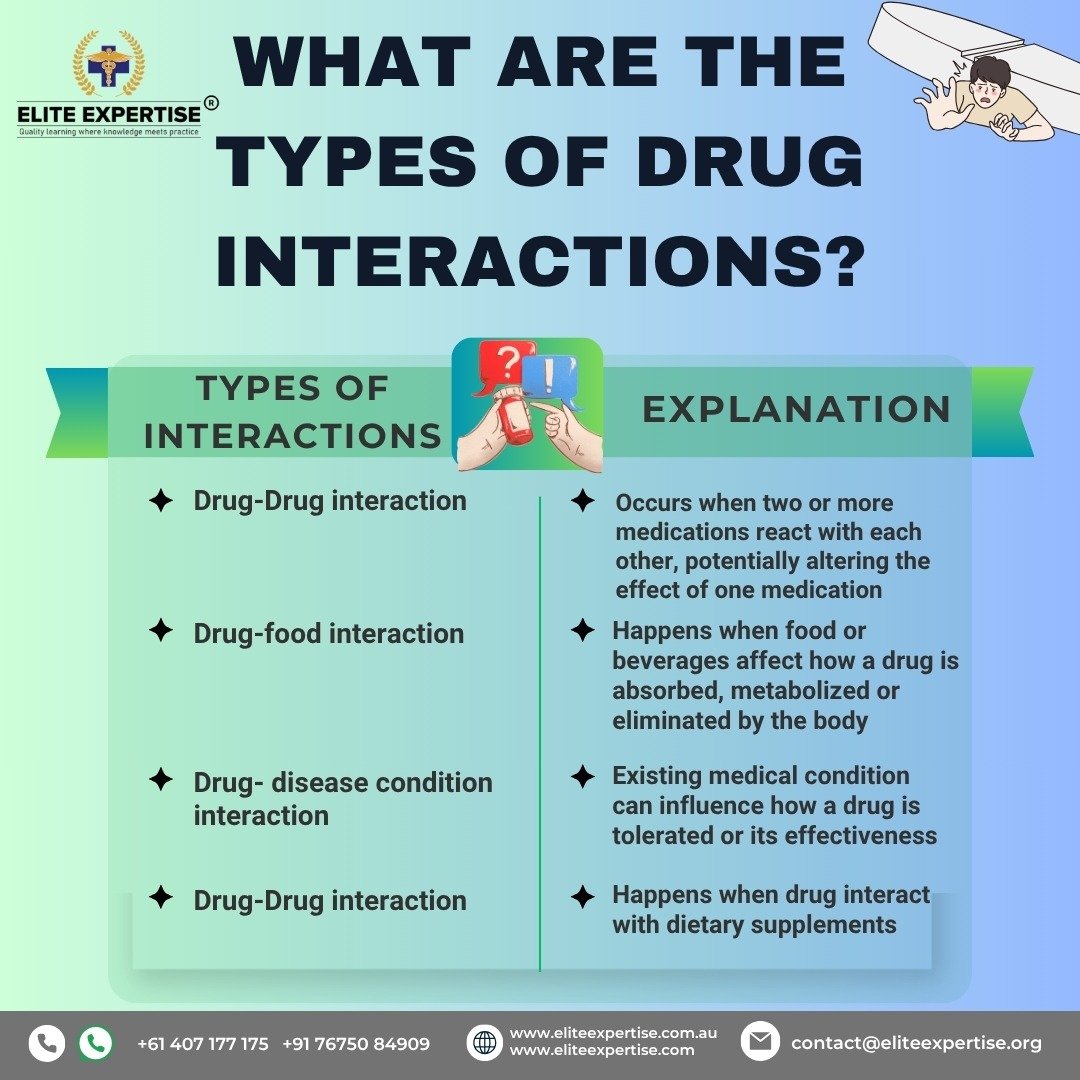
    What are drug interactions?

    Drug interaction occurs when the effects of a medication are altered by the presence of another substance, such as another drug, food or supplements. These interactions can either increase or decrease the effectiveness of a drug or lead to unwanted side effects.

    The outcome of the interaction can be beneficial, neutral, or harmful but in exam, it will be mostly focused on potentially harmful interactions

    Drug Interaction

    What are the types of drug interactions?

    Few Examples of Drug interactions are

    • Sedatives and antihistamines: combining these can cause excessive drowsiness, and slow reaction times

    • Blood thinners and pain relievers: certain pain relievers like aspirin or ibuprofen can increases the risk of bleeding when taken with blood thinners

    • Grapefruit and statins: grapefruit can interfere with the metabolism of statins, potentially increase the risk of side effects

    • Alcohol and certain drugs: alcohol can intensify the sedative effects of certain drugs or cause adverse reactions

    💡 Related Read:

    Understanding Digoxin: A Key Drug For Heart Conditions

    What are the consequences of drug interactions?

    • They can induce toxicity

    • Increase risk of side effects

    • Reduced drug effectiveness

    Top 5 Drug interactions in a glance

    How to prevent drug interactions?

    • Consult with a healthcare professional: before starting any medications, seek information from a doctor or pharmacist about potential interactions and measures to avoid those

    • Read drug labels carefully: pay attention to the warnings and interactions listed on the medication labels

    • Inform your doctor or pharmacist about all the medication and supplements that you use.

    • Consider using a drug interaction checker: Online AI tools can help identify the potential interactions. But it’s always advisable to get professional help rather than relying on online tools .

    • Avoid alcohol and certain foods: some substance can always interfere with metabolism and absorption

      What are the tips to master drug interactions for the OPRA exams?

      • Use charts and flashcards to memorise interaction

      • Group drugs by enzymes (eg: CYP450 inducers / inhibitors)

      • Practice clinical scenarios: OPRA focus mainly on case study based questions

      • Keep updated: some guidelines change with newer drug safety data

      Elite Expertise : Your Partner in OPRA success

      At Elite expertise, we specialize in preparing pharmacists for international licensing exams like OPRA, PEBC, PSI, etc. Our simplified pharmacology sessions break down complex concepts like drug interaction sinto easy to grasp format, using mnemonics, memory tricks and clinical case discussions

      If you are aiming for OPRA success, Elite Expertise can guide you through every high yield topics, from beta blocker to CYP450 interactions with clarity and confidence

      Conclusion: Drug interaction Don’t have to be difficult

      If a candidate understands the basic types of mechanisms and clinical consequences of drug interactions, they become much easier to remember. And apply. Keep practicing, use relevant resources, and stay sharp with your OPRA preparations.

    💡 Related Read:

    Beta Blockers pharmacology : A key topic in the OPRA Exam prepaparation

    This blog is intended for informational purposes only and reflects the views of Elite Expertise based on publicly available information at the time of writing. While we strive to provide accurate and updated details regarding pharmacist career pathways abroad, regulations and licensing requirements may vary and are subject to change by respective authorities. Elite Expertise is not a migration agent or legal advisor and does not provide immigration, sponsorship, or visa services. We strictly offer coaching and educational support for licensing exams such as PEBC (Canada), OPRA (Australia), and TCQR (Ireland). For personalized immigration advice or legal consultation, please contact a licensed migration agent or relevant government authority.

    ⚠️ Disclaimer

    About the Author

    Krupa Karamchand

    Content Writer | Elite Expertise

    Krupa Karamchand is a B. Pharm graduate and KAPS-qualified pharmacist with over 7 years of experience in the pharmaceutical field. As an experienced SEO content writer, she combines her in-depth healthcare knowledge with proven digital strategies to create informative, engaging, and search engine–optimized blogs. Krupa is passionate about making complex medical topics easy to understand and accessible to all readers.

    Follow On