Blog

  • Tips for Hyderabad Pharmacists Planning to Migrate to Australia

    Tips for Hyderabad Pharmacists Planning to Migrate to Australia

    A move to Australia as a pharmacist from Hyderabad is an opportunity that could change your life completely, a career that would be fulfilling, global exposure, and a chance to do good in healthcare.

    On the other hand, the trip necessitates meticulous planning, knowledge of the eligibility requirements, and solid OPRA exam training. Below is a stepwise guide to leading you to success in the pharmacy profession in Australia.

    Known for its flourishing pharmacy industry and among the places where the shortage of pharmacists is the lowest, Australia is a hot spot for overseas-qualified professionals.

    The Overseas Pharmacist Readiness Assessment (OPRA) exam is your way to work as an Australian pharmacist if you are from India. The following are some ideas on how you can set out on your journey.

    Understand the Eligibility Requirements

    Prior to beginning your OPRA exam preparation, look over the following terms of eligibility:

    • Graduates of Bachelor of Pharmacy (BPharm), Master of Pharmacy (MPharm), or PharmD from a recognized university are eligible for the exam.

    • Your degree should be equal to at least 4 years of full-time academic study or 3 years at the level of the Australian Qualifications Framework.

    • Registration with the Pharmacy Council in India is, in most cases, a requirement.

    • OPRA is the examination for those who have obtained their qualifications outside New Zealand and Australia.

    Check if you satisfy all the OPRA exam eligibility conditions.

    Start Preparing for the OPRA Exam

    Being well prepared for the OPRA exam by coaching plays an indispensable role in the result:

    • Take advantage of the opportune moment and choose a well-known OPRA exam preparation course whose structured content, live sessions, mock tests, and comprehensive study materials will help you.

    • Make sure that the institute providing you with assistance ensures the presence of faculty with rich experience in the Australian pharmacy.

    • Concentrate on perfecting the OPRA syllabus: Biomedical Sciences, Medicinal Chemistry, Pharmacology, Pharmacokinetics, Pharmacodynamics, Therapeutics, and Patient Care.

    • Become a member of groups of peers for the purpose of sharing of knowledge and getting support, in particular, from pharmacists who have successfully passed the exam.

    Elite Expertise offers live online classes, recordings, tailored study material, and unlimited access until you clear the exam.

    English Proficiency Test (IELTS/PTE)

    You must take an English proficiency test, such as IELTS or PTE Academic, meeting the Australian Pharmacy Council’s scoring requirements. This step is mandatory for skills assessment and subsequent visa application.

    Apply for Skills Assessment through APC

    • The Australian Pharmacy Council (APC) conducts the skills assessment. This includes verifying your qualifications and readiness for the OPRA exam.

    • Submitting accurate transcripts, certificates, and test scores is essential for a successful application.

    Visa & Migration Process

    Once you clear your skills assessment and OPRA exam:

    • Select the appropriate visa category.

    • Prepare for documentation, including health checks, and ensure all certificates are in order.

    • Seek advice from migration consultants if needed for a seamless process.

    Internship & AHPRA Registration

    • After passing the OPRA exam, you must complete a supervised internship in Australia, usually over 1 year.

    • Register provisionally with the Pharmacy Board of Australia (AHPRA).

    • Pass additional written and oral assessments by AHPRA and complete pharmacy law & ethics modules.

    Job Search and Career Opportunities

    • After receiving general registration, one can take up different positions like a clinical pharmacist, a consultant pharmacist, or a specialist in hospitals, community pharmacies, or research organizations, and become an expert in these fields.

    • Use job boards, pharmacy networks, and recruiters for job search support.

    • Pharmacists’ salaries in Australia are very competitive, with a solid demand and career progression opportunities available.

    Conclusion

    The pharmacists who are able to pass the OPRA exam, prepare thoroughly, and work with a determined approach to fulfill all requirements will be the ones to have a successful career in pharmacy in Australia.

    Leverage trusted OPRA exam coaching, stay current with Australian pharmacy standards, and build a support system for guidance. At Elite Expertise, our goal is to mentor Hyderabad pharmacists, helping them thrive in Australia’s dynamic healthcare landscape.

    If you wish to know more or want tailored coaching, check out our OPRA exam preparation course and speak with our consultants today!

    Frequently Asked Questions?

    About the Author

    Radhika

    Content Writer | Elite Expertise

    Radhika loves all things content! With a Master’s in English Literature and over 4 years of experience in digital strategies. She specializes in creating engaging content across diverse industries – including healthcare, technology, and e-commerce – always writing content that connects to its readers.

    Follow On

  • How to Apply for OPRA Exam Australia in 2025: Your complete Guide

    Australia continues to be one of the top destinations for pharmacists globally. The country offers a top-notch healthcare system, competitive salaries, and a growing demand for skilled professionals and international pharmacy graduates. If you are an overseas pharmacist who is planning to migrate to Australia, passing the OPRA exam is a crucial step. The OPRA exam is known as the Overseas Pharmacists Readiness Assessment (OPRA) Exam, previously known as KAPS (Knowledge Assessment of Pharmaceutical Science) is the primary step of the registration process. The KAPS Exam was replaced with the OPRA exam from March 2025.

    In this comprehensive guide, we will take you through the entire OPRA Exam application process, eligibility, criteria, important documents, fees, timeline, and expert tips to help you successfully apply and pass the OPRA Exam.

    What is the OPRA Exam? Conducted by the Australian Pharmacy Council (APC)

    The Overseas Pharmacists Readiness Assessment Examination is a computer-based exam that is an official licensure exam for internationally trained pharmacists who wish to practice in Australia and start the registration process.

    Conducted by the Australian Pharmacy Council (APC), the OPRA Exam evaluates whether your skills, knowledge, and clinical competencies meet Australian Standards for pharmacy practice. It focuses on real-world pharmacy scenarios, testing not just what you know, but how you apply it in clinical and community settings

    • The OPRA exam is a computer-delivered, multiple-choice question exam consisting of 120 questions and lasting 2.5 hours.

    • Candidates can reschedule their OPRA exam during the registration period, but must do so through the Candidate Portal.

    • Out of the 120 questions in the OPRA exam, 90% are scored and contribute to the result, while 10% are unscored and used for testing purposes.

    • The OPRA exam uses a scaled scoring system where passing depends on overall performance across the entire exam.

    Why is the OPRA Important for overseas pharmacists?

    If you are a foreign-trained pharmacist, passing the OPRA exam is a mandatory step towards becoming a registered pharmacist in Australia. It is essential for:

    • Registering with the Pharmacy Board of Australia (PBA)

    • To start a supervised internship

    • First step of achieving full pharmacist registration

    • For evaluating the knowledge that will help in practicing safely and legally in Australia

    The OPRA Exam replaces the older KAPS exam pathway and represents a shift towards a more practical, outcome-based approach aligned with Australia’s modern healthcare system

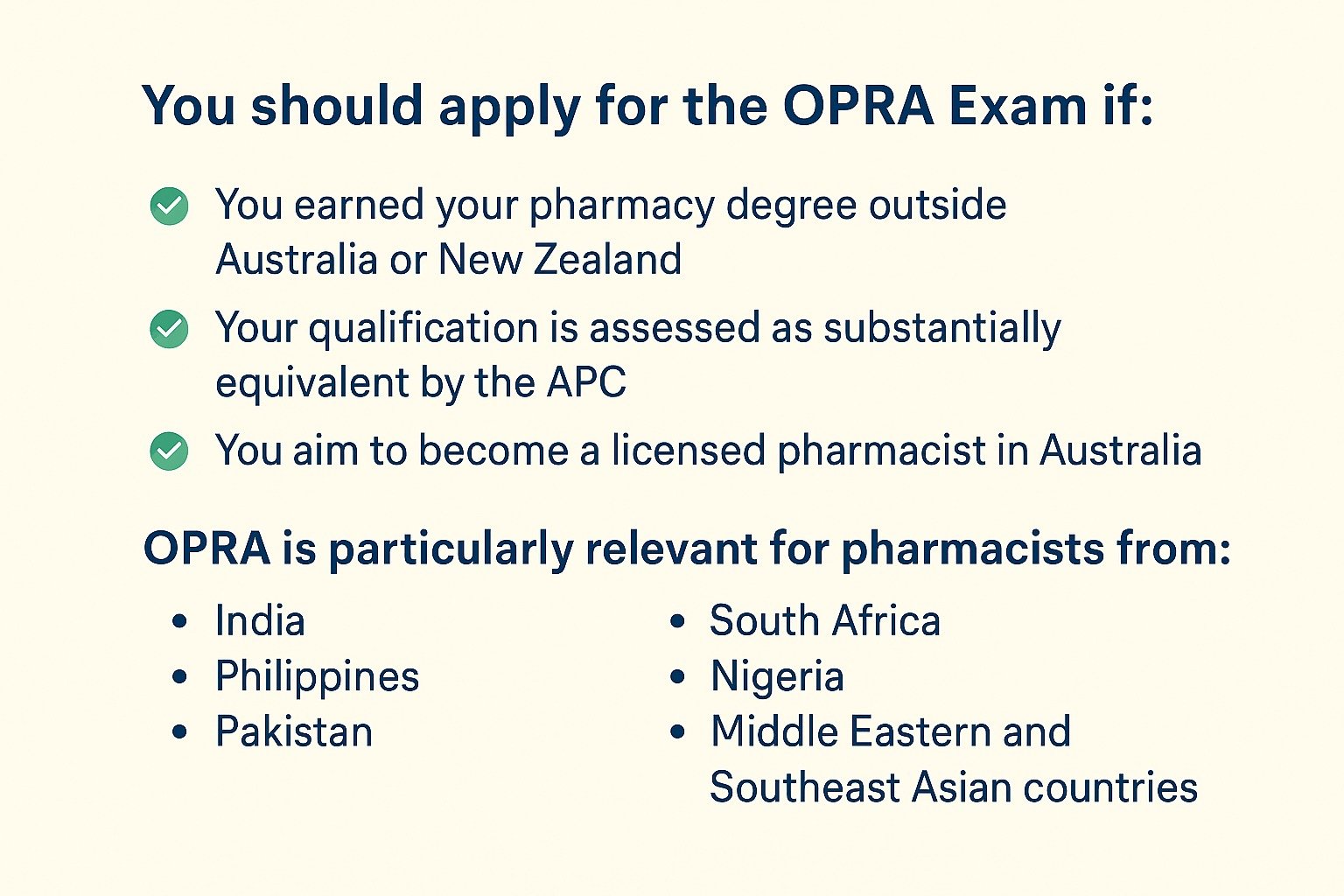
    Who should apply for the OPRA Exam? What is the recognized pharmacy degree?

    Who should apply for OPRA exam 2025

    How to Apply for OPRA Exam Australia: A step-by-step explanation

    Step 1: Skills Assessment by the APC (Australian Pharmacy Council )

    Before you apply for the OPRA Exam, the Australian Pharmacy Council needs to verify your pharmacy qualifications.

    Eligibility requirement for knowledge stream – Documents required are:

    • Pharmacy degree certificate (B. Pharm, M. Pharm or PharmD)

    • Academic transcripts with subject-wise marks of he pharmacy degree

    • Proof of internship or clinical training

    • Proof of registration in the home country as a registered pharmacist

    • Passport bio page

    You will need to submit both original and English-translated documents for your Eligibility Check.

    Full registration fee for skills assessment: AUD 810.00 (2025 rate)

    Processing time is 6-12 weeks. The timeframe for processing the Eligibility Check is up to 4 weeks under unforeseen circumstances. If incorrect data is provided, the assessment process may take longer than usual. Candidates should have an idea about the registration closing dates

    Once approved, candidates will receive a skills assessment letter to move forward with the application to attempt the OPRA Exam. Thus, the skills assessment process is finished

    Step 2: Apply for the OPRA Exam (overseas pharmacist readiness assessment)

    After the Eligibility assessment:

    • Internationally qualified pharmacists should log in to the APC candidate portal

    • Choose an upcoming OPRA Exam window-they will display the next exam period, registration deadline, and more

    • Complete the application form

    • Upload supporting documents if needed

    • Candidates must pay a registration fee of AU$2,190 to sit for the OPRA exam.

    • Select the preferred alternative test centre and date (available internationally)

    Step 3: Prepare for the OPRA Exam

    OPRA is a computer-based, single-paper exam that tests three core domains. Preparation for the OPRA exam requires a comprehensive understanding of the exam’s structure and content distribution.

    Preparation time: 3-6 months, depending on your background

    Results of the OPRA exam will state if candidates passed or failed, with no further details provided.

    Resources to use:

    • APC sample papers and blueprints

    • OPRA-Focused preparation courses-Like the Comprehensive OPRA Preparation course from Elite Expertise

    • Clinical pharmacy textbooks

    • National Guideline (E.G, Australian Medicines Handbook)

    Step 4: Take the OPRA Exam & Receive a Skills assessment outcome
    • Conducted in secure test centers worldwide (Pearson VUE or similar)

    • Duration: 2.5 hours

    • Exam format: case-based MCQs, scenario questions, and skills-based analysis

    • Candidates must upload a passport-size photo during the registration process for the OPRA exam.

    • Exam score timeline: usually within 4-6 weeks after the exam window closes

    • Once candidates pass the OPRA exam, they receive a Skills Assessment Outcome letter from APC that is crucial for provisional registration with the Pharmacy Board of Australia.

    • You must pay the Skills Assessment Outcome fee, which is AU$300.

    Step 5: Apply for an Internship and Provisional registration

    After successfully completing the OPRA Exam:

    • Apply for provisional registration with the Pharmacy Board of Australia with the skills assessment outcome letter before becoming a fully registered pharmacist in Australia

    • Secure an internship position in a hospital or community pharmacy for internationally trained pharmacists

    • Candidates should appear for the English proficiency test, such as PTE, IELTS, OET, etc

    • Enroll in a recognized Intern Training program (ITP) for overseas qualified pharmacists

    • Complete the desired hours of supervised practice

    • Pass the Intern written Exam and Oral Exam (Conducted by AHPRA and APC), which is crucial for becoming a registered pharmacist in Australia

    Once all steps are completed, you will be eligible for general registration and can begin working as a fully licensed pharmacist in Australia

    Pharmacist registration process in Australia

    The pharmacy registration process in Australia begins with an eligibility check conducted by the Australian Pharmacy Council (APC). The eligibility check does not expire once completed, providing enduring confirmation of eligibility. You must be registered as a pharmacist, eligible to register, or eligible to start the registration process in the country where you graduated as an international pharmacist.

    The Skills Assessment Outcome is necessary for both provisional registration and to support a visa application with the Department of Home Affairs. To be eligible for provisional registration, candidates must have a valid visa for Australia.

    OPRA Exam Dates & Application Deadlines

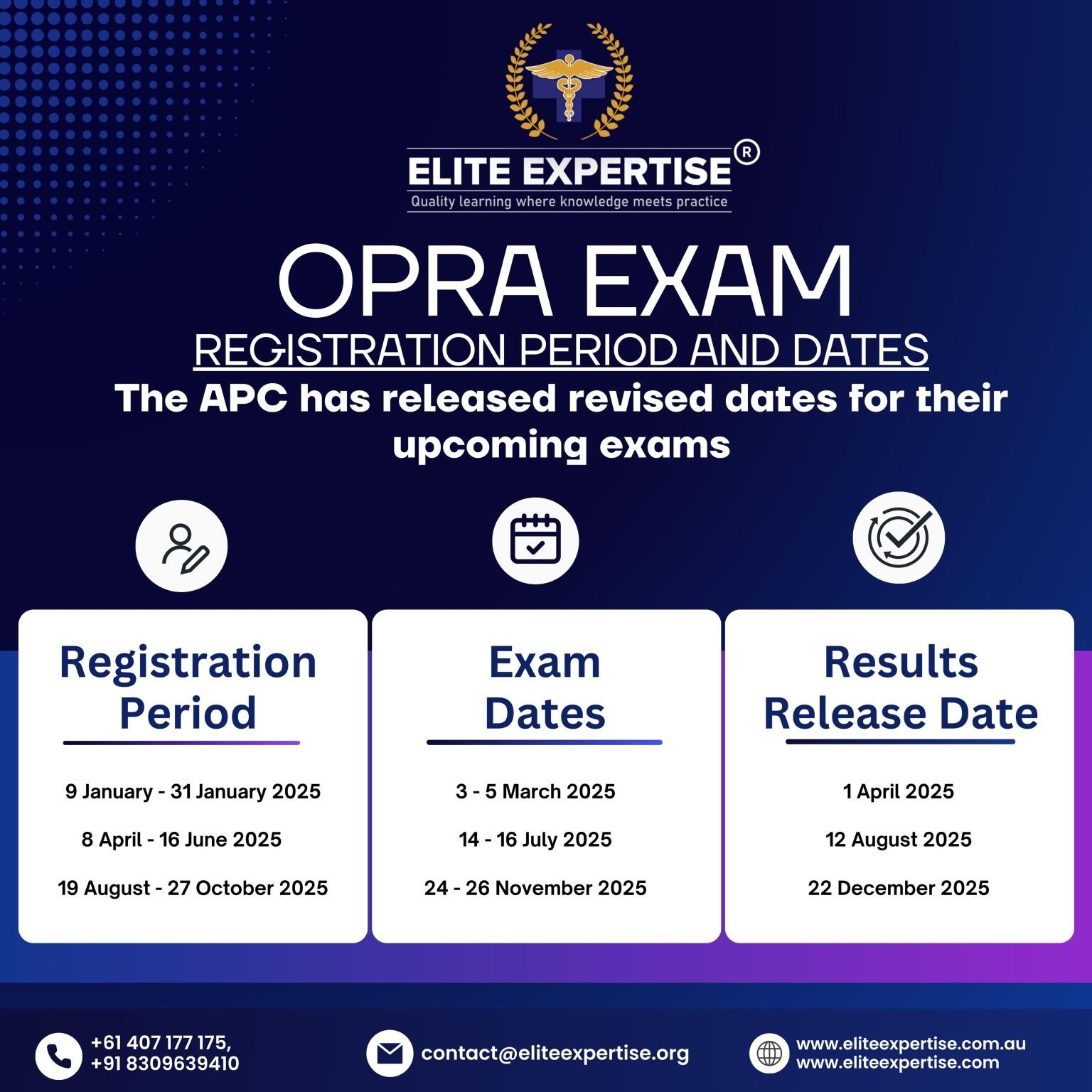
    OPRA exam date 2025

    Expert Tips to Maximize Your Success

    1. Start preparing early, at least 4 months before your chosen exam cycle

    2. Join study groups or online courses with other OPRA Candidates

    3. Invest in quality study materials, preferably Australian clinical resources

    4. Consider the OPRA coaching programs if you are unsure about the OPRA Pattern

    5. Stay updated with the APC guidelines, law changes, and healthcare regulations

    Conclusion:

    The OPRA exam opens the door to a lucrative and fulfilling pharmacy career in Australia. With a clear understanding of the process, the right study strategy, and timely preparation, you can confidently achieve your Australian pharmacist registration goals.

    About the Author

    Krupa Karamchand

    Content Writer | Elite Expertise

    Krupa Karamchand is a B. Pharm graduate and KAPS-qualified pharmacist with over 7 years of experience in the pharmaceutical field. As an experienced SEO content writer, she combines her in-depth healthcare knowledge with proven digital strategies to create informative, engaging, and search engine–optimized blogs. Krupa is passionate about making complex medical topics easy to understand and accessible to all readers.

    Follow On

  • Pharmacist Jobs in Ireland: Explore Your Career Opportunities

    For Overseas pharmacists who wish to work as registered pharmacists in Ireland, the country offers diverse job roles in the community, hospital, industry, and academic settings. By managing medications, giving advice, and caring for patients, Pharmacists are essential to the healthcare industry. Ireland is a desirable location for professionals in this field. It is governed by the Pharmaceutical Society of Ireland (PSI), which allows registered pharmacists to work and settle in Ireland

    Types of Pharmacy Jobs

    Location-Based Jobs

    • County Dublin offers a variety of opportunities, including both full-time and part-time roles. Rural areas like County Tipperary focus more on community-based care, while cities such as Galway and Cork provide opportunities in hospital and industry pharmacy. Pharmacy jobs in Ireland are available across urban and rural locations, and candidates can easily search for positions using online job boards and recruitment agencies.

    Salary by Location in Ireland

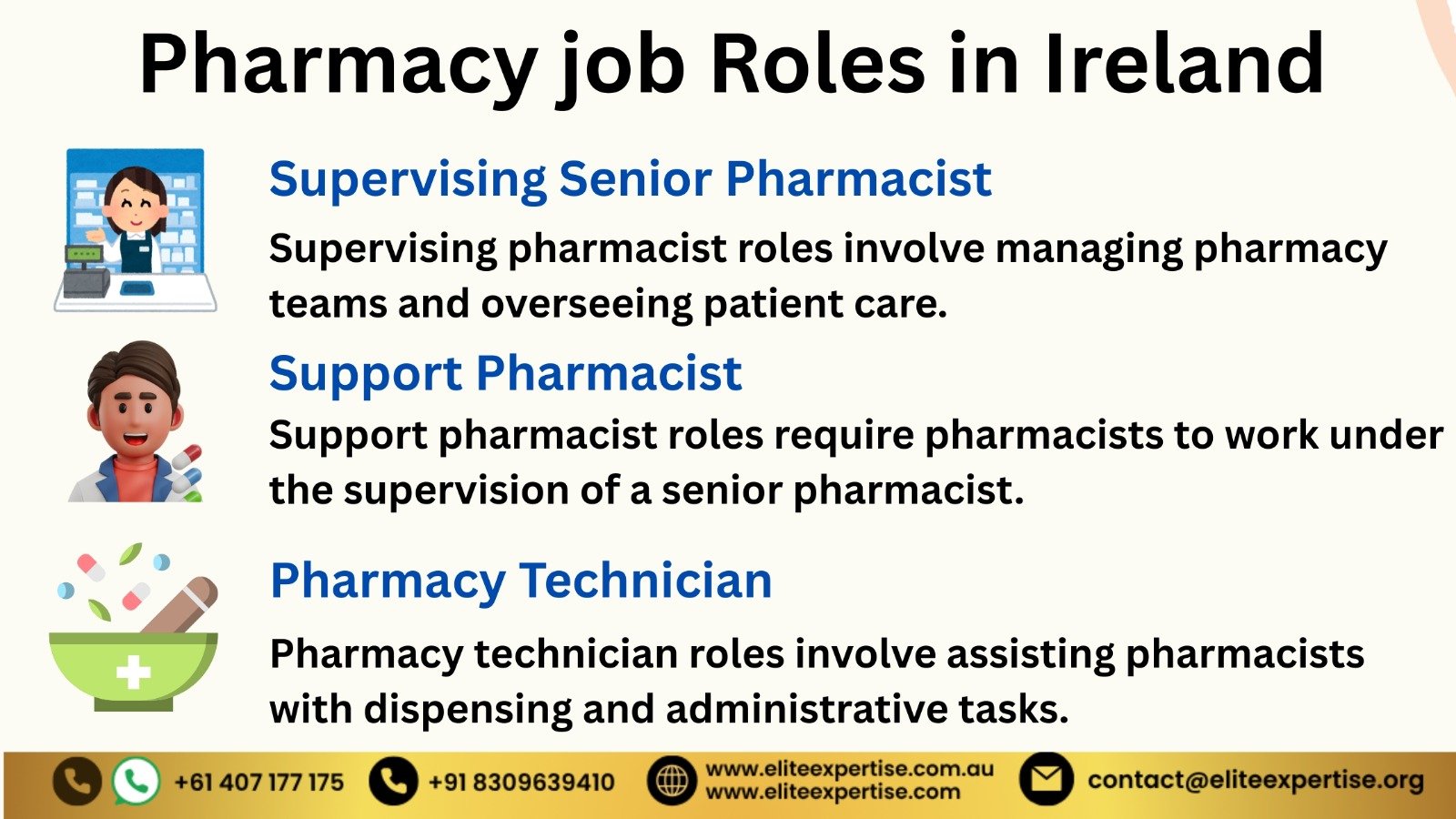
    Pharmacy Job Roles- Pharmacy technician, supervising pharmacists, and more

    Pharmacy job roles in ireland

    Benefits of Working in Ireland

    • Ireland offers a high standard of living with excellent healthcare and education systems, making it an attractive destination for pharmacists. Benefit from a good work-life balance, flexible working hours, and generous annual leave. The country’s vibrant culture, natural beauty, and status as a pharmaceutical hub provide ample opportunities for career advancement. Additionally, the Pharmaceutical Society of Ireland supports pharmacists with continuing education and professional development resources.

    Career Development Opportunities-Pharmacy registration process

    • Pharmacists can develop their careers through ongoing education and training.

    • Specialized courses and certifications are available, such as clinical pharmacy or pharmacy management.

    • Registration with the Pharmaceutical Society of Ireland is mandatory for practicing as a pharmacist in Ireland.

    • Pharmacists from other countries must apply for qualification recognition and registration with the Pharmaceutical Society of Ireland.

    • International pharmacists can receive support via the IPU for the registration process in Ireland.

    Salary and Benefits

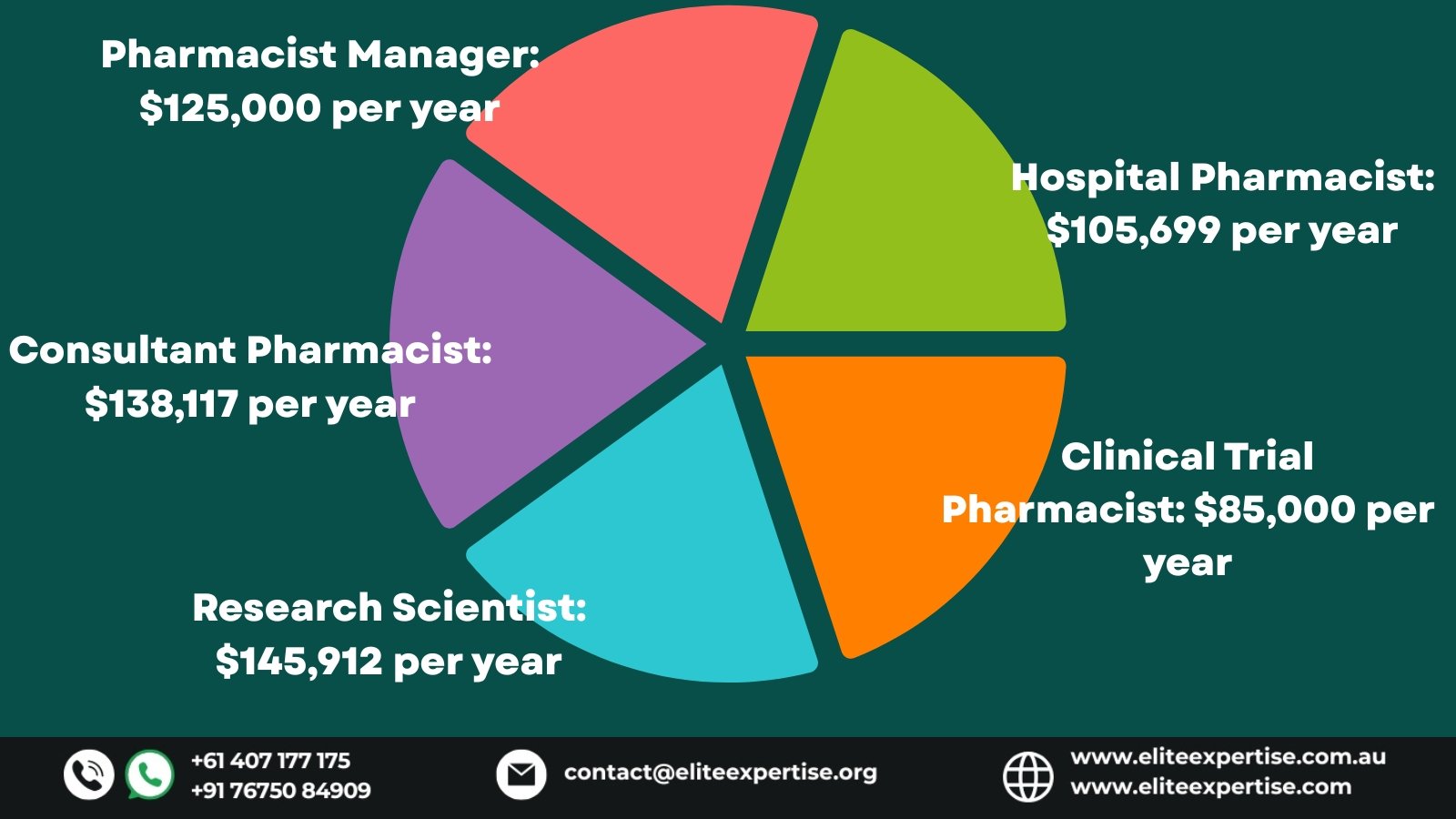
    Pharmacists in Ireland enjoy competitive salaries and benefits for late nights, including pension schemes, health insurance, bonuses, and professional development opportunities. Salary ranges vary by experience and customer-focused sector, with pharmacy-based senior pharmacists earning higher pay. The Pharmaceutical Society of Ireland ensures fair compensation and guides salary and benefits to support pharmacists throughout their careers.

    Average Pharmacist salary in Ireland (2025)

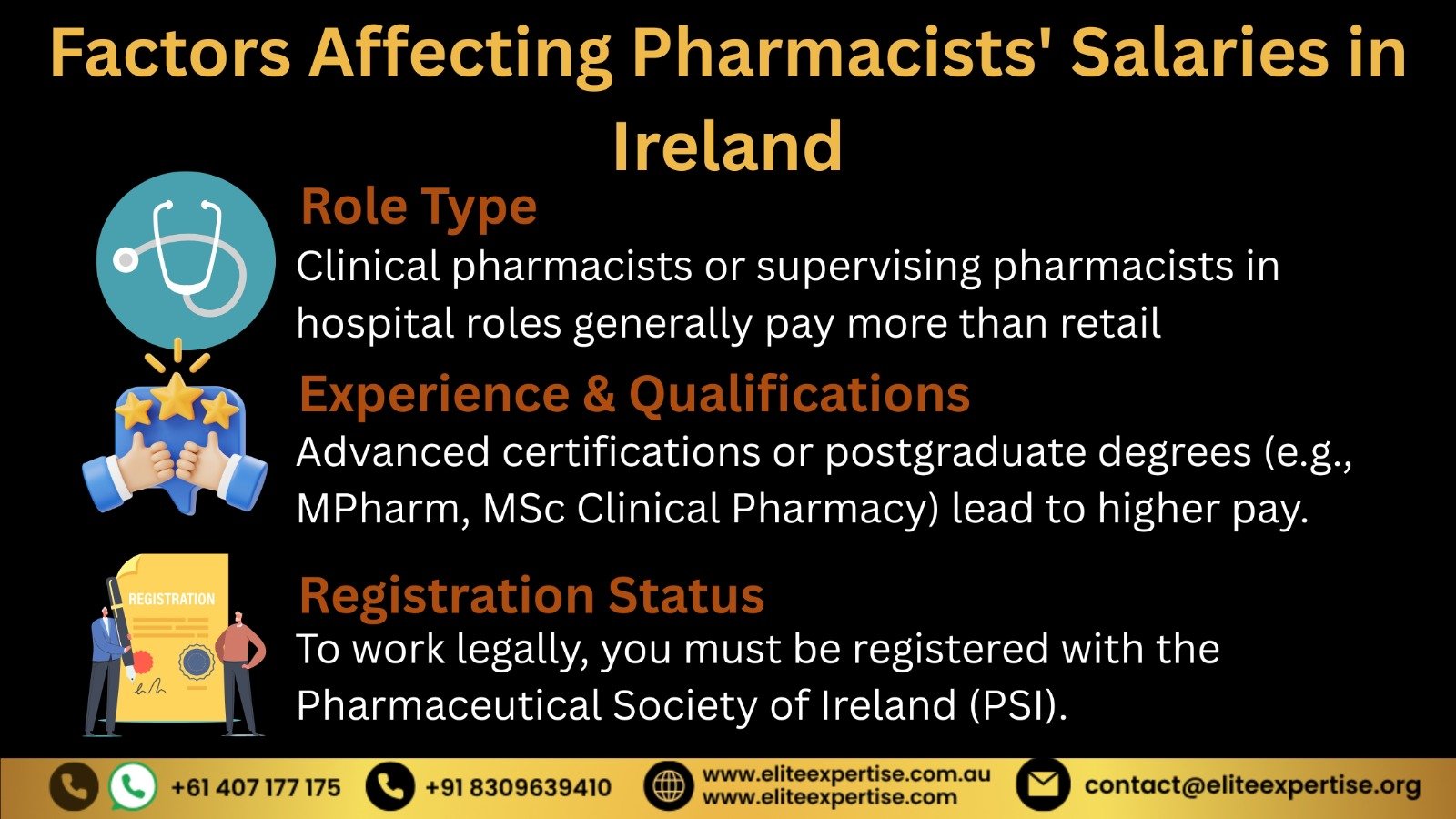
    Factors That Affect Pharmacist Salaries in Ireland

    Factors affecting pharmacists salaries in ireland

    Job Search and Application

    • Pharmacy graduates can search for jobs online, using job boards and recruitment agencies.

    • Pharmacists in Ireland enjoy competitive salaries compared to the rest of the EU.

    • Candidates should tailor their CV and cover letter to the specific job and employer.

    • Pharmacists are considered the most trusted professionals in Ireland at a rate of 96%.

    • Med Pharm is a leading Pharmacy Recruitment Agency specializing in recruitment and staffing solutions for pharmacies across Ireland.

    Why Choose a Career in Pharmacy?

    • Supervising Pharmacists are in demand and there are numerous job openings available across various counties in Ireland.

    • Pharmacist job listings are available in cities and towns all over Ireland, providing a variety of work locations.

    • Community pharmacies in Ireland are seen as essential healthcare providers, with nearly 2,000 pharmacies nationwide..

    • Pharmacists in Ireland are considered to be part of the first port of call within the healthcare system.

    Job Vacancies and Growth

    • There are currently many job vacancies available in Ireland across various sectors.

    • The demand for pharmacists is expected to grow, driven by an aging population and increasing healthcare needs.

    • New job opportunities are emerging, such as clinical pharmacy and pharmacy education.

    • They can also pursue careers in research and development, contributing to the creation of new medicines.

    • The PSI provides guidance on job vacancies and growth, ensuring that they are aware of emerging trends and opportunities.

    Pharmacist Jobs in Ireland: Key Roles and Responsibilities

    Conclusion

    Ireland offers a diverse range of pharmacist job opportunities across community, hospital, industry, and support roles. With competitive salaries, career growth potential, and the need for qualified professionals in both urban and rural settings, it’s an excellent destination for pharmacists seeking stability and professional development. Whether you’re a recent graduate or an experienced practitioner, understanding the job market, registration process, and sector-specific benefits can help you make informed career choices and thrive in Ireland’s healthcare system.

    About the Author

    Krupa Karamchand

    Content Writer | Elite Expertise

    Krupa Karamchand is a B. Pharm graduate and KAPS-qualified pharmacist with over 7 years of experience in the pharmaceutical field. As an experienced SEO content writer, she combines her in-depth healthcare knowledge with proven digital strategies to create informative, engaging, and search engine–optimized blogs. Krupa is passionate about making complex medical topics easy to understand and accessible to all readers.

    Follow On

  • Your Guide to Pharmacist Jobs & Licensing in Europe 2025

    Your Guide to Pharmacist Jobs & Licensing in Europe 2025

    Pharmacy graduates who want to work in Europe have to consider the various licensure examinations of the countries they wish to work or study in.

    If you are a pharmacy graduate and your dream is to build an international career, then Europe is a land of vast opportunities. If you are enticed by the excellent health care systems, competitive salaries, or multicultural environments, Europe has become a popular destination for pharmacists worldwide.

    Read more for this complete guide on pharmacist jobs and licensing in Europe, along with the concepts of the UK, Germany, Ireland, Australia, and Canada.

    Besides this, you will also figure out how international exams like the PSI Equivalence Exam, PEBC, and others play a role in your licensing journey.

    Why Work as a Pharmacist in Europe?

    Europe is an attractive destination for individuals who want to work and have a good study experience. European pharmacists are among the most respected professionals in society; they have a good level of professional autonomy, they can use the advanced medical infrastructure, and, besides all that, they have a good work-life balance.

    Along with this, the fact that pharmacists are in short supply all over the world certainly means that there will be a higher job demand, competitive wages, and the ability to choose permanent residency or citizenship as a job benefit.

    It is needless to say that if you are already planning to become a pharmacist in Australia or register as a pharmacist in Canada, then it would be the most logical step to also consider Europe as the place to continue your career.

    Understanding the General Licensing & Recognition Process

    To work as a pharmacist in Europe, pharmacists from abroad usually have to go through a recognition of qualifications process, for which they might need to:

    • Confirm and evaluate pharmacy degrees

    • Take language proficiency tests (generally the official language)

    • Pass professional licensure exams (For instance, PSI Equivalence Exam in Ireland)

    • Participate in internships

    • Register with the national pharmacy councils or pharmacy boards

    The process is different in each country because their pharmacy regulatory body is different.

    Country-Wise Registration Processes

    Australia

    For becoming a pharmacist in Australia, foreign graduates need to complete the Pharmacist Stream of the Australian Pharmacy Council (APC), which consists of:

    • Document and pharmacist qualifications Australia evaluation

    • Clear the Overseas Pharmacist Readiness Assessment (OPRA) exam

    • Demonstrating English language competence (IELTS/PTE)

    • Visa application

    • Provisional registration with AHPRA

    • Supervised practice (Internship)

    • Intern Pharmacist Written Exam

    It is a complicated process, but we can help. At Elite Expertise, we have an OPRA exam preparation course to help you become pharmacist in Australia.

    This is the same process to get New Zealand pharmacist jobs; you will have to clear the New Zealand Pharmacy Legislation course, except that there are no intern examinations. You will have to register with the Pharmacy Council of New Zealand once all process and exams is completed.

    United Kingdom

    Registration with the General Pharmaceutical Council (GPhC) is obligatory for those who want to work as pharmacists in the UK. The main steps are:

    • Having a pharmacy degree approved by the GPhC

    • Complete Overseas Pharmacists Assessment Programme (OSPAP) degree

    • One-year foundation training program (internship)

    • Passing the GPhC Registration Assessment

    Ireland

    The Pharmaceutical Society of Ireland (PSI) is the body responsible for licensing pharmacists in Ireland. Non-EU trained pharmacists must:

    • Request recognition of their qualifications

    • Register for the PSI TCQR process

    • Pass the PSI Equivalence Exam through TCQR

    • Register with the PSI

    Canada

    The route to studying pharmacy in Canada is regulated by the Pharmacy Examining Board of Canada (PEBC). Steps include:

    • Enrol in Pharmacists’ Gateway Canada

    • Educational Credential Assessment

    • Canada PEBC Evaluating Exam

    • PEBC Qualifying Exam (MCQ and OSCE)

    • Structured Practical Training (SPT) or Internships

    • Provincial registration and licensing

    Many opt for pharmacist training in Canada through bridging programs or postgraduate studies. The Pharmacist Gateway Canada provides a central platform for international applicants.

    Job Opportunities for Pharmacists in Europe

    Europe’s healthcare systems are under pressure due to an aging population and rising demand for medical services. Pharmacists are increasingly being utilized for:

    • Clinical pharmacy roles in hospitals

    • Community pharmacy services

    • Regulatory and quality assurance roles

    • Research and pharmaceutical industry positions

    Countries like Ireland, the UK, and Germany have active recruitment programs for overseas pharmacists. There are also New Zealand pharmacist jobs and opportunities for those who trained in Canada or Australia.

    Challenges and Tips

    Working as a pharmacist in Europe is rewarding, but it comes with challenges:

    • Navigating complex licensing procedures

    • Language barriers (especially in non-English speaking countries)

    • Adapting to new healthcare regulations and systems

    Tips for Success:

    • Start your credential evaluation early

    • Enroll in the OPRA exam, PSI exam preparation, or PEBC study courses

    • Build English language skills

    • Connect with mentors or networks in your target country

    How Elite Expertise Can Support Your Journey

    At Elite Expertise, we specialize in helping pharmacists navigate the international licensing maze. Our services include:

    • Exam coaching (PSI, PEBC, OPRA [KAPS] exams)

    • Guidance on studying pharmacy abroad.

    • Personal mentorship from globally registered pharmacists

    • Support with test prep by providing mock tests, free resources, and recorded lectures

    Whether you’re aiming for Canada pharmacist registration, the PSI Equivalence Exam, or to become a pharmacist in Australia, we’re here to simplify the process and fast-track your success.

    Conclusion

    Qualified pharmacists are in high demand in Europe, but the situation is not without challenges. However, if you prepare well, get the right advice, and are determined, you will succeed in fulfilling your dream of working in pharmacy abroad.

    Take the first step of your trip confidently—reach out to Elite Expertise now to find out the best way to register as a pharmacist in Europe and other parts of the world.

    Frequently Asked Questions?

    About the Author

    Radhika

    Content Writer | Elite Expertise

    Radhika loves all things content! With a Master’s in English Literature and over 4 years of experience in digital strategies. She specializes in creating engaging content across diverse industries – including healthcare, technology, and e-commerce – always writing content that connects to its readers.

    Follow On
  • What is the Scope of PharmD in 2025: Careers and Opportunities

    The Doctor of Pharmacy (Pharm.D) is a pharmacy degree designed to prepare students for advanced roles in clinical practice and patient care. The Pharm D course is a professional doctoral program in pharmaceutical education that equips students with the knowledge and skills required for diverse healthcare careers.

    • Pharm.D is a six-year program combining academic study and clinical training.

    • Covers pharmaceutical sciences, pharmacology, medicinal chemistry, and clinical pharmacy. Foundational subjects such as human anatomy and pharmaceutical science are integral parts of the Pharm D program, providing essential knowledge for clinical practice and patient care.

    • Clinical pharmacists optimize medication therapy and manage complex drug regimens.

    • Pharm D graduates are integral members of the healthcare team, working collaboratively to improve patient outcomes.

    • PharmD degree offers advanced clinical roles and professional recognition.

    • Focuses on medication therapy management and patient-centered care.

    • Ideal for those dedicated to patient safety and healthcare quality.

    Eligibility Criteria

    To pursue a Pharm.D course, candidates must meet specific eligibility criteria:

    • Completed 10+2 education with science subjects: Physics, Chemistry, and either Biology or Mathematics.

    • Minimum 50% marks in these subjects (varies by institution).

    • Some colleges may require specific subjects like pharmaceutical inorganic chemistry or pharmaceutical organic chemistry.

    • Eligibility may depend on entrance exam requirements; review college prerequisites before applying.

    • It is important to choose a reputable college of pharmacy to ensure quality education, strong clinical exposure, and better career prospects.

    Pharm D course fees vary:

    • Pharm D fees can differ significantly depending on the college of pharmacy and its location, with factors such as tuition, scholarships, and institution type affecting the total cost.

    • Private colleges often charge higher fees, up to ₹15–18 lakhs for the full course.

    • Government colleges generally offer more affordable fees.

    • Check the official fee structures of each pharmacy college before applying.

    • Choose recognized pharmacy colleges in India for quality education, clinical training, and better job opportunities in the pharmaceutical and healthcare sectors.

    Entrance Exams for Pharm D in India

    Required Skills for Pharm D course

    Success in a Pharm D program requires a combination of strong academic knowledge and practical skills. Aspiring clinical pharmacists need excellent communication, analytical thinking, and attention to detail to ensure patient safety and optimize medication therapy. A solid foundation in pharmaceutical sciences and the ability to adapt to fast-paced clinical settings are essential for delivering effective patient care and improving outcomes throughout their careers.

    Benefits of Pursuing a Pharm D Course

    • Earning a Pharm D degree opens diverse career opportunities in healthcare.

    • Clinical pharmacists work directly with patients to optimize medication therapy and improve health outcomes.

    • Pharm D graduates are in demand in hospitals, clinics, and community pharmacies.

    • Graduates can pursue careers in clinical research, the pharmaceutical industry, and academia.

    • Pharm D education prepares for roles in drug development, clinical trials, and innovative therapy creation.

    Pharm D professionals play a central role in advancing healthcare, research, and the pharmaceutical industry, driving industry growth and expanding employment opportunities.

    Global Scope & Job Opportunities of Pharm D

    Global scope after PharmD graduation

    Career Paths in the Healthcare Sector

    Pharm D graduates have diverse career opportunities in healthcare, including roles as clinical pharmacists in hospitals and community pharmacies, positions in pharmaceutical companies focusing on research, development, and regulatory affairs, and jobs in government agencies and research organizations. They can also pursue academic careers or work as medical writers, making the Pharm D degree versatile and suited to various professional interests.

    Career opportunities for Pharm.D. graduates

    Career Opportunities and Development

    Pharm D graduates enjoy diverse career opportunities and growth potential, including:

    • Careers in hospitals, the pharmaceutical industry, research & development, regulatory affairs, and academia.

    • Advancement to leadership roles, such as a quality assurance manager.

    • Specialized roles like a medical writer

    • High demand for clinical pharmacists focused on patient-centered care and medication optimization.

    Top Recruiters in the Pharmaceutical Industry

    Salary Range of a PharmD Graduate

    Salary Expectation after PharmD

    Courses after the Pharm D course

    • Specialized training options include clinical research, pharmaceutical sciences, and business management.

    • Obtain credentials like Certified Clinical Pharmacist (CCP) or Board of Pharmacy Specialties (BPS) for professional credibility.

    • Consider master’s or doctoral degrees for academic or research career advancement.

    Scope of Pharm. D. Graduates Overseas-Licensing exams & career paths

    Conclusion

    The Pharm.D degree opens the door to a diverse and dynamic range of career opportunities, both in India and abroad. With strong foundations in clinical pharmacy, therapeutics, and patient-centered care, Pharm.D graduates are well-equipped to work in hospitals, community pharmacies, research institutions, academia, regulatory bodies, and the pharmaceutical industry. The growing emphasis on evidence-based medicine and personalized healthcare has further increased the demand for skilled clinical pharmacists worldwide. Whether it’s through global licensure pathways like PEBC (Canada), OPRA (Australia & New Zealand), or PSI (Ireland), Pharm.D holders have multiple options to establish a rewarding international career. As healthcare systems continue to evolve, the scope for Pharm.D professionals will only expand, making it a future-ready and globally respected qualification

    About the Author

    Krupa Karamchand

    Content Writer | Elite Expertise

    Krupa Karamchand is a B. Pharm graduate and KAPS-qualified pharmacist with over 7 years of experience in the pharmaceutical field. As an experienced SEO content writer, she combines her in-depth healthcare knowledge with proven digital strategies to create informative, engaging, and search engine–optimized blogs. Krupa is passionate about making complex medical topics easy to understand and accessible to all readers.

    Follow On

  • Pharmacist Salary in Australia: Insights on Earnings and Expectations

    PHARMACIST SALARY IN AUSTRALIA

    Pharmacists are vital to Australia’s healthcare system, ensuring safe medication use. Overseas pharmacists must complete an accredited pharmacy degree, pass the OPRA exam, undergo supervised training, and clear the Australian Intern Written and Oral exams. Meeting English proficiency requirements and registering with the Pharmacy Board of Australia are also mandatory before practicing. Pharmacists work in hospitals, community pharmacies, research, and the pharmaceutical industry.

    Key points:
    • Complete pharmacy degree and exams

    • Supervised practical training required

    • English proficiency test mandatory

    • Registration and licensing with Pharmacy Board

    • Work settings: hospitals, community, research, industry

    Their responsibilities and salary details include:

    • Dispensing medications and providing patient care

    • Providing medication, advice, and health care services to patients

    • Participating in the development of new drugs and ensuring medication safety

    • Pharmacists are highly accountable for patient care, medication safety, and quality pharmaceutical services

    • Average salary of approximately $54.10 per hour, varying by factors such as location, experience, and qualifications

    • Employment settings range from bustling city hospitals to local community pharmacies

    • Pharmacists play a vital role in supporting the health and well-being of Australians, and their responsibilities are distinct from those of doctors, who provide medical care and diagnosis within the broader healthcare system

    Overview of Pharmacist Salary in Australia

    Salary Overview

    • The average pharmacist salary in Australia is approximately $88,483 per year, a figure based on factual data, making it a competitive career choice within the healthcare sector.

    • Pharmacists are paid an average base wage of $56.91 per hour, based on recent salary reports.

    • This annual salary translates to approximately $7,373 per month and $1,700 per week, offering a clear breakdown of monthly and weekly wage expectations.

    • Major metropolitan areas, such as Sydney and Melbourne, also tend to offer higher wages compared to regional or rural locations.

    • When compared internationally, the average pharmacist wage in Australia is higher than in many other countries, such as the UK, Canada, and Germany.

    Factors Affecting Pharmacist Salary in Australia

    Several important factors influence the salary for a pharmacist in Australia:

    • Location: Pharmacists in major cities like Sydney and Melbourne generally earn more due to higher living costs and demand.

    • Experience: More years and specialized expertise lead to higher pay.

    • Qualifications: Advanced degrees (e.g., master’s degree) and specialized training increase salary potential.

    • Industry: Roles in pharmaceutical, hospital, clinical, or research sectors typically pay more than in community pharmacy.

    • Job Market: Local demand and competition affect salary levels.

    Highest Paying Cities with average salary for Pharmacists

    When it comes to earning potential, location is a major factor for pharmacists in Australia. The highest-paying cities for pharmacists are those with a strong pharmaceutical industry presence, higher cost of living, and robust demand for healthcare professionals. According to recent salary data, the following table highlights the average hourly wage and estimated annual salary ranges for pharmacists in these top cities:

    These higher salaries in major cities reflect both the increased cost of living and the rising demand for skilled pharmacists. Factors such as population growth, expanding healthcare services, and the presence of key hospitals and pharmaceutical companies contribute to competitive pay rates. Pharmacists seeking better income and career opportunities should consider these top-paying urban centers.

    Salaries for Pharmacists by Role

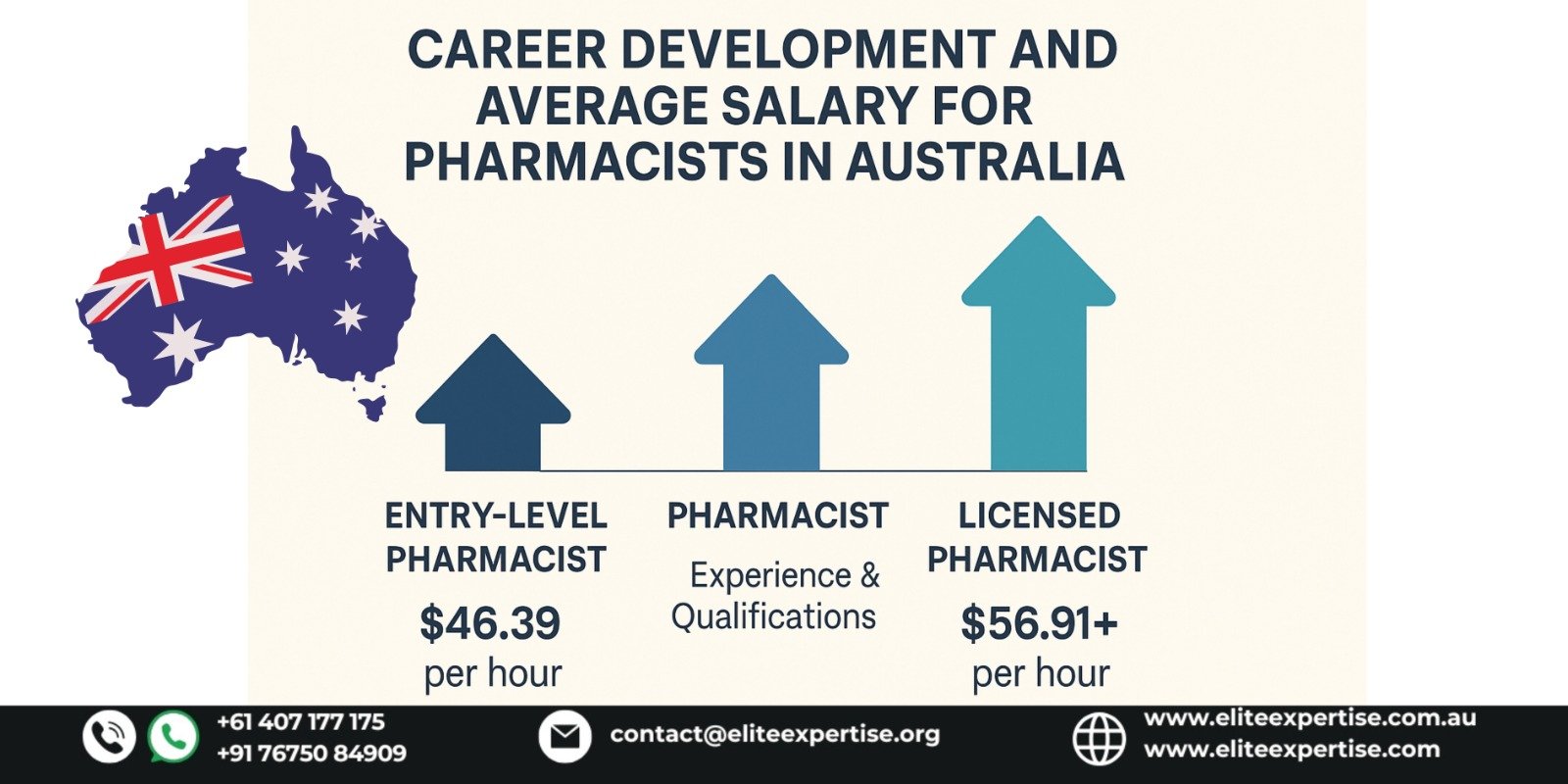
    Pharmacist salaries in Australia vary depending on role and experience. Hospital pharmacists typically earn more than those in community pharmacies, while those in research, development, or managerial positions can earn even higher wages. Entry-level pharmacists start around $46.39 per hour, with experienced and licensed pharmacists earning $56.91 per hour or more, often exceeding $100,000 annually. Location and qualifications also influence pay, with top cities offering greater earning potential.:

    Pharmacist salary in Australia as per different roles

    • These figures are based on national averages and can fluctuate depending on location, qualifications, and years of experience.

    • As pharmacists progress in their careers and take on more specialized or leadership roles, their salaries typically increase.

    • Pharmacists provide essential services in community, hospital, and industry settings, offering professional development and strong earning potential.

    Career Development and salary for a pharmacist

    Career development significantly impacts the average pharmacist’s salary in Australia. Key points include:

    • Entry-level pharmacists start at around $46.39 per hour.

    • Advanced qualifications, such as a master’s degree, boost earning potential.

    • Experienced licensed pharmacists can earn $56.91 per hour or more.

    • Career paths include community pharmacy, hospital pharmacy, and pharmaceutical industry roles.

    • Location, demand, and sector influence salary variations.

    • Progression into managerial, clinical, or research roles offers higher salaries and responsibilities.

    Average Pharmacist salary in Australia VS Career development

    By focusing on professional growth and industry trends, pharmacists can achieve strong financial and career rewards.

    Conclusion on Average pharmacist salary in australia

    In summary, the salary for a pharmacist in Australia depends on several key factors:

    • Location, with cities like Gold Coast, Brisbane, and Canberra offering higher pay

    • Experience and level of expertise

    • Qualifications, including advanced degrees such as a master’s degree

    • Sector of employment, including hospitals, community pharmacies, and the pharmaceutical industry

    The average pharmacist’s salary is approximately $56.91 per hour. To practice, pharmacists must complete a pharmacy degree and complete the registration process with the Pharmacy Board of Australia.

    Career development strongly influences salary growth for pharmacists in Australia. Key points include:

    • Advanced qualifications and experience lead to higher pay.

    • Salaries range from $80,000 to $120,000 per year depending on location, industry, and expertise.

    • Opportunities exist across hospitals, community pharmacies, and the pharmaceutical industry.

    • Strong demand and a dynamic job market support stable, rewarding careers.

    • Ongoing professional development is essential for competitive salaries and career satisfaction.

    About the Author

    Krupa Karamchand

    Content Writer | Elite Expertise

    Krupa Karamchand is a B. Pharm graduate and KAPS-qualified pharmacist with over 7 years of experience in the pharmaceutical field. As an experienced SEO content writer, she combines her in-depth healthcare knowledge with proven digital strategies to create informative, engaging, and search engine–optimized blogs. Krupa is passionate about making complex medical topics easy to understand and accessible to all readers.

    Follow On

  • Understanding Canada Pharmacist Salary: Factors That Impact Earnings

    In 2025, pharmacists in Canada are expected to earn a median salary of $112,008 CAD per year. This article explores factors influencing these salaries, including the Canada pharmacist salary, and how pharmacists can maximise their earnings.

    Key Takeaways

    • Know how much the pharmacist earn in Canada 2025

    • Get to know about the salaries for experienced pharmacist and fresher pharmacist

    • Learn How to work as a pharmacist in Canada from INDIA,PAKISTAN ,UAE AFRICA

    • Learn How to earn more in Canada for pharmacist

    • Immigration Process for International Pharmacists to work in Canada

      Table of contents :-
    • What is the Average Salary Range of pharmacist in 2025

    • what is Experience and Education Level needed to earn more

    How much is the Pharmacist Salary in Canada 2025

    In 2025, pharmacist salaries in Canada are expected to remain strong, with key points including:

    • A median annual salary of approximately $112,008 CAD, which is above the average pharmacist salary.

    • Pharmacists with 1-4 years of experience earn an average salary of CAD 97,274 per year.

    • Pharmacists with 10-19 years of experience earn CAD 105,974 annually.

    What is the Average Salary Range of pharmacist in 2025

    Pharmacists in Canada earn:

    Pharmacists with at least 2 years of experience see a 31% salary increase compared to entry-level, earning CAD 7.5K to CAD 9.3K monthly. Experience and expertise directly lead to higher pay.

    What is the Salary for different Location

    Location significantly influences pharmacist salaries:

    • Urban areas, with a higher cost of living and greater demand for healthcare services, typically offer higher salaries.

    • Pharmacists in Ontario, British Columbia, and Alberta tend to earn higher salaries compared to other provinces due to demand and cost of living.

    How to earn as a Pharmacist Salary in Canada

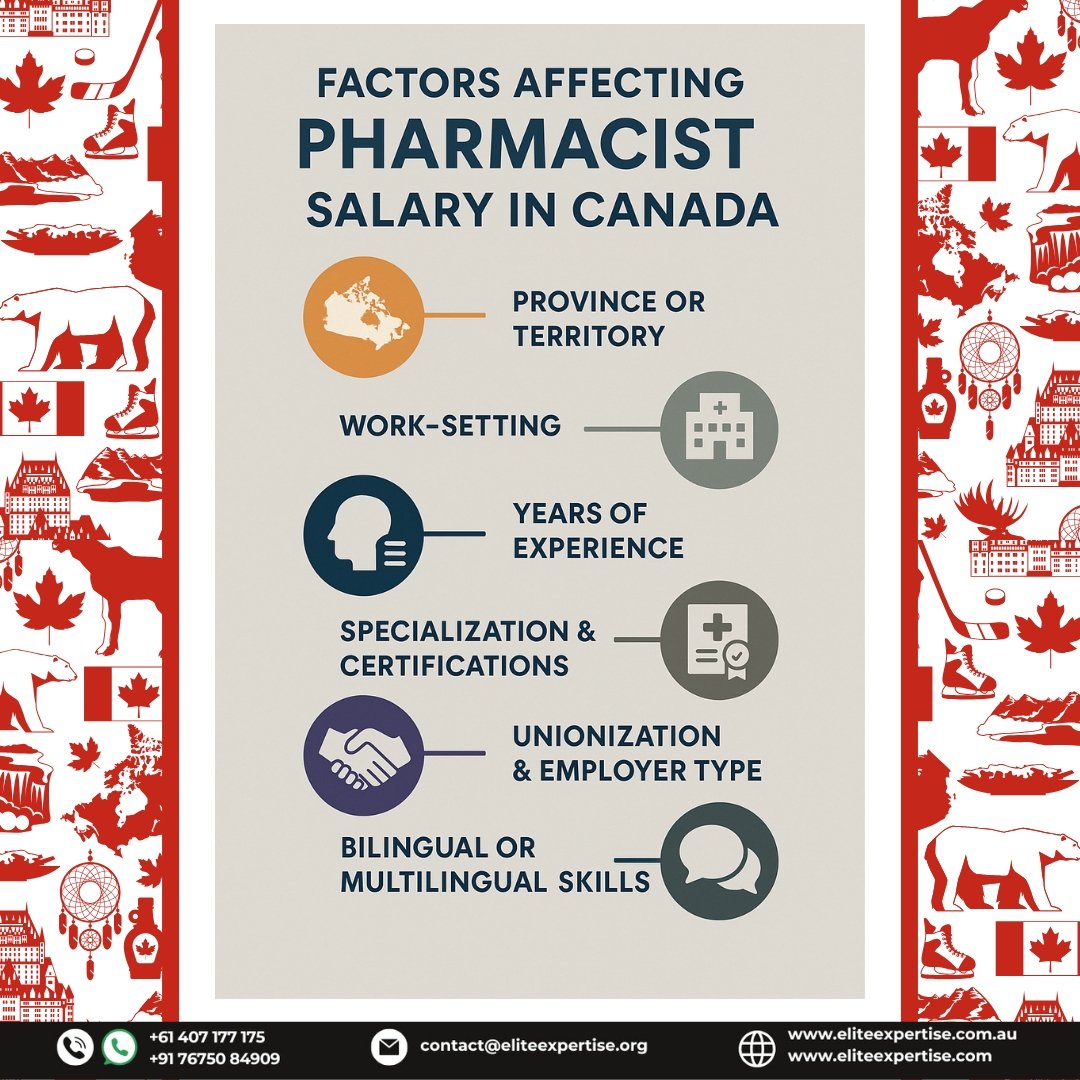
    Pharmacist salaries in Canada are influenced by several factors, including experience, education level, and work setting. Hospital pharmacists often earn more than those in retail settings due to the complexity of their roles.

    Provincial regulatory requirements also impact salary potential, as training and supervision standards vary by different provinces. Recognizing these factors can help pharmacists navigate their careers and maximize earnings.

    Factors affecting pharmacist salary in Canada, including education and experience.

    What is Experience and Education Level needed to earn more

    Experience has a significant influence on pharmacist salaries in Canada. The financial benefits of experience highlight the value of long-term commitment to the profession. For example:

    Education level also significantly impacts salary. Pharmacists with additional certifications or specialized training usually command higher salaries. Pharmacy programs prepare pharmacists for diverse professional challenges.

    Who are payed more in Canada ?

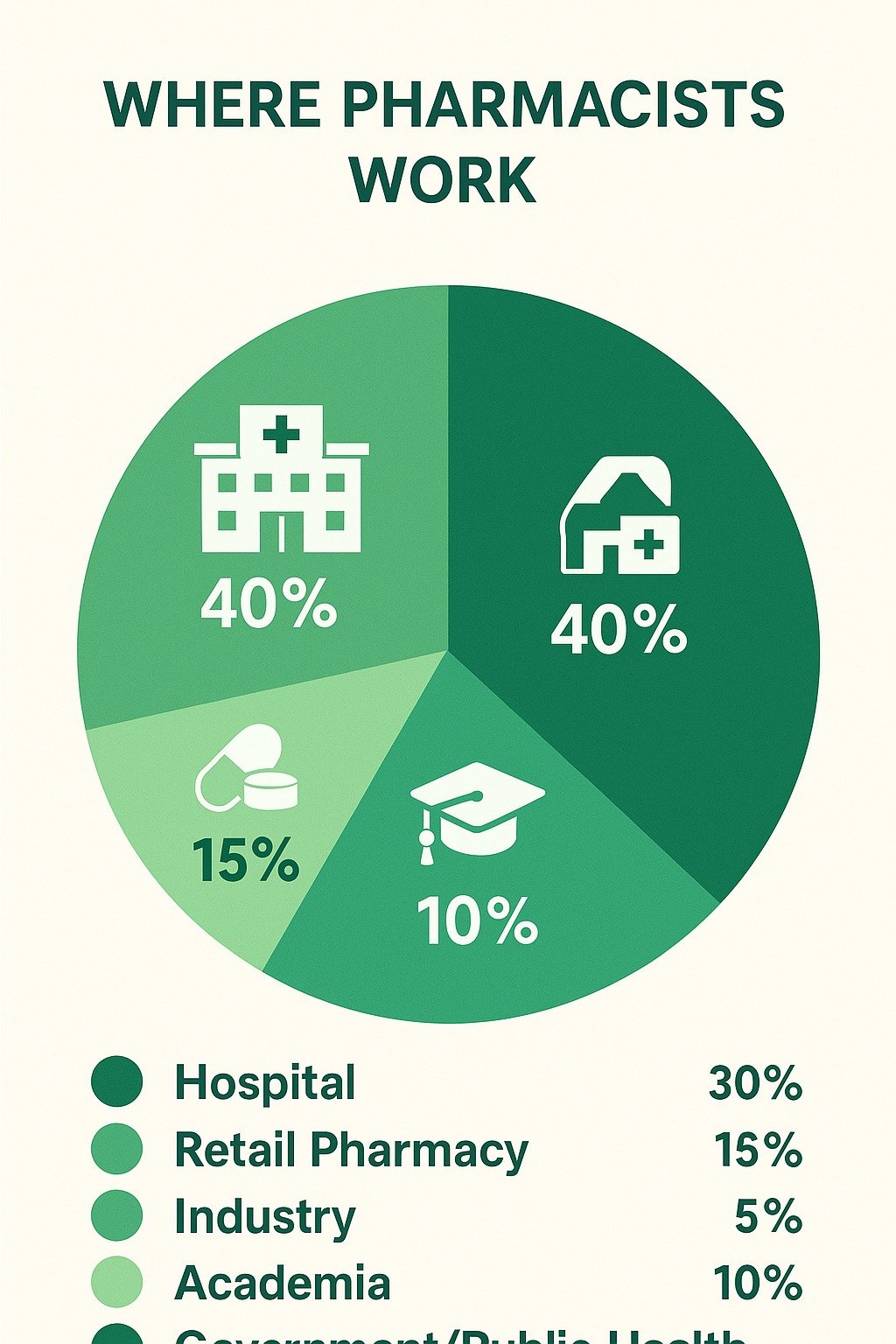
    Pharmacists can work in various sectors, each offering different salary potential:

    Hospital pharmacist vs Retail pharmacy vs industrial pharmacy

    Hospital pharmacists often pharmacists earn more due to the complexity and responsibilities of their roles, including critical medication management and patient safety tasks.

    Retail pharmacists, working in community pharmacies, may earn less than hospital pharmacists but play a vital role by dispensing medications, offering health advice, and managing medication therapy. This variety allows pharmacists to choose career paths that suit their interests and goals.

    Provincial Regulatory Requirements

    Provincial regulatory requirements greatly impact pharmacist salaries in Canada. Key factors include:

    • Each province has its own licensing and practical training requirements, affecting income potential.

    • Practical training hours vary by province, influencing how quickly a pharmacist can become licensed and start earning.

    • Supervision by a licensed pharmacist during training adds further complexity.

    Meeting these provincial requirements is crucial for maximizing earnings. Compliance with local regulations ensures pharmacists are well-prepared and qualified, leading to better job opportunities and higher salaries.

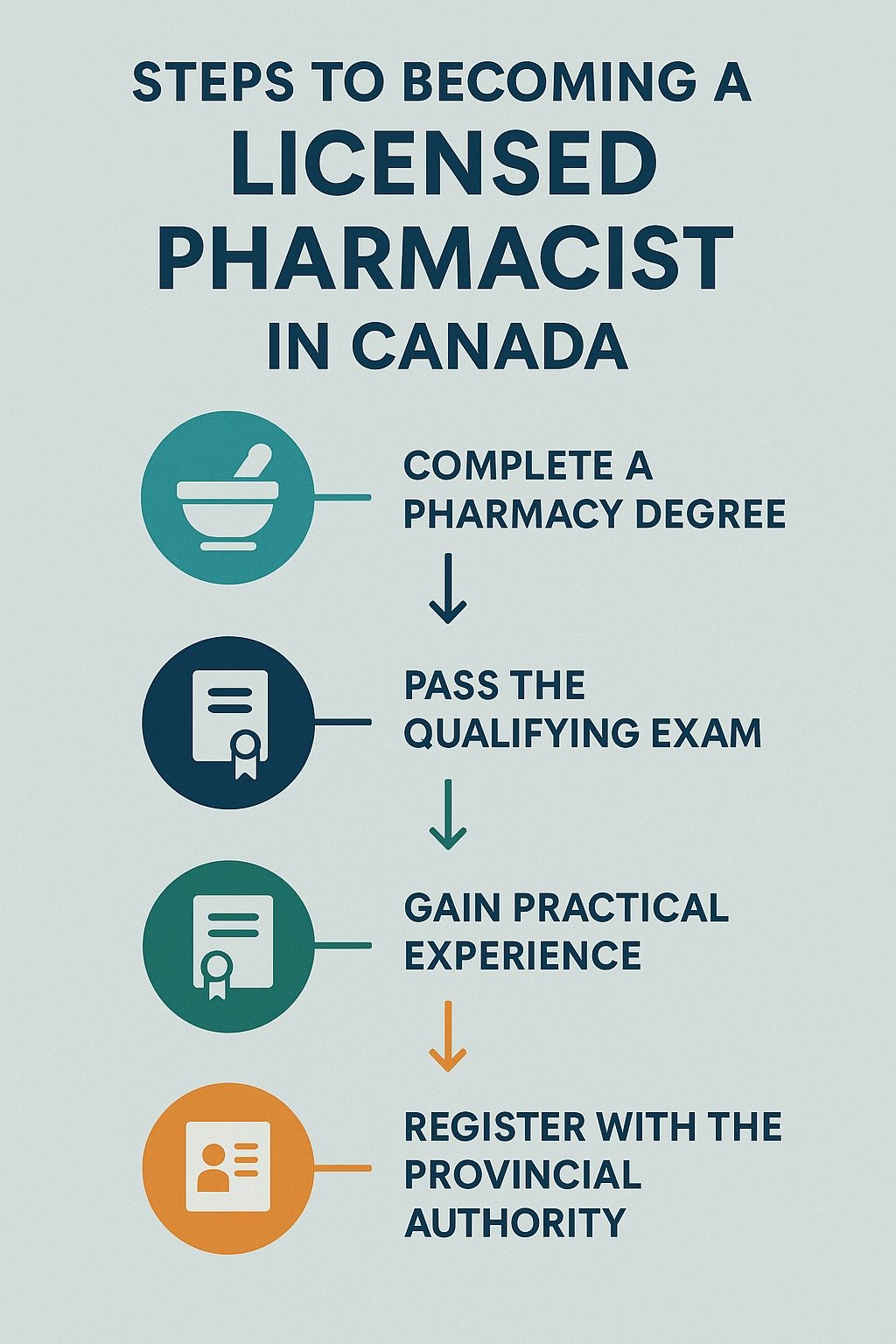
    Steps to Becoming a Licensed Pharmacist in Canada 2025

    To become a licensed pharmacist in Canada, candidates must follow several steps:

    This rigorous process ensures pharmacists are well-prepared to meet Canadians’ healthcare needs and adhere to high professional standards, as emphasized by the Canadian pharmacists association.

    Obtain a Pharmacy Degree

    • Obtain a pharmacy degree (BPharm, PharmD, or MPharm) from a recognized institution.

    • Complete an accredited program meeting Canadian standards.

    • Gain comprehensive education in pharmacology, chemistry, and health sciences.

    • Prepare for the Pharmacy Examining Board of Canada (PEBC) exams and practical training.

    • Build a strong foundation for a successful pharmacy career in Canada.

    Pass the PEBC Exams-the Evaluating exam

    Passing both the PEBC Evaluating Exam and the PEBC Qualifying Exam is essential for becoming a licensed pharmacist in Canada.

    All candidates must pass the PEBC Qualifying Exam to obtain licensure as a pharmacist in Canada.

    Here’s a brief overview of each:

    Both exams are mandatory steps in the licensure process and must be successfully completed before proceeding to practical training and provincial registration. Pharmacists must demonstrate proficiency in English or French, often requiring tests such as IELTS or TOEFL.

    Complete Practical Training

    • Complete structured practical training or internships after passing PEBC exams.

    • Gain hands-on experience under supervision of a licensed pharmacist.

    • Practical training requirements vary by province, affecting timeline and salary potential.

    • Meet provincial licensing requirements by completing training hours and applying for licensure.

    • Once licensed, start professional career contributing to healthcare and earning rewards.

    Job Opportunities and Demand for Pharmacists in Canada

    • The job market for pharmacists in Canada is strong due to an aging population and increased healthcare focus. Canada’s healthcare sector is experiencing an annual growth rate of 3.3%.

    • Approximately 90% of pharmacy graduates in Canada secure employment after graduation.

    • Being aware of job trends helps pharmacists make informed career decisions and benefit from high demand.

    Current Job Market Trends insights according to the average pharmacist salary

    The current job market for pharmacists in Canada is strong, with high demand and excellent employment prospects. Key points include:

    • Approximately 90% of pharmacy graduates secure jobs.

    • Provinces such as Alberta, Saskatchewan, British Columbia, Prince Edward Island, and Nova Scotia offer abundant opportunities.

    • Between 2022 and 2031, around 20,000 job seekers are expected to fill pharmacist positions.

    • The growing healthcare needs of an aging population and advancements in the pharmaceutical industry drive demand.

    This positive outlook makes pharmacy a rewarding career choice with competitive salaries and ample job opportunities..

    Future Outlook of healthcare professionals

    The future outlook for pharmacists in Canada is positive, with robust job market growth projected. An aging population and increasing healthcare demands are key drivers, ensuring steady demand for pharmacists, according to Statistics Canada.

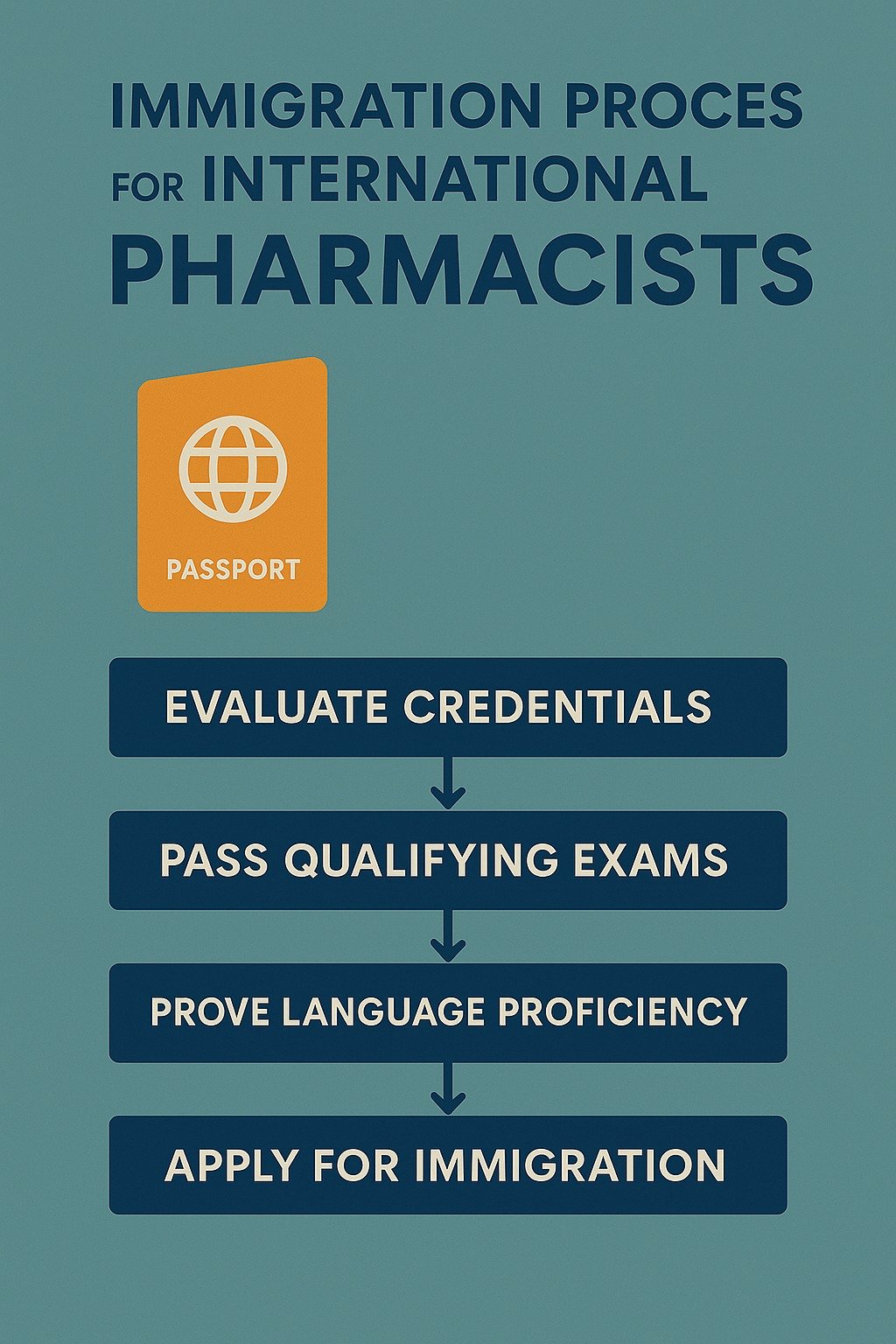
    Immigration Process for International Pharmacists

    International pharmacists aiming to work in Canada must navigate a specific immigration process, including:

    • Eligibility checks through programs like the Federal Skilled Worker Program (FSWP)

    • To immigrate through Express Entry, candidates must create an online profile that includes their credentials and qualifications. Receiving an Invitation to Apply (ITA) for permanent residence is based on a candidate’s Comprehensive Ranking System (CRS) score and the demand for their occupation.

    • Pharmacists can also pursue immigration through Provincial Nominee Programs (PNPs) specific to their province of choice.

    • Candidates must demonstrate language proficiency in English or French to meet immigration and licensing requirements.

    • Internationally trained pharmacists must have their credentials assessed by the Pharmacy Examining Board of Canada (PEBC)

    Understanding these steps is crucial for international pharmacy graduates pursuing a step by step process for careers in Canada.

    Roles and Responsibilities of Canadian Pharmacists

    Pharmacists in Canada are key healthcare professionals working in settings like community pharmacies and hospitals. They dispense medications, provide patient consultations, and ensure safe medication practices, playing a crucial role in patient care and health outcomes across the country. Pharmacists must register with a provincial regulatory authority to obtain a license to practice in Canada.

    Comparison of Community Pharmacist and Hospital Pharmacist Roles

    Conclusion

    Understanding the factors influencing pharmacist salaries in Canada, the steps to becoming a licensed pharmacist, and the various job opportunities available provides a clear picture of the profession’s landscape in 2025. The demand for skilled pharmacists remains high, driven by an aging population and increasing healthcare needs. Continuous professional development and staying updated with industry changes are essential for career advancement. By navigating these aspects effectively, pharmacists can enjoy a rewarding and financially stable career. The future looks promising for pharmacists in Canada, with numerous opportunities to make a significant impact on healthcare.

    About the Author

    Krupa Karamchand

    Content Writer | Elite Expertise

    Krupa Karamchand is a B. Pharm graduate and KAPS-qualified pharmacist with over 7 years of experience in the pharmaceutical field. As an experienced SEO content writer, she combines her in-depth healthcare knowledge with proven digital strategies to create informative, engaging, and search engine–optimized blogs. Krupa is passionate about making complex medical topics easy to understand and accessible to all readers.

    Follow On

  • How AI is Creating New Career Paths in Pharmacy & Healthcare

    How AI is Creating New Career Paths in Pharmacy & Healthcare

    It’s a common misconception that AI will diminish the need for pharmacists and technicians. However, that is far from the truth.

    The benefits are immense, which will reduce repetitive tasks and free pharmacists for patient-focused care. AI is set to increase the demand for skilled professionals, and pharmacists will be more crucial now than ever.

    AI-driven processes will require pharmacists’ skills to verify accuracy, applying their unique experience and critical thinking to patient care, qualities that AI cannot replicate.

    Pharmacists will manage AI-integrated workflows and ensure seamless operations regarding technical requirements across all areas. This will create new AI careers in pharmacy.

    New Career Opportunities Powered by AI in Pharmacy

    The roles that are at risk from automation are mainly data-heavy, repetitive tasks, or rules-based tasks. AI chatbots handle basic medical enquiries, natural language tools generators that need minimal human intervention.

    This does not mean a threat to pharmacists’ jobs; instead, pharma marketers, researchers, and medical science liaisons are going to evolve.

    AI can make data learning and sorting easy; however, it cannot empathize, strategize like a skilled professional. The pharmaceutical industry requires human judgment and understanding of therapeutic nuances.

    Here are future pharmacist roles with AI:

    • AI trainers

    • Medical data science liaisons

    • Algorithm auditors

    • Digital transformation leads

    Pharmacists with experience in machine learning, along with medicine, will be in demand. AI will also help pharmacists focus on patient-facing, high-cognition tasks such as processing large image datasets. Real-time analytics provide new insights for endocrinologists, cardiologists, and behavioral scientists.

    AI-Enabled Skills Now in Demand

    The pharmaceutical industry doesn’t just focus on medicines; it includes management, patient care, research, and therapy. Advancements in pharmacy artificial intelligence can lead to better health outcomes, albeit they are safe, regulated, and ethical for all, creating new pharmacy jobs with AI.

    AI in Clinical Practice

    • Assists with drug interactions, dosage, and treatment plans

    • Requires expert human validation for safety

    AI in Virtual Labs & Simulations

    • Simulates safe, realistic practice scenarios

    • Builds problem-solving and clinical judgment

    AI in Learning Platforms

    • Uses NLP for tailored content and feedback

    • Detects gaps and adjusts study schedules

    AI in Exam Prep

    • Creates question banks and tracks performance

    • Recommends topics and provides instant grading

    Real-World Pharmacy Applications

    • Inventory tracking and medication management

    • Real-time data analysis for decisions

    • Task automation and personalized treatments

    Drug Discovery & Development

    • Finds drug candidates and repurposes meds

    • Analyzes health data for tailored therapy

    • Supports pharmacogenomics for treatment success

    Pharmacy Ops & Automation

    • Manages inventory and prevents supply issues

    • Smart dispensers improve adherence

    • Chatbots give medical info; robots boost efficiency

    • Analyzes datasets for research and policy

    Safety & Compliance

    • Flag interactions, allergies, and errors

    • Tracks side effects and detects counterfeits

    How This Affects International Pharmacy Graduates (IPGs)

    IPGs will need to update their education to AI-specific knowledge. Educators must prepare students and integrate AI tools into their practice for AI skills to remain competitive and relevant.

    Here are some benefits of AI:

    • Personalized Learning: AI-powered simulations change according to personal learning styles. This increases our knowledge retention and exam performance.

    • Efficiency: Automation can reduce administrative tasks, which means the pharmacist can spend more time with the patient.

    • Accuracy: Systems that run on AI minimize medication mistakes and improve patient safety.

    • Innovation: At the junction of pharmacy and technology, new roles come into being. Thus, the range of career options for graduates expands.

    • Accessibility: AI-simulated learning or methods of learning will help students understand concepts and scenarios better. This will also make it accessible for any individual from any remote part of the world.

    Elite Expertise’s Role in Preparing AI-Ready Pharmacists

    Elite Expertise is leading the way in preparing pharmacists for the new age by incorporating virtual learning tools, access to study materials, and industry-aligned curricula. This approach provides students with the necessary skills to excel in both exams and practice.

    👉 Also Read : How to Become a Pharmacist in Australia

    Elite Expertise’s commitment to practice-based education, combined with the expertise of experienced academic and licensed professionals working in Australia, has achieved high success rates. This makes them a trusted partner for anyone seeking to advance their career in pharmacy in Australia and beyond.

    What is the Future of AI in Pharmacy?

    There is a growing demand for AI in healthcare careers. This is where the role of AI in pharmacy will play:

    • Advanced Clinical Decision Support: Artificial Intelligence will be able to suggest more accurate recommendations by taking into account patient genetics, lifestyle, and real-time health data.

    • Personalized Medicine: Pharmacists will let AI do the job of deciding on therapies for the patients, thus enabling them to achieve better results and reducing adverse reactions.

    • Telepharmacy and Remote Care: The AI-powered virtual assistants dedicated to this mission will be there for the remote consultations to help at all times.

    • Ethical Leadership: The responsibility of the pharmacists will become more and more significant, and their role will be more and more crucial in forming policies and providing ethical implementation of technology if this scenario of the increase of the role of AI continues.

    • Collaboration: AI can integrate pharmacy, data science, and healthcare, broadening career prospects

    Final Thoughts

    AI is the future, and pharmacy education and practice will be influenced too. Positive transformations that reduce routine tasks, so that focusing on the patient takes prominence.

    It also creates AI pharmacist career opportunities for pharmacists to grow. Modern pharmacists who adopt AI-powered learning, practical training, and real-world applications have a bright future, where technology and human expertise will mutually complement each other in improving patient care and driving innovation.

    Elite Expertise offers resources that professionals and students alike can use to traverse better the landscape of changing pharmacy in 2025 and beyond.

    About the Author

    Radhika

    Content Writer | Elite Expertise

    Radhika loves all things content! With a Master’s in English Literature and over 4 years of experience in digital strategies. She specializes in creating engaging content across diverse industries – including healthcare, technology, and e-commerce – always writing content that connects to its readers.

    Follow On
  • Mastering Ratios & Proportions for OPRA: A Must-Know in Pharmaceutical Calculations

    OPRA Exam Preparation: Mastering Ratios & Proportions for Pharmaceutical Calculations

    Preparing for the Overseas Pharmacist Readiness Assessment (OPRA) exam is an important step toward becoming a registered pharmacist in Australia.

    The OPRA Exam is a multiple-choice, computer-based test that lasts 2.5 hours and contains a total of 120 questions.

    If you’re at the beginning of your Overseas Pharmacist Readiness Assessment (OPRA) exam preparation or just going through the main concepts, gaining confidence in ratios and proportions will help you not only during exam day but also in your future.

    Learning the clinical sciences that are the basis of pharmaceutical calculations is particularly crucial for the OPRA test.

    Eligibility and Registration

    The Australian Pharmacy Council (APC) has established eligibility criteria that internationally trained pharmacists must meet. Ensure that you complete the registration period and submit your documents well in advance of the registration closing date. Early registration is recommended.

    • The required qualifications include a degree in pharmacy from an accredited university.

    • Candidates must select and complete the competency stream suitable for their background.

    • Eligibility must be confirmed before registering for the OPRA exam

    • Registration is done online through the APC Candidate Portal

    • The application requires uploading documents such as proof of qualifications and identity

    • Exam fee payment is part of the registration process

    After submitting qualifications and required documentation, appear for the OPRA exam registration.

    The broader registration process includes:

    • Register for the OPRA exam.

    • Once you clear the OPRA exam, apply for provisional registration with the Pharmacy Board of Australia (PharmBA).

    • Once you have completed provisional registration, proceed with supervised practice (internship). Complete supervised practice period of 1,575 hours, which is 12 months full-time.

    • After supervised practice hours, pass the board registration exams. These exams include the Australian intern written exam.

    👉 Also Read: Australian Intern pharmacist-What is Australian intern oral exam

    OPRA Exam Guide and Format

    The OPRA exam is a computer-based, multiple-choice exam format.

    • Assesses knowledge in pharmaceutical sciences, clinical sciences, and biomedical sciences

    • Sample questions help understand question types and answering strategies.

    • The exam is held multiple times annually.

    • Candidates can select their preferred exam dates and locations, subject to seat availability.

    • Early selection is recommended due to the limited number of seats available.

    What are Ratios and Proportions in the Overseas Pharmacist Readiness Assessment?

    Here is how you can know about the ratios and proportions in the OPRA exam

    • Ratios represent comparisons between two amounts, indicating the proportion of one quantity to another (e.g., 2:5).

    • Proportions tell us that two ratios are equal. Thus, supposing 2:5 = 4:10, these numbers will be in proportion.

    • In the realm of pharmacy, these ideas are at the very heart of the activity of changing drug formulations, understanding prescription directions, and ensuring patient safety.

    Why is it Important for OPRA Students?

    The OPRA exam assesses a candidate’s grasp of pharmaceutical sciences, clinical sciences, and biomedical sciences. Also, it ensures that all pharmacists in Australia have the necessary competence that complies with the safety standards for effective practice.

    Preparing for the OPRA exam assesses a candidate’s commitment to upholding Australian standards and delivering high-quality care to patients.

    Ratios and proportions underpin many pharmaceutical calculations:

    • Calculating dosages based on weight or age

    • Diluting or compounding medications

    • Converting between different measurement systems

    • Adjusting concentrations of solutions

    A clear grasp of these concepts is non-negotiable for anyone aiming to pass the OPRA exam and achieve the required pharmacist qualifications in Australia. OPRA exam coaching significantly increases the likelihood of passing the exam.

    Types of Questions You Might See

    Understanding the format and context is vital for OPRA exam preparation. Expert tips for managing time and tackling tricky questions are important for success in the Overseas Pharmacist Readiness Assessment exam.

    Dosage calculations (e.g., mg/kg, body surface area)

    • Solution dilutions

    • Powder reconstitution

    • Infusion rates

    Many questions are scenario-based, requiring application rather than rote memorization.

    Common Mistakes to Avoid

    • Ignoring units or failing to convert them properly

    • Mixing up numerators and denominators

    • Overlooking decimal placement

    • Assuming ratios have to be simplified (sometimes, the format matters more)

    • Not double-checking the clinical context (e.g., pediatric vs. adult dosing)

    Sample OPRA Questions

    These examples are taken from the sample paper provided on the Australian Pharmacy Council (APC) website

    1. A 30 kg child is to be administered 250 mg of metronidazole every 8 hours. Each milliliter of a 500 mg/500 mL ampule of metronidazole contains 0.135 millimoles/mL of sodium. What is the amount of sodium the child will receive in 24 hours?

    2. A patient is prescribed Lugol’s Solution (5% iodine) 0.3 mL three times a day. How much iodine does this provide each day?

    3. An adult subject is injected with 100 mg of a drug, and the resultant plasma concentration is 2.5 microgram/mL. Assuming the drug uniformly distributes in body water, what is this subject’s volume of body water?

    4. Practicing these types helps clarify the application of ratios and proportions.

    👉 Also Read: OPRA Exam Common Questions – Everything You Need to Know

    Quick Recap & Study Tips

    These are some tips you can follow for a successful exam day.

    • Understand, not just memorize—if you can, try to visualize problems.

    • Study using similar scenarios from real life to the OPRA exam format.

    • Apply dimensional analysis to eliminate calculation mistakes.

    • The use of electronic aids, such as flashcards, formula sheets, and cheat sheets, will facilitate interactive and more efficient preparation for the Overseas Pharmacist Readiness Assessment (OPRA) exam.

    • Practice timing yourself with questions to simulate exam conditions.

    Post-Exam Process

    • Candidates who have taken the OPRA exam will be provided with exam results indicating whether they have a passing score.

    • Those who have cleared the examination can register provisionally with the Pharmacy Board of Australia and become an intern pharmacist in Australia.

    • If a candidate fails, they can still retake the exam. You can register to sit the exam again during the next exam period.

    • Candidates can access their exam scores through the candidate portal on the APC website.

    Free Resources for Extra Practice

    • Elite Expertise offers sample OPRA exam free resources, quizzes, and downloadable guides tailored to Australian pharmacy exam standards.

    • The APC official website is also a valuable source for guidelines and examples.

    • Consider reviewing textbooks or open-access online modules focusing on pharmaceutical calculations.

    • Elite Expertise also conducts mock exams for OPRA exam preparation courses to gauge readiness.

    👉 Also Read: How to Prepare for the OPRA Exam for Pharmacists in 3 Months

    Conclusion

    Confidence with ratios and proportions not just prepares you for the OPRA exam but is also integral to the safe and professional pharmacy practice in Australia.

    A structured OPRA exam preparation course provides candidates with the knowledge and confidence needed for a first-time passing attempt.

    Candidates who wish to register for the OPRA Exam must complete an eligibility check.

    Suppose you want a structured OPRA exam preparation. In that case, Elite Expertise provides targeted support, resources, and expert guidance to help you succeed on your journey to becoming a registered pharmacist in Australia.

    The information provided on this blog is for informational purposes only. While we strive to provide accurate and up-to-date information about the OPRA exam, the official resources from the Australian Pharmacy Council and the Pharmacy Board of Australia are the definitive sources of information.

    ⚠️ Disclaimer

    About the Author

    Radhika

    Content Writer | Elite Expertise

    Radhika loves all things content! With a Master’s in English Literature and over 4 years of experience in digital strategies. She specializes in creating engaging content across diverse industries – including healthcare, technology, and e-commerce – always writing content that connects to its readers.

    Follow On

  • OPRA Exam Free Study Materials- PDF Download

    Ace the Overseas Pharmacists Readiness Assessment exam (OPRA) with high-quality FREE Resources!

    OPRA stands for Overseas Pharmacists Readiness Assessment. It’s a computer-based, closed-book MCQ exam developed by the Australian Pharmacy Council (APC). It tests whether pharmacists who trained outside Australia or New Zealand have the biomedical, pharmaceutical, and clinical science knowledge required to practice safely in Australia.

    Ready to Launch Your Pharmacy Career in Australia?Start with the OPRA Exam Australia — Formerly KAPS, Now Your Ticket to Success!

    • Exam Type: Computer-based multiple-choice questions (MCQs)

    • Conducted By: Australian Pharmacy Council (APC)

    • Frequency: Held three times a year – March, July, and November

    • Purpose: Assesses overseas pharmacists’ knowledge and competence

    • Key Areas Covered: Biomedical sciences, pharmacology, patient care

    Outcome: A crucial step toward pharmacist registration in Australia

    OPRA Exam Syllabus

    Master the 5 Key Content Areas of the 2025 OPRA Exam for FREE—Your Blueprint to Success! “Download now.”

    Self-Study for OPRA Exam Syllabus: A Practical Approach

    Self-study is a flexible and independent learning approach that allows OPRA candidates to prepare at their own pace using available resources such as textbooks, online materials, and mock exams. This method is especially useful for pharmacists who are self-motivated, disciplined, and may not have access to formal coaching or live classes.

    In the context of the OPRA exam Australia, self-study enables candidates to:

    • Understand the exam format and content areas thoroughly,

    • Focus on their individual strengths and weaknesses,

    • Customize their study schedule to suit work or family commitments, and

    • Make use of free and low-cost learning tools to minimize expenses.

    However, while self-study offers freedom and cost-effectiveness, it also requires careful planning, strong commitment, and proactive efforts to stay updated with Australian pharmacy practice standards.

    Pros and Cons of Self-Study for the OPRA exam

    Self-study offers several advantages for preparing for the OPRA exam. It provides the flexibility to learn at your own pace, making it ideal for those with work or family commitments. It’s also cost-effective, allowing candidates to prepare using free or low-cost resources such as textbooks, online lectures, and practice questions. With self-study, learners can tailor their preparation based on personal strengths and weaknesses, focusing more on difficult topics while skipping over familiar ones. This approach helps develop strong independent learning skills such as time management, discipline, and self-motivation.

    However, self-study also has its limitations. Without a structured plan or expert guidance, it’s easy to miss key topics or misunderstand complex concepts. Feedback on practice questions is often limited, making it harder to track progress or correct errors. Candidates may also lack exposure to clinical case discussions and Australian-specific pharmacy guidelines, which are crucial for the OPRA exam. Additionally, studying alone can lead to feelings of isolation and reduced motivation over time. Staying consistent and updated requires significant effort and discipline.

    Everything You Need to Ace the OPRA Exam—All in One Place!

    Get ahead with a power-packed suite of FREE resources designed just for overseas pharmacists:

    • Simplified Study Guides & Notes—Cover every key topic with ease

    • MCQs & Full-Length Mock Tests – Practice smart with detailed solutions

    • Bite-Sized Video Tutorials – Learn complex concepts the easy way

    • Flashcards, Formula Sheets & Cheat Sheets—Perfect for quick revision

    • Time Management Tips & Exam Hacks – Learn how to beat the clock and tricky questions

    Designed by expert pharmacists, our tools help you avoid common pitfalls and study with confidence.

    Join thousands of successful candidates—start your OPRA prep the smarter way with Elite Expertise!

    FREE Books for Self Study-Download Now!

    Select the Right Study Materials-FREE Study Material For OPRA Exam

    Why Settle for Self-Study? Unlock OPRA Success with Expert Coaching & Support!

    Crack the OPRA Exam with Confidence!

    • Join expert-led coaching sessions tailored for overseas pharmacists

    • Get access to mock exams, sample papers & real-time feedback

    • Be part of interactive online study groups & boost your prep

    • Follow a structured plan aligned with APC standards

    • Increase your chances of first-attempt success!

    Supercharge Your OPRA Prep with Elite Expertise

    Struggling with complex pharmacy concepts? We’ve got you covered!

    Unlock Free Video Lectures & Sample Papers—Designed just for internationally trained pharmacists!

    Master core topics like:

    • Biomedical Sciences

    • Biopharmaceutics

    • Human Physiology, Drug Design, ADME & More

    Created by Experts— Mr. Arief Mohammad & Mrs. Harika Bheemavarapu are renowned clinical consultant pharmacists and educators which is Perfect for visual learners who want real-time, easy-to-digest lessons, not just textbook jargon.

    Build your foundation. Boost your confidence. Tackle clinical questions like a pro!

    Crush the OPRA Exam with Elite Expertise!

    Ready to become a registered pharmacist in Australia?Elite Expertise gives you the edge with the most focused, APC-aligned OPRA prep course out there.Full syllabus coverageOPRA-style practice questions & mock tests
    Expert-led coaching & 1:1 mentorship
    Proven strategies, smart study plans, and exam hacks

    Learn smarter. Practice harder. Succeed faster.

    Join now—your OPRA success story starts here

    About the Author

    Krupa Karamchand

    Content Writer | Elite Expertise

    Krupa Karamchand is a B. Pharm graduate and KAPS-qualified pharmacist with over 7 years of experience in the pharmaceutical field. As an experienced SEO content writer, she combines her in-depth healthcare knowledge with proven digital strategies to create informative, engaging, and search engine–optimized blogs. Krupa is passionate about making complex medical topics easy to understand and accessible to all readers.

    Follow On