Blog

  • The Indian Pharmacist’s Guide to Working in Australia in 2025

    The Indian Pharmacist's Guide to Working in Australia

    For a pharmacist in India looking to expand their career internationally, Australia offers a golden opportunity. With an aging population and a developed healthcare system, a growing demand for skilled pharmacists, the country welcomes internationally qualified professionals, especially those from India. However, making a move requires a clear understanding of the registration pathway, eligibility rules, exams such as OPRA (previously known as KAPS), and visa procedures.

    This detailed guide serves as your one-stop resource for navigating the entire process, from India to working legally as a registered pharmacist in Australia.

    Registration Pathway of Indian Pharmacists to Australia

    Pharmacists trained outside of Australia must follow a structured assessment and registration pathway governed by two key organizations.

    • Australian Pharmacy Council(APC): Assess your academic qualifications and facilitate the exams (KAPS, OPRA, Australian Intern written exams, etc.)

    • Pharmacy Board of Australia (PBA): Oversees national registration and licensing

    👉 Also Read: Indian pharmacist work and migration to Australia

    What are the steps included in the registration pathway?

    1. Skills assessment by APC

    2. Successfully clear the OPRA Exam(Overseas Pharmacist Readiness Assessment exam)

    3. Visa and migration process

    4. Complete the internship and clear the Australian Intern Written and oral exams.

    5. Registration with the Pharmacy Board of Australia

    What are the Eligibility requirements for Indian pharmacists?

    Indian pharmacists must meet specific requirements before applying for this process:

    • Educational qualification: A B. Pharm, M. Pharm, Pharm D from an institution recognized by the Pharmacy Council of India (PCI)

    • Registration status: Active or past registration with the Pharmacy Council of India, or at least eligible to register

    Documents required:

    • Degree certificate

    • Academic transcript (for assessment)

    • Valid passport and ID proof

    • A License Registration certificate or a letter stating the eligibility to register

    What is the step-by-step process of becoming a registered pharmacist in Australia?

    1. Skills Assessment:

  • Apply to the APC for document evaluation, submitting all required documents.

  • Candidates must upload all required documents to the candidate portal.

  • Processing time: 8-12 weeks

  • Fees: AUD 810.00

  • After evaluation, APC will provide a positive outcome and eligibility to sit for the OPRA exam.

    2. Successfully clear the OPRA Exam (Overseas Pharmacists Readiness Assessment Exam)

    • The KAPS exam will be replaced by the Overseas Pharmacist Readiness Assessment (OPRA) Exam in March 2025. This Exam is conducted to assess the competency of internationally trained pharmacists to practice safely in Australia.

    • Computer-based single-paper Exam with 120 questions for 2.5 hours

    • The OPRA Exam covers the core subjects in pharmacy, including clinical knowledge, biomedical sciences, patient care, and therapeutics, to ensure candidates meet the high standards expected by the Australian HealthCare sector.

    Preparation tips:

    • Join a structured OPRA exam coaching program like those offered by Elite Expertise

    • Use APC-recommended books

    • Allocate 3-6 months for preparation and studies

    How to prepare for the OPRA Exam?

    A quality coaching program is not just about teaching; it’s about mentorship, strategy, and performance enhancement. At Elite Expertise, for instance, our OPRA training is divided into structured modules that simulate real exam scenarios.

    Focus on the OPRA Exam syllabus and resources

    • Biomedical science

    • Therapeutic care

    • Pharmacodynamics and pharmacokinetics

    • Toxicology and pharmacology

    • Clinical practice care

    Key study resources

    • Australian Medicine Handbook

    • Therapeutic guideline

    • APC Sample papers on the official website

    • Mock tests

    • Customized study material offered by coaching institutes like Elite Expertise

    Why choose Elite Expertise for OPRA Training?

    At Elite Expertise, we specialize in training pharmacists for global licensure exams. Our OPRA coaching program is designed by pharmacists, for pharmacists, with a deep understanding of what it takes to pass.

    Here is why students trust us:

    • Experienced trainer with Australian clinical and academic experience, including consulting with experienced clinical pharmacists Mr. Arief Mohammad & Mrs. Harika Bheemavarapu

    • Complete coaching for Exam inclined with the core syllabus

    • Flexible learning schedule for professionals-both live and recorded lectures

    • Unlimited revision access until you pass the Exam

    • Personalized feedback on practice tests and mock exams

    • 100+ case study discussions that will enhance clinical exposure

    • High success rate and global student community

    What are the types of visas to consider by Indian pharmacists for migration?

    To legally enter Australia, Indian pharmacists must apply for skilled visas.

    The most common among them are:

    • Subclass 189 (skilled independent)

    • Subclass 190 (state sponsorship)

    • Subclass 491 (regional work visa)

    • Subclass 409 (training visa)

    • Subclass 482 (employer sponsorship visa)

    Requirements for these types of visas are:

    • Positive skills assessment letter from APC

    • Proof of English test (accepted tests are PTE, IELTS, OET)

    • Point Score system -at least 65+ (Which considers age, education, work experience, English test score, etc.)

    1. Internships and supervised practice in Australia

    • After arriving in Australia, Pharmacists need to complete a supervised internship

    • Hours to be completed are 1575 hours

    • Conducted under the guidance of a registered pharmacist in Australia

    2. What are the Australian Intern Written and Oral exams?

    Australian intern written exam:

    • Conducted by: APC

    • Format: Multiple-choice question

    • Topics: Pharmacy practice, clinical therapeutics, pharmaceutical science

    • Held twice a year

    Australian intern oral exam:

    • Conducted by: Pharmacy Board of Australia

    • Format: face-to-face assessment by real-time experience-based case scenario sessions

    • Focus on patient counseling, dispensing, clinical scenarios, legal, and professional issues

    👉 Also Read: Visa Points for Pharmacy Career in Australia

    Successfully clearing both these examinations can lead to general registration in Australia as a licensed pharmacist with AHPRA.

    At Elite Expertise, candidates can also receive training for the Australian intern written and oral exams. For an Indian pharmacist aiming to become a registered pharmacist in Australia, Elite Expertise is a one-stop solution for all your processes.

    What are the Career Opportunities and salary expectations?

    Australia offers strong job prospects for pharmacists, especially in rural and regional locations.

    Common Career roles are:

    • Community pharmacy

    • Hospital pharmacists

    • Aged care and consultant pharmacy

    • Academia and research

    • Industrial and regulatory affairs

    Salary guide:

    👉 Also Read: How Much Does a Pharmacist Earn in Australia? (2025 Salary Guide by Role & Location)

    Final thoughts

    For Indian pharmacists, migrating to Australia can open doors to global career opportunities, enhanced lifestyles, and long-term security. While the journey involves careful preparation and multiple steps, the right guidance and coaching are essential to make your journey smoother.

    Whether it’s cracking OPRA or PTE or needing assistance in the skills assessment process, Elite Expertise is here to support you with structured training and expert guidance. Join our success-driven program and fulfill your dreams in Ace.

    About the Author

    Krupa Karamchand

    Content Writer | Elite Expertise

    Krupa Karamchand is a B. Pharm graduate and KAPS-qualified pharmacist with over 7 years of experience in the pharmaceutical field. As an experienced SEO content writer, she combines her in-depth healthcare knowledge with proven digital strategies to create informative, engaging, and search engine–optimized blogs. Krupa is passionate about making complex medical topics easy to understand and accessible to all readers.

    Follow On

  • Australian Pharmacist licensing exam (OPRA Exam) for Indian Pharmacists

    OPRA exam

    OPRA exam is the shared licencing exam for both Australia and New Zealand. These are among the top countries that Indians choose to migrate and practise as a pharmacist. Are you an Indian pharmacist aspiring of becoming a pharmacist in Australia or New Zealand? With increasing shortages of pharmacist in these countries, they are actively looking for international pharmacy professionals to help this condition.

    Every country has its own pathway to practise pharmacy and OPRA exam is the gateway step for Australia and New Zealand.

    What is the OPRA Exam?

    OPRA stands for Overseas Pharmacist Readiness Assessment that is conducted by the Australian Pharmacy Council (APC). OPRA exam has replaced the KAPS (Knowledge Assessment of Pharmaceutical Sciences) exam from March 2025, which was earlier the pharmacist licensing exam for Australia and New Zealand.

    It’s designed to assess whether overseas pharmacists (like those from India) have the knowledge, skills, and readiness to practice safely in Australia.

    OPRA vs KAPS: What’s the Difference?

    Elite Expertise has supported students preparing for KAPS exam and now continuing its guidance for OPRA exam too.

    Why OPRA Matters for Indian Pharmacists

    • Indian B.Pharm, M.pharm and Pharm.D graduates must go through a skills assessment and registration process to work as a pharmacist in Australia or New Zealand.

    • The OPRA exam is now the mandate exam in that process for all the pharmacists overseas. It’s recognized by the Pharmacy Board of Australia (PBA) and helps streamline pharmacy registration for overseas candidates.

    • This exam is a proof that your skill, competencies and educational standards meet the standards of Australian Healthcare system.

    Who Should Take the OPRA Exam or OPRA exam eligibility?

    You should consider the OPRA exam if you:

    • Have a minimum four-year degree like Bachelor of Pharmacy (BPharm) or higher like Master of Pharmacy (MPharm) Doctor of Pharmacy (PharmD) from India

    • If you are aspiring to work as a registered pharmacist in Australia or New Zealand

    • Previously planned to take the KAPS but fall under the updated eligibility

    Elite Expertise can assess your qualifications and guide you on the correct exam and pathway.

    How to Prepare for the OPRA Exam

    The OPRA exam tests applied knowledge, not just theory and checks the readiness of the candidate to practise in Australia. You’ll face clinical case-based questions, calculation-based problems, and Australian healthcare context in this examination.

    Topics Covered, but not limited to:

    Therapeutics and Patient Care (45%)

    Biomedical Sciences (20%)

    Medicinal Chemistry and Biopharmaceutics (10%)

    Pharmacokinetics and Pharmacodynamics (10%)

    Pharmacology and Toxicology (15%)

    The is syllabus is vast and if you are confused where to start from then Elite Expertise provides coaching and guidance for your OPRA exam preparation:

    OPRA Coaching with Elite Expertise

    At Elite Expertise, we offer:

    • Live & recorded OPRA-focused classes that involves curated resources for the exam.

    • Study material and case-based practice, our faculty Mrs Harika Bheemavarapu and Mr Arief Mohammad are both Clinical pharmacists in Australia whose experience clearly reciprocates in their teaching.

    • Mock tests based on updated OPRA blueprint. These tests have been created to simulate the actual exam conditions to prepare you better for the exam day.

    • One-on-one mentoring and support till you clear the OPRA exam.

    • Personalized feedback and study plans

    • Our OPRA exam preparation coaching or crash course is for 3.5 months and covers over 300 hours of preparatory sessions.

    Most of our students cleared their exam on the first attempt.

    Documents Required by Indian Pharmacists for OPRA Eligibility Check:

      Identification DocumentsThree photo identification documents must be provided. At least one must be a primary form of ID such as a passport, national identity card, or driver’s license.Pharmacy Qualification CertificateTo confirm that you have completed your graduation, a pharmacy degree certificate or a completion letter from your university must be provided.Academic TranscriptInclude your full academic transcript showing all subjects studied, grades/marks received, and course duration.Evidence of Registration or LicensureProvide proof of your pharmacist registration or eligibility to be registered in your home country or another country. This should show the start and end dates of registration.Recent Passport-size PhotographA clear and recent passport-size photo, taken within the last six months.Name Change Document (if applicable)The candidate must submit official documentation such as a marriage certificate or legal name change certificate in case of a name change due to marriage or any legal reason.

      Elite Expertise offers full assistance with APC documentation evaluation.

    After Passing OPRA: What’s Next?

    Once you pass the OPRA exam:

    1. Apply for provisional registration.

    2. Explore PR pathways via skilled migration visas (491, 190, 186). To know more on visas please read this blog to give you a better understanding: Visa Points for Pharmacy Career in Australia | Elite Expertise.

    3. Start your supervised internship (1575 hours) in an Australian pharmacy once you migrate.

    4. After completion of 75% of the intern hours you will be eligible for the Intern Written and Oral exams.

    5. Once you pass all the exams apply for General Registration and become a fully registered pharmacist.

    Common Problems Faced by Indian Pharmacists During the OPRA Process

    Watch this video to more about English language test latest updates: New English Language Requirement for #pharmacists 2025 |What after #opra EXAM|#pte #shorts

    Conclusion:

    If you’re an Indian pharmacist thinking about Australia or New Zealand, the OPRA exam is your gateway. It’s simpler, outcome-based, and better aligned with today’s healthcare needs.

    At Elite Expertise, we provide end-to-end support — from APC document evaluation guidance, OPRA exam preparation, training you for the intern written and oral exams, and Ahpra registration.

    No matter where you’re starting, we’ll help you finish strong. Do not worry if you have gap in your education or your are a working professional who is busy struggling between work and personal life we are here to help everyone from a fresher to a working professional.

    This blog is intended solely for educational and informational purposes. The information provided is based on the current understanding of the OPRA exam process and pharmacist licensing pathways in Australia and New Zealand as of June 2025. Immigration policies, eligibility requirements, and exam formats are subject to change by regulatory bodies such as the Australian Pharmacy Council (APC), Pharmacy Board of Australia (PBA), and the Pharmacy Council of New Zealand (PCNZ). Readers are advised to consult official sources or seek professional advice for the most up-to-date and accurate information. Elite Expertise does not provide legal or immigration services but offers academic guidance and preparatory support for pharmacy licensing exams.

    ⚠️ Disclaimer

    About the Author

    Sahana Rao

    Sahana Chinthapatla is renowned for her expertise in scientific and medical writing, backed by an MPharm in Pharmacology and years of experience in research analysis and scientific writing.

    As the Head Business Writer at Elite Expertise, she provides insightful and well-researched content on KAPS, OPRA, PEBC, PSI and global pharmacy pathways, guiding aspiring pharmacists in their professional journeys.

    Follow On

    Head Business Writer | Elite Expertise

  • ACE Inhibitors (Angiotensin-Converting Enzyme Inhibitors): A Complete Pharmacology Guide for Pharmacy Exams

    ACE Inhibitors

    What are ACE Inhibitors?

    ACE inhibitors are a group of medications that are primarily used to treat hypertension (Blood pressure) and heart failure. They work by relaxing blood vessels, which reduces the workload on the heart. ACE inhibitors act on Renin-Angiotensin-Aldosterone-System (RAAS) to lower the blood pressure and reduce the strain on kidney and heart.

    They are mainly used to treat conditions like:

    • Hypertension

    • Heart failure

    • Chronic kidney disease(CKD)

    • Post-Myocardial Infarction (MI)

    • Diabetic nephropathy

    These widely prescribed and frequently tested in pharmacy licensing exams such as OPRA (Australia), PEBC (Canada), PSI (Ireland), FPGEE (USA), etc

    What is the mechanism of action of ACE inhibitors?

    ACE Inhibitors block the action of the ACE (Angiotensin Converting Enzyme which is involved in the production of Angiotensin II, which is a potent vasoconstrictor.

    By inhibiting the action of this enzyme:

    • ACE Inhibitors reduces production of Angiotensin II leading to less vasoconstriction

    • It decreases the production of Aldosterone, thus causes lower sodium and water retention in body

    • It will increase bradykinin which will increase the vasodilation. (But causes dry cough)

    Net result of these actions are :

    • Lower blood pressure

    • Improved cardiac output due to reduced preload and afterload

    • Reduced renal damage in diabetics

    • Decreased preload and afterload in heart failure

    Common ACE Inhibitors: At a Glance

    Most ACE Inhibitors end in “PRIL”. Captopril is notable for its sublingual use in hypertensive emergencies

    What are the common uses of ACE Inhibitors?

    What are the common side effects of ACE Inhibitors?

    • Dry cough: This is most common, affecting the majority of patients due to bradykinin buildup due to the mechanism of action. The cough can be persistent and may be more noticeable at night or when lying down.

    • Dizziness and Lightheadedness: mainly occurs when the therapy is started or the dose is increased. And may be more pronounced when standing up quickly.

    • Headache: commonly seen

    • Fatigue and weakness: some patients can feel tiredness

    • Taste disturbance: a metallic taste or loss of appetite

    • Gastrointestinal issue: Nause, stomach upset, diarrhea, or constipation may occur

    Less common side effects are:
    • Angioedema

    • Kidney problems

    • Hyperkalemia

    • First-dose hypotension

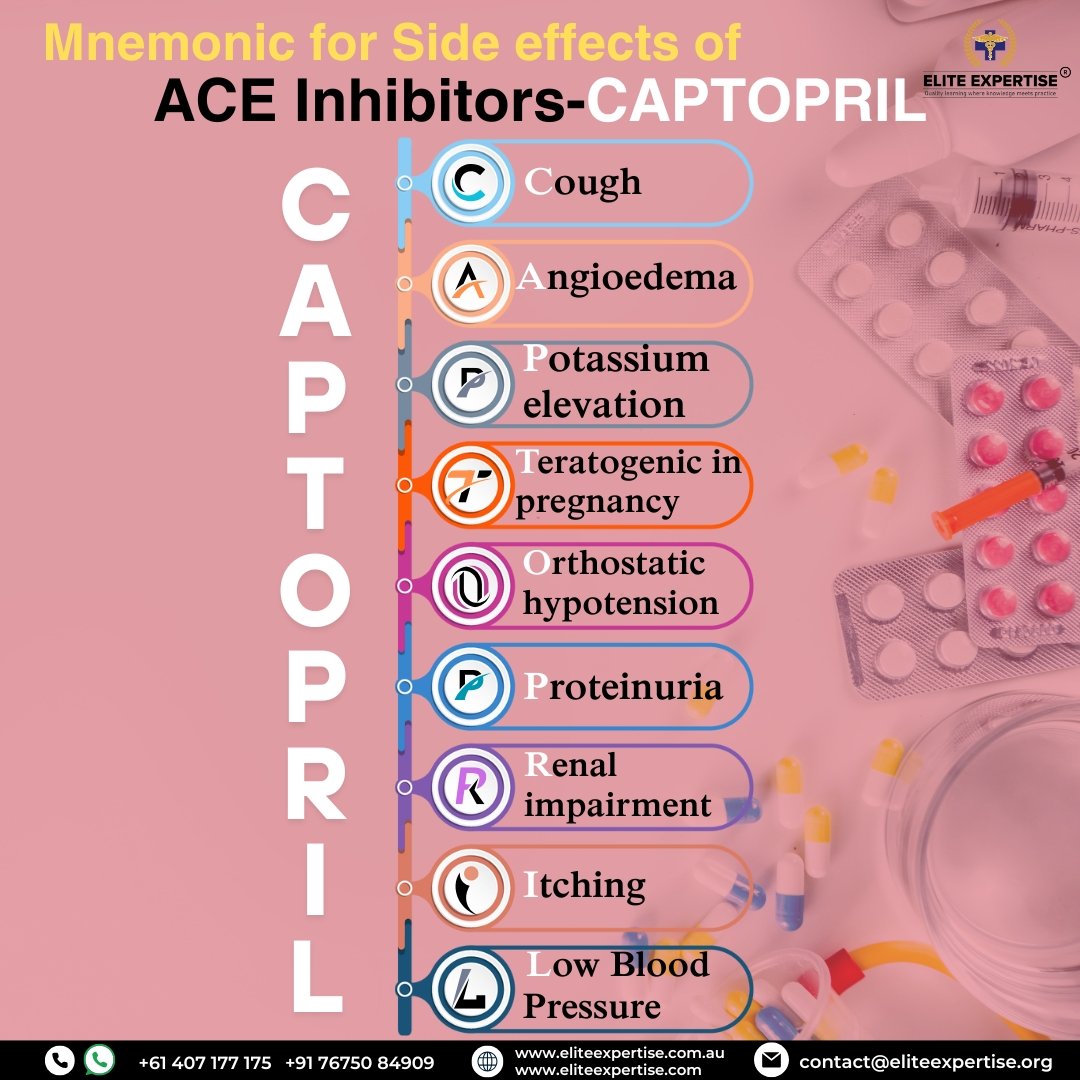
    Mnemonic for Side effects of ACE Inhibitors-CAPTOPRIL

    Captopril

    Common Drug interactions with ACE Inhibitors

    What are the study tips for ACE Inhibitors (for pharmacy exams)

    1. Use Mnemonics for understanding and remembering

    2. Prepare Flashcard: Create “drug-side effect-use”flashcard

    3. Practice Case study scenarios

    4. Prepare visual flowcharts for better understanding

    How Elite Expertise Can Help you ace these difficult topics and exams. At, Elite expertise, we guide pharmacy professional worldwide to pass tough exams like:

    • OPRA (Australia)

    • PEBC (Canada)

    • PSi (Ireland)

    Final take away:

    ACE Inhibitors are more than just blood pressure medication. They protect the heart, preserve kidney function, and improve survival after MI or in heart failure. Whether you are preparing for competitive exams or using the knowledge in Clinical practice, understanding the mechanism, side effects, and clinical significance is essential.

    💡 Related Read:

    Beta Blockers pharmacology : A key topic in the OPRA Exam prepaparation

    This blog is intended for educational and informational purposes only. While every effort has been made to ensure accuracy, the information provided does not constitute medical or professional advice. Pharmacy-related content, drug names, uses, and recommendations should always be verified with official guidelines, textbooks, or qualified healthcare professionals. Readers are advised to consult regulatory authorities such as the Pharmacy Board of Australia, PEBC (Canada), or PSI (Ireland) for updated exam and licensing details. Elite Expertise does not provide medical advice but offers academic guidance to pharmacy professionals worldwide.

    ⚠️ Disclaimer

    About the Author

    Krupa Karamchand

    Content Writer | Elite Expertise

    Krupa Karamchand is a B. Pharm graduate and KAPS-qualified pharmacist with over 7 years of experience in the pharmaceutical field. As an experienced SEO content writer, she combines her in-depth healthcare knowledge with proven digital strategies to create informative, engaging, and search engine–optimized blogs. Krupa is passionate about making complex medical topics easy to understand and accessible to all readers.

    Follow On

  • Australia PR for Pharmacists: Your Complete Guide to Permanent Residency

    Australia PR

    Australian PR or permanent residency now more accessible than ever, reasons being, the shortage of qualified pharmacists (especially in regional or rural areas), visa options like 491 Skilled Work Regional Visa which are a direct pathway for the PR, also the recent changes from November 2024, where the work experience for employer-sponsored visa has been reduced to 1 year from 2years.

    With that said are you a qualified pharmacist, who is aspiring of a stable, rewarding career in Australia?If yes, then having a sound knowledge from all the aspects is important for like, what is the licencing exam, step by step after the exam, registration process, visa aspects and the Permanent residency information etc.

    In this blog let’s talk about:

    • the PR pathways for pharmacists,

    • eligibility,

    • key exams like OPRA,

    • visa options, and

    • how you can turn your pharmacy career into a permanent future in Australia.

    Why Australia Needs Pharmacists

    Australia is undergoing a critical shortage of pharmacists, especially in rural and regional areas.

    The Pharmacy Guild of Australia, has conducted a study or a project called the Workforce Capability Project, according to which, the demand for skilled pharmacists is expected to rise significantly over the next decade.

    Another reason is 8th Community Pharmacy Agreement (8CPA) now allows pharmacists to:

    • Prescribe for 23+ medical conditions

    • Take on expanded clinical roles

    • Earn better remuneration

    The increasing opportunities and the scope of practice makes Australia a highly popular option for international pharmacists.

    Here are the steps to follow for your PR as a pharmacist:

    Step 1: Pass the OPRA Exam

    There are various steps before applying for a PR, starting with, you must get your documents evaluated by the regulatory board of Australia called Australian Pharmacy Council. For overseas-trained pharmacists (including from India, Pakistan, Sri Lanka, Bhutan, Nepal UAE, Philippines, Kenya etc.), the first step is:

    Overseas pharmacists’ Readiness Assessment or OPRA

    · This exam is conducted by the Australian Pharmacy Council (APC)

    At Elite Expertise, we help you clear OPRA confidently with:

    • Live and recorded classes

    • Study material and mock tests

    Mentorship until you pass

    Step 2: Apply for Skilled Migration Visas

    OPRA exam is the gateway for entry into Australia. Once you are done with exam you must apply for Skilled migration visa and start your internship and then apply for general registration.

    Here are the top visa options for pharmacists made easy for you at a glance:

    Some important things to consider:

    Occupation Lists: Pharmacist must be on the MLTSSL (Medium and Long-Term Strategic Skills List) or STSOL (Short-Term Skilled Occupation List) for certain visas like subclass 190.

    Employer-Sponsored Visas (482/186)

    • Pharmacists now require only 1 year of work experience (from Nov 2024)

    • Sponsorships available through regional or community pharmacies

    State Nomination Opportunities

    Many states actively seek pharmacists for their nomination programs:

    • South Australia: Frequently invites pharmacists via 491 and 190

    • Queensland & Tasmania: Open to regional pharmacists

    • New South Wales: Lists pharmacists on its skilled occupation list

    Documents You’ll Need for PR Application

    To apply for PR, you’ll need:

    💡 Related Read:

    A Beginner’s Guide to Understanding the OPRA Exam | Elite Expertise

    We don’t just prepare you for exams — we prepare you for life in Australia.

    Conclusion

    Getting PR as a pharmacist in Australia is more achievable now than ever before — thanks to expanded visa options, reduced work experience requirements, and strong demand for healthcare professionals.

    If you’re ready to start your pharmacy career in Australia, take the first step today with Elite Expertise. We will help you from your very first step OPRA exam and until the Ahpra registration process. Our team is available 24*7 for your queries so why wait start today.

    This blog is intended for informational purposes only and reflects the understanding and interpretation of the current visa and registration pathways as of June 2025. Immigration policies, visa criteria, and registration requirements are subject to change. Readers are strongly advised to verify all information with official government and regulatory bodies such as the Australian Pharmacy Council (APC), Department of Home Affairs, and the Australian Health Practitioner Regulation Agency (Ahpra) before making any decisions. Elite Expertise does not provide immigration or legal advice but offers educational support to assist pharmacists in their licensure journey.

    ⚠️ Disclaimer

    About the Author

    Sahana Rao

    Sahana Chinthapatla is renowned for her expertise in scientific and medical writing, backed by an MPharm in Pharmacology and years of experience in research analysis and scientific writing.

    As the Head Business Writer at Elite Expertise, she provides insightful and well-researched content on KAPS, OPRA, PEBC, PSI and global pharmacy pathways, guiding aspiring pharmacists in their professional journeys.

    Follow On

    Head Business Writer | Elite Expertise

  • Pharmacist jobs abroad for Indians

    Indian pharmacist or a fresher who just completed your pharmacy exams planning to work abroad with aspiration that extent beyond borders? Ready to elevate your pharmacy career and skills to a world-class health care system? Don’t you want to compromise on your quality of life and competitive salaries? All this with gaining exposure to diverse opportunities?

    Too many questions? But no one to answer?

    Elite Expertise has answers to every question you have! Read this blog to know more:

    Are you are a skilled pharmacist with passion to learn more? If yes, then the world is increasingly having a shortage of skilled pharmacists and the countries like Australia, New Zealand, Canada, Ireland, the US, the UK and so on are looking for your talent and invaluable contribution.

    Things to consider before planning to work abroad:

    • Which country suits you best?

    • What are the salary expectations based on the country you work?

    • What are the expanded roles in that country you get to work?

    • Opportunities for grow in your career does the country provide?

    • Other perks if any?

    Let’s look each one and understand before you make a choice of the country to consider.

    Working Abroad vs Working in India – A Pharmacist’s Career Comparison

    From the table it is evident of that the opportunities aboard are better than in India from a pharmacy a career aspect.

    Can Indian pharmacist work in any country with his license?

    • No, you need to get a licence from the country and get yourself registered as a licensed pharmacist in that country.

    Top 3 Countries for Indian pharmacists to work abroad

    Why Canada:

    • Shortage of pharmacists due to ageing population

    • Robust Healthcare system

    • Immigration friendly

    • Competitive salaries

    • Good work-life balance

    • Welcoming multi-cultural society

    • Additional perks

    • Job stability

    Pharmacist licensing exam for Canada:

    Steps involved to be licensed in Canada by an Indian pharmacist

    💡 Related Read:
    PEBC Canada 2025 (Evaluating Exam) Update for Indian Pharmacist | Elite Expertise

    route map to registered pharmacist in Canada

    2. Why Australia?

    • High demand, especially in rural areas

    • OPRA pathway is clear and structured

    • Bridging programs are not mandatory like other countries

    • Pathway to Permanent Residency (PR) via 491, 190, and employer-sponsored visas

    • Rapidly growing healthcare sector

    • Other perks like children education, spouse work rights etc.

    • Attractive packages

    Pharmacist licensing exam for Australia:

    Steps involved to be licensed in Australia by an Indian pharmacist:

    2. Why Ireland?

    • Global hub for pharmaceutical companies

    • High Demand – Shortage of qualified pharmacists, especially in community and hospital sectors

    • Attractive Salary – Pharmacists earn between €50,000 – €80,000+ per year

    • Clear Licensing Pathway – TCQR process. Easy and time saving there are no internship period.

    • Work-Life Balance – Regulated work hours and strong employee rights

    • Visa & Relocation Support – Many employers assist with work permits and relocation

    • Pathway to PR – Opportunity to apply for Stamp 4 (long-term residency)

    • Globally Recognized Experience – Irish pharmacy experience is respected in the EU and beyond

    • Family-Friendly Immigration – Spouse can often work; children can study in Ireland

    • Safe, Scenic, and Welcoming – A peaceful country with a growing Indian community

    Pharmacist licensing exam for Australia:

    Steps involved to be licensed in Ireland by an Indian pharmacist

    💡 Related Read:
    PSI Ireland Exam for Indian Pharmacists | Elite Expertise

    Conclusion:

    Every country has its own perks what suit best for is the option the you choose personally. All these licensure exams and pathways are not easy and need assistance. Proper guidance is the key to passing the exam in the first attempt and Elite Expertise does the same. We provide guidance and mentoring to every candidate for their chosen country be it Canada, Australia, New Zealand or Ireland. Our team is available 24*7 and you can contact us and we help you to choose the country the best suits you.

    This blog is intended for informational purposes only and reflects the views of Elite Expertise based on publicly available information at the time of writing. While we strive to provide accurate and updated details regarding pharmacist career pathways abroad, regulations and licensing requirements may vary and are subject to change by respective authorities. Elite Expertise is not a migration agent or legal advisor and does not provide immigration, sponsorship, or visa services. We strictly offer coaching and educational support for licensing exams such as PEBC (Canada), OPRA (Australia), and TCQR (Ireland). For personalized immigration advice or legal consultation, please contact a licensed migration agent or relevant government authority.

    ⚠️ Disclaimer

    About the Author

    Sahana Rao

    Sahana Chinthapatla is renowned for her expertise in scientific and medical writing, backed by an MPharm in Pharmacology and years of experience in research analysis and scientific writing.

    As the Head Business Writer at Elite Expertise, she provides insightful and well-researched content on KAPS, OPRA, PEBC, PSI and global pharmacy pathways, guiding aspiring pharmacists in their professional journeys.

    Follow On

    Head Business Writer | Elite Expertise

  • Structural Chemistry: how to study for PSI, PEBC and other Pharmacy Exam

    Structural Chemistry: how to study for PSI, PEBC and other Pharmacy Exam

    Why structural chemistry matters for exams like PEBC, and PSI

    Structural chemistry is not just a part of organic chemistry, it’s a core subject that is frequently asked in pharmacy exams like PEBC (Pharmacy Examining Board of Canada), PSI (Pharmaceutical Society of Ireland) and other pharmacy exams. A solid grasp of this topic helps candidates understand drug structure, reactivity, interaction and even pharmacokinetics.

    Why an aspiring pharmacy exam candidate can’t ignore the structural chemistry topic?

    When it comes to pharmacy exams like PEBC, PSI or others, students often overlook one of the most scoring subjects-structural chemistry.

    Yet this subject forms the foundation for:

    • Drug-receptor interactions

    • Pharmacokinetics and pharmacodynamics

    • Drug design and synthesis

    • Clinical reasoning in medicinal chemistry

    Whether you are revising for Canada’s PEBC or Ireland’s PSI, understanding the structure of molecules and how they interact is essential for clinical reasoning and answering MCQs accurately.

    What is structural chemistry?

    Structural chemistry is a branch of chemistry focused on understanding the spatial arrangements of atoms within the molecules and solids, and how this arrangement influences their properties and behaviors

    Some of the core areas which it deals with:

    • Molecular structure

    • Bonding types (ionic, covalent, coordinate)

    • Molecular geometry and shape

    • Hybridization

    • Resonance

    • Stereochemistry (Chirality, optical isomerism)

    • Functional group recognition

    What are core topics to Master in structural Chemistry?

    Let’s break it down into subtopics that regularly appear in pharmacy exams:

    1. Bonding and Hybridization:

    Why it matters: Hybridization determines the shape, bond angles, and stability of molecules, all critical for understanding drug interaction and reactivity.

    • sp-Linear (180 degree) eg: acetylene

    • Sp2-trigonal planar (120 degree) eg: ethene

    • Sp3-tetrahedral (109.5 degree) eg: methane

    Exam hack: You can often determine hybridization by counting bonding groups around the atom (steric number). PEBC loves such MCQ

    2. Molecular Geometry and VSEPR Theory

    It investigates the three dimensional arrangement of atoms and molecules according to their bonds. Some of these are:

    • Linear, trigonal planar, Tetrahedral, Trigonal Bipyramidal, Octahedral

    • Effects how drugs fit into receptors (Lock-and -key model)

    Example: the stereochemistry of beta-lactam antibiotics affects how they bind to penicillin-binding proteins

    3. Resonance structures and Delocalization
    • Resonance increases a molecule’s stability and explains electron distribution.

    • Resonance often influences the acid-base strength, reactivity, and charge distribution in drugs

    • Exam tip: Expect questions like “Most stable, least stable” resonance contributor

    4. Isomerism: Structural and stereoisomerism

    Pharmacy exams often test your ability to differentiate isomers:

    • Constitutional isomers: different atom connectivity

    • Stereoisomers: same connectivity, different spatial arrangement

    • Enantiomers: mirror images (superimposable)

    • Diastereomers: Not mirror images

    Clinical connection: one enantiomer of thalidomide was therapeutics, the other caused birth defects. This highlights how critical stereochemistry is for drug safety.

    5. Intermolecular forces:

    Understand the Intermolecular force effect such as boiling point, solubility, and absorption.

    Some of them are:

    • Hydrogen bonds

    • Dipole-Dipole interactions

    • London dispersion forces, etc

    Exam tip: Questions on drug solubility and bioavailability often requires knowledge of these forces

    6. Functional groups and Nomenclature
    • Candidates should be able to name, draw, and recognize the functional group

    • Learn common pharmacophores: alcohols, aldehydes, amines, carboxylic acids, ketones, esters, etc

    Exam tip; flashcards are great for mastering IUPAC naming and functional group recognition-especially under time pressure

    What to expect from Structural chemistry in PEBC, PSI and other pharmacy exams

    Here is few example of topics usually shows up

    Study Tips For Structural Chemistry Mastery

    • Use visual aids: Draw molecule, build models, or use 3D software like ChemDraw or MolView

    • Practice Mechanisms: Electron pushing is a universal language in organic reaction

    • Use Mnemonics:

    • Watch YouTube animations: for visualizing VSEPR shapes and isomer rotations

    • Solve past papers: PEBC and PSI questions are often in repeated patterns

    Pro tip: Relate Structures to Drugs

    PEBC Exam preparation pharmacist in Canada #pebcexam

    Link structural chemistry to actual medicines

    • Understand how morphines 3D structure affects receptor binding

    • Learn how NSAID functional group impact acidity and solubility

    • Explore how antibiotic stereochemistry affects spectrum activity

    Final Takeaway: Structural chemistry how to score

    You don’t need to memorise every molecule ever made. But a strong grasp of core structural chemistry principles can make complex questions simple. And since this subject is highly testable and frequently asked in MCQs and Case-study based formats, it is a must study area for anyone taking:

    • PEBC (Canada)

    • PSI (Ireland)

    • FPGEE (USA)

    • GPAT (India)

    • Other international pharmacy exams

    We understand Structural chemistry can feel overwhelming for few, but at Elite Expertise, our expert educators, Mr. Arief Mohammad and Mrs. Harika Bheemavarapu, breaks down the complex topics like hybridization, isomerism, and molecular chemistry into simple, exam-focused lessons tailored for pharmacy licensure exams like PEBC, PSI, GPAT and many more pharmacy exams.

    This blog is intended for educational purposes only and is based on our understanding of structural chemistry topics commonly tested in pharmacy licensure exams such as the Pharmacy Examining Board of Canada (PEBC), the Pharmaceutical Society of Ireland (PSI), and other international assessments. While we aim to provide accurate and up-to-date information, exam formats, syllabi, and regulatory requirements may change. We encourage all readers to consult official sources—such as PEBC, PSI, or relevant national pharmacy authorities—for the most current and authoritative guidance. Elite Expertise does not take responsibility for any actions taken solely based on this content.

    ⚠️ Disclaimer

    Krupa Karamchand is a B. Pharm graduate and KAPS-qualified pharmacist with over 7 years of experience in the pharmaceutical field. As an experienced SEO content writer, she combines her in-depth healthcare knowledge with proven digital strategies to create informative, engaging, and search engine–optimized blogs. Krupa is passionate about making complex medical topics easy to understand and accessible to all readers.

    Follow On
    About the author

    Krupa Karamchand

    Content Writer | Elite Expertise

  • Understanding Digoxin: A Key Drug For Heart Conditions

    Learn everything about Digoxin - a key cardiac glycoside used in heart failure and arrhythmias. Understand its mechanism, use

    Digoxin has remained a vital component in the management of certain heart conditions for ages. Derived from natural sources, this cardiac glycoside plays an essential role in treating heart failure and arrhythmias. Whether you are a healthcare professional, pharmacy student, or curious patient, understanding how Digoxin works and how to use it safely is crucial.

    What Is Digoxin?

    Digoxin is a well-known cardiac medication used to treat various heart-related conditions. It belongs to the cardiac glycoside family, which increases the force of heart muscle contraction and regulates heart rhythm. Despite the availability of newer drugs, Digoxin remains significant in specific patient populations.

    The origin and evolution of Digoxin

    Digoxin was initially derived from the leaves of the Digitalis Lanata plant (commonly known as Foxglove). It was first used in the 18th century to treat edema, a symptom of heart failure. Over the years, its therapeutic effects have been refined through clinical research, making it a standard treatment in modern cardiology.

    How does Digoxin work in the body?

    Digoxin works by inhibiting the sodium-potassium ATPase pump in cardiac cells. This leads to an increase in intracellular calcium, which enhances cardiac contractility (positive inotropic effect). Additionally, Digoxin slows conduction through the atrioventricular (AV) node, making it effective in controlling the ventricular rate in atrial fibrillation.

    Key actions of Digoxin

    • Increase the force of heart contractions.

    • Slow heart rate (especially in atrial fibrillation)

    • Improves cardiac output in heart failure

    These effects improve cardiac output and help control heart rate in arrhythmias.

    What are the common medical uses of Digoxin?

    Digoxin is prescribed:

    • Heart failure with reduced ejection fraction: Especially in patients with persistent symptoms despite optimal therapy

    • Atrial Fibrillation: To control the ventricular rate by slowing AV node conduction

    • Sometimes used in Supraventricular arrhythmias, though less common today

    👉 Also Read: What Are ACE Inhibitors? Uses, Side Effects & Mechanism Explained

    What are the dose guidelines and patient instructions?

    • Adult Dosage: 250 to 500 micrograms every 4-6 hours, according to response, up to a total of 1.5mg

    • Elderly: 125 to 250 micrograms every 4-6 hours, according to response, up to a total of 500 micrograms

    What should I tell my care team before I take this medication?

    Health professionals need to know if you have any of these conditions before starting digoxin therapy.

    • Certain heart rhythm disorders

    • Heart disease or a recent heart attack

    • Kidney or liver disease

    • An unusual or allergic reaction to Digoxin

    • Pregnant or trying to be pregnant

    • Breastfeeding

    How to use this medication?

    • Take this medication by mouth with a glass of water

    • Follow the directions on the prescription label carefully

    • Take your dose at regular intervals

    • Don’t take the medication more often than prescribed

    • Consult your care team before giving this medication to children

    • In case of overdose, immediately contact a poison control center or go to the emergency room

    What are the recognizing side effects and signs of toxicity?

    Due to its narrow therapeutic window, even minor deviations in dose or metabolism can cause toxicity.

    Common side effects:

    • Allergic reactions: skin rashes, itching, hives,

    • Nausea, vomiting, fatigue

    • Visual changes (yellow vision, halos)

    • Confusion or dizziness

    Signs of digoxin toxicity

    • Bradycardia

    • Severe arrhythmias

    • GI disturbance

    • CNS symptoms (delirium, hallucination)

    What are the common drug interactions and safety tips?

    Digoxin has several clinical significant drug interactions

    • Digoxin will increase the toxicity risk with:

    • Diuretics (due to low potassium or magnesium)

    • Amiodarone

    • Verapamil

    • Quinidine

    • Macrolide antibiotics (erythromycin)

    Safety tips during digoxin therapy

    • Monitor electrolyte levels regularly

    • Adjust the dose in elderly and impaired patients

    • Avoid abrupt discontinuation

    • Educate patients on symptom monitoring

    How to monitor digoxin therapy?

    Close therapeutic monitoring is a key:

    What to monitor:

    • Serum digoxin levels (after 6-8 hours of the last dose or just before the next dose)

    • Renal function (especially GFR)

    • Electrolytes (K+, Mg2+, Ca2+)

    • Heart rate and ECG changes

    Regular reviews ensure the drug remains within the safe and effective range.

    The future of Digoxin in cardiac treatment:

    While newer medications like ARNIs, beta-blockers, and SGLT2 inhibitors dominate modern heart failure protocols, Digoxin still plays a niche but valuable role. Its rate control and symptom relief benefits make it useful in select patients, particularly those who cannot tolerate newer agents.

    Ongoing research explores low-dose Digoxin for broader cardiac and even non-cardiac uses (anti-inflammatory or anti-cancer properties), indicating that Digoxin’s story is far from over

    👉 Also Read: Beta Blockers pharmacology A key topic in the OPRA Exam preparation

    Summary

    Digoxin remains a powerful medication in the hands of well-informed healthcare professionals. Understanding its mechanism, proper dosing, and vigilant monitoring ensures its benefits outweigh the risks. Whether you are a clinician, pharmacist, or student, keeping up with Digoxin’s evolving role is essential in modern cardiovascular care.

    ⚠️ Disclaimer

    This blog is intended for educational purposes only and is based on our understanding of structural chemistry topics commonly tested in pharmacy licensure exams such as the Pharmacy Examining Board of Canada (PEBC), the Pharmaceutical Society of Ireland (PSI), and other international assessments. While we aim to provide accurate and up-to-date information, exam formats, syllabi, and regulatory requirements may change. We encourage all readers to consult official sources—such as PEBC, PSI, or relevant national pharmacy authorities—for the most current and authoritative guidance. Elite Expertise does not take responsibility for any actions taken solely based on this content

    About the Author

    Krupa Karamchand

    Content Writer | Elite Expertise

    Krupa Karamchand is a B. Pharm graduate and KAPS-qualified pharmacist with over 7 years of experience in the pharmaceutical field. As an experienced SEO content writer, she combines her in-depth healthcare knowledge with proven digital strategies to create informative, engaging, and search engine–optimized blogs. Krupa is passionate about making complex medical topics easy to understand and accessible to all readers.

    Follow On
  • PEBC Canada 2025 (Evaluating Exam) Update for Indian Pharmacist

    Why Indian Pharmacists Choose Canada?

    Canada is one of the top priorities considering career abroad by Indian pharmacists, the reason being:

    Competitive salaries:

    The average salary of a pharmacist in Canada is CAD 95,000 – CAD 115,000 annually. This may change with the experience (Please refer to table below for an approximate range of salary earned with experience).

    Also read: Pharmacist Salary Abroad in 2025: Top-Paying Countries Ranked (Australia, Canada, UK & NZ) | Elite Expertise

    Excellent job opportunities:

    With growing aged populations the demand for pharmacists is increasing in Canada.

    Advanced Scope of Practice and Professional Development
    • One of the best Healthcare systems in the world.

    • Clear immigration pathways and permanent residency

    • Good work-life balance

    • Respect and recognition for Pharmacists

    💡 Related Read:

    Why Canada is the Top Choice for Overseas Pharmacists? | Elite Expertise

    PEBC pathways for international Pharmacy Graduates (IPGs):

    There are three different pathways based on which place you belong to:

    • Canadian Graduates

    • US Graduates

    • International Graduates- Indians fall in this category

    Key Update (Effective May 13, 2025)

    PEBC has introduced a streamlined pathway—eligible international pharmacy graduates now get exempted from the Pharmacist Evaluating Exam and can proceed directly to the Qualifying Exam Part I (MCQ) after document evaluation

    Who Qualifies?

    After completing the mandatory Document Evaluation, candidates are eligible under any of these pathways.

    1. The international graduates of pharmacy programs accredited by CCAPP (Canada) or ACPE (USA) at the time of their graduation are eligible.

    2. Graduates from Australia, New Zealand, Ireland, UK, South Africa — recognized as having comparable accreditation and regulatory frameworks.

    3. Graduates from other international programs plus at least 1 year in direct patient-care within the past 3 years in regulated countries (US, UK, Australia, Ireland, South Africa, NZ).

    Important for Indian pharmacists:Indian PharmD & BPharm graduates from ACPE- or CCAPP-accredited colleges (e.g., JSS College of Pharmacy) are eligible under Pathway 1, if the program was accredited at their graduation date

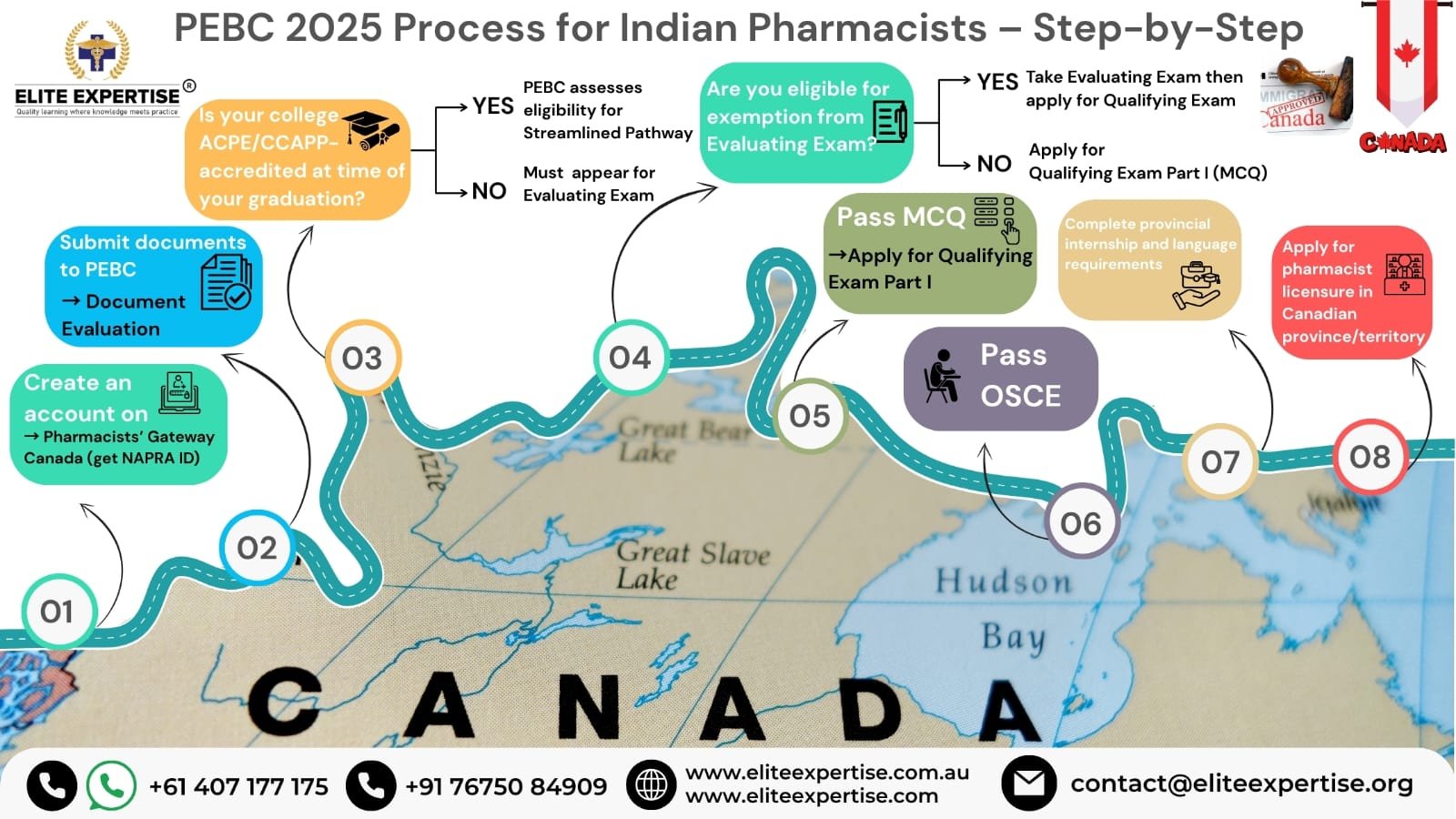
    Steps to follow to become a registered pharmacist in Canada from India:

    • Get your NAPRA ID, from Pharmacist’s Gateway Canada

    • First get your documents evaluated by the PEBC (Pharmacy Examining Board of Canada)

    • Once your documents evaluation is done move on to the assessment part

    • If you are exempted form PEBC to give the Evaluating exam directly apply for Qualifying exam

    • If no, then you must pass the Evaluating exam and once done move to Qualifying exam

    • Qualifying exam has two parts- MCQ exam and OSCE exam

    • Complete both these exams and enter the phase of internship based on province selected

    • Finish your Jurisprudence exam pertaining the province

    • Final registration as a Canadian pharmacist.

    What You Must Still Do

    1. Document Evaluation — REQUIRED for all international applicants. PEBC assesses whether your degree matches Canadian standards.

    2. Streamlined Pathway eligibility — Determined after your documentation is reviewed

    3. If approved, you can skip the Evaluating Exam and directly apply for the Pharmacist Qualifying Exam Part I (MCQ)

    Why This Matters for Indian Pharmacists

    • Skip a major exam: No Evaluating Exam—direct progress to Qualifying MCQ.

    • Faster licensure path: All candidate steps streamlined — document review → MCQ → OSCE.

    • Cost and time savings: Usually 6–12 months & exam fees and prep.

    • Immigration-aligned: Better timelines for licensure → provincial registration → Express Entry / PNP.

    Is PEBC exam tough?

    • Yes! It is a tough exam to crack but the perks of passing this exam are many as you are sure of a job in Canada waiting for you as a registered pharmacist considering the shortage of skilled professionals like Pharmacist With right guidance and preparation, you can clear the exam. Join a preparation course to help you through this journey.

    Why Choose Elite Expertise PEBC preparatory course (Evaluating Exam):

    • Best online coaching the international pharmacists for their licensing exams in different countries like Canada, Australia, Ireland and New Zealand

    • Beast faculty who are experienced clinical pharmacists and director at Elite Expertise, Mr Arief Mohammad and Mrs Harika Bheemavarapu.

    • Comprehensive teaching material.

    • Classes are both interactive and online making accessibility at its best

    • Offline recorded sessions are provided too, incase you missed a class.

    • Thousands of mocks to practise from get you ready for the exam day.

    • It’s a 6-month course not rushing and explaining every subject and concept from scratch. Thereby very useful for working professionals and candidates with gap in their educational background.

    Watch this video from our director regarding Evaluating exam: Pharmacy Evaluating Exam Canada | PEBC Tips, Exam Pattern & Syllabus Breakdown

    Conclusion:

    Considering Canda as a career option is one of the best decisions with good work-life balance and lucrative salaries. Canada provides a job consistency, no fear of losing a job once you are all covered. No Evaluating Exam for eligible Indian pharmacy grads from CCAPP/ACPE-accredited programs (effective May 13, 2025) but this is just for the colleges like JSS college of pharmacy. Ensure your Indian college was accredited at graduation and that you complete Document Evaluation. Once approved, focus on evaluating exam (based on approval by PEBC), MCQ prep + OSCE → then Canadian registration & practice.

    Start your international career journey with Elite Expertise and we promise to stay with you until you pass your exam!

    This blog is for informational purposes only and reflects our views and interpretations. While we strive for accuracy, licensing requirements and regulations may change. Readers are advised to verify information with official sources such as the Pharmacy Examining Board of Canada (PEBC) and the National Association of Pharmacy Regulatory Authorities (NAPRA) before making any decisions. We do not assume responsibility for any actions taken based on the information provided.

    ⚠️ Disclaimer

    About the Author

    Sahana Rao

    Sahana Chinthapatla is renowned for her expertise in scientific and medical writing, backed by an MPharm in Pharmacology and years of experience in research analysis and scientific writing.

    As the Head Business Writer at Elite Expertise, she provides insightful and well-researched content on KAPS, OPRA, PEBC, PSI and global pharmacy pathways, guiding aspiring pharmacists in their professional journeys.

    Follow On

    Head Business Writer | Elite Expertise

  • Calcium Channel Blockers (CCBs): Mechanism of Action in Pharmacology – OPRA Exam guide

    Introduction

    Calcium channel blockers (CCBs) are an important topic in the cardiovascular system and an important drug class tested in the OPRA exam. Understanding their mechanism of action, classification and clinical applications is crucial for pharmacists preparing for Australian registration. This blog post explores the pharmacodynamics of CCBs and provides a concise, exam-relevant overview.

    What are Calcium Channel blockers?(CCBs)

    Calcium channel blockers are a class of antihypertensive and antianginal medications that inhibit the entry of calcium ions (Ca2+) through L-type voltage-gated calcium channels in cardiac and smooth muscle cells. This action helps to relax and widen the blood vessels, improving blood flow and lowering the blood pressure. CCBs are usually used to treat conditions like hypertension (high blood pressure), Angina (chest pain), and certain abnormal heart rhythms.

    What is the Mechanism of action of Calcium channel blockers?

    Calcium channel blockers primarily work by inhibiting the entry of calcium ions into cells, particularly those in heart and blood vessels. This action leads to the relaxation of smooth muscles in the blood vessels, causing vasodilation, thus reducing the blood pressure.

    Let’s understand the mechanism of action in detail:

    1.By Blocking Calcium Channels:
    • CCBs target the L-type calcium channels, which are important in calcium influx into the cells.

    • These channels are seen in vascular smooth muscles, cardiac myocytes, and cells in the sinoatrial (SA) and atrioventricular (AV) nodes of the heart.

    • By blocking these channels, CCBs reduce the amount of calcium entering the cells.

    2.Effects on the heart
    • In cardiac cell, CCBs decrease the force of contraction, known as a negative inotropic effects

    • In the SA and AV nodes, CCBs slow down the heart rate (negative chronotropic effects) and slow down electrical conduction (negative dromotropic effects)

    • These effects can be beneficial in treating conditions like atrial fibrillation and certain types of supraventricular tachycardia.

    3.Effects on the blood vessels
    • In vascular smooth vessels, reduced calcium entry leads to relaxation and dilation of blood vessels.

    • The vasodilation lowers blood pressure, reducing the strain on the heart.

    What are the types of calcium channel blockers?

    How to remember the major difference of dihydropyridines Vs nondihydropyridines-OPRA Exam essential?

    What are the main side effects of calcium channel blockers?( Remember SHRED)

    • Slower the heart rate (bradycardia)

    • Hypotension & Headache

    • Reflex tachycardia (less with longer acting CCBs-Amlodipine)

    • Edema (mainly peripheral and is dose dependent)

    • Dizziness

    💡 Related Read:

    Beta Blockers pharmacology : A key topic in the OPRA Exam prepaparation

    Do calcium channel blockers interact with any other medications?

    • Calcium channel blockers can interact with many other medications. They should not be mix with any medications that lowered the blood pressure or effects the heart rate

    • Taking grapefruit with Calcium channel blockers should be avoided because it will affect the absorption of the medication

    OPRA exam Tips for Calcium Channel blockers

    • Know which CCBs are safe in arrhythmias (Verapamil and diltiazem)

    • Be familiar with the difference between dihydropyridines and non-dihydropyridines

    • Expect questions linking mechanism of actions

    • Understand CCBs interaction with beta blockers, especially risks of bradycardia

    Final thoughts

    For OPRA exam success, mastering the mechanisms of action of CCBs are very important. These drugs not only form the backbone of cardiovascular therapy but also test the ability of candidates to apply pharmacology in clinical scenarios. Focus on classifications, mechanisms, and how these relate to therapeutic use and side effects.Ready to ace the OPRA exam pharmacology section-Join Elite Expertise, where top educators break down pharmacology in easy steps, provide case-study learning, and help you build the confidence to clear the exam.

    ⚠️ Disclaimer

    This blog is for informational and educational purposes only, specifically designed to support pharmacy students preparing for the OPRA exam. The content reflects our interpretation of pharmacological principles and exam-relevant topics, such as calcium channel blockers (CCBs). While we strive for accuracy, clinical practices and licensing requirements in Australia may evolve over time. Readers are advised to verify any clinical or regulatory information with official sources such as the Pharmacy Board of Australia and the Australian Health Practitioner Regulation Agency (AHPRA). Elite Expertise does not assume responsibility for decisions made based on the information presented in this article.

    About the Author

    Krupa Karamchand

    Content Writer | Elite Expertise

    Krupa Karamchand is a B. Pharm graduate and KAPS-qualified pharmacist with over 7 years of experience in the pharmaceutical field. As an experienced SEO content writer, she combines her in-depth healthcare knowledge with proven digital strategies to create informative, engaging, and search engine–optimized blogs. Krupa is passionate about making complex medical topics easy to understand and accessible to all readers.

    Follow On

  • OPRA vs Other Pharmacy Exams: A Detailed Analysis

    OPRA vs Other Pharmacy Exams: A Detailed Analysis

    The dream of practising as a registered pharmacist in countries like Australia, Canada, the USA, Ireland, the UAE, or New Zealand for an internationally trained graduate begins with clearing the licensure exam. These exams assess your knowledge, skills, and readiness to practice in specific countries according to their healthcare standards. Among the most recognized exams are the OPRA exam (Australia, New Zealand), PEBC exam (Canada), PSI Equivalence Exam (Ireland), NAPLEX (USA), and DHA (Dubai). Each exam has its structure, eligibility, criteria, and registration pathway.

    This blog post will provide comprehensive details on these major pharmacy licensure exams. We will also introduce Elite Expertise, a trusted training institute with proven success in preparing candidates for OPRA, PEBC, and PSI exams under the guidance of expert educators Mr. Arief Mohammad and Mrs. Harika Bheemavarpu, both of whom are experienced clinical pharmacists.

    What is the OPRA Exam-Australia?

    The Overseas Pharmacist Readiness Assessment (OPRA) is a mandatory step after the initial eligibility assessment. It is conducted by the Australian Pharmacy Council and is part of Australia’s Knowledge stream pathway for internationally qualified pharmacists.

    Key features:

    • This exam assesses internationally trained pharmacists’ pharmaceutical knowledge, clinical skills, and communication skills.

    • Computer-based single paper that comprises 120 multiple-choice questions covering clinical, pharmaceuticals & ethical topics

    • Successfully clearing this exam is essential for the Provisional AHPRA registration and Visa process.

    • Candidates should focus on their preparation, which requires a strong focus on Australian standards, patient safety, and case studies.

    👉 Also Read: OPRA Exam Eligibility Criteria

    What is the PEBC Exam-Canada?

    The Pharmacy Examination Board of Canada (PEBC) certifies foreign-trained pharmacists through multiple examination steps.

    Steps include:

    • Evaluating examination: tests foundational knowledge in pharmacy.

    • Qualifying examination: Part 1(MCQs) and Part 2 (OSCE)-these exams test both clinical and practical knowledge

    • Eligibility: A minimum of 4 years of a pharmacy degree with document verification done by PEBC

    • After clearing both these exams, candidates can apply for a provisional license.

    • Exams mainly focus on Canadian healthcare practice, clinical skills, and ethical knowledge of Canadian pharmacy practice.

    👉 Also Read: PEBC Evaluating Exam Update: May 2025 Eligibility Changes for IPGs

    What is the PSI Equivalence Exam – Ireland?

    The Pharmaceutical Society of Ireland (PSI) Equivalent Exam is designed for non-EU/EEA pharmacists. This exam ensures your academic and professional credentials match Irish standards.

    Process involves:

    • Application and credential submission to the PSI for verifications

    • After the holistic assessment, PSI will inform the pathway to be adopted by the candidate, which will be either no exam, attempt only one part of the exams, or both exams to be tried by the candidates.

    • Apply for an examination visa.

    • I successfully cleared the PSI equivalent exam and registered in Ireland.

    • Several changes have been made to the eligibility criteria for international candidates since April 2025. Pharm, M.Pharm, and Pharm D are now accepted.

    • They have removed the adaptation period. Candidates can directly apply for registration after the completion of the exam.

    👉 Also Read: Documents for Pharmacist Qualification Recognition in Ireland

    What is NAPLEX in the United States of America?

    The North American Pharmacist Licensure Examination (NAPLEX) is a part of the USA licensure process.

    • It is administered by the NABP (National Association of Board of Pharmacy)

    • The foreign graduate must get their credentials assessed and approved by FPGEC.

    • It is a computer-based examination (FPGEE-Foreign Pharmacy Graduate Equivalency examination ) focusing on Pharmacotherapy, calculations, and patient care.

    • Additional requirements include TOEFL iBT, Internship hours, and state-specific law exam(MPJE-Multistate Pharmacist Jurisprudence Examination)

    What is the DHA Exam-Dubai?

    The Dubai Health Authority (DHA) exam is conducted for pharmacists who seek a license in Dubai.

    • Eligibility: At least a 4-year bachelor’s degree with 2 years of experience outside the UAE

    • It is a multiple-choice exam conducted via Prometric

    • Candidates can attempt the examination after document verification and the dataflow process

    • The syllabus includes UAE laws, pharmacology, pharmaceutical calculations, etc

    Pharmacy Licensing Process Overview

    Which Pharmacy Exam is Right for You?

    Choosing the right exam depends on several factors. It is crucial to select the country in which you want to live. Some common factors to consider are:

    • Destination Country

    • Qualification recognition

    • Career goals

    • Time & financial investment

    • Visa pathways and residency options

    Countries like Pharmacist in Australia, Canada, or Ireland offer better options if you aim for long-term settlement and permanent residency. For faster employment or regional mobility in the Middle East, DHA is a practical choice.

    What are the Key Differences in Exam Eligibility and Process?

    1. Australia: Candidates must undergo a skills assessment before attempting the examination. Once they clear the exam, they must complete a supervised internship under a registered pharmacist and pass two more exams (Australian Intern written and oral exams) before final registration.

    2. Canada: It is a tough exam with a 2-step licensure process that highly focuses on clinical and practical knowledge

    3. Ireland: The document evaluation process is a bit tougher, taking more time and being a bit more complicated than in other countries. However, no internship is required after successfully clearing the examination.

    4. USA: Requires FPGEC Certification along with TOEFL and document verification

    5. Dubai: This process is quicker than others, but 2 years of experience is mandatory.

    How will Elite Expertise help you prepare for the OPRA, PEBC, and PSI exams?

    Elite Expertise is a premium training institute that specializes in preparing pharmacists for licensure exams in countries like Australia, New Zealand (OPRA), PEBC Exam (Canada), and Ireland (PSI)

    What sets Elite Expertise Apart?

    • 👨‍🏫Experienced faculty: Mr. Arief Mohammad and Mrs. Harika Bheemavarpu, who are accredited consultant clinical pharmacists in Australia with highly qualified, globally accepted clinical knowledge

    • 📘Comprehensive curriculum: Covers relevant syllabus, mock exams, 100+ case-based studies, 80+ live and recorded sessions

    • 🎯High success rate: Proven track record of helping candidates clear exams on the first attempt

    • 🧭Personalized guidance: one-to-one mentorship, doubt-clearing sessions, and application support

    • 🎓Flexible learning: Online live and recorded classes to accommodate international students’ schedules

    Conclusion:

    Pharmacy licensure abroad is a challenging yet rewarding journey. Choosing the right exam, whether OPRA, PEBC, PSI, NAPLEX, or DHA, depends on where you wish to build your career. Each comes with its own process, timeline, and preparation demands.

    You can become a registered pharmacist overseas with the proper guidance and expert support. Join Elite Expertise today and take your first confident step towards an international pharmacy career.

    About the Author

    Krupa Karamchand

    Content Writer | Elite Expertise

    Krupa Karamchand is a B. Pharm graduate and KAPS-qualified pharmacist with over 7 years of experience in the pharmaceutical field. As an experienced SEO content writer, she combines her in-depth healthcare knowledge with proven digital strategies to create informative, engaging, and search engine–optimized blogs. Krupa is passionate about making complex medical topics easy to understand and accessible to all readers.

    Follow On