Category: Uncategorized

  • Understanding HPV: What You Need to Know

    Understanding Human Papillomavirus

    Human Papillomavirus (HPV) is one of the most common viral infections, with over 100 different strains affecting both men and women. Though often overlooked due to its mild or invisible symptoms, HPV can have serious health consequences if left untreated, including various cancers. In this blog, we’ll delve into the different types of HPV, how it’s transmitted, its symptoms, diagnosis, treatment options, and ways to prevent it. Let’s take a closer look at the essential facts about HPV to better understand its impact on health.

    What is HPV?

    HPV, or Human Papillomavirus, is a viral infection transmitted primarily through skin-to-skin contact, particularly sexual activity. It is most commonly linked to genital warts and can also contribute to the development of several types of cancer, including cervical, anal, and throat cancers. While some HPV types cause no symptoms and clear up on their own, others can have long-term consequences if not detected and managed early.

    Types of HPV
    • Low-risk HPV: These strains, such as types 6 and 11, are typically responsible for causing genital warts. Although not life-threatening, they can cause discomfort and require treatment for removal.

    • High-risk HPV: This category includes strains like HPV types 16 and 18, which are linked to cancers of the cervix, vulva, vagina, anus, penis, and throat. These strains may remain in the body undetected for years before causing abnormal cell changes that can lead to cancer.

    How is HPV Transmitted?

    HPV spreads mainly through direct skin-to-skin contact, which can occur during vaginal, anal, or oral sex. It can also spread through genital contact, even without penetration. This means that people who have HPV may unknowingly pass the virus on to their partners, even if they don’t have visible symptoms like warts.

    Symptoms of HPV

    Most people infected with HPV don’t experience any symptoms, making it difficult to know if you’re carrying the virus. In fact, the body often clears the infection on its own within two years. However, for those who develop symptoms:

    • Genital warts: These appear as small, flesh-colored or grey growths on the genital, anal, or mouth areas.

    • Abnormal Pap smear results: These can indicate the presence of high-risk HPV strains and abnormal cell changes, which, if left untreated, may lead to cancer over time.

    How is HPV Diagnosed?

    While there’s no routine test for HPV in men, women can be tested for HPV and cervical changes:

    • Pap smear: This test looks for abnormal cell changes in the cervix that could lead to cancer.

    • Understanding HPV: What You Need to Know

      s high-risk HPV strains, especially in women aged 30 and above.

    • Colposcopy: If a Pap smear shows abnormal results, a colposcopy may be performed to examine the cervix more closely.

    • Visual inspection: In some cases, a doctor may use acetic acid (vinegar) to highlight abnormal areas on the cervix or genital region.

    Treatment for HPV

    Currently, there is no cure for HPV itself. However, there are treatments for the health issues caused by HPV:

    • Genital warts: Treatments like cryotherapy (freezing), laser therapy, or topical treatments can remove warts.

    • Precancerous cell changes: If high-risk HPV leads to abnormal cells on the cervix, treatment options include LEEP (Loop Electrosurgical Excision Procedure), cryosurgery, or cone biopsy to remove the abnormal tissue.

    It’s important to note that while treatments can remove warts or abnormal cells, they don’t cure the underlying HPV infection. The virus can remain dormant in the body and reactivate later.

    Preventing HPV

    While there’s no guaranteed way to avoid HPV entirely, there are several measures you can take to reduce your risk:

    • Vaccination: The HPV vaccine is highly effective at preventing infections from the most dangerous types of HPV, including those responsible for most cervical cancers. The vaccine is recommended for both boys and girls starting at age 11-12, but it can also benefit older individuals.

    • Regular screenings: For women, regular Pap smears (starting at age 21) can catch abnormal cell changes early, preventing the development of cancer.

    • Condom use: Condoms can reduce the risk of HPV transmission, though they don’t provide complete protection because they don’t cover all areas of possible contact.

    • Communication with partners: It’s essential to have open discussions with sexual partners about sexual health, including potential HPV exposure.

    The Outlook: Living with HPV

    The good news is that in most cases, HPV clears up on its own within a couple of years. However, high-risk strains require ongoing monitoring due to their potential to cause serious health problems, such as cancer. Regular screenings and follow-up appointments with your healthcare provider are key to catching any precancerous changes before they develop into cancer.

    If you’ve been diagnosed with HPV or experience symptoms like genital warts, it’s important to seek medical advice. Early detection and treatment can help manage the virus and prevent complications.

    Conclusion

    HPV is a common but often misunderstood virus that affects millions of people worldwide. While it can cause serious health problems like cancer, regular screenings, vaccinations, and safe sexual practices can significantly reduce risks and improve health outcomes. If you have HPV, take the necessary steps to monitor and manage the infection with the help of your healthcare provider. By staying informed, you can take proactive measures to protect your health and that of your loved ones.

    Similarly, pursuing a pharmacy career requires the right preparation and guidance. Whether you’re preparing for the OPRA pathway in Australia or the PEBC exam in Canada, Elite Expertise offers the support and resources needed to help you succeed in your professional journey. Proactive steps in both health and career development lead to long-term success.


  • OSPAP EXAM

    Are you a pharmacist from outside the UK looking to practice in Great Britain? The Overseas Pharmacists Assessment Programme (OSPAP) is your first step! Here’s everything you need to know about this one-year postgraduate course and how it leads you to become a registered pharmacist in the UK.

    What is OSPAP?

    OSPAP is a one-year diploma designed to help pharmacists trained outside the European Economic Area (EEA) or those with EEA qualifications not recognized in the UK. It equips you with the knowledge and skills required to practice as a pharmacist in the UK.

    Who Can Apply for OSPAP?

    If you’re a qualified pharmacist from overseas and registered or eligible to register as a pharmacist in your home country, you can apply. Here’s a quick look at the eligibility requirements:

    • Pharmacy qualification from outside the EEA.

    • English language proficiency: Either an IELTS score of 7 or above in all areas or a grade B or above in the OET (Pharmacy).

    Step-by-Step Process to Register as a Pharmacist in the UK

    1. Complete the OSPAP Course
    • First, you’ll need to apply for the OSPAP program. This involves:

      • Filling out a paper application.

      • Submitting your qualification documents and English proficiency.

      • Paying a £739 application fee.

    • The course starts in September or October, so make sure to apply well in advance!

    2. Foundation Training
    • After completing the OSPAP, the next step is to do 52 weeks of foundation training in a GPhC-approved pharmacy under the supervision of a tutor. You must apply through the National Recruitment Scheme (NRS).

    3. Pass the Registration Assessment
    • Next, you’ll sit for the Registration Assessment, which tests your pharmacy knowledge and your ability to apply it in real-life scenarios. There are two exams, and you need to pass both to proceed.

    4. Apply for Registration
    • Once you’ve completed OSPAP, foundation training, and passed the assessment, you can apply to register as a pharmacist with the GPhC. Make sure to apply within four years of starting your OSPAP course!

    What Documents Do You Need?

    Before you begin, prepare the following:

    • Proof of identity and certified copies of your qualifications.

    • English language competency proof (IELTS or OET scores).

    • Documents from your university and pharmacy regulator in your country of qualification.

    Key Deadlines and Fees
    • Application fee: £739.

    • OSPAP courses typically start in September or October each year.

    • Apply before 31st July to be considered for the upcoming academic year.

    Tips for Success
    1. Prepare Early: Start gathering your documents and ensure you meet the English proficiency requirements.

    2. Meet the Deadlines: Submit your OSPAP application on time to secure your place in the course.

    3. Stay Organized: Keep track of your progress throughout the foundation training and registration process.

    Conclusion

    The OSPAP route is a clear, structured pathway for overseas pharmacists who want to work in the UK. With determination and the right preparation, you can successfully transition into the UK’s healthcare system.

    At Elite Expertise, we understand how challenging this journey can be. That’s why we’re here to support you every step of the way. From preparing for language proficiency tests to guiding you through the registration process, we help you achieve your dream of becoming a UK-registered pharmacist.

  • How to Become a Pharmacist in Australia from India

    To work as a pharmacist in Australia, overseas-trained pharmacists must meet the stringent standards set by the Australian Pharmacy Council (APC). The registration process begins with a Skills Assessment, which ensures that your educational qualifications and professional experience align with Australian pharmacy practice requirements.

    This step is crucial, as it establishes your eligibility for further assessments and exams. The APC evaluates factors such as the curriculum of your pharmacy degree, your work experience, and your English language proficiency.

    Key Steps to Registration: From Eligibility Check to Exam Completion

    Achieving registration involves several key steps:

    1. Eligibility Check: Verify your qualifications and professional background against Australian standards.

    2. Skills Assessment Application: Submit your credentials to the APC for evaluation.

    3. Exams: Successfully complete Australia pharmacy exam for Indian pharmacist like the Competency Assessment of Overseas Pharmacists (CAOP) or the Overseas Pharmacist Readiness Assessment (OPRA) to demonstrate your competency.

    4. Provisional Registration: After passing the required exams, you can obtain provisional registration and complete a supervised practice period.

    5. Full Registration: Upon completing all requirements, including the supervised practice, you can gain full registration and start practising as a pharmacist in Australia.

    Migration and Registration: Understanding the Processes

    It’s essential to distinguish between migration and registration. Pharmacy registration focuses on verifying your professional qualifications and readiness to practise, while migration involves securing a visa to live and work in Australia. Once registered, pharmacists can explore skilled migration pathways, such as the Skilled Independent Visa (subclass 189) or Employer-Sponsored Visas, to make their move official.

    Exams for Indian Pharmacists in Australia

    Competency Assessment of Overseas Pharmacists (CAOP) Exam

    The CAOP exam assesses your ability to apply pharmacy knowledge in an Australian healthcare setting. It covers key areas, including:

    • Clinical problem-solving

    • Pharmaceutical calculations

    • Legal and ethical responsibilities in pharmacy practice

    Passing the CAOP exam demonstrates your readiness to meet the expectations of Australian employers and deliver exceptional patient care.

    The New Overseas Pharmacist Readiness Assessment (OPRA) Exam

    The OPRA exam is a recent addition to the registration pathway, designed to evaluate your clinical knowledge, communication skills, and understanding of Australian pharmacy laws. This exam ensures that you are prepared to integrate seamlessly into the local healthcare environment.

    The OPRA exam assesses:

    • Real-world clinical scenarios

    • Pharmacy legislation and regulations

    • Interpersonal communication skills with patients and healthcare teams

    Both exams require thorough preparation to showcase your expertise and readiness for the Australian pharmacy workforce.

    Eligibility Criteria and Document Requirements

    To begin your registration journey, ensure you meet these key eligibility requirements:

    • A pharmacy degree recognized by the Pharmacy Council of India or equivalent.

    • Valid registration as a pharmacist in India.

    • Proficiency in English, demonstrated through an exam like IELTS Academic (minimum overall score of 7.5) or OET Pharmacy.

    This eligibility check is the foundation for a successful application and registration process.

    Required Documents for Skills Assessment and Registration

    Gathering the correct documentation is essential to avoid delays. Here’s what you’ll need:

    1. Academic transcripts and degree certificates (certified copies).

    2. Proof of current registration with the Pharmacy Council of India.

    3. Evidence of work experience, such as employer letters or service certificates.

    4. Proof of English proficiency (IELTS or OET scores).

    5. Passport and identification documents.

    6. Passport-sized photographs.

    7. Application and exam fees.

    Preparing these documents in advance will streamline your journey.

    Key Steps in the Registration Process for Indian Pharmacists

    The pathway to registration is methodical and structured. Follow these steps to stay on track:

    1. Submit Your Application: Start with a detailed application to the APC for a Skills Assessment.

    2. Prepare for Exams: Register for the CAOP or OPRA exams and develop a study plan.

    3. Complete Exams: Successfully pass the required exams to proceed to the next stage.

    4. Gain Provisional Registration: After passing the exams, apply for provisional registration to begin your supervised practice.

    5. Undertake Supervised Practice: Complete a designated period of supervised work in an approved Australian pharmacy.

    6. Full Registration: Finalise your registration after completing all requirements and assessments.

    Each step brings you closer to achieving your goal of practising pharmacy in Australia.

    How to Prepare for the Pharmacy Exams in Australia

    Study Materials and Resources for the OPRA and CAOP Exams

    Effective preparation is the key to success in the OPRA and CAOP exams. Use these resources to build confidence:

    • Official APC exam guidelines and recommended reading lists.

    • Comprehensive pharmacy textbooks covering Australian pharmacy practice.

    • Online forums and study groups for collaborative learning.

    Sample Papers and Exam Guides

    Practice is essential to master the exam format and time management. Sample papers and guides allow you to:

    • Familiarise yourself with the structure and types of questions.

    • Test your knowledge under timed conditions.

    • Identify areas where you need improvement.

    Mock tests, provided by various preparation platforms, are invaluable in building your exam-day confidence.

    Tips for Success in the OPRA Exam

    1. Understand the Format: Review the exam structure, including multiple-choice questions and practical scenarios.

    2. Master Australian Pharmacy Law: Familiarise yourself with legal and ethical frameworks unique to Australia.

    3. Hone Your Communication Skills: Clear and empathetic communication is crucial for patient interactions.

    4. Set a Study Schedule: Allocate time to cover each section of the exam thoroughly.

    5. Take Care of Yourself: Stay focused by maintaining a healthy routine, including regular breaks and adequate rest.

    With determination and strategic preparation, you can excel in these exams and advance toward your dream career.

    Inspiring Confidence for a Bright Future

    Pursuing a pharmacy career in Australia as an Indian professional is a journey of growth and accomplishment. The pathway may seem challenging, but with clarity, preparation, and perseverance, you can navigate it successfully. Achieving registration not only elevates your professional standing but also opens doors to rewarding opportunities in a globally recognized healthcare system.

    Start your journey with confidence, and remember that each step you take brings you closer to a fulfilling career. With the right mindset and resources, the dream of becoming a pharmacist in Australia is well within your reach. For other options we also offer the following courses: Australian Pharmacist Oral Exam Prep, Australian Pharmacist Intern Written Exam Prep, OPRA Exam Preparation Course, and A Comprehensive Guide to Pharmacist Registration in Australia.

    Testimonials and Real-Life Stories

    Mr. Arief Mohammad is renowned for his excellent teaching skills and practice-based experience which can contribute to developing practice-based knowledge for a learner. He has been a practicing pharmacist in Australia for the last 5 years and has been a preceptor to several students and intern pharmacists.

    Follow On

    Arief Mohammad

    Arief Mohammad

    ABOUT THE AUTHOR

  • OPRA Exam Fees in Australia: What Does it Cost for Foreign Pharmacists?

    The OPRA (Overseas Pharmcists Readiness Assessment) exam is a pivotal step for pharmacists looking to bring their expertise to Australia. For aspiring hospital pharmacists, pharmacy students, and healthcare professionals with a passion for pharmacy, understanding the costs and requirements is key to successfully navigating this process. This guide provides clear, encouraging, and practical insights to help you take confident steps toward your career goals.

    Overview of the OPRA Exam Fees

    Preparing for the OPRA exam involves several financial considerations, but with proper planning, you can ensure a smooth journey. By understanding the costs associated with the exam, you can confidently budget for this important milestone in your pharmacy career.

    Breakdown of OPRA Exam Fees

    1. Eligibility Check Fee:The first step involves an eligibility check to assess your qualifications. This process typically costs between AUD 1,000 and AUD 1,200, depending on the requirements of the Australian regulatory body.

    2. Exam Registration Fee: Registering for the OPRA exam itself costs approximately AUD 2,500 to AUD 3,000. This fee covers both the written and oral assessment components.

    3. Supplementary Costs:

    • Rescheduling Fees: Up to AUD 200 for changes to exam dates.

    • Study Materials: Budget AUD 300 to AUD 500 for guides and practice tests.

    • Travel and Accommodation: Costs vary for those travelling to exam centres.

    While these costs may seem significant, think of them as an investment in your future—a pathway to becoming a recognized pharmacy professional in Australia.

    Eligibility and Requirements for the OPRA Exam

    The OPRA exam has specific eligibility requirements designed to ensure overseas pharmacists meet Australian professional standards. Meeting these criteria is the first step toward achieving your dream.

    Eligibility Check Fee Details

    The eligibility check fee is non-refundable and ensures your qualifications align with Australian standards. It is your gateway to the next phase of the registration process.

    Key Eligibility Criteria for Overseas Pharmacists

    1. Educational Qualifications: A recognized degree in pharmacy from an accredited institution.

    2. Professional Experience: At least 12 months of practical experience in a pharmacy setting.

    3. English Proficiency: Demonstrated through scores in approved tests such as IELTS or TOEFL.

    Documents Required for the Eligibility Check

    Prepare the following documents to streamline your eligibility check process:

    • Certified copy of your pharmacy degree.

    • Official academic transcripts.

    • Proof of professional registration in your home country.

    • English proficiency test results.

    • Employment verification letters.

    • Valid ID and passport-sized photographs.

    Important Dates for the OPRA Exam

    The OPRA exam is held several times a year. Registration deadlines typically close 8–12 weeks before the exam date. Staying informed about these dates ensures you never miss an opportunity to take the next step in your career. Regularly check the official Australian pharmacy regulatory authority’s website for updates.

    Exam Registration Process

    Registering for the OPRA exam is a straightforward process. Follow these steps to stay on track:

    1. Create an Account: Sign up with the Australian Pharmacy Council (APC) or equivalent regulatory authority.

    2. Submit Documents: Upload your eligibility documents for assessment.

    3. Pay Fees: Complete the payment for the eligibility check and exam registration.

    4. Select Exam Date: Choose a location and date that works best for you.

    Once your application is approved, you’ll receive confirmation and further details to help you prepare for the big day.

    OPRA Exam Structure and Format

    Understanding the structure and format of the OPRA exam is essential for effective preparation. The exam assesses both theoretical knowledge and practical skills:

    • Written Exam:

    1. Covers pharmacology, pharmaceutical calculations, and professional practice.

    2. Includes multiple-choice and short-answer questions.

    • Oral Exam:

    1. Tests communication, ethical decision-making, and problem-solving skills.

    2. Features patient scenarios to evaluate your ability to apply knowledge in real-world situations.

    Preparing for the OPRA Exam: Resources and Tips

    Preparation is the foundation of success. With the right resources and strategies, you can approach the OPRA exam with confidence.

    Resources for Success

    1. Official Study Guides:Access recommended materials from the Australian Pharmacy Council.

    2. Practice Tests:Simulate the exam environment to build familiarity and reduce anxiety.

    3. Workshops and Webinars:Participate in expert-led sessions from Elite Expertise to strengthen your understanding.

    Motivational Tips

    1. Set a Schedule:Break down your study plan into manageable daily or weekly goals.

    2. Stay Informed:Keep up-to-date with Australian pharmacy standards and guidelines.

    3. Seek Support:Join study groups or forums with fellow pharmacists to share insights and motivation.

    Remember, every moment you invest in preparation brings you closer to your goal of becoming a licensed pharmacist in Australia.

    OPRA Exam Centers and Locations

    The OPRA exam is conducted in major cities across Australia, including Sydney, Melbourne, Brisbane, Perth, and Adelaide. For international candidates, select centres in global hubs may also host the exam. These accessible locations ensure you can find a convenient venue to showcase your skills.

    Pursuing the OPRA exam is more than just a process; it’s a step toward realising your dream of practising pharmacy in Australia. By understanding the fees, eligibility criteria, and preparation essentials, you’re setting yourself up for success. Trust in your abilities, stay committed to your goal, and take confident strides toward a rewarding career. For more information, we also offer the following guides: Comprehensive Guide to KAPS Exam Fees and Refunds, Everything you need to know about KAPS Exam, and What is the KAPS Exam?

    Testimonials and Real-Life Stories

    FAQs

    Mr. Arief Mohammad is renowned for his excellent teaching skills and practice-based experience which can contribute to developing practice-based knowledge for a learner. He has been a practicing pharmacist in Australia for the last 5 years and has been a preceptor to several students and intern pharmacists.

    Follow On

    Arief Mohammad

    Arief Mohammad

    ABOUT THE AUTHOR

  • What is Subclass 407 Visa for Australia

    Subclass 407 VISA for Australia

    Introduction:

    The Subclass 407 Training Visa is designed for individuals seeking occupational training to enhance their skills or gain professional development in Australia. This temporary visa allows candidates to stay in Australia for up to two years, participating in structured training programs provided by an approved sponsor.

    For Overseas pharmacists, especially those who have cleared the KAPS exam or will be qualified through OPRA EXAM, the 407 visa presents a unique opportunity to gain hands-on experience in the Australian healthcare system.

    What Is the Subclass 407 Visa?

    The 407 visa allows individuals to:

    • Undertake workplace-based training to improve skills relevant to their current occupation.

    • Participate in professional development activities with an Australian sponsor.

    This visa is particularly suited for professionals in regulated fields like pharmacy, where practical training is integral to meeting licensing and registration requirements.

    Eligibility Criteria for the 407 Visa

    To apply for the 407 visas, candidates must meet the following requirements:

    1. Sponsorship: Candidates must be sponsored by an Australian organization, such as a pharmacy, hospital, or healthcare institution, approved under the Temporary Activity Sponsorship framework.

    1. Training Plan: The sponsor must provide a structured training program tailored to the candidate’s skill development needs, with at least 30 hours per week of training.

    1. Health and Character Requirements: Applicants must pass medical examinations and provide police clearances.

    1. English Proficiency: Functional English skills are required, demonstrated through tests like IELTS or PTE Academic.

    Why the 407 Visa Is Beneficial for KAPS and OPRA Qualified Pharmacists

    For KAPS and OPRA-qualified pharmacists, the 407 visa offers several key advantages:

    1. Skill Enhancement: Pharmacists can receive structured training that aligns with Australian professional standards, boosting their readiness for full registration.

    1. Industry Exposure: Candidates gain invaluable insights into the Australian healthcare system, including operational practices and patient care protocols.

    1. Pathway to Long-Term Opportunities: While the 407 visa itself is temporary, it can help pharmacists build local experience, a critical factor for securing employer-sponsored visas or permanent residency in Australia.

    1. Transition to Registration: Pharmacists can use this training period to fulfil practical experience requirements, preparing for the intern training program and other assessments necessary for full pharmacist registration.

    How the 407 Visa Can Lead to Career Growth

    Though the Subclass 407 visa does not directly grant permanent residency, it serves as a stepping stone by providing the local experience often required for skilled migration visas such as the Subclass 482 (Temporary Skill Shortage) or Subclass 186 (Employer Nomination Scheme). Pharmacists who leverage their 407-visa experience effectively can position themselves for long-term career success in Australia.

    Conclusion:

    A Unique Opportunity for Growth with Elite Expertise

    At Elite Expertise, we specialize in equipping pharmacists with the tools and guidance needed to excel in the KAPS exam/OPRA exam and the Australian healthcare system. The 407 visa is an excellent opportunity for our students to enhance their skills and open doors to a fulfilling career in pharmacy in Australia. Let us be your partner on this transformative journey.

  • ACE inhibitors (Angiotensin-Converting Enzyme Inhibitors)

    ACE inhibitors (Angiotensin-Converting Enzyme Inhibitors) are a class of medications primarily used to treat cardiovascular conditions, such as hypertension (high blood pressure) and heart failure. They work by relaxing blood vessels, which improves blood flow and reduces the workload on the heart.

    How ACE Inhibitors Work

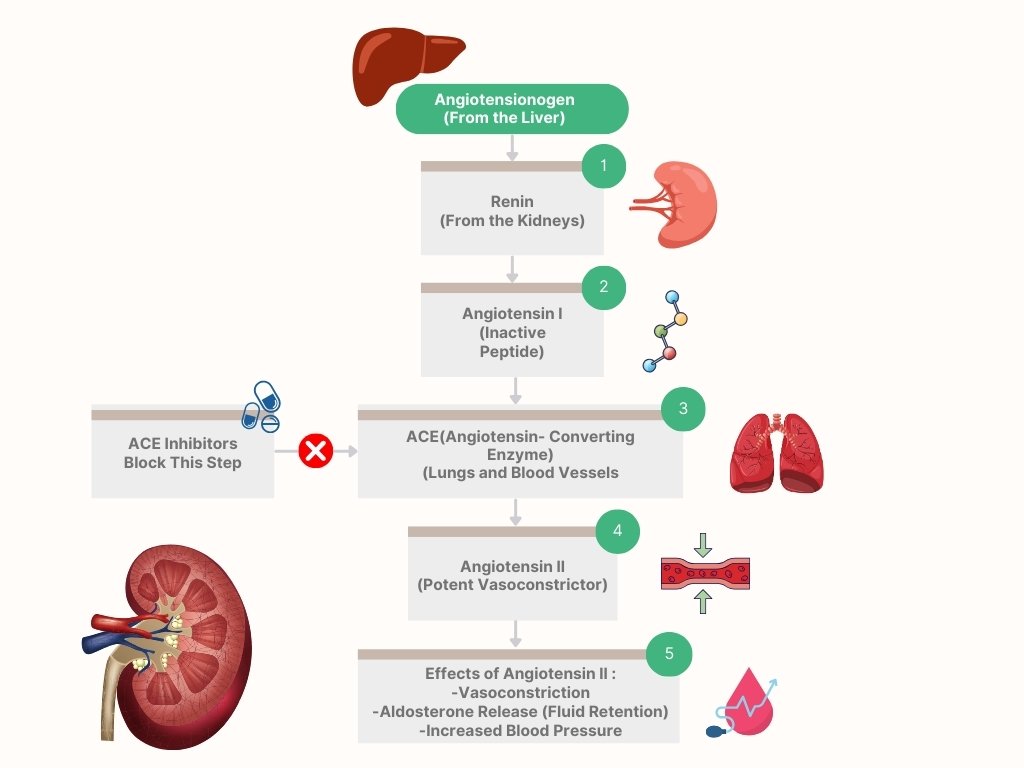
    The mechanism of action of ACE inhibitors involves blocking the activity of the angiotensin-converting enzyme (ACE), which is a key component in the renin-angiotensin-aldosterone system (RAAS). This leads to several physiological effects that lower blood pressure and benefit the cardiovascular system.

    Step-by-Step Mechanism

      Inhibition of ACE: ACE inhibitors prevent the enzyme angiotensin-converting enzyme from converting angiotensin I (an inactive peptide) into angiotensin II (a potent vasoconstrictor).

    1. Reduced Angiotensin II Levels:

      • Angiotensin II normally causes blood vessels to constrict, increasing blood pressure. By lowering its levels, ACE inhibitors cause vasodilation (relaxation and widening of blood vessels).

      • Angiotensin II also stimulates the release of aldosterone, a hormone that promotes sodium and water retention. Inhibition reduces aldosterone secretion, leading to decreased fluid volume and lower blood pressure.

    2. Increased Bradykinin Levels:

      • ACE also breaks down bradykinin, a peptide that causes vasodilation. By inhibiting ACE, bradykinin levels increase, contributing further to blood vessel relaxation and blood pressure reduction.

      • This increase in bradykinin is also responsible for the dry cough seen as a side effect in some patients.

    3. Renal Protection:

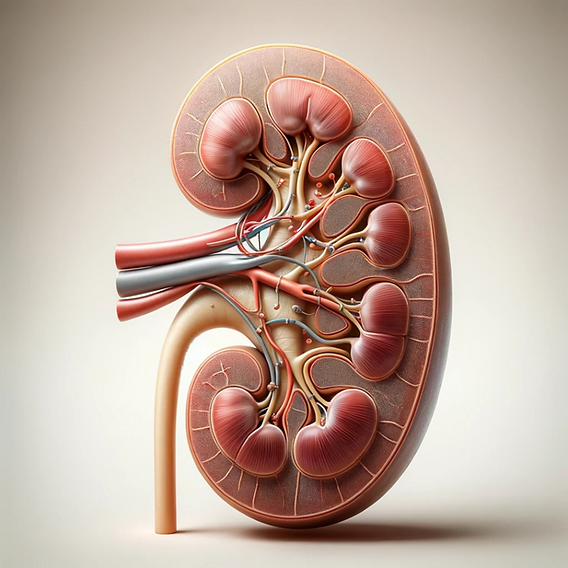
      • By lowering blood pressure and reducing pressure in the glomeruli of the kidneys, ACE inhibitors help protect kidney function, particularly in conditions like diabetic nephropathy.

    Uses of ACE Inhibitors
    1. Hypertension: Lowering high blood pressure reduces the risk of heart attack, stroke, and kidney damage.

    2. Heart Failure: Improves symptoms and survival rates by reducing the workload on the heart.

    3. Post-Heart Attack: Prevents further heart damage after a myocardial infarction.

    4. Chronic Kidney Disease (CKD): Protects kidney function, especially in patients with diabetes (diabetic nephropathy).

    5. Prevention of Cardiovascular Events: Reduces the risk of strokes and other cardiovascular complications.

    Common ACE Inhibitors:
    How to Recognize ACE Inhibitors

    “Wondering how to spot an ACE inhibitor? Here’s a simple clue: they all end in ‘-pril‘!”

    Some frequently prescribed ACE inhibitors include:

    • Enalapril (Vasotec)

    • Lisinopril (Prinivil, Zestril)

    • Ramipril (Altace)

    • Perindopril (Coversyl)

    • Captopril (Capoten)

    • Benazepril (Lotensin)

    Contraindications:

    “Not everyone can safely take ACE inhibitors. Remember this handy mnemonic!”

    • T: Teratogenic

    • O: Orthostatic Hypotension

    • P: Potassium Increase

    • C: Cough

    • A: Angioedema

    • R: Renal Impairment

    • D: Dizziness

    Conclusion :

    ACE inhibitors have revolutionized the management of cardiovascular and renal conditions, offering life-saving benefits through their unique mechanism of action. By effectively controlling blood pressure, protecting the heart, and preserving kidney function, they play a pivotal role in modern medicine. Understanding their uses, benefits, and limitations equips healthcare professionals to make informed decisions for their patients. At Elite Expertise , we are committed to empowering aspiring pharmacists with the knowledge and skills to excel in their careers, bridging the gap between education and practice.


  • What’s Changing: KAPS Vs OPRA Exam

    The Australian Pharmacy Council (APC) is set to introduce the Overseas Pharmacist Readiness Assessment (OPRA) exam in March 2025, replacing the existing Knowledge Assessment of Pharmaceutical Sciences (KAPS) exam. This transition aims to streamline the assessment process for internationally trained pharmacists and ensure alignment with contemporary pharmacy practices in Australia.

    Here’s a comprehensive look at what’s changing, how it impacts overseas pharmacists, and the key milestones to keep in mind.

    Key Differences Between KAPS and OPRA

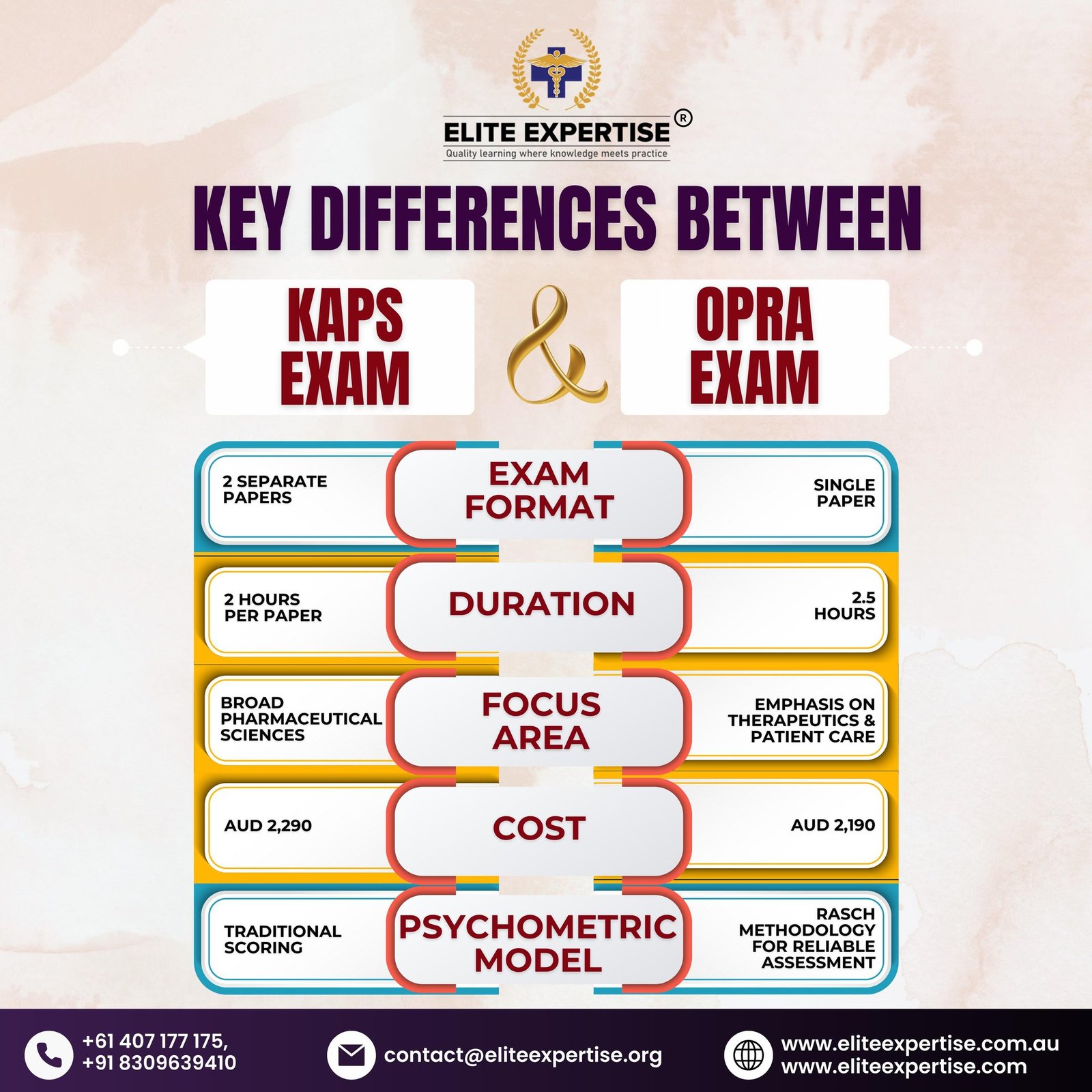
    The table below highlights the major distinctions between the two exams:

    key differences between KAPS Exam Vs OPRA Exam

    The shift to a single-paper format and a patient-care-focused curriculum reflects APC’s efforts to prioritize skills that pharmacists need in real-world practice.

    Key Dates to Remember

    Make sure to register early for the OPRA exam during the specified period to secure your spot.

    Why This Change Matters

    The APC’s introduction of the OPRA exam is a strategic step toward modernizing the assessment process for overseas pharmacists. Here’s why this change is significant:

    1. Streamlined Assessment: A single paper reduces the overall exam burden while maintaining comprehensive evaluation.

    1. Focus on Patient-Centered Care: Greater emphasis on therapeutics and patient management ensures pharmacists are better equipped for practical roles.

    1. Reliable Scoring: The adoption of the Rasch methodology improves fairness and accuracy in evaluating candidates’ competencies.

    Preparing for the OPRA Exam

    At Elite Expertise, we are committed to helping international pharmacists transition smoothly into this new exam structure. Our resources and expert guidance include:

    • Comprehensive Study Materials: Updated to reflect the OPRA exam framework.

    • Mock Tests: Practice sessions modeled after the OPRA exam to build confidence and readiness.

    • Focused Mentorship: Personalized support to address individual learning needs.

    We aim to ensure you are well-prepared to excel in this new format and achieve your career goals in Australia.

    Conclusion

    The shift from KAPS to OPRA represents a pivotal moment for overseas pharmacists aspiring to work in Australia. By aligning assessments with current pharmacy practices, the APC is setting a higher standard for professional readiness. With the right preparation and guidance, this change offers a pathway to a fulfilling career in the Australian healthcare system.

    For more details about the OPRA exam or to access tailored preparation resources, contact us or visit the APC website.

  • Calcium Channel Blockers (CCBs): A Student-Friendly Guide

    Calcium channel blockers (CCBs) are essential drugs for managing cardiovascular conditions like hypertension and angina. They are divided into two main subclasses: non-dihydropyridines and dihydropyridines, each with distinct properties and clinical uses. Let’s break down the information into easy-to-understand charts and key points.

    Classification of Calcium Channel Blockers

    Mechanism of Action

    CCBs inhibit calcium entry into cardiac and vascular smooth muscle cells via L-type calcium channels, leading to:

    1. Peripheral vascular smooth muscle relaxation → Lowers blood pressure.

    1. Decreased myocardial contractility → Reduces oxygen demand (useful in angina).

    1. Reduced heart rate and conduction velocity → Beneficial in arrhythmias.

    Indications

    Side Effects

    Clinical Considerations and Pearls

    Tips for Memorization

    1. Suffix Difference:

    • Non-dihydropyridines = No suffix “-ine” (e.g., verapamil).

    • Dihydropyridines = End with “-ine” (e.g., amlodipine).

    1. Side Effects Clue:

    • Non-dihydropyridines → Constipation, cardiac output worsening.

    • Dihydropyridines → Edema, flushing, headache.

    1. Clinical Tip: Reflex tachycardia is more common with short-acting dihydropyridines, less with long-acting agents.

    Conclusion

    Calcium channel blockers are versatile medications used to manage hypertension, angina, and arrhythmias. Understanding their subclass differences, mechanisms, and clinical considerations is key to optimizing patient care. With their distinct profiles, non-dihydropyridines focus on cardiac effects, while dihydropyridines emphasize vascular relaxation.

    By mastering these concepts, students can confidently navigate pharmacotherapy discussions and clinical applications.

    For more expert guidance, insightful articles, and subject-focused resources made easy for students, visit the Elite Expertise blogs page. Stay informed and empowered as you progress in your pharmacy journey!

    Non-Dihydropyridines
    Drugs

    Verapamil Diltiazem

    Key Features

    More cardiac effects (↓ heart rate and contractility)
    Less vasodilation
    No suffix “-ine”

    Dihydropyridines
    Drugs
    Key Features

    Amlodipine
    Nifedipine
    Nicardipine
    Nimodipine
    Felodipine

    More vascular selectivity
    Primarily peripheral vasodilators
    End with suffix “-ine”

  • OPRA Exam Pathway: Steps to Becoming a Registered Pharmacist in Australia

    Becoming a registered pharmacist in Australia involves meeting specific qualifications, passing assessments, and navigating the registration processes outlined by the Australian Pharmacy Council (APC). This guide outlines the steps for overseas-trained pharmacists to achieve registration, particularly those whose pharmacy qualifications were obtained outside countries like Australia, Canada, Ireland, New Zealand, the UK, or the USA.

    If you don’t meet these criteria, explore other pathways through APC’s Skills Assessments.

    Steps to Registration

    Step 1: Eligibility Check

    The eligibility check verifies whether your qualifications align with APC standards.

    Important: All documents must be translated into English by NAATI-accredited translators.

    Step 2: Skills Assessment (Exam)

    To demonstrate your knowledge and competency, candidates must pass the KAPS exam (available until November 2024) or the OPRA exam (from March 2025).

    Candidates failing the KAPS exam in its final session may re-sit or opt for the OPRA exam in 2025.

    Step 3: Skills Assessment Outcome

    Upon passing the exam, you can request a Skills Assessment Outcome from the APC.

    Step 4: Provisional Registration and Supervised Practice

    Once you receive your Skills Assessment Outcome, proceed with provisional registration and supervised practice.

    Conclusion

    The transition to the OPRA exam simplifies the process for overseas pharmacists, focusing on therapeutics and patient care while maintaining rigorous assessment standards. By following these steps—from eligibility checks to supervised practice—you can achieve your goal of becoming a registered pharmacist in Australia.

    For personalized guidance and resources to prepare for the OPRA exam and beyond, contact Elite Expertise. We’re here to support you every step of the way!

  • OPRA EXAM MARCH 2025 SAMPLE CASE SCENARIO

    SAMPLE CASE STUDY ON CONSTIPATION FOR OPRA EXAM PREPARATION:_

    Case: -Vahid a 52-year-old male approaches to Happy Pharmacy with a complaint of severe constipation which He has been for more than 2 days. He has a medical history of hypertension, angina, diabetes and a recent knee surgery 6 days ago and got discharged from the hospital.

    Vahid medications are:

    1. Amlodipine 10mg daily- For blood pressure.

    1. Metoprolol 25mg -twice daily- for angina and blood pressure

    1. Isosorbide mononitrate 60mg daily- for angina

    1. Metformin 500mg twice daily- for diabetes

    1. Sitagliptin 50mg daily- for diabetes

    1. Oxycodone 5mg QID prn -started after knee surgery for pain

    1. Paracetamol 1g QID- for pain

    Investigations – What would be the main cause of his constipation?

    Treatment: – Which laxative would be the best suitable agent for JP

    a. Docusate

    b. Psyllium

    c. Lactulose

    d. Senna with docusate

    Conclusion

    The OPRA exam is an important step for pharmacists from overseas who want to work in New Zealand and Australia. It focuses on essential knowledge, patient safety, and ethical decision-making, ensuring that only qualified pharmacists serve the public. By understanding the exam’s structure and preparing effectively, you’ll gain the confidence you need to succeed.

    Schedule a FREE one-on-one consultation online here and get expert advice for your career advancement. Do not miss this opportunity to advance in New Zealand and Australia’s healthcare systems and take the first step toward a fulfilling career as a licensed pharmacist.

    TAGS:-Pharmacist OPRA Exam Australia