Category: Uncategorized

  • Australian Intern Pharmacist Exam Training in 2025 by Elite Expertise

    Key concepts:

    • There are two major exams that intern pharmacists should attempt before applying for general registration-Intern written and intern oral exam

    • The intern Written Exam evaluates the skills, experience & knowledge a candidate gained during the pharmacy internship period

    • The Intern oral exam is conducted to evaluate the practical application of knowledge, communication skills, and the ability to handle day-to-day pharmacy situations of an intern.

    • join Elite Expertise and start their personalized preparation journey with confidence and under the guidance of experienced Australian registered pharmacists – Arief Mohammad & Mrs. Harika Bheemavarapu.

    Becoming registered pharmacists in Australia is an exciting yet challenging milestone. One of the most critical steps in this journey is successfully passing the Australian Intern exams. These exams test your clinical knowledge, decision-making abilities, and capacity to handle real-world pharmacy scenarios. The Intern exams serve as a pivotal assessment. This exam is not just another hurdle to clear; it’s a measure of your competency to practice safely & effectively in the dynamic landscape of Australian healthcare.

    In general to become a fully registered pharmacist in Australia, step includes:

    1. skills assessment by APC

    2. Successfully clear the OPRA examination

    3. Pass the English language test (PTE, IELTS, OET)

    4. Submit EOI & receive an ITA for visa

    5. Receive a visa and migrate to Australia

    6. Find internship & finish 75% of desired intern hours.

    7. Attempt Australian Intern written & oral Examination

    8. Apply for final registration as a pharmacist in Australia.

    Let’s discuss intern exams.

    Australian Intern Exams comprise of two parts:

    1. Intern Written Exam-conducted by Australian Pharmacy Council

    2. Intern Oral Exam-assessed by Pharmacy Board of Australia.

    An intern pharmacist who aspires to become a fully registered pharmacist in Australia can consider Elite Expertise as a one-stop solution for all their exam-related preparations. We help our pharmacists in each step of this process. We provide comprehensive preparatory courses to successfully clear the Australian Intern oral & written Exam. Targeted study plan and vigorous mock test (interactive & MCQs) prepare our candidates with confidence.

    While most interns prepare more vigorously for the oral exam, candidates should not underestimate the Intern Written Exam.

    Let’s have a look over the steps that will help you in mastering the Australian Intern written Exams.

    INTERN WRITTEN EXAM: A CRUCIAL STEP TOWARDS REGISTRATION

    Overview:

    The intern Written Exam evaluates the skills, experience & knowledge a candidate gained during the pharmacy internship period.

    The Australian Intern Written exam is an “open book exam”. This means you can bring any printed or hand-written reference material E.g.: Australian Medicine handbook (AMH) to the examination hall.

    • Candidates should be provisionally registered with the Pharmacy board of Australia.

    • Have completed 75 % of supervised practice hours under a registered pharmacist in Australia.

    • Exam Pattern: A 2 hour examination which consists of 75 Multiple-choice questions, with 67 scored questions and 8 unscored questions (pilot).

    • Fees for written exam: AUD 770.00 per attempt

    INTERN ORAL EXAM: FINAL STEP BEFORE GENERAL REGISTRATION

    Overview:

    The Intern Oral Exam in Australia is the final test that overseas pharmacists should handle before becoming a fully registered pharmacist. This exam is conducted to evaluate the practical application of knowledge, communication skills, and the ability to handle day-to-day pharmacy situations of an intern.

    The Pharmacy Board of Australia conducts the oral exam for intern pharmacists under the guidance of the Australian Health Practitioner Regulation Agency (AHPRA).

    The exam tests applicants’ applied knowledge, patient safety, and interpersonal skills, including proper communication and problem-solving capabilities.

    • Duration of examination is 35-40 minutes

    • The mode of examination is face-to-face with an examiner

    • Examiners will be experienced registered pharmacists under the guidance of the PBA

    What are the fees for the intern oral exam?

    Why Choose Elite Expertise for Pharmacy Intern Exam Training?

    Structured preparation and practice in counseling are essential to handling the exam with confidence. This exam will make interns capable of handling real-life pharmacy challenges.

    Candidates who are serious about successfully clearing the intern oral exam in their first attempt, join Elite Expertise and start their personalized preparation journey with confidence and under the guidance of experienced Australian registered pharmacists – Arief Mohammad & Mrs. Harika Bheemavarapu.

    Key benefits of our training:

    • In each lecture, educators cover all intern exam competencies, including clinical, legal, and communication modules.

    • Flexible Online Classes with recordings which are Perfect for working interns balancing study and training.

    • Expert-led Training by Clinical pharmacists registered with AHPRA and consultant working pharmacists who understand the Australian pharmacy standards.

    • Regular practice with mock tests and oral assessment which mimics the real exam which will help to boost the confidence

    • 24*7 admin support and improved networking through various social media handles

    • Unlimited access to the resources until you pass the exam with one time payment.

    Who Can Join This Training Program?

    Our Pharmacy Intern Exam Training is ideal for:

    • Overseas-trained pharmacists who have completed the OPRA Exam and secured an intern position in Australia.

    • For Australian pharmacy graduates who are in their internship year.

    • Pharmacists seeking a structured pathway to achieve AHPRA registration.

    How Elite Expertise Helps You Succeed

    Our structured coaching ensures that you are fully prepared for both the written and oral components of the intern exam. We help you:

    • Understand the exam structure, marking criteria, and question types.

    • Develop critical thinking through case-based problem-solving sessions.

    • Master Australian pharmacy laws, ethics, and standards of practice.

    • Improve communication and consultation techniques for real-world scenarios.

    • Receive personalized mentorship and feedback from experienced tutors.

    Conclusion: Step Into Your Pharmacy Career with Confidence

    The Pharmacy Intern Exam in Australia is your final hurdle before becoming a fully registered pharmacist and with the right training, you can pass it on your first attempt. Join Elite Expertise’s Pharmacy Intern Exam Training today and gain the skills, knowledge, and confidence to achieve your pharmacy career goals in Australia.

    About the Author

    Krupa Karamchand

    Content Writer | Elite Expertise

    Krupa Karamchand is a B. Pharm graduate and KAPS-qualified pharmacist with over 7 years of experience in the pharmaceutical field. As an experienced SEO content writer, she combines her in-depth healthcare knowledge with proven digital strategies to create informative, engaging, and search engine–optimized blogs. Krupa is passionate about making complex medical topics easy to understand and accessible to all readers.

    Follow On

  • OPRA Exam Coaching 2025 | Pass on 1st Attempt (95% Success) – Elite Expertise

    Key Points to Remember

    • Over 300 hours of live and recorded classes.

    • Rasch-style mock exams aligned with the APC.

    • Case-based learning with patient scenarios.

    • Personalized 1:1 mentorship for weak areas.

    • 95%+ first-attempt success rate.

    • Study materials for life access.

    One of the main ways to become a pharmacist in either Australia or New Zealand is to pass the Overseas Pharmacists Readiness Assessment (OPRA) Exam, which is a single, high-stakes examination. As the new standard substituting the KAPS exam in 2025-26, OPRA not only expects the learners to demonstrate their knowledge but also to show their clinical reasoning application of knowledge that meets the Australian guidelines.

    This is where the struggle begins for most internationally trained pharmacists (ITPs).

    Elite Expertise is the training provider that is solely focused on providing the desired results that are necessary to bridge this gap successfully. We are not simply a coaching centre; we are the faculty of the Australian Consultant Clinical Pharmacists who are dedicated to giving an extraordinary level of readiness.

    Our Core Promise: Work with the top experts, don’t only study, but train and be the first one to pass OPRA with our 95%+ industry-leading Pass Rate that backs first-attempt success.

    Why Overseas Pharmacists Struggle with the OPRA Exam

    The OPRA exam is a single-paper, 120-MCQ assessment. The Australian Pharmacy Council (APC) oversees this exam. The exam’s content is made up of 30% comprehension and 15% application, which means that more emphasis is placed on the practical clinical application than on simple memorisation. Some common challenges are:

      The Content Gap: The clinical guidelines used in schools in Australia are not often featured in the international textbooks.

    • The Focus Gap: Areas of high yield such as Therapeutics & Patient Care (45%) are mostly little talked about.

      • The Practice Gap: The majority of candidates are not provided with the opportunity to participate in the Rasch-style mock exams that simulate the actual exam, and thus, on the day of the exam, they experience anxiety due to a lack of preparation.

      Without a structured, goal-oriented preparation, self-study is not likely to produce results of a first-attempt success.

    Elite Expertise: Your Strategic Partner for APC-Aligned Preparation

    Elite Expertise brings a highly structured, high-yield program that concentrates on the major aspects that matter the most.

    Two Key Pillars:

    Our combined online model not only guarantees convenience and accessibility but also allows the participants to gain hands-on experience with actual clinical cases.

    OPRA Mastery: Elite Expertise Training Features vs. Outcomes

    Educator Expertise: Learn from Australian Consultant Clinical Pharmacists

    The main distinguishing factor that gives Elite Expertise the edge over other faculties is the presence of Australian consultants who are working through the same registration process they share their insights and experiences with you.

    Experience the Elite Edge: Their current Australian hospital experience allows students to receive content that is not only practical but also directly applicable to OPRA scenarios.

    How the Program Decodes the OPRA Content Areas

    Why Candidates Trust Elite Expertise: The Proven Advantage

    • Exceptional Success Rate: Consistently 95%+ first-attempt pass rate.

    • Lifetime Access: You only need to enrol once, and then you can use the resources until you pass; there is no need to pay any renewal fees.

    • Authentic Mock Exams: Rasch-model simulations closely emulate the actual OPRA environment.

    • Mentorship After OPRA: Support through the Skills Assessment, Provisional Registration, and Intern Written/Oral Exams.

    By working with the mentor, candidates develop their confidence and gain a better understanding of the exam, which ultimately results in stress reduction and efficient use of time.

    Elite Expertise OPRA Exam Preparation Course Fees

    Who Should Enrol

    • Pharmacists with training from abroad who are getting ready for the 2025-26 OPRA exam.

    • Those who have been away from their studies for a long time and want to return to studying or who have tried KAPS/OPRA before.

    • Transitional pharmacists first-attempt success who want to speed up their registration process.

    • Any person who wants to have a practical, well-organised and efficient study session led by an expert.

    OPRA Exam Overview

    Final Thoughts

    The OPRA exam serves as a pivotal gateway to your pharmacy profession in Australia. Elite Expertise helps to close the gap between the subject matter and its practical application by offering content that complies with the APC standards, providing students with detailed mock exams, and offering guidance from pharmacists working in Australia.

    Do not continue to struggle with old materials or broken self-learning. Collaborate with Elite Expertise, utilise our 95%+ first-time pass rate, and turn your pharmacy Australia registration journey into something tangible.

    GET STARTED TODAY AND TAKE ADVANTAGE OF THE UPCOMING OPRA MASTERCLASS!

  • Pharmacy Oral Exam Training by Elite Expertise | Clinical Coaching for 2025 Interns

    Key Takeaways

    • The Pharmacy Oral Exam does test the applicant’s clinical judgment, ethics, communication, and not just knowledge.

    • Role-play and mock exams are essential for mastering real exam pressure.

    • Elite Expertise’s educators are practising pharmacists, offering practical insights.

    • The training mirrors the Pharmacy Board’s 2025 oral exam format.

    • Interns gain confidence, speed, and professionalism under exam conditions.

    The Pharmacy Oral Examination (Practice) is certainly one of the toughest milestones for every aspiring pharmacist travelling in their registration pathway. When compared to other written assessments, this particular oral examination does test the candidate’s ability to apply their gained knowledge under pressure, in real time, and while demonstrating ethical judgment, professional communication, and clinical safety, all in one place.

    Many aspiring pharmacy interns who have been preparing on their own do often underestimate the levels of this well-structured exam demands in the first place. This is where Elite Expertise, the most trusted name in pharmacist coaching, comes in.

    Keep reading as we explore more about the pharmacy oral exam training program as designed by experts in Elite Expertise to help aspirants clear the exam in the first attempt itself. This particular oral exam training is designed by experts who have years of knowledge in practising as Australian clinical pharmacists and they do know exactly what the examiners will be looking for.

    Why Pharmacy Interns Need Structured Oral Exam Training

    Most interns face similar challenges when preparing for the oral exam. These include knowing the content but struggling to express it under stress, misunderstanding law or ethics scenarios, or lacking role-play experience. The table below highlights these common issues and their impact on exam day.

    Elite Expertise addresses these challenges through personalised, scenario-based oral exam training, guided directly by experienced clinical pharmacists.

    Elite Expertise: Oral Exam Training Designed for Australian Practice

    The program aligns perfectly with the Pharmacy Board of Australia’s 2025 oral exam format, focusing on four key areas: communication, clinical problem-solving, ethics, and confidence-building.

    Core Training Features and Outcomes

    Instead of relying on rote learning, Elite Expertise focuses on transforming interns into confident communicators capable of handling real-life pharmacy practice scenarios.

    Meet the Educators Behind the Training

    Arief Mohammad

    • Accredited Consultant Pharmacist (AACPA)

    • Clinical Pharmacist at Northern Health Hospital, Melbourne

    • Extensive experience across hospital, community, and international settings

    • Renowned for simplifying complex law and ethics into practical decision frameworks

    Harika Bheemavarapu

    • Consultant Pharmacist with Accreditation (AACPA)

    • Clinical Pharmacist Educator at Monash Health Hospital

    • Specialises in role-play-based training and patient counselling

    • Focused on confidence enhancement and communication structure

    Together, they ensure that every intern receives real-world guidance, not just academic tutoring — to strengthen professional judgment and decision-making.

    How the Training Maps to the Exam Format

    The oral exam consists of three main parts. Elite Expertise’s curriculum mirrors this exact structure, preparing candidates for each component with precision.

    This mapping helps interns get familiar with the real assessment environment while improving their confidence and fluency in responding to situational prompts.

    Who Should Consider This Training?

    This oral exam preparation course is ideal for:

    • Pharmacy interns preparing for the 2025 Oral Exam (Practice)

    • Overseas pharmacists new to Australian legal and communication standards

    • Candidates who have passed the written exam but struggle under oral exam pressure

    • Those who prefer guided preparation instead of self-study uncertainty

    Supporting Exam Context for 2025 Candidates

    Before applying for the oral exam, candidates must meet certain eligibility requirements. The table below outlines the minimum standards as per the Pharmacy Board of Australia.

    Final Thoughts

    Success in the Pharmacy Oral Exam is not just about memorising information, it’s all about communicating the clinical reasoning effectively, making ethical decisions confidently, and staying composed even under stress.

    Elite Expertise’s oral exam training is built exactly for that. With repeated mock exam exposure, scenario-based coaching, and professional feedback from practising clinical pharmacists like Arief Mohammad and Harika Bheemavarapu, interns develop not only the right answers but also the right delivery.

    For every other candidate who has been aiming to secure their registration in 2025 with utmost confidence, Elite Expertise offers more than just preparation, it delivers performance readiness.

    About the Author

    Aditi Pathak

    Content Writer | Elite Expertise

    Aditi Pathak is an experienced SEO content writer with over 4 years of expertise in crafting engaging, well-researched, and search engine–optimized content. Currently pursuing her Master’s in English, she brings together strong academic knowledge and creative writing skills to deliver blogs and articles that are both informative and reader-friendly. Aditi is passionate about simplifying complex topics into clear, accessible content that resonates with diverse audiences. Her focus lies in creating value-driven content strategies that enhance online visibility while keeping readers informed and engaged.

    Follow On

  • How to Get a Pharmacy Job in India 2025 – Complete Career Guide

    Quick Recap

    • The type of pharmacy degree shapes your career options.

    • The specialisation preceding the salary and career growth has multiplied widely.

    • The practice and projects consolidate the CV.

    • Relations are essential for hidden vacancies.

    • Modern abilities and clinical knowledge make one more attractive to employ.

    The pharmaceutical industry of India is experiencing tremendous growth in 2025, mainly due to the increased healthcare requirements, the growth of research and development, and the digital transformation. In the future period, this means a high rise in various activities linked to clinical, regulatory, research, and corporate sectors for pharmacy graduates.

    It does not matter if you are a newly graduated fresh person or an experienced candidate; by using a systematic method, you will be able to find the right pharmacy job in India.

    Educational Foundation: Key Qualifications

    The kind of pharmacy degree you have determines to a great extent, the path of your professional career, the amount of money you can make, and the duties of your job.

    Mandatory Requirement: To be allowed to work legally, one must be registered with the State Pharmacy Council. No matter where in India you want to work, if you do not have the registration, then you are not authorised to work as a pharmacist.

    Top In-Demand Pharmacy Roles in India 2025

    Clinical Pharmacy: The Patient-Centric Role

    Pharm.D graduates are increasingly in demand as candidates for hospital and corporate clinical jobs outside the hospital. The positions of responsibilities are not limited to:

    • Checking prescriptions and drug therapy.

    • Performing patient counselling and medication therapy management (MTM).

    • Collaborating with doctors in the areas of intensive care, oncology, or long-term disease management.

    A clinical pharmacist can avail himself of better advantages in salary and career progression. In particular, he can benefit from it when obtaining various specialisation certifications.

    Regulatory Affairs and Compliance

    The pharmaceutical industry of India is increasing its exports and presence in the global markets, which is driving a significant demand for professionals in the field of regulatory affairs.

    Key responsibilities:

    • Documenting and filing drug approvals with the concerned authorities.

    • Making sure that the guidelines of CDSCO, USFDA, and EMA are followed.

    • Working closely with the quality and production departments to prepare for audits.

    The position is very well-paid and with the parameters of expertise and certifications, the salary grows exponentially.

    Pharmaceutical Research & Development

    Research and Development (R&D) is the basic support system for creative ideas in the Indian pharmaceutical sector. People with M.Pharm or B.Pharm degree along with practical lab skills usually makes a career in:

    • New formulation creation.

    • Stability studies and analytical research.

    • Support and documentation for clinical trials.

    Moreover, India’s drive for APIs and novel drug discovery has become a wheel to keep the demand going all the time.

    Essential Strategies to Secure Your Pharmacy Job

    The pharmacy career campaign needs to be planned out; it requires certain skills and the implementation of the networking concept.

    Skill Development and Specialisation

    • Higher Education: M.Pharm or Pharm.D leads to specialised areas like R&D, Clinical, and Regulatory fields.

    • Certifications: Good Manufacturing Practice (GMP), Clinical Research, Pharmacovigilance, Pharmaceutical Analytics.

    • Soft Skills: Communication, leadership, and teamwork are very important for hospital and business areas.

    Gain Practical Experience

    • Internships: You can do an internship in a pharmaceutical company, a hospital, or a laboratory during your course.

    Project Work: To increase your resume’s strength, you can publish your research or take part in case studies.

    Job Search & Networking

    • Job Portals: Besides LinkedIn, there are other job portals such as Indeed, Foundit, Indian Pharma Jobs, and company websites.

    • Networking: Get involved with IPA, go to industry events, tune into webinars, and connect with mentors who are just a click away.

    Government Jobs: Study for Railways, Defence, PSUs, and CDSCO exams if you want a secure job.

    Key Industry Trends in 2025

    Salary Insights by Role

    Tips to Get Hired Quickly

    • Begin looking for a job in your last academic year.

    • Customise your resume to suit pharmaceutical positions in India.

    • Highlight certifications and measurable achievements.

    • Participate in industry seminars and networking events.

    • Keep updated with new trends and technology tools.

    Also Read: How to Become a Pharmacist In Australia

    Conclusion

    Pharmacy graduates in India, in 2025, are the talent market that employers from a broad variety of job fields have their sights set upon. Such areas are clinical, regulatory, research, and corporate sectors. So, a person with the knowledge and skills in clinical pharmacy and patient-centric care can easily find a position and a pharmacist can plan their career in drug regulatory affairs or in research and development of pharma companies; there’s a role for every skill set.

    One can be successful through a combination of specialisation, practical experience, certifications, and networking. You may be able to grab the highest salary in India in the pharmaceutical sector if you combine your strong points with the current trends that include digital health, pharmacovigilance, and telepharmacy.

    The industry recognises and rewards those who take the initiative to learn more and keep their knowledge up to date. Always staying on top of the latest developments and technologies is really the key to your success. A pharmacy degree can be the start of a flourishing career for you if you have the correct plan and strategy in mind.

    About the Author

    Aditi Pathak

    Content Writer | Elite Expertise

    Aditi Pathak is an experienced SEO content writer with over 4 years of expertise in crafting engaging, well-researched, and search engine–optimized content. Currently pursuing her Master’s in English, she brings together strong academic knowledge and creative writing skills to deliver blogs and articles that are both informative and reader-friendly. Aditi is passionate about simplifying complex topics into clear, accessible content that resonates with diverse audiences. Her focus lies in creating value-driven content strategies that enhance online visibility while keeping readers informed and engaged.

    Follow On

  • What are the steps involved to become a pharmacist abroad in 2025?

    Key Concepts:

    • Pharmacy is one of the most in-demand healthcare professions worldwide.

    • A pharmacist working in western country can easily earn an attractive salary with a better lifestyle, and global recognition.

    • Pharmacists can choose countries like Australia, Canada, UK, Ireland, USA, and UAE.

    • There are many benefits of working abroad such as rewarding salary, higher chances of career growth, exposure to advanced healthcare industry and eventually settling with permanent residency.

    • A degree holder with either BPharm/PharmD degree is acceptable

    • English test such as IELTS/PTE/OET/TOEFL is acceptable to prove the language proficiency

    • Pharmacists must have a valid license in their home country.

    • Elite Expertise is the world’s best online training platform for exams like OPRA, PSI, and PEBC Evaluating Exam.

    For a student who has done pharmacy graduation, there are plenty of options available with a rewarding career. Pharmacy is one of the most respected healthcare professions worldwide. Pharmacists are in high demand across the world because of the exponential growth happening in the healthcare industry recently. Pharmacists are front line healthcare professionals who are responsible to provide safe medications, patient counselling, and work in collaboration with the clinical team. Qualified pharmacists are highly in demand in countries like Australia, Canada, the UK, Ireland, the USA, and the Middle East.

    Pharmacists are one of the healthcare professionals who get an attractive salary worldwide. In this blog, we will discuss the step by step process of working abroad as a pharmacist, including eligibility, exams, top destinations, salaries, and practical tips.

    Why Should Pharmacists Consider Working Abroad?

    Pharmacists choose to move overseas for several reasons, both professional and personal. Some of the top benefits include:

    • Countries like the USA and Canada offer higher salaries for pharmacists

    • Developed countries provide a work life balance with stable working hours, healthcare benefits, and job security.

    • Working abroad adds international value to the career profile with a global recognition

    • Countries like Australia and Canada allow pharmacists to migrate with family and settle there permanently.

    • Working abroad or in developed countries will allow pharmacists to explore advanced healthcare systems in hospitals, clinics and pharmacy chains

    Best Countries for Pharmacists to Work Abroad

    Every western country has their own licensing authorities for pharmacists and particular licensing exams and pathways. Lets understand about the most popular destinations:

    1. Australia

    • Candidates must clear the KAPS/OPRA Exam conducted by the APC, which is the licensing exam for overseas pharmacists

    • After successfully clearing the exam, pharmacists have to do a mandatory internship under a registered pharmacist and then clear two mandatory exams-Australian Intern written and oral exam.

    • Salary: AUD 80,000 – 120,000 per year

      2. Canada

    • PEBC (Pharmacy Examining Board of Canada) is the licensing examination body

    • Evaluating Exam → Qualifying Exam → Internship → Language test is the steps involved

    • CAD 70,000 – 110,000 per year is the salary

      3. United Kingdom (UK)

      • Candidates have to join the OSPA Program. Once they clear the program, they can register with GPhC

      • Candidates must clear the English proficiency (IELTS/OET, PTE UK) test

      Average pay ranges from £40,000 – 70,000 per year

    4. Ireland

    • Overseas pharmacists have to clear the PSI Equivalence Exam conducted by the Pharmaceutical Society of Ireland

    • There is no adaptation period from 2025, they have to clear a single exam and fulfill the registration requirement.

    • Salary: €55,000 – 85,000 per year

      5. United Arab Emirates (UAE/Dubai)

    • There are various licensing exams for overseas pharmacists like DHA (Dubai), HAAD (Abu Dhabi), MOH (other Emirates) to clear

    • There is no internship required after exam clearance

    • Salaries received by the pharmacists are tax-free. Average pay for a registered pharmacist ranges from AED 6,000-9,000 per month

      6. United States of America (USA)

      • Applicants must clear the NAPLEX (North American Pharmacist Licensure Exam) by NABP

      • Only English proficiency test accepted by the NABP is TOEFL iBT for foreign pharmacists

      • Basic pay ranges from USD 110,000 – 140,000 per year

    Eligibility Requirements to Work as a Pharmacist Abroad

    • Candidates with a Bachelor of Pharmacy (BPharm) or Doctor of Pharmacy (PharmD) degree are acceptable. In some countries like USA, they accept only PharmD

    • All Applicants must clear one of the English proficiency tests as proof of the proficiency in handling the English language. In most of the countries, exams like IELTS, PTE, OET, or TOEFL iBT are accepted.

    • Pharmacists must have an active registration in the home country

    • For some countries like UAE, mandatory two years of work experience is required.

    • Candidates are supposed to clear licensing exams of the particular country.

    • In some countries, like Australia or New Zealand, candidates are supposed to internship or training under a registered pharmacist before getting fully licensed

    Licensing Exams for Pharmacists Abroad

    How Elite Expertise can help you in your dream abroad?

    For candidates who are preparing for competitive licensing exams like OPRA Exam, psi equivalance exam, or PEBC, Elite Expertise is one of the top-notch training institutes who gives right guidance for all these different exams.

    Elite Expertise is the world’s best online education and training platforms for pharmacists, offering specialized expert-led coaching . Directors and Educators, Mr. Arief Mohammad and Mrs. Harika Bheemavarpu (working consultant clinical pharmacists) gives exceptional coaching for students in various exams.

    With expert-led live classes and recordings, updated study materials, and structured mock tests, Elite Expertise has helped hundreds of overseas pharmacists successfully achieve their dream of working abroad.

    Pharmacist Salaries Abroad

    Pharmacists will get more benefits like housing allowances, health insurance, paid leave, bonuses and pension contributions.

    How to Apply for Pharmacist Jobs Abroad?

    Working abroad is a step-by-step process. Here’s a simplified pathway:

    1. Applicants must fulfill the eligibility criteria set by the pharmacy council of the particular country.

    2. Fill the application after the skills assessment and schedule to attempt the particular licensing exam with the authority (APC, PEBC, GPhC, etc.).

    3. Study for the exams with the help of exam guides, practice questions, and coaching institutes.

    4. In some countries like Australia, it requires a supervised internship before licensing.

    5. Apply for a visa based on skilled migration or employer sponsorship.

    6. Start searching for a job, Apply through job portals, hospital websites, or recruitment agencies.

    Conclusion

    Being a pharmacist, and working abroad is one of the most rewarding career paths for healthcare professionals. To successfully clear exams, meeting eligibility,candidates can choose to get guidance from the world’s best coaching institute – Elite Expertise. Once they clear the examination, they can apply for jobs and migrate to the -particular country. Working abroad will provide international recognition, attractive salaries, and long-term migration opportunities.

    With proper preparation and the right guidance, you can achieve your dream of becoming a licensed pharmacist overseas. Whether your goal is to work in Australia, Canada, the UK, Ireland, the USA, or the UAE, the opportunities are vast and achievable.

    About the Author

    Krupa Karamchand

    Content Writer | Elite Expertise

    Krupa Karamchand is a B. Pharm graduate and KAPS-qualified pharmacist with over 7 years of experience in the pharmaceutical field. As an experienced SEO content writer, she combines her in-depth healthcare knowledge with proven digital strategies to create informative, engaging, and search engine–optimized blogs. Krupa is passionate about making complex medical topics easy to understand and accessible to all readers.

    Follow On

  • How to become a pharmacist in Oman in 2025 from India?

    Key Concepts:

    • Oman remains a popular destination for Indian pharmacists in 2025 due to tax-free salaries and career growth.

    • To qualify, Indian pharmacists need a BPharm, MPharm, or PharmD degree along with valid Indian registration.

    • At least three years of recent, continuous pharmacy work experience is usually required.

    • All documents, including certificates and experience letters, must pass primary source verification like DataFlow.

    • Candidates must clear the Oman Prometric pharmacist exam, which tests pharmacology, pharmaceutics, and clinical knowledge.

    • After passing, pharmacists may face a viva or interview in Oman before final approval.

    • Employers typically sponsor the work visa once licensing is granted by the Ministry of Health.

    Oman is considered as one of the GCC countries where the healthcare industry is growing drastically. Due to this, there is a high demand for healthcare professionals in the country. But for overseas pharmacists who are preparing to practice in Oman, the journey can be mixed with excitement and uncertainty.

    For Indian pharmacists who are aiming to build a career in Oman in 2025, the path can be confusing. The regulatory requirements and clearing the particular exam can be challenging for the applicants. But the country can also have promising opportunities for registered pharmacists who have full legal rights to work in Omann. In this blog, we will discuss the process required for an Indian pharmacist to become a licensed pharmacist in Oman.

    What Makes Oman Attractive for Pharmacists?

    • The healthcare industry in Oman is continuously growing and the demand for licensed healthcare professionals are also growing

    • The licensing process is simpler when compared to English speaking or western countries like Canada, USA, etc.

    • Pharmacist salary is tax-free with extra basic allowances such as housing, insurance and more.

    • Easy adaptation with the culture and friendly atmosphere.

    How to become a pharmacist in Oman?

    To practice legally in Oman, as a registered pharmacist, overseas applicants have to go through several steps of the licensing process.

    Step 1: Meeting the eligibility criteria

    • Applicants must have a pharmacy degree (BPharm, PharmD, MPharm).

    • They should be registered as a pharmacist in their home country.

    • A work experience of minimum three years is mandatory without gap

    Step 2: Verification of documents by Dataflow

    All required documents must undergo a verification process, often through the Dataflow system, before scheduling the exam

    Documents required are:

    • Passport copy

    • Academic transcript and degree certificate

    • Good standing certificate

    • License proof from home country

    • Experience certificate

    Step 3: attempt the Omani Examination for Pharmacist

    Step 4: Find a job and get visa

    After getting a job offer letter, applicants have to attest all the documents through Oman embassy and file visa as per the employer requirements

    Step 5: Final step-Prepare for viva exam

    After obtaining the visa,applicants can travel to Oman and start preparing for the viva exam. Most of the employers will provide free accommodation to the pharmacists. After this final step they can apply to gain registration in Oman

    Know More: All About OPRA Exam

    What are the Challenges & Risks to Consider?

    • Recently there are some priorities given to Omani pharmacists compared to overseas pharmacists . so there is a chance of visa refusal for the pharmacists who are planning to migrate. This is due to national employment prioritization happening in all gulf countries

    • High competition in high-paying areas, especially from the pharmacists from Arabic speaking countries like Egypt.

    • Some delays happening in the data flow and licensing process from the employer side

    • Due to low communication skills, Indian pharmacists struggle to crack interviews.

    • Less job security compared to India

    Strategies & Tips to Maximize Success

      Prepare documents well

    1. Keep original degree certificates, transcripts, registration certificates, experience letters, etc.

    2. If needed, get certified translations (English/Arabic).

    3. Ensure no gaps, consistent dates, and correctness in names/dates.

      Start exam preparation early

    4. Focus on core topics: pharmaceutics, pharmacology, biochemistry, clinical pharmacy, regulatory affairs.

    5. Use standard textbooks and exam question banks.

    6. Attempt mock tests under timed conditions.

      Choose your job targets smartly

    7. Consider applying to pharmacies in less competitive areas (rural towns, smaller clinics) first.

    8. Avoid sectors that are likely under stricter Omanisation rules.

    9. increase networking — alumni, professional groups, pharmacist associations in Oman.

      Engage with peers & mentors

    10. Join online groups for Gulf pharmacists.

    11. Ask about how others overcame challenges (document issues, viva, transfer between sectors).

      Stay updated on policy changes

    12. Oman’s labour / healthcare policies may shift; watch for news about exemptions, renewals, changes in quotas.

    13. Be ready to pivot: e.g., move to adjacent GCC country roles if Oman’s restrictions become too strict.

      Financial planning

      • Expect to spend money on document verification, exam fees, translations, perhaps travel.

      • Keep a buffer in case of delays or unemployment stretches.

      • Consider parallel options (clinical research roles, pharmaceutical industry, regulatory affairs) if direct dispensing roles are constricted.

    Conclusion

    For Indian pharmacists working in Oman in 2025 is both an opportunity and a challenge. The salary offered by the country is tax-free which makes it attractive compared to western countries. While the recent Omanisation policies and strict licensing requirements which favours Omani pharmacists is a challenge for overseas pharmacists.

    To be successful in this challenging path, applicants should focus on the strategic preparation of the licensing exam and upskilling of knowledge and communication skills. They should ensure that the documents submitted are accurate and be up to date about the policy changes to avoid delays . Oman can still be a rewarding destination to build a sustainable and respected pharmacy career.

    About the Author

    Aditi Pathak

    Content Writer | Elite Expertise

    Aditi Pathak is an experienced SEO content writer with over 4 years of expertise in crafting engaging, well-researched, and search engine–optimized content. Currently pursuing her Master’s in English, she brings together strong academic knowledge and creative writing skills to deliver blogs and articles that are both informative and reader-friendly. Aditi is passionate about simplifying complex topics into clear, accessible content that resonates with diverse audiences. Her focus lies in creating value-driven content strategies that enhance online visibility while keeping readers informed and engaged.

    Follow On

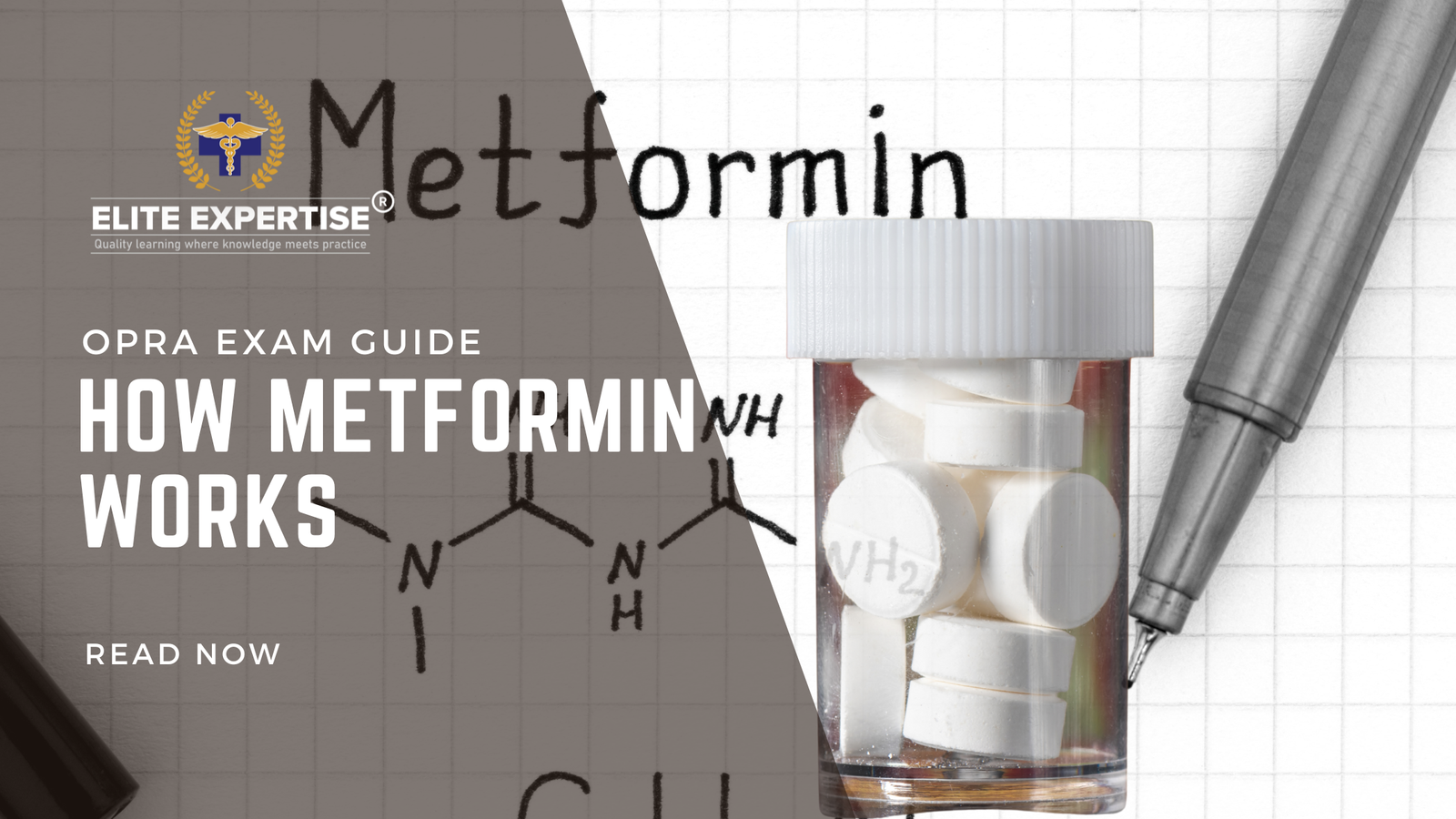
  • How Metformin Works: OPRA Exam Guide 2025 for Pharmacy Students

    Key Points for Exams

    • Primary effect: lower hepatic gluconeogenesis

    • Mitochondrial inhibition (Complex I) → ↑ AMP: ATP → AMPK

    • mGPD inhibition & redox shift (AMPK-independent)

    • Inhibits glucagon action → cAMP → PKA pathway

    • Enhances muscle/fat GLUT4 translocation

    • Intestinal processes: GLP-1, absorption, neural pathways, microbiome

    • Dependent on OCT1, OCT2, MATE transporters

    • Stop in renal failure / acute disease / contrast / surgery

    • No hypoglycemia risk (as a rule), non-direct insulin secretion

    If you’re planning on taking the OPRA 2025 exam, Metformin belongs to the list of medications that you can’t just comprehend at a surface level. Typically, it is thought of as a simple first-line therapy for type 2 diabetes, but actually, its action mechanism is really complicated and involves several pathways that interact. Metformin’s impacts are no less than a jigsaw puzzle whose pieces come from the liver, mitochondria, gut, and different transporters and which are all different. So, students of pharmacy, if you want to achieve the highest score in the exam, then you need to understand every one of these layers. Examiners are no longer satisfied with answers that are mere recitals of buzzwords or over-simplified explanations; instead, they expect clinical insight and reasoning depth from them.

    This guide is our way of explaining the mechanisms of Metformin in a simple, well-organised and student-friendly manner. We provide you with a complete picture of how this drug is working in the body and the cells, which includes the use of both AMPK and non-AMPK pathways, its function in peripheral tissues, and the new findings about the effects of the gut. After going through this guide, you will have a profound and clinically applicable understanding of Metformin, which is exactly the kind of understanding that OPRA examiners are seeking.

    1. The Liver: Metformin’s Primary Stage

    Diabetes Metformin’s main target area is the liver, where it reduces glucose production via gluconeogenesis. Due to this effect, the drug is referred to as the first-line treatment of Type 2 diabetes mellitus.

    Key steps:

    • Hepatocytes take up metformin via OCT1 (Organic Cation Transporter 1).

    • Since it is a positively charged molecule, it is concentrated in the mitochondria.

    • It passes through the mitochondria, where it blocks the respiratory chain Complex I, thus lowering ATP production.

    • The ratio of AMP to ATP is increased, so the energy sensor, AMP-dependent protein kinase (AMPK), is activated.

    • Once AMPK is activated, it suppresses the expression of gluconeogenic enzymes such as PEPCK and G6Pase, diminishes lipid synthesis, and makes the liver more insulin sensitive.

    • This is the conventional mechanism, but the OPRA examiners now expect you to provide a more detailed explanation.

    That is the classic pathway, but OPRA examiners now expect you to go deeper.

    2. The Redox & mGPD Pathway — Beyond AMPK

    One of the complex machinery that you should learn to handle is:

    • Metformin blocks the mitochondrial glycerol phosphate dehydrogenase (mGPD) activity.

    • Due to the blockage of GPD, there is a raised NADH:NAD⁺ ratio which has an inhibitory effect on gluconeogenesis from such intermediates as lactate and glycerol.

    • The effect in question is AMPK-independent; thus, the redox change will still inhibit glucose production, irrespective of whether AMPK is in charge or not.

    • A few scientists are looking into Complex IV as part of the picture; however, for the most part, mGPD and the redox shift will be the key elements you should focus on when preparing for the exam.

    3. Silencing Glucagon’s Call

    Metformin also affects the response of the liver to glucagon:

    • It lowers cAMP levels in the liver, thus inhibiting PKA activation.

    • As glucagon uses cAMP → PKA to initiate gluconeogenesis, the interference impelling the liver “to overlook” glucose production signals.

    Such a process clarifies the reason why Metformin is seldom accompanied by hypoglycemia – it is not an insulin amplifier but a signal attenuator of the glucagon pathway.

    4. Peripheral Tissues: Muscle & Fat

    Metformin works beyond the liver:

    • While in the muscle and fat tissue, the AMPK activation supports the translocation of GLUT4 to the membrane of the cell.

    • Since more GLUT4 transporters are available on the surface, glucose uptake from the bloodstream is increased.

    • Most importantly, it achieves this while not causing the release of insulin, thus the danger of low blood sugar remains minimal.

    Therefore, while we frequently focus on the liver, the extent of the medication’s positive effect entails both the reduction of production and the facilitation of usage.

    5. The Gut: A Rising Star in Mechanism

    One of the newer angles suitable for an exam: Metformin’s gut-centric actions. Examiners of the OPRA test can’t get enough of “extra credit” depth, so you really shouldn’t miss this.

    What it does in the gut:

    • Stimulates GLP-1 secretion from gut L-cells → small insulin co-powering, appetite control.

    • It slows intestinal glucose absorption via the reduction of glucose peaks in the blood after meals

    • Activate a gut-brain-liver neural circuit which is the source of the signal to the liver to decrease glucose output

    • Changes microbiome composition that may be a source of metabolic benefits as well as gastrointestinal side effects.

    Extended-release Metformin variants, which concentrate their activity in the gastrointestinal tract (with only a small amount going into the blood), give almost the same result, meaning that the effect of the gut may be just as important as that of the liver.

    6. Transporters & Distribution

    If you are looking for examiner points, then you can not ignore transporters.

    • OCT1: Transport of the drug to the liver—changes in this area will impact the drug effect.

    • OCT2 (kidney uptake) and MATE1/MATE2-K (renal efflux) are the main sources of elimination.

    • Reduced function of renal transporters or the kidney will cause drug build-up and the risk of adverse effects will increase.

    While you are preparing for your exams, you should always connect the process with actual patient risk.

    7. Safety: Lactic Acidosis & High-Stakes Moments

    Although Metformin-Associated Lactic Acidosis (MALA) is an infrequent cause, it is still the major warning.

    Mechanism behind risk:

    • Metformin limits cell respiration in mitochondria which leads the cells to anaerobic glycolysis, a less efficient pathway and, thus, more lactate is formed.

    • When lactate removal (particularly from the kidney) is hindered, lactate accumulates.

    • Situations such as serious infection, lack of oxygen, kidney failure, heart failure, surgery, or the use of iodinated contrast increase the risk.

    Exam tip: When safety is in question, be sure to always give the advice “stop in acute illness/renal failure/ before contrast/ surgery.”

    8. Study Strategy & How Coaching Helps

    This medication is a high-yield test topic; however, it is complex and it is quite simple to make an overgeneralization. Here are some tips for efficient studying of this topic:

    • Sketch the mechanism (liver, redox, gut).

    • Use your flashcards for the safety rules and transporters.

    • Practice Multiple Choice Questions that involve mechanisms (e.g. “what happens if OCT1 polymorphism?”)

    • Review cases that require the knowledge of Metformin’s side effects or contraindications.

      How coaching (e.g. via Elite Expertise’s OPRA Exam Preparation Course) can boost you:

      The OPRA coaching by Elite Expertise comes with a well-planned structure including:

      • Online classes, written notes

      • Practice tests and assignments.

      • Guidance by the mentor, 24/7 help and a WhatsApp group.

      • Train-the-trainer program for experts with actual pharmacy practice.

      Responsible coaching will help you keep up your pace if you happen to be managing self-study, tiredness, or not fully understanding the subject matter. Also, it will help you find those difficult topics that you have overlooked.

    Final Word

    Metformin can’t be defined only by “AMPK and glucose-lowering”. To succeed at OPRA 2025, you should be able to tell about its combined hepatic + gut roles, talk about redox/mGPD changes, give a short explanation of transporters, and most importantly, make a connection between the drug and clinical safety all the time.

    If you are totally confused about how to combine various aspects and still move forward, a coaching program like Elite Expertise could really take your preparation to another level. By working with the proper guidance, having your plan and putting your skills to practice, you will go beyond your Metformin cramming and really master it.

    Wishing you all the best with your OPRA preparation! We are ready to help you with the next task if you need this content transformed into slides, MCQ sets, or a video script.

    This blog is intended for educational purposes only and is designed to support students preparing for the OPRA exam. The information provided does not replace official exam materials, clinical judgment, or professional medical advice. Elite Expertise is an independent educational institution and is not affiliated with the Australian Pharmacy Council or any official regulatory body

    ⚠️ Disclaimer

    About the Author

    Aditi Pathak

    Content Writer | Elite Expertise

    Aditi Pathak is an experienced SEO content writer with over 4 years of expertise in crafting engaging, well-researched, and search engine–optimized content. Currently pursuing her Master’s in English, she brings together strong academic knowledge and creative writing skills to deliver blogs and articles that are both informative and reader-friendly. Aditi is passionate about simplifying complex topics into clear, accessible content that resonates with diverse audiences. Her focus lies in creating value-driven content strategies that enhance online visibility while keeping readers informed and engaged.

    Follow On

  • How to become a licensed pharmacist in Abu Dhabi from India in 2025?

    Key concepts:

    • The Department of Health conducts a licensing exam for overseas pharmacists who wish to practice as registered pharmacists in Abu Dhabi.

    • Documents such as a degree certificate, a license copy, a good standing certificate, an experience certificate, etc, are required.

    • Two years of mandatory experience are required to attempt the examination

    • The average salary of a registered pharmacist is AED 6000-10,000.00

    For Indian pharmacists, the United Arab Emirates is a preferred destination for working as a registered pharmacist. For those planning to become a registered or licensed pharmacist in Abu Dhabi, passing the licensing exam for pharmacists is the primary step.

    Abu Dhabi is rapidly becoming a hub for advanced healthcare facilities and innovations. For Indian pharmacy graduates, 2025 presents an excellent opportunity to build a rewarding career in the UAE, offering attractive tax-free salaries. They get international exposure and exponential career growth. This guide explains everything you need to know—from eligibility to licensing exams, salary expectations, and tips for securing your first pharmacist job in Abu Dhabi.

    Why Choose Abu Dhabi for Your Pharmacy Career?

    • There is a high demand for pharmacists in hospitals, retail pharmacies, and clinics.

    • The salary that a pharmacist receives will be completely tax-free.

    • They will be exposed to one of the world’s most advanced healthcare industries, featuring modern innovations.

    • The UAE is one of the safest cities, with excellent schools and a good work-life balance.

    What are the Eligibility Criteria for Indian Pharmacists?

    What is the Process to Work as a Pharmacist in Abu Dhabi?

      Documents to be submitted

    1. Candidates must collect the degree certificate, mark sheets, passport copy, experience certificate, and registration from the PCI/State Council and submit these documents to the Department of Health.

    2. Get them attested by the MEA & UAE embassy.

      Apply for Dataflow Verification

      The UAE authority will verify your educational and professional documents.

      Register for DOH (HAAD) Exam

      Once the applicant receives a positive result from the data flow, they can then schedule the DOH exam online through the DOH portal or via Pearson VUE.

      Clear the DOH Exam

      Mainly, the DOH exam covers pharmacology, clinical pharmacy, pharmacy law, and patient counseling.

      A passing score allows you to get your license.

      Job Search and Offer Letter

      Apply for hospital/retail jobs. Your employer typically sponsors your visa after hiring you.

      Get a Work Visa and Relocate

      Complete medical tests, Emirates ID registration, and start your career.

    Pharmacist Salary in Abu Dhabi (2025)

    How can one secure a Pharmacist’s job in Abu Dhabi?

    • New applicants should start networking with recruiters on LinkedIn and join relevant UAE pharmacy groups.

    • They can apply to the earliest public hospitals, where official websites will post vacancies in advance.

    • Applicants can regularly update their clinical knowledge and practise interview questions to improve communication and skills.

    • Licences should be kept active until you find a job.

    Challenges You May Face

    • The DOH exam is competitive; candidates must prepare strategically to clear it by thoroughly practicing MCQs regularly.

    • Exam fees, attestation, and flight tickets can be expensive, so candidates must plan and budget their finances to alleviate the burden.

    • Candidates will need to take the time to understand local pharmacy laws, and patient interaction in a multicultural setting is key.

    Also Read: All About Dubai Health Authroity Exam

    Conclusion

    Becoming a pharmacist in Abu Dhabi in 2025 is one of the best career moves for Indian pharmacy graduates. With proper planning, document preparation, and focused DOH exam training, you can start earning a tax-free salary and build a secure future. Take the first step today: prepare your documents, start your exam preparation, and connect with recruiters

    About the Author

    Krupa Karamchand

    Content Writer | Elite Expertise

    Krupa Karamchand is a B. Pharm graduate and KAPS-qualified pharmacist with over 7 years of experience in the pharmaceutical field. As an experienced SEO content writer, she combines her in-depth healthcare knowledge with proven digital strategies to create informative, engaging, and search engine–optimized blogs. Krupa is passionate about making complex medical topics easy to understand and accessible to all readers.

    Follow On

  • How to Find a Pharmacist Internship in Australia After Passing the OPRA Exam in 2025 from India

    Key Takeaways

    • Passing the OPRA exam is the first step toward becoming a registered pharmacist in Australia.

    • You must apply for provisional registration before starting your internship.

    • An internship requires 1,575 hours of supervised practice in an approved site.

    • Success depends on submitting early applications, being flexible, networking effectively, and being exam-ready.

    • Elite Expertise offers comprehensive training, mentorship, and step-by-step support, from initial setup to full registration with OPRA.

    Australia has now become one of the best and top destinations for every aspiring Indian pharmacy graduate who is looking forward to building a successful career abroad. With well-structured training, attractive work opportunities, and the right pathways toward permanent residency, the country is now seen as a dreamy destination.

    Starting from March 2025, the OPRA (Overseas Pharmacist Readiness Assessment) Exam has replaced the previously existing KAPS exam. This particular change has certainly standardized the overall process for every overseas-trained pharmacist to register and start working in Australia.

    But one common question many candidates from India ask is:

    “If I pass the OPRA exam, can I directly get an internship in Australia?”

    The answer is yes, but with a process. Passing the OPRA makes you eligible to apply for provisional registration with AHPRA (Australian Health Practitioner Regulation Agency). Only after receiving provisional registration can you begin your internship under supervision in Australia.

    Understanding the OPRA Exam

    The OPRA Exam is conducted by the Australian Pharmacy Council (APC) to assess whether overseas pharmacists are ready to practice in Australia.

    • Who needs it?

    Any overseas pharmacist who wishes to work as an intern pharmacist in Australia must clear OPRA to qualify for provisional registration.

    • Format & Details:

      • Computer-based online multiple-choice test

      • 120 questions

      • Duration: 2.5 hours

      • Exam fee: AUD 2,190

    • Outcome: Passing OPRA allows candidates to move to the next step: applying for provisional registration.

    Internship Pathway at a Glance

    Here’s a simplified table to show the process from India to full registration as a pharmacist in Australia:

    Applying for Provisional Registration

    After clearing OPRA, you must apply to AHPRA for provisional registration before starting your internship.

    Documents Required:

    • OPRA exam results and APC skills assessment outcome letter

    • Pharmacy degree certificates (attested copies)

    • Proof of work experience (if required)

    • Police clearance and certificate of good standing

    • English proficiency test results (IELTS, OET, or PTE Academic)

    • Passport and identity documents

    Why It Matters:

    • Without provisional registration, you cannot legally work as an intern pharmacist in Australia.

    • It officially allows you to complete the required supervised practice hours.

    Internship Requirements in Australia

    In order to turn into a full-time and registered pharmacist in Australia, you need to complete a valid internship that involves a supervised practice under a renowned and registered pharmacist.

    • Duration: Total 1,575 hours of supervised pharmacist practice

    • Supervision: Must be done under the supervision of a registered Australian pharmacist

    • Workplaces: Community pharmacy, hospital pharmacy, or any other approved sites

    • Visa Requirement: Valid work rights (Either Temporary Skill Shortage type of visa, a permanent residency, or through student-to-work pathway)

    • Approval: Both the preceptor and internship site must get approved by the Pharmacy Board of Australia

    The Right Ways to Find an Internship in Australia

    Searching and finding the right internship from India might be overwhelming and challenging, but once you have started with proper planning, it can be easily done. Here are some of the effective and working strategies.

    1. Apply to Pharmacy Chains – Chemist Warehouse, Priceline Pharmacy, TerryWhite Chemmart, Blooms The Chemist

    2. Explore Hospital Internships – Public hospitals (via state health departments) and private hospitals (Ramsay, St. Vincent’s)

    3. Use Job Portals – Seek.com.au, Indeed.com.au, LinkedIn Jobs

    4. Apply Directly – Contact local pharmacies, especially in rural regions, with a CV + cover letter

    5. Network Actively – Join pharmacy forums, groups, expos, and online webinars

    6. Leverage Recruitment Agencies – Healthcare recruiters can assist with rural and regional placements

    Internship Responsibilities

    During your internship, you will:

    • Dispense and check prescriptions under supervision

    • Counsel patients on medicines

    • Learn Australian pharmacy laws and the Pharmaceutical Benefits Scheme (PBS)

    • Maintain detailed logbooks of your supervised practice

    • Prepare for the Intern Written Exam and Intern Oral Exam

    • Build decision-making skills required for local pharmacy practice

    Challenges You May Face

    1. High Competition – Especially in metro cities

    2. Visa Sponsorship Issues – Employers may hesitate to sponsor overseas interns

    3. Rural Preference – Regional internships are easier to secure and sometimes offer benefits

    4. Timing of Intakes – Many start in January/February, so apply early

    5. Experience Gaps – Stay updated with clinical knowledge to stay employable

    Tips to Secure Your Internship

    • Apply as soon as you receive provisional registration

    • Be flexible with location — rural roles are less competitive

    • Prepare an Australian-style CV tailored to local expectations

    • Network through social platforms and professional associations

    • Contact employers directly with confidence

    • Keep revising OPRA topics for the intern exams

    Completing the Internship & Moving to Full Registration

    Once you finish your 1,575 supervised hours, you must pass two additional exams:

    • Intern Written Exam – Assesses clinical knowledge and pharmacy law

    • Intern Oral Exam – Evaluates communication, professionalism, and decision-making skills

    After passing these, you can apply for general registration with AHPRA and work as an independent pharmacist anywhere in Australia.

    How Elite Expertise Can Help You

    Securing an internship in Australia from India is possible, but it requires structured preparation and expert guidance. This is where Elite Expertise makes a difference.

    They support overseas pharmacists from OPRA to full registration with services like:

    • Comprehensive OPRA exam preparation courses with topic-based classes, mock tests, and strategies

    • Internship guidance and AHPRA registration support, including expert CV reviews tailored to Australian standards

    • Coaching for Intern Written and Oral Exams, complete with mock viva sessions

    • Mentorship from experienced consultants like Mr. Arief Mohammad and Mrs. Harika Bheemavarapu, both clinical pharmacists in Australia

    With Elite Expertise, you don’t just prepare for the OPRA — you gain the confidence and practical support to complete your internship and achieve full pharmacist registration.

    Conclusion

    Indian pharmacists can apply and hold onto a valid internship in Australia after applying and passing the OPRA exam in 2025. The OPRA examination is the right pathway that needs to be cleared and then followed by provisional registration with the AHPRA, searching and finding approved internship site, and then completing about 1,575 of supervised hours. Although the entire process remains competitive, it can be easily approached with a flexible and proactive learning plan to improve your chances of getting the internship.

    Finding the right pathway on your own may feel overwhelming. That’s why many overseas pharmacists have been choosing Elite Expertise, your trusted partner to prepare you for the OPRA exam and also guide you through every other step of your internship and the registration journey.

    With our professional support, your dream of working as a registered pharmacist in Australia can absolutely turn into a reality.

    About the Author

    Aditi Pathak

    Content Writer | Elite Expertise

    Aditi Pathak is an experienced SEO content writer with over 4 years of expertise in crafting engaging, well-researched, and search engine–optimized content. Currently pursuing her Master’s in English, she brings together strong academic knowledge and creative writing skills to deliver blogs and articles that are both informative and reader-friendly. Aditi is passionate about simplifying complex topics into clear, accessible content that resonates with diverse audiences. Her focus lies in creating value-driven content strategies that enhance online visibility while keeping readers informed and engaged.

    Follow On

  • Australia vs USA: Which Country Has the Better Healthcare System?

    Key Takeaways:

    • Australia provides universal healthcare coverage through Medicare, ensuring nearly all residents have access to essential medical services, unlike the USA, where coverage is uneven and tied to insurance status.

    • Healthcare in Australia is significantly more affordable for residents, with lower out-of-pocket costs and regulated drug prices, whereas the USA faces high premiums, deductibles, and medication costs without price caps.

    • Australians report much higher satisfaction with their healthcare system compared to Americans, reflecting better access, affordability, and equity in care.

    • The USA excels in advanced specialist care and medical innovation, but suffers from unequal access to healthcare, leaving many uninsured or underinsured.

    Healthcare Systems At a Glance
    Access and Coverage
    Affordability
    Satisfaction and Wellbeing
    Core Strengths and Weaknesses
    Australia vs USA Healthcare Comparison Table
    Expert Opinions and Reports
    Conclusion
    Frequently Asked Questions

    While both Australia and the USA are capable of providing high-quality medical care and applying advanced technologies, the way these two countries differ in terms of healthcare coverage, affordability, and outcomes is enormous. A comprehensive comparison will help the readers decide which country offers better healthcare.

    The health system that a person chooses between Australia and the USA will have a great impact on the quality of life, financial security, and general welfare. Both countries provide cutting-edge medical care and technology, but have significant differences in terms of coverage, affordability, and outcomes.

    This comparison not only shows the differences but also equips health professionals, families, and migrants with the necessary knowledge.

    Healthcare Systems At a Glance

    Australia is a country with a universal healthcare scheme (Medicare), which is supported by a modest tax levy (generally 2%), thus providing medically necessary services free of charge for all residents.

    By private insurance, people have the option to cover mainly the extras or to have faster access to the elective procedures.

    On the other hand, the USA is a country with a system that is pluralistic, where the private insurance sector, employer-sponsored plans, and public schemes such as Medicare for seniors and Medicaid for low-income groups make up the healthcare system.

    Coverage varies depending on whether a person is employed, the income, and the policies of a given state, resulting in significant differences.

    Access and Coverage

    • Australia takes care of the comprehensive needs of each and every resident. It is possible to have direct contact with a primary physician, get a child vaccinated, receive maternity care, and take advantage of rural outreach programs like the Flying Doctor Service.

    • The United States offers excellent specialist care and advanced facilities for individuals with good quality insurance. However, there are still a great number of people who are not covered or underinsured; thus, in 2018, the percentage of those without health insurance was more than 8.5%.

    Affordability

    • Health services in Australia are much more economical on a regular basis. More than 64% of Australians consider health services to be affordable, in comparison with only 33% of Americans. Besides, the expenses that the patients have to bear and the insurance premiums are very affordable.

    • The United States has a complicated and expensive program to cover something that is not absolutely clear, with extremely high premiums, deductibles, copays, and incessant surprises during the expenses. Many times the cost of pharmaceuticals is very high and without any limit on their prices, while medications for Australians have a price ceiling set by the Pharmaceutical Benefits Scheme.

    • Out of different health indicators, Australia has the first choice considering life expectancy, the lowest infant death rate, and in general, the easiest and most fair access to the medical system, all this leading to a healthy population.

    • Although the US has various advantages, such as being very good in highly specialized care, very advanced medical research, and quick access to well-insured patients, the country also has some serious problems, such as inequality and high rates of death from preventable causes.

    Satisfaction and Well-being

    • The level of satisfaction with the healthcare system in the two countries is very different and a lot higher in Australia (73.4%) than in the US (54.2%).

    • The residents of the U.S. are not only twice as dissatisfied with their situation, but they also give cost as the main reason for negative healthcare experiences among them.

    Core Strengths and Weaknesses

    Australia Strengths:

    • Universal coverage.

    • Affordable services.

    • High satisfaction.

    • Special programs for minorities and rural outreach.

    • Effective coordination between federal and state governments.

    Australia

    • Dental and vision care are almost completely excluded from the coverage.

    • Some restrictions on the use of newly released drugs.

    USA

    • Excellent facilities available for insured patients of top standard.

    • Highly qualified specialists and great medical innovation.

    • The large number and fast access to specialties for those with sufficient money are the main advantages.

    USA Weaknesses:

    • High rates of uninsured/underinsured.

    • Expensive and inconsistent coverage.

    • Unequal access across states.

    Australia vs USA Healthcare Comparison Table

    Expert Opinions and Reports

    • The World Health Organization and OECD are not only the two top organizations that jointly rank the world’s best and worst healthcare systems, but they also consider Australia’s system as one of the highest in the table for results and efficiency.

    • According to the health insurance experts, the uniqueness of the Australian system which is a combination of a public safety net and a regulated private market makes a country more secure, affordable and ultimately better for the total wellbeing.

    Know More: All about OPRA Exam

    Conclusion

    With universally accessible care, lower personal costs, and higher patient satisfaction, Australia is the preferable country for health care for most residents, families, and immigrants. On the other hand, the USA is the best for those who have good-quality insurance and are seeking specialists, or fast-track care. However, the risk of expensive bills, gaps in being uninsured, and uneven coverage makes it less secure for the average person.

    If there is someone who is concerned about the affordability, equity, and wellbeing, then he or she would probably find the Australian system more stable and supportive of lifelong health.