

Blog

  • Interactive Learning: Innovative Tools and Technologies in Pharmacy Courses Online

    Practising Pharmacist in Australia
    Pharmacy Courses Online

    The advent of the internet and the technological innovations in this decade of the twenty-first century has made the entire world of education more dynamic and impactful. The world of pharmaceutical education is not an exception in this case. These days, the online education and online preparation for examinations has made the entire process of cracking exams easy and convenient for the students. In this blog we will explore the role of tools, technologies in Pharmacy Courses Online by discussing Elite Expertise, a provider of online, high-quality education to learners who want to practice as pharmacists in Australia.

    The Role of Websites and Apps in Pharmacy Courses Online

    In the ever-evolving landscape of online education, websites and apps play a pivotal role in reshaping the way pharmacy courses are delivered and experienced. These digital tools not only enhance the learning experience but also provide students with accessible and interactive platforms to acquire essential pharmaceutical knowledge. Let’s delve into the multifaceted contributions of websites and apps in the realm of online pharmacy education.

    Accessible Learning Materials
    • Websites and apps offer a centralised hub for learning materials, ensuring students have easy access to course content, lecture notes, and reference materials.

    • Interactive e-books and multimedia resources provide a dynamic learning experience, catering to various learning styles.

    Real-time Updates and Notifications
    • Push notifications and alerts keep students informed about course updates, assignment deadlines, and important announcements, fostering a sense of engagement and accountability. While attending any pharmacy courses online, these types of features in an app can make the student remain proactive on a serious note.

    • Instant access to updated information ensures that students stay connected with the rapidly evolving field of pharmacy.

    Collaborative Learning Platforms
    • Online forums, discussion boards, and collaborative spaces within websites and apps facilitate peer-to-peer interaction. Those aspiring minds who are searching for online pharmacy courses with certificates, should incline to these types of websites, which provide effective learning with those features.

    • Group discussions and collaborative projects enable students to exchange ideas, share knowledge, and collectively solve problems, fostering a sense of community.

    Self-assessment and Quizzes
    • Built-in quizzes and self-assessment tools help students gauge their understanding of course materials.

    • Immediate feedback from these assessments aids in identifying areas for improvement, allowing for personalised learning journeys.

    Elite Expertise provides the Elite Expertise e-learning application that serves as a dynamic platform for live lectures. Along with the live lectures, students can also get the recordings of the lectures later. This not only enhances accessibility but also allows for personalised review, catering to individual learning preferences. Being suitable for Android, windows and IoS systems, this app has become extremely beneficial and convenient for the students in terms of gaining impactful knowledge.

    2. The Website for Practice Exams with Precision
    Mobile Accessibility
    • Mobile apps enable students to access course materials anytime, anywhere, promoting flexibility in learning schedules.

    • Learning on-the-go enhances the overall accessibility of pharmacy courses, accommodating the diverse lifestyles of modern learners.

    Elite Expertise | Revolutionising Online Education for KAPS Preparation

    At the forefront of innovative online education for aspiring pharmacists, Elite Expertise stands as a beacon of excellence, offering comprehensive training programs tailored to the unique requirements of the Knowledge Assessment of Pharmaceutical Sciences (KAPS). The Australian Pharmacy Council (APC) administers KAPS as an entry-level examination pathway for aspiring Pharmacists to obtain pharmacist registration in Australia, and Elite Expertise has emerged as a leader in providing specialised courses and resources to guide learners through this crucial assessment.

    Exceptional Training Programs

    Elite Expertise distinguishes itself through a range of meticulously crafted training programs, covering KAPS essentials to Australian Pharmacist oral examination preparation. Their commitment to student success is evident in the provision of online courses and practice-based experiences, ensuring learners are well-equipped to achieve their final goal of becoming fully registered pharmacists in Australia.

    Interactive Conceptual Live Sessions

    The hallmark of Elite Expertise’s approach is the integration of interactive conceptual live sessions. These sessions, conducted by experienced professionals, go beyond traditional lectures, fostering student engagement and promoting a deeper understanding of pharmaceutical sciences.

    Recorded Lectures

    Recognising the diverse learning needs of students, Elite Expertise offers recorded lectures by Australian practicing pharmacists. This flexibility allows learners to revisit key concepts at their own pace, enhancing comprehension and retention.

    Precise Study Material

    Elite Expertise provides students with concise and targeted study materials, ensuring that the learning experience is focused and efficient. The carefully curated content aligns with the specific requirements of KAPS, streamlining the preparation process.

    Assignments and Mock Tests

    To reinforce learning and assess comprehension, Elite Expertise incorporates assignments and mock tests into their programs. These evaluative tools serve as invaluable resources for gauging progress and identifying areas that require additional attention.

    Dynamic Online Education through Elite Expertise’s Technological Advancements

    1. The Elite Expertise E-Learning Application

    For comprehensive knowledge assessment, Elite Expertise utilises a comprehensive and easy-to-use website for practicing mock tests. Here, students can simulate exam conditions, complete with timed assessments. This realistic exam hall experience ensures that learners are well-prepared for the challenges of KAPS.

    3. Google Drive for Shared Notes

    Elite Expertise leverages Google Drive as a collaborative platform for sharing study notes. This innovative use of technology promotes a sense of community among learners, allowing them to access and contribute to a collective pool of knowledge.

    Conclusion

    In the realm of pharmacy courses online for KAPS, Intern Pharmacist written exam, and Intern Pharmacist Oral exam PREP course, Elite Expertise emerges as a trailblazer, seamlessly blending traditional teaching methods with cutting-edge technological advancements.

    Through interactive sessions, recorded lectures, precise study materials, assignments, and mock tests, Elite Expertise not only prepares students for the KAPS examination but also nurtures the Practice-based knowledge, essential skills, and knowledge required for a successful career as a pharmacist in Australia.

    The integration of their e-learning application, comprehensive website, and Google Drive further exemplifies their commitment to providing a dynamic and holistic learning experience. As the landscape of pharmacy education evolves, Elite Expertise continues to lead the way, empowering the next generation of pharmacists with the tools they need to excel.

    Mr. Arief Mohammad is renowned for his excellent teaching skills and practice-based experience which can contribute to developing practice-based knowledge for a learner. He has been a practicing pharmacist in Australia for the last 5 years and has been a preceptor to several students and intern pharmacists.

    Follow On

    Arief Mohammad

    Arief Mohammad

    ABOUT THE AUTHOR

  • A Comprehensive Guide to Pharmacist Registration in Australia: Steps and Requirements

    Embarking on a journey to obtain pharmacist registration in Australia is a commendable pursuit, and the process involves navigating a series of meticulous steps. This comprehensive guide aims to provide aspiring pharmacists with detailed insights and valuable tips to ensure a smooth transition from hopeful professionals to licensed practitioners in the land Down Under.

    Embarking on a journey to obtain pharmacist registration in Australia is a commendable pursuit, and the process involves navigating a series of meticulous steps. This comprehensive guide aims to provide aspiring pharmacists with detailed insights and valuable tips to ensure a smooth transition from hopeful professionals to licensed practitioners in the land Down Under.

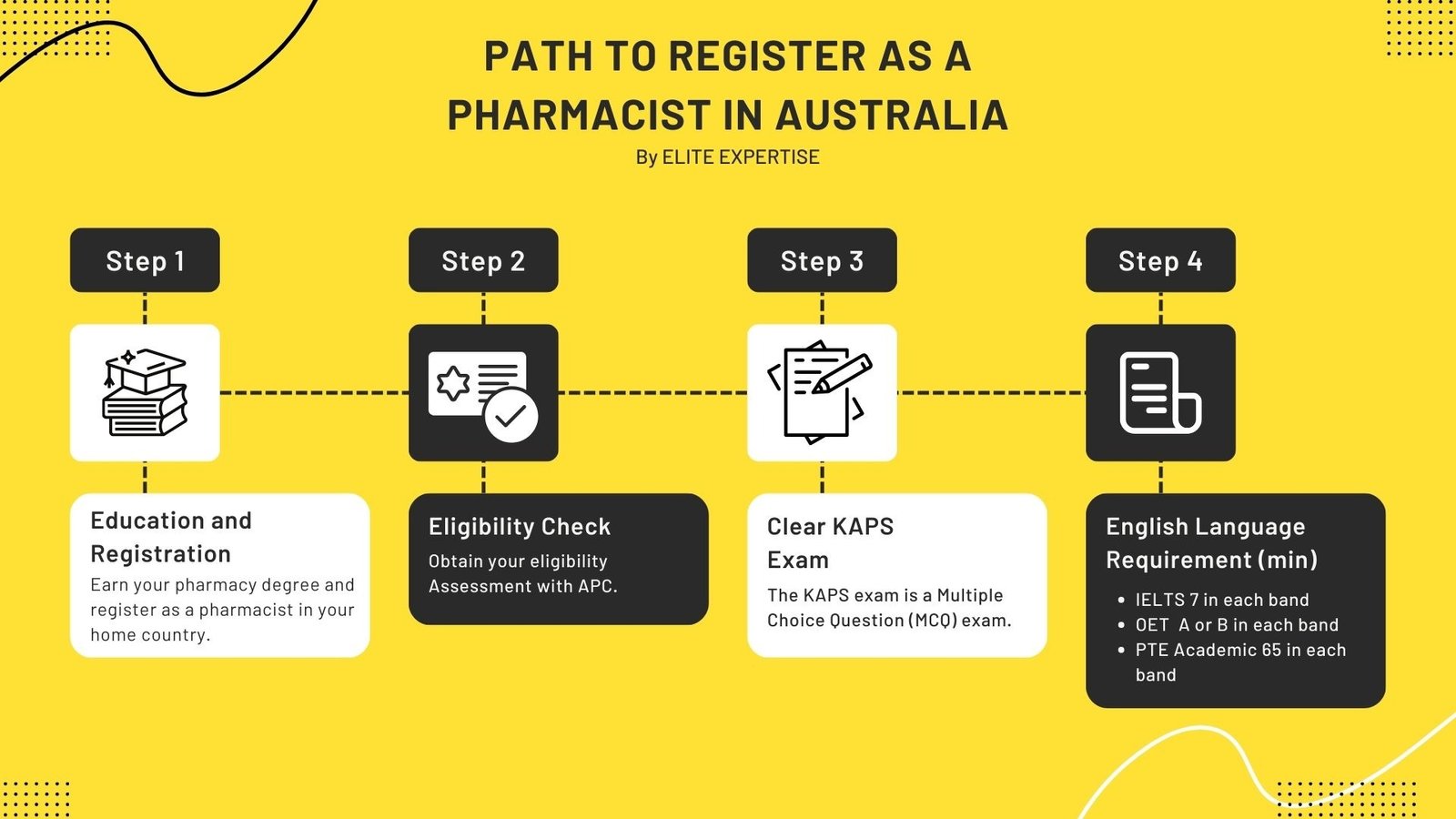
    Education and Qualification

    To kickstart your journey to obtain pharmacist registration in Australia, it is imperative to ensure that your pharmacy degree is accredited by the Australian Pharmacy Council (APC). The APC maintains a comprehensive list of recognized qualifications on its website, offering a valuable resource for prospective pharmacists.

    Eligibility Check

    Before delving into the intricate process, submit your education documents and other required identity documents to the APC for assessment and obtain an eligibility assessment letter. This crucial step serves to confirm that your qualifications meet the stringent standards set by Australian authorities. The APC website provides self-assessment tools and clear guidelines, aiding in a streamlined eligibility check. By completing this step early in the process, you can save valuable time and ensure that you meet the necessary criteria for the subsequent stages of pharmacist registration.

    KAPS Exam

    Prepare for the Knowledge Assessment of Pharmaceutical Science (KAPS) exam, a pivotal evaluation of your core knowledge in pharmaceutical chemistry, pharmacology, physiology, pharmaceutics, and therapeutics. The KAPS exam is computer-based and demands a thorough understanding of the fundamental principles of pharmaceutical science. To aid in your preparation, the APC offers official study guides, practice questions, and access to sample exam papers. Consider enrolling in a KAPS preparation course to receive additional support and guidance. Success in the KAPS exam is crucial as it lays the foundation for progressing further in the registration process.

    English Language Proficiency

    Demonstrating proficiency in the English language is a key requirement for pharmacist registration in Australia. Accepted language tests include

    • IELTS (with a score of 7 in each band)

    • OET (achieving A or B in all four components)

    • PTE Academic (with a score of 65 in each module)

    and achieving scores that meet the AHPRA’s minimum requirements is essential. For candidates whose first language is not English, Australia provides various language support programs and resources to assist in reaching the required level of fluency. It is imperative to communicate clearly and effectively in a healthcare setting, making the English language proficiency test a crucial step in ensuring that pharmacists can provide optimal care to diverse patient populations.

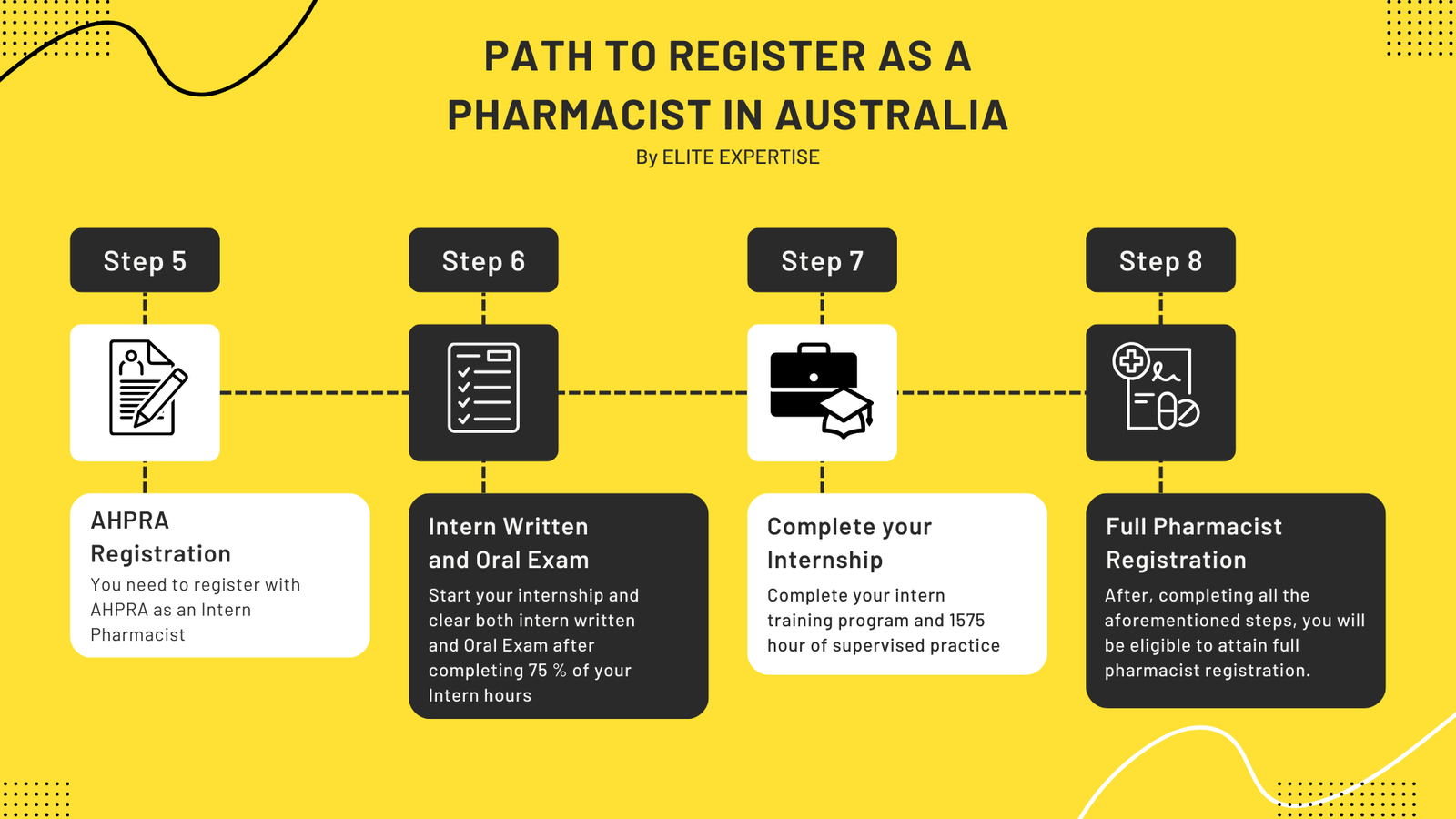
    Upon successfully completing the preliminary steps, the next milestone in pharmacist registration in Australia is obtaining provisional registration with the Australian Health Practitioner Regulation Agency (AHPRA). This step involves submitting a comprehensive application to AHPRA, which includes essential documents:

    AHPRA Registration Application: Fill out the AHPRA Form APRO-60 meticulously, ensuring all details are accurate and complete, and submit it to the respective AHPRA office in Australia or electronically through an email. It takes 6 to 8 weeks for your documents to be assessed by the case officer. Any discrepancies or incomplete information in Form APRO-60 may lead to delays in the registration process.

    Police Clearance: Demonstrate your good standing by providing a police clearance from your home country. This document serves as evidence of your professional conduct and adherence to legal standards.

    Good Standing Certificate: Obtain a good standing certificate from the pharmacy council in your home country. This certificate attests to your positive professional standing in your country of origin, further bolstering your eligibility for provisional registration.

    Successfully obtaining provisional registration with AHPRA marks a significant milestone, allowing you to progress to the next phase of your journey towards full pharmacist registration.

    AHPRA Registration (Provisional)

    With provisional registration secured, the subsequent step involves completing 1575 hours of supervised practice or internship. Before you begin supervised practice, in addition to your registration, you will also need to submit form AASP-60 for approval. This step is crucial to ensure you meet the requirements for supervised practice and progress smoothly in your health care career.

    The real-world experience during your supervised practice hours is crucial for refining your skills, gaining practical insights, and building confidence as a pharmacist. The Australian Pharmacy Council (APC) maintains a list of approved internship providers to assist you in finding suitable placements.

    During this supervised practice, you will work under the guidance of experienced pharmacists, applying theoretical knowledge to real-world scenarios. It is an opportunity to familiarize yourself with Australian pharmacy practices, regulations, and patient care standards. Actively engage with your preceptor, seek feedback, and take initiative in your learning to maximise the benefits of the internship period.

    Supervised Practice Hours or Internship

    Enhance your learning experience by enrolling in an intern training program offered by reputable institutions such as the Pharmaceutical Society of Australia (PSA), the Pharmacy Guild of Australia, or accredited universities. These programs are designed to provide additional guidance, training workshops, and support throughout your internship.

    Choosing the right intern training program is crucial. Consider factors such as program structure, focus areas, and learning styles. Different programs cater to diverse needs and career aspirations, so select one that aligns with your goals. The intern training program complements your supervised practice, offering a structured approach to your professional development as a pharmacist.

    Intern Training Program

    The Intern Pharmacist Written Exam is a critical assessment of your practical pharmacy skills and knowledge. It is an open-book, multiple-choice exam with questions (MCQ) that include some scenario-based questions to assess clinical reasoning skills. This evaluation tests your understanding of pharmaceutical principles and your ability to apply them in practice. Leveraging the resources and support provided by your intern training program is key to preparing for this exam.

    Engage in practice exams, utilise study guides, and review past questions to familiarise yourself with the exam format. The Intern Written Exam is an opportunity to showcase your theoretical knowledge and its practical application, demonstrating your readiness to transition from internship to independent practice.

    Intern Pharmacist Written Exam

    The Intern Pharmacist Oral Exam is a crucial part of the registration process to become a licensed pharmacist in Australia. Overseas pharmacists first need to undergo a skill assessment, followed by clearing the KAPS exam, to qualify as an intern pharmacist in Australia. The internship entails 1575 hours, and upon completion of 75%, candidates become eligible to attend the Intern Pharmacist Oral Exam.

    Conducted by The Pharmacy Board of Australia, the exam assesses practical knowledge and skills acquired during the internship. Factual knowledge and its application, professional and ethical practice, decision-making, and communication skills are key elements for success. To apply for the exam, candidates must use the official website of The Pharmacy Board of Australia.

    The exam, with a fee of 415 AUD (as of 16/09/2023), has a duration of 35 minutes and includes questions, including case-based scenarios. Assessment parameters cover knowledge on primary healthcare, legal and ethical practice, problem-solving skills, and communication skills. Candidates are expected to demonstrate understanding of dose, drug interaction, side effects, counselling points, and the legality of medicines.

    To enhance their chances of success, candidates are advised to gain maximum skills and knowledge during the internship. Clearing both the Intern Pharmacist Oral Exam and the Intern Pharmacist Written Exam represents the final step in achieving registration as a pharmacist in Australia.

    Intern Pharmacist Oral Exam

    Upon successfully completing all the aforementioned steps, you will be eligible to attain full pharmacist registration. This accomplishment marks the attainment of a coveted license, granting you the authority to practice pharmacy independently in Australia. Congratulations on reaching this significant milestone in your pharmacy career.

    Full Pharmacist Registration

    At Elite Expertise, we’re dedicated to delivering top-tier education for aspiring pharmacists planning to obtain Pharmacist registration in Australia. Our experienced academic team has a proven track record in successfully preparing overseas pharmacists to pass Australian Pharmacist licensing exams like Knowledge Assessment of Pharmaceutical Sciences (KAPS)- an essential entry-level examination evaluated by the Australian Pharmacy Council (APC), Intern Pharmacist written exam and Intern Pharmacist oral exam. From KAPS exam essentials to Australian Pharmacist oral examination preparation, our online courses and practice-based experiences are designed to propel learners towards their goal of becoming fully registered pharmacists in Australia.

    About Elite Expertise

    Embarking on the journey to obtain pharmacist registration in Australia demands dedication, thorough preparation, and adherence to the outlined steps. By following this comprehensive guide, you are well-equipped to navigate the intricate process and embark on a fulfilling career in the vibrant Australian healthcare system. May this guide serve as a beacon, guiding you towards success in your pursuit of becoming a licensed pharmacist in Australia.

    Want to be a practising pharmacist in Australia? Contact Elite Expertise now. Our highly skilled academic team is committed to delivering top-notch education and practical experiences for overseas pharmacists seeking registration and practice opportunities in Australia.

    Conclusion

    Mr. Arief Mohammad is renowned for his excellent teaching skills and practice-based experience which can contribute to developing practice-based knowledge for a learner. He has been a practicing pharmacist in Australia for the last 5 years and has been a preceptor to several students and intern pharmacists.

    Follow On

    Arief Mohammad

    Arief Mohammad

    ABOUT THE AUTHOR

  • Unlocking the Scope of a GP Pharmacist in Australia: How to Become a Pharmacist

    pebc coaching in canada

    In the dynamic landscape of healthcare, the role of pharmacists has expanded beyond the traditional dispensing of medications. One such specialised role gaining prominence in Australia is that of a GP pharmacist. This comprehensive guide on “how to become a pharmacist” will delve into the world of GP pharmacists in Australia, exploring their roles, responsibilities, and the path to becoming one. Whether you’re a pharmacy student or someone interested in a healthcare career, this article will provide valuable insights into the evolving role of GP pharmacists in Australia.

    Understanding the Scope of a GP Pharmacist

    A GP pharmacist, also known as a General Practice Pharmacist, is a highly trained professional who works within general practice settings, collaborating with general practitioners (GPs) to optimise patient care. Their primary focus is on medication management, but their roles extend far beyond that.

    Roles and Responsibilities

    1. Medication Review and Optimisation: GP pharmacists conduct thorough medication reviews for patients. They assess the appropriateness, safety, and effectiveness of prescribed medications, identify potential drug interactions, and recommend adjustments when necessary. This process helps minimise adverse drug events and ensures patients receive the most suitable treatments.

    2. Collaborative Care: They work closely with GPs and other healthcare providers to develop and implement medication management plans. This collaboration enhances patient care by ensuring that medications align with the overall treatment goals.

    3. Chronic Disease Management: GP pharmacists play a crucial role in managing chronic diseases like diabetes, hypertension, and asthma. They monitor patients’ progress, adjust medications as needed, and provide ongoing support to improve disease management.

    4. Polypharmacy Management: In an ageing population where many patients take multiple medications, GP pharmacists help manage polypharmacy by streamlining medication regimens and reducing unnecessary prescriptions.

    5. Patient Education and Counselling: GP pharmacists educate patients and caregivers about medication regimens, potential side effects, and the importance of adherence. This empowers patients to actively participate in managing their health.

    6. Preventive Care: They contribute to preventive care initiatives by identifying patients at risk and recommending appropriate interventions, such as vaccinations and health screenings.

    7. Quality Assurance: GP pharmacists play a role in maintaining the quality of care within the practice. They assist in ensuring compliance with regulatory requirements related to medication management and safety.

    How to Become a GP Pharmacist in Australia

    Becoming a GP pharmacist in Australia involves a well-defined path and a commitment to continuous learning. Here’s how to embark on this rewarding career journey:

    1. Complete a Bachelor’s Degree in Pharmacy: To become a pharmacist, you must start by earning a Bachelor of Pharmacy (BPharm) degree. This typically takes four years and equips you with the foundational knowledge in pharmaceutical sciences. If you are an overseas pharmacist who finished Bachelor of Pharmacy or Doctor of Pharmacy, you can start your practice as a pharmacist in Australia on passing the KAPS exam.

    2. Gain Practical Experience: After obtaining your degree, you need to complete a one-year internship under the supervision of a registered pharmacist. This internship provides hands-on experience in various pharmacy settings and is essential for your development as a pharmacist.

    3. Pass the Australian Pharmacist Exam: To become a registered pharmacist in Australia, you must pass the Australian Pharmacist Exam. This exam assesses your knowledge and competence in pharmacy practice and ensures that you meet the national standards.

    4. Register with the Pharmacy Board of Australia: Once you pass the exam, you can apply for registration with the Pharmacy Board of Australia. This registration is essential to practice as a pharmacist in the country.

    5. Gain Post-Registration Experience: Many GP pharmacists gain additional experience as a community pharmacist or in a hospital pharmacy settings before transitioning into general practice. This experience helps build your confidence and expertise.

    6. Specialise and Pursue Additional Training: While not mandatory, specialising in general practice or other relevant areas can enhance your career prospects as a GP pharmacist. Consider pursuing postgraduate qualifications or certifications.

    7. Network and Seek Opportunities: Building a network within the healthcare community is crucial for finding opportunities in general practice. Seek out practices that are open to integrating a pharmacist into their team.

    The Australian Pharmacist Exam

    The Australia Pharmacist Exam is a critical milestone on the path to becoming a registered pharmacist in Australia. It assesses your knowledge and competency in pharmacy practice and ensures that you meet the national standards required to practice safely and effectively.

    The exam typically consists of two parts: the written exam and the oral/practical exam. The written exam assesses your theoretical knowledge in areas such as pharmacology, therapeutics, and pharmaceutical calculations. The oral/practical exam evaluates your ability to apply this knowledge in real-life scenarios, including patient consultations.

    Preparing for the Australia Pharmacist Exam requires a thorough understanding of the Australian healthcare system, medication management guidelines, and the legal and ethical aspects of pharmacy practice in the country. It’s essential to invest time in studying and practising sample questions to increase your chances of success.

    KAPS Exam

    Being an overseas pharmacy student, if you are struggling to find the answer to “how to become a pharmacist”, then you should know about the KAPS exam. The Knowledge stream pathway encompasses the Knowledge Assessment of Pharmaceutical Sciences (KAPS), an evaluative examination that overseas registered pharmacists are required to successfully complete to be eligible to practice pharmacy in Australia. This examination serves to evaluate the candidate’s comprehension and expertise in pharmaceutical sciences.

    Future Trends

    1. Telepharmacy: The adoption of telehealth and telepharmacy is on the rise, allowing GP pharmacists to provide services remotely, especially in underserved areas.

    2. Integration of Technology: Pharmacy practice is becoming increasingly technology-driven, with the use of electronic health records and advanced medication management software.

    Conclusion

    The role of a GP pharmacist in Australia extends beyond traditional medication dispensing to encompass medication management, collaborative care, and patient education. The path to becoming a GP pharmacist involves completing a Bachelor’s degree in Pharmacy, gaining practical experience, passing the Australia Pharmacist Exam, and registering with the Pharmacy Board of Australia. Continuous learning and specialisation can further enhance your career as a GP pharmacist.

    While challenges exist, the demand for GP pharmacists is growing, and their role in enhancing patient care is becoming increasingly recognised. As the healthcare landscape evolves, GP pharmacists are well-positioned to play a vital role in optimising medication management and improving overall patient outcomes in Australia. Being an overseas student, if you want details on “how to become a pharmacist” and qualify for the KAPS Exam, you can contact Elite Expertise!

    Mr. Arief Mohammad is renowned for his excellent teaching skills and practice-based experience which can contribute to developing practice-based knowledge for a learner. He has been a practicing pharmacist in Australia for the last 5 years and has been a preceptor to several students and intern pharmacists.

    Follow On
    Arief Mohammad

    Arief Mohammad

    ABOUT THE AUTHOR

  • The Role of a Practising Pharmacist in Australia: Navigating Overseas Pharmacist Registration

    pharmacy Oral exam

    The ever-evolving landscape of healthcare in Australia demands a constant adaptation of roles and responsibilities for healthcare professionals. Among the prominent roles emerging recently is that of a practising pharmacist in Australia, especially for those seeking overseas pharmacist registration in Australia. This comprehensive guide aims to shed light on the intricacies of becoming a practising pharmacist in Australia, highlighting the roles, responsibilities, and challenges faced by professionals in this field.

    Understanding a Practising Pharmacist in Australia

    A practising pharmacist in Australia is a highly skilled healthcare professional responsible for ensuring the safe and effective use of medications. They work collaboratively with patients, physicians, nurses, and other healthcare providers to achieve the objective of optimising patient outcomes. Their primary focus is on medication management, which involves various roles and responsibilities.

    Roles and Responsibilities

    1. Medication Review and Optimisation: Practising pharmacists in Australia conduct comprehensive medication reviews for patients. They assess the appropriateness, safety, and effectiveness of prescribed medications, identify potential drug interactions, and recommend adjustments when necessary. This process helps minimise adverse drug events and ensures patients receive the most suitable treatments.

    2. Medication Reconciliation: Practising pharmacists play a crucial role in reconciling patients’ medication histories during transitions of care, such as hospital admissions or discharges. This helps prevent medication errors and enhances continuity of care.

    3. Education and Counselling: Practising pharmacists educate patients and caregivers about medication regimens, potential side effects, and the importance of adherence. This empowers patients to take an active role in managing their health.

    Scope of Consultant Pharmacists in Australia

    The role of consultant pharmacists in Australia has expanded significantly over the years, driven by the growing healthcare needs of the population and the recognition of their expertise. Let’s explore the various domains where consultant pharmacists are making a significant impact.

    1. Aged Care Facilities: Consultant pharmacists play a pivotal role in optimising medication therapy for elderly residents in aged care facilities. They work closely with healthcare teams to ensure that residents receive appropriate and safe medication regimens. This is particularly important as Australia’s population continues to age, leading to an increased demand for geriatric care services.

    2. Hospitals: In hospitals, consultant pharmacists contribute to medication management during patient admissions and discharges. They conduct medication reconciliation, assess the appropriateness of drug therapy, and help prevent medication errors. This enhances patient safety and reduces readmission rates.

    3. Community Pharmacy: Consultant pharmacists in community settings offer medication management services to individual patients. They conduct medication reviews, provide medication counselling, and collaborate with physicians to optimise drug therapy. This helps improve medication adherence and patient outcomes.

    4. General Practice: Some consultant pharmacists work within general practice settings, assisting primary care physicians in managing patients with complex medication regimens. They provide valuable input on medication selection and dosing, contributing to better patient care.

    5. Palliative Care: Consultant pharmacists are instrumental in palliative care settings, where the focus is on alleviating symptoms and improving the quality of life for patients with terminal illnesses. They work closely with healthcare teams to manage pain and other symptoms effectively.

    6. Mental Health Services: In mental health facilities, consultant pharmacists contribute to the management of psychiatric medications. They assess medication regimens, monitor side effects, and collaborate with mental health professionals to achieve optimal outcomes for patients.

    7. Remote and Rural Areas: Consultant pharmacists are increasingly being utilised in remote and rural areas of Australia to bridge the gap in healthcare services. They provide essential medication management services to underserved populations, ensuring access to safe and effective healthcare.

    8. Medication Safety and Quality Improvement: Consultant pharmacists are actively involved in medication safety initiatives and quality improvement projects. They help healthcare organisations implement best practices, reduce medication-related incidents, and enhance overall patient care.

    The Transition: Overseas Pharmacist Registration in Australia

    For overseas-trained pharmacists seeking to practice in Australia, the journey involves a specific set of challenges and requirements. Here’s how you can navigate the process effectively:

    1. Qualifications Assessment: The KAPS (Knowledge Assessment of Pharmaceutical Sciences) exam plays a pivotal role in the journey of overseas pharmacists seeking registration and the ability to practice their profession in Australia. It serves as a crucial assessment tool designed to evaluate the knowledge and competence of international pharmacists, ensuring that they meet the high standards and regulations set by Australian healthcare authorities.

    Passing the KAPS exam demonstrates an individual’s ability to adapt their pharmaceutical knowledge and skills to the Australian context, ensuring the safety and well-being of patients and the efficacy of pharmaceutical services. It safeguards the quality of healthcare and offers overseas pharmacists an invaluable opportunity to contribute to the Australian healthcare system while pursuing their career goals. To get professionals’ help to pass this exam, you can choose Elite Expertise. The online platform has been specifically designed for overseas pharmacists to practice and register in Australia through a knowledge stream.

    1. English Proficiency: You must demonstrate English language proficiency by taking an approved English language test, such as IELTS or PTE Academic. Achieving the required scores is essential for overseas pharmacist registration in Australia.

    2. National Registration: Once your qualifications are approved, you can apply for national registration with the Pharmacy Board of Australia. This registration allows you to practice as a pharmacist in the country.

    3. Internship: To gain practical experience in the Australian healthcare system, you’ll typically need to complete a supervised internship. The duration and requirements for the internship may vary depending on your qualifications and the state or territory in which you intend to practice.

    4. Further Assessment: If your qualifications and experience are not directly equivalent to Australian standards, you may be required to complete additional assessments or courses to bridge the gap.

    5. Ongoing Professional Development: Continuous learning and professional development are crucial for practising pharmacists in Australia. You must engage in ongoing education to stay updated with the latest developments in the field.

    Challenges and Future Trends

    Becoming a practising pharmacist in Australia, especially as an overseas-trained professional, presents its own set of challenges. These include:

    1. Adaptation to the Australian Healthcare System: Overseas-trained pharmacists must familiarise themselves with the Australian healthcare system, including local regulations and practices.

    2. Continuing Education: Staying updated with the latest advancements in pharmacy practice and medications is crucial. Pharmacists must invest in continuous learning to maintain their expertise.

    Conclusion

    Becoming a practising pharmacist in Australia is a rewarding but challenging journey, particularly for overseas-trained pharmacists. The role of a practising pharmacist in Australia encompasses medication review, reconciliation, education, and quality assurance, all aimed at optimising patient outcomes.

    For overseas-trained pharmacists, the path to registration involves qualification assessment, English proficiency testing, internship, and ongoing professional development. While challenges exist, dedication and perseverance can lead to a fulfilling career as a practising pharmacist in Australia.

    As the healthcare landscape continues to evolve, practising pharmacists play a vital role in ensuring the safe and effective use of medications. Their expertise and commitment contribute to improved patient care and outcomes, making them valuable members of the healthcare team in Australia.

    If you are seeking guidance to pass the KAPS Exam and ensure overseas pharmacist registration in Australia, contact Elite Expertise!

    Mr. Arief Mohammad is renowned for his excellent teaching skills and practice-based experience which can contribute to developing practice-based knowledge for a learner. He has been a practicing pharmacist in Australia for the last 5 years and has been a preceptor to several students and intern pharmacists.

    Follow On
    Arief Mohammad

    Arief Mohammad

    ABOUT THE AUTHOR

  • Migration Overseas and Excelling as an Overseas Pharmacist

    kaps exam full form

    Are you an ambitious overseas pharmacist aspiring to expand your horizons and practice in a new and exciting environment? Look no further than the comprehensive resources and guidance provided by Elite Expertise. Our platform is your dedicated partner in achieving success as an overseas pharmacist, offering top-notch education, registration support, and a pathway to seamless integration into the pharmaceutical landscape of your dreams.

    Embark on Your Journey with the Best Overseas Pharmacists Online training platform

    Migration overseas can be a thrilling adventure, opening doors to fresh opportunities and enriching experiences. As you set your sights on practicing pharmacy in a foreign land, trust our expertise to guide you through this transformative journey. We understand the unique challenges faced by overseas pharmacists seeking general registration and practice in new territories. Our tailored solutions are designed to address your specific needs and empower you to navigate the intricate process with confidence.

    How to Become a Pharmacist in Australia

    Becoming a registered pharmacist in Australia involves several key steps, beginning with a solid education and culminating in professional registration. First and foremost, you’ll need to complete an accredited pharmacy degree, typically a Bachelor of Pharmacy or a Master of Pharmacy, from a recognized Australian university. This degree provides the foundational knowledge and practical skills necessary for safe and effective pharmacy practice.

    Earning your degree is just the first step. To legally practice as a pharmacist in Australia, you must be registered with the Pharmacy Board of Australia. This involves meeting their specific registration requirements, which are designed to ensure competency and maintain high professional standards.

    There are some additional hurdles for pharmacists trained internationally. Your qualifications will need to be assessed by the Australian Pharmacy Council to determine how they compare to Australian standards. This assessment process often includes skills assessments and may require you to sit examinations. Successfully completing these assessments is crucial for internationally trained pharmacists seeking registration in Australia. Essentially, you’ll need to demonstrate that your knowledge and skills are equivalent to those of Australian-trained pharmacists.

    Visa applications for pharmacists seeking to work in Australia generally involve a range of requirements, which can vary depending on the specific visa subclass you’re applying for. However, some common requirements often include:

    • Skills Assessment: A positive skills assessment from the Australian Pharmacy Council is typically required to demonstrate that your qualifications and experience meet Australian standards.

    • English Language Proficiency: You’ll need to prove your English language skills through a recognized test like IELTS, OET, or PTE Academic.

    • Health and Character: You’ll need to meet certain health and character requirements, which may involve medical examinations and police checks.

    • Work Experience: Some visas may require a certain amount of relevant work experience in your field.

    • Sponsorship: For some visas, you may need to be sponsored by an Australian employer or a state/territory government.

    • Age: Some visas have age restrictions.

    • Points Test: For certain skilled migration visas, you may need to achieve a minimum score on a points test, which assesses factors like age, education, work experience, and English language proficiency.

    Visa Options for Pharmacists

    Navigating the Australian visa system can seem daunting, but understanding the different visa options available to pharmacists is a key step in your journey. Several visa categories may be relevant, and the best option for you will depend on your individual circumstances. Here are some common visa pathways:

      Skilled Independent visa (subclass 189): This visa is for skilled workers who have an occupation on the skilled occupation list and have a positive skills assessment. It allows you to live and work permanently in Australia. You don’t need a sponsor for this visa.Skilled Nominated visa (subclass 190): Similar to the 189, this visa is for skilled workers, but it requires nomination by a state or territory government agency. It also grants permanent residency.Temporary Skill Shortage visa (subclass 482): This is an employer-sponsored visa that allows skilled workers to work in Australia for a temporary period. Your employer needs to sponsor you for this visa, demonstrating they couldn’t find a suitable local candidate. This can be a pathway to permanent residency later.

    • Regional Sponsored Migration Scheme visa (subclass 187): This visa is for skilled workers who are sponsored by an employer in a regional area of Australia. It offers permanent residency.

    • The process for obtaining any of these visas generally involves:

      1. Skills Assessment: Obtaining a positive skills assessment from the Australian Pharmacy Council.

      2. English Language Test: Proving your English language proficiency through a recognized test.

      3. Visa Application: Submitting a complete visa application with all required documents.

      4. Health and Character Checks: Undergoing medical examinations and police checks.

    Unlock Your Potential with Overseas Pharmacist Registration in Australia

    Among the most sought-after destinations for pharmacists looking to broaden their horizons is Australia. The captivating landscapes, advanced healthcare system, and dynamic pharmaceutical industry make it an appealing choice. However, the path to registration and practice in Australia can appear complex and overwhelming. This is where Elite Expertise – the best overseas Pharmacists online training platform steps in. We offer comprehensive guidance to help you achieve General Pharmacist Registration in Australia! Our program is meticulously crafted to streamline your journey to becoming a registered pharmacist Down Under.

    Why Choose Elite Expertise?

    At Elite Expertise, we understand that success hinges on comprehensive preparation, tailored guidance, and a commitment to excellence. Here’s why we stand out as your ideal partner in achieving your overseas pharmacist aspirations:

    Expert Guidance: Our seasoned experts have an in-depth understanding of the overseas pharmacist registration process in various countries, including Australia. With their guidance, you’ll gain clarity on the requirements, procedures, and documentation needed to successfully navigate the registration process.

    Comprehensive Resources: We provide a wealth of resources that empower you with knowledge and insights crucial to your success. From study materials and mock exams to real-world case studies presented to you with our exclusive live lectures, our resources are designed to enhance your pharmacist expertise and boost your confidence.

    Interactive Learning: Our online platform offers interactive learning modules that allow you to engage actively with the material. This immersive approach fosters understanding and retention, ensuring you’re well-prepared for the challenges that lie ahead.

    Live Support: Benefit from live sessions with expert instructors who will address your queries, provide clarification, and offer valuable advice. Our commitment to your success extends beyond the digital realm.

    Pathway to Excellence: As you embark on your journey, we’re dedicated to not just helping you achieve registration but also supporting you in excelling as a pharmacist. Our resources and guidance set the stage for a fulfilling and impactful career.

    Join Us on Your Journey

    Migration overseas and the pursuit of excellence as an overseas pharmacist are exciting endeavors, but they require meticulous planning and guidance. Elite Expertise is here to offer you a clear pathway to success. Whether you’re interested in overseas pharmacist registration in Australia or simply seeking to enhance your pharmaceutical knowledge and skills, our platform has you covered. Your dreams are our priority, and we’re committed to helping you turn them into reality.

    Enroll today and unlock the doors to a world of opportunities and fulfillment in the pharmacist-health care field. Your journey begins here with the best overseas online pharmacist training platform.

    FAQs

    How do you register as a pharmacist in Australia from overseas?

    Registering as a pharmacist in Australia from overseas involves several key steps:

    1. Qualifications Assessment: Your qualifications must be assessed by the Australian Pharmacy Council (APC) to determine their comparability to Australian standards. This often involves submitting documentation of your academic qualifications, work experience, and other relevant information.

    2. Skills Assessment: The APC will likely require you to complete a skills assessment, which may include written examinations and/or practical assessments, to evaluate your competency.

    3. KAPS Exam: If the APC deems your qualifications comparable, you will be required to pass the Knowledge Assessment of Pharmaceutical Sciences (KAPS) exam. This exam tests your knowledge of pharmaceutical sciences relevant to Australian practice.

    4. Registration with the Pharmacy Board of Australia: Once you have successfully passed the KAPS exam, you can apply for registration with the Pharmacy Board of Australia. This involves meeting their registration requirements, including demonstrating good character and English language proficiency.

    5. Visa Application: You will also need to secure an appropriate visa that allows you to work in Australia.

    What is the pharmacist exam for foreigners in Australia?

    The primary exam for internationally qualified pharmacists seeking registration in Australia is the Knowledge Assessment of Pharmaceutical Sciences (KAPS) exam. This exam is conducted by the Australian Pharmacy Council (APC) and assesses your knowledge of pharmaceutical sciences relevant to the Australian context. It covers areas such as pharmacology, pharmaceutics, pharmacotherapy, and pharmacy practice.

    Can I take the KAPS exam outside Australia?

    The KAPS exam is typically offered at test centers within Australia. The APC website is the definitive source of information regarding test locations and availability. It’s crucial to check their website for the most up-to-date details on exam centers and scheduling, as this information can change. Historically, the exam has been administered in Australia, and it is highly unlikely this has changed. It’s best to confirm directly with the APC.

    Have any other questions? For more information, visit our frequently asked questions.

    Mr. Arief Mohammad is renowned for his excellent teaching skills and practice-based experience which can contribute to developing practice-based knowledge for a learner. He has been a practicing pharmacist in Australia for the last 5 years and has been a preceptor to several students and intern pharmacists.

    Follow On

    Arief Mohammad

    Arief Mohammad

    ABOUT THE AUTHOR

  • My Daily Routine as a Hospital Pharmacist in Australia Copy

    Arief Mohammad

    Working as a Clinical Pharmacist in Australian hospitals has always been a dream and it was quite a big struggle to achieve it. The role in an Australian hospital is of course so rewarding. The respect for your knowledge is immense and you have that moral satisfaction that you are practising your knowledge meaningfully. Working with generalist and specialist doctors is so fun and gratifying. After a few interview rejections, I landed my first clinical Pharmacist role at Swan Hill District Health of regional Victoria. I currently work as a Grade 2 Pharmacist at Northern Health, Melbourne.

    What is a Hospital Pharmacist?

    A hospital pharmacist is a healthcare professional who plays a crucial role in ensuring the safe and effective use of medications in a hospital setting. They work closely with doctors, nurses, and other healthcare providers to optimise patient care.

    By sharing a daily routine, I aim to offer insights into the diverse responsibilities and challenges faced by hospital pharmacists. This will help you understand the importance of their role and the valuable contributions they make to patient health and well-being.

    I am also personally involved in designing and implementing policies and protocols to enhance quality in hospital practice and bring about the best patient safety and health outcomes in my daily practice. I have authored many consumer health information brochures, nurse education plans, and leaflets, designed continuing professional development modules for different stakeholders in a multidisciplinary health care professionals team, prepared various patient education brochures, a range of public health documents, authored conference abstracts as a part of my passion for public health research; prepared education monographs and variety of training materials for nurses, student, and intern pharmacists.

    My Daily Routine at a Pharmacy Hospital

    My workday begins with dispensing inpatient medications using i-Pharmacy software, ensuring accuracy and efficiency in medication management. I then attend the multidisciplinary team meetings, collaborating with nurses, doctors, physiotherapists, care coordinators, social workers, and exercise physiologists. These meetings offer a holistic view of the patients admitted each day, allowing me to contribute effectively to their care plans. My caseload often includes complex cases such as cardiovascular conditions, mental health concerns, paediatrics, and sepsis, requiring careful review of antimicrobial prescribing and other critical medications. Handling emergency cases is also a routine part of my role, keeping me engaged in fast-paced and high-stakes clinical decisions.

    Performing pharmacist reviews, medication reconciliation, and pharmacist interventions are my daily responsibilities. On a typical day of dealing with and reviewing 30 patients, I prioritise my patients based on their healthcare needs, medical histories, and complex case histories. Advising doctors on selecting the best treatment regimens to bring about the best health care outcomes is my prime responsibility. I prepare in-patient medication management plans, discharge medication profiles with changes in medications, and a summary of information for patients to refer to upon discharge after a stay in the hospital.

    Once the morning rounds are complete, I delve into my primary responsibilities. This includes reviewing and dispensing medications to ensure accuracy and safety. I also spend a significant amount of time counselling patients on their medication regimens. This involves explaining how to take their medications correctly, addressing any concerns or questions they may have, and providing information about potential side effects.

    In addition to these tasks, I collaborate closely with doctors and nurses to develop and implement patient care plans. This involves discussing medication options, monitoring patient responses to treatment, and making adjustments as needed.

    The Importance of Rest for Hospital Pharmacist Jobs

    Taking a short break for lunch is essential to maintain focus and energy throughout the day. While I enjoy a quick meal, I also use this time to catch up on any missed calls or emails. It’s important to stay refreshed and alert to ensure optimal patient care.

    Afternoon Tasks of a Hospital Pharmacist

    The afternoon brings more patient consultations and medication reviews. I continue to counsel patients on their medications, address their queries, and provide drug information. I also handle any medication-related issues that may arise during the day.

    Depending on the hospital’s specific needs and my area of expertise, I may also be involved in clinical trials or research activities. This could involve participating in studies to evaluate new medications or treatment approaches, or providing expert input on drug development and safety.

    Wrapping Up the Day at a Pharmacy Hospital

    As the day draws to a close, I ensure that all necessary documentation and patient records are updated and maintained. This includes documenting medication administration, patient responses to treatment, and any changes to care plans.

    I also prepare for the next day’s activities by reviewing the patient medication orders and ensuring that all necessary medications are available. This helps to ensure a smooth start to the following day.

    Finally, I take some time to reflect on the day’s accomplishments and challenges. This helps me identify areas for improvement and celebrate my successes.

    Challenges and Rewards

    While the life of a hospital pharmacist is incredibly fulfilling, it also presents its own challenges. Some common challenges I face include:

    • Time constraints: The fast-paced environment of a hospital can often lead to time pressures. Balancing the demands of patient care, regulatory compliance, and professional development can be demanding.

    • Medication errors: Preventing medication errors is a top priority for pharmacists. Ensuring that medications are prescribed, dispensed, and administered correctly requires constant vigilance and attention to detail.

    • Complex patient cases: Many patients in hospitals have complex medical conditions and may require multiple medications. This can make it challenging to ensure that all medications are safe and effective for each patient.

    However, the rewards of being a hospital pharmacist far outweigh the challenges. The satisfaction of knowing that I’ve helped patients improve their health and quality of life is truly priceless. Some of the personal rewards I derive from my role include:

    • Making a difference: I have the opportunity to directly impact patients’ lives by ensuring that they receive the appropriate medications and care.

    • Continuous learning: The field of pharmacy is constantly evolving, and I am always learning new things. This keeps my job interesting and challenging.

    • Collaboration: Working with a team of healthcare professionals is both rewarding and fulfilling. I enjoy collaborating with doctors, nurses, and other pharmacists to provide the best possible care for our patients.

    A Career as a Hospital Pharmacist

    A typical day as a hospital pharmacist is filled with variety, challenges, and immense satisfaction. From reviewing medication orders and dispensing medications to counselling patients and collaborating with healthcare providers, pharmacists play a vital role in ensuring patient safety and optimising treatment outcomes. You can start your career as a pharmacist intern and grow from there.

    If you’re passionate about healthcare and enjoy working in a fast-paced environment, a career in hospital pharmacy could be the perfect fit for you. The opportunity to make a positive impact on patients’ lives, combined with the intellectual stimulation and continuous learning opportunities, make this a rewarding and fulfilling profession.

    I love what I am doing and feel proud of being and contributing to the profession as a clinical pharmacist where I can apply my education to improve the health and well-being of the community. Couldn’t ask for more!!

    Mr. Arief Mohammad is renowned for his excellent teaching skills and practice-based experience which can contribute to developing practice-based knowledge for a learner. He has been a practicing pharmacist in Australia for the last 5 years and has been a preceptor to several students and intern pharmacists.

    Follow On

    Arief Mohammad

    Arief Mohammad

    ABOUT THE AUTHOR

  • Life Of an Pharmacy Intern in Australia | Elite Expertise

    Harika Bheemavarapu

    The Pivotal Role of a Pharmacy Intern in Australia

    Intern pharmacists are the future of the healthcare industry. They are aspiring healthcare professionals who have completed their academic studies in pharmacy and are now gaining practical experience under the supervision of licensed pharmacists. Their role is essential in ensuring the safe and effective use of medications.

    A Glimpse into Daily Life, Challenges, and Opportunities

    This blog provides a comprehensive look into the daily life of an intern pharmacist in Australia. We will explore the various responsibilities they undertake, the challenges they face, and the exciting opportunities that await them. By understanding their experiences, you can gain valuable insights into the world of pharmacy and the crucial role these individuals play in healthcare.

    Pathway to Becoming an Intern Pharmacist

    To become an intern pharmacist in Australia, you must complete a recognized pharmacy degree program. This typically involves a Bachelor of Pharmacy or Master of Pharmacy degree. These programs provide a solid foundation in pharmaceutical sciences, including pharmacology, toxicology, and pharmacy practice.

    Registration with the Pharmacy Board of Australia

    Upon completion of your pharmacy degree, you must register with the Pharmacy Board of Australia. This is a regulatory body that ensures the professional competence and conduct of pharmacists in the country. Registration involves providing proof of your qualifications, passing an examination, and completing a declaration of good character. Once registered, you are officially an intern pharmacist and can begin your pharmacist internship training.

    Pharmacist Internship Structure

    The pharmacist internship program for intern pharmacists in Australia typically lasts for 12 months. This period allows for comprehensive training and experience in various pharmacy settings.

    Key Learning Objectives

    During the internship, intern pharmacists are expected to develop a wide range of skills and knowledge. Some of the key learning objectives include:

    • Dispensing medications: Accurately preparing and dispensing prescriptions.

    • Patient counseling: Providing information and advice to patients about their medications.

    • Medication reviews: Assessing patients’ medication regimens to ensure safety and effectiveness.

    • Inventory management: Maintaining accurate records of medication stock.

    • Record keeping: Documenting patient interactions and medication dispensing.

    • Collaboration: Working effectively with other healthcare professionals, such as doctors and nurses.

    • Professional development: Developing essential professional attributes, such as empathy, professionalism, and continuous learning.

    Through practical experience and mentorship, intern pharmacists gain the necessary skills to become competent and compassionate healthcare providers.

    Daily Responsibilities

    Intern pharmacists play a diverse and essential role in the healthcare setting. Their responsibilities encompass both clinical and administrative tasks, contributing to the safe and effective delivery of patient care. From dispensing medications to providing patient counselling and collaborating with healthcare professionals, intern pharmacists are integral members of the healthcare team.

    Clinical Duties

    • Dispensing Medications: Intern pharmacists play a vital role in the accurate preparation and dispensing of medications. They ensure that prescriptions are filled correctly and that patients receive the appropriate dosages.

    • Patient Counselling: Providing clear and concise information to patients about their medications is a crucial aspect of an intern pharmacist’s role. This includes explaining how to take medications, addressing potential side effects, and answering any questions patients may have.

    • Medication Reviews: Intern pharmacists often conduct medication reviews to assess patients’ medication regimens. This involves evaluating the appropriateness of medications, identifying potential drug interactions, and making recommendations for adjustments as needed.

    Administrative Tasks

    • Inventory Management: Maintaining accurate records of medication stock is essential for ensuring the availability of necessary medications. Intern pharmacists assist in managing inventory, ordering supplies, and tracking expiration dates.

    • Record Keeping: Detailed documentation is crucial in pharmacy practice. Intern pharmacists maintain patient records, including prescription history, medication allergies, and adverse drug reactions.

    Collaboration

    • Working with Healthcare Professionals: Intern pharmacists collaborate closely with other healthcare professionals, such as doctors, nurses, and other pharmacists. They work together to ensure the optimal care of patients and the effective management of medications. This collaboration involves sharing information, discussing treatment plans, and coordinating medication therapy.

    Skills and Attributes

    To succeed as an intern pharmacist, a combination of technical skills and professional attributes is essential. These qualities contribute to effective patient care, efficient work practices, and professional growth.

    Key Skills

    • Attention to Detail: Pharmacy work requires meticulous attention to detail to ensure the accuracy of medication preparation and dispensing. Intern pharmacists must be able to carefully review prescriptions, measure dosages, and verify medication information.

    • Communication: Effective communication skills are vital for interacting with patients, healthcare professionals, and colleagues. Intern pharmacists must be able to explain complex information clearly and concisely, listen attentively, and build trust with patients.

    • Problem-Solving: The ability to identify and solve problems is essential in pharmacy practice. Intern pharmacists may encounter various challenges, such as medication shortages, drug interactions, or patient questions. They must be able to think critically, analyze information, and find effective solutions.

    Professional Attributes

    • Empathy: Understanding and responding to patients’ needs is a fundamental aspect of healthcare. Intern pharmacists must be empathetic and compassionate, demonstrating genuine care for their patients’ well-being.

    • Professionalism: Maintaining a high level of professionalism is essential in the healthcare field. Intern pharmacists should adhere to ethical standards, dress appropriately, and conduct themselves in a respectful manner.

    • Continuous Learning: The field of pharmacy is constantly evolving, and intern pharmacists must be committed to lifelong learning. They should stay updated on the latest pharmaceutical advancements, participate in continuing education programs, and seek opportunities for professional growth.

    Challenges and Opportunities

    While the internship experience can be rewarding, it also presents its own challenges and opportunities for growth.

    Challenges

    • Work-Life Balance: The demanding nature of pharmacy work can sometimes make it difficult to maintain a healthy work-life balance. Long hours, shift work, and the pressure to provide excellent patient care can contribute to stress and burnout.

    • Stress Management: Dealing with the stress of a fast-paced healthcare environment can be challenging. Intern pharmacists must develop effective stress management techniques to maintain their well-being and performance.

    Opportunities

    • Career Advancement: The internship provides a solid foundation for a successful career in pharmacy. With experience and dedication, intern pharmacists can progress to various roles, such as community pharmacists, hospital pharmacists, or clinical pharmacists.

    • Specialization Areas: Pharmacy offers a variety of specialization areas, allowing intern pharmacists to pursue their interests and develop expertise in specific fields. Some popular areas include oncology pharmacy, geriatric pharmacy, and paediatric pharmacy.

    Helping Intern Pharmacists Through Mentorship and Professional Organizations

    Mentorship and professional organizations play vital roles in supporting intern pharmacists and fostering their professional development. By connecting with experienced pharmacists and joining relevant organizations, intern pharmacists can gain valuable guidance, resources, and networking opportunities.

    Mentorship

    Mentorship plays a crucial role in the development of intern pharmacists. A mentor, often referred to as a preceptor, is an experienced pharmacist who provides guidance, support, and supervision to intern pharmacists.

    Benefits of Mentorship:

    • Guidance and Advice: Mentors offer valuable guidance on various aspects of pharmacy practice, including patient care, medication management, and professional development.

    • Support and Encouragement: Mentors provide emotional support and encouragement, helping intern pharmacists navigate the challenges of the internship.

    • Role Modeling: Mentors serve as positive role models, demonstrating the qualities and behaviors of successful pharmacists.

    • Networking Opportunities: Mentors can introduce intern pharmacists to other professionals in the field, expanding their network and creating opportunities for future career advancement.

    Professional Organizations

    Intern pharmacists can benefit from membership in professional organizations, which offer a range of resources and support.

    • Pharmacy Guild of Australia: The Pharmacy Guild of Australia is the peak body representing community pharmacists in Australia. It provides members with advocacy, education, and professional development opportunities.

    • Pharmaceutical Society of Australia: The Pharmaceutical Society of Australia is a professional body that represents pharmacists across all sectors of the industry. It offers a variety of services, including continuing education, professional development, and ethical guidance.

    By leveraging the support of mentors and professional organizations, intern pharmacists can enhance their learning experience, develop their skills, and build a strong foundation for their future careers.

    Personal Experiences and Advice from an Intern Pharmacist

    My Journey in the Pharmacist internship started in the regional town of Moama in New South Wales, Australia. I was very fortunate to have Mr. Clint Flanigan as my chief preceptor. He was a warehouse of pharmacist knowledge and community experience. I had an elite team of educators who were pharmacist diabetes educators, pharmacist asthma educators, pharmacist immunizers, and accredited consultant pharmacists who perform home medication reviews and residential medication management services in Australia. I am always grateful for what they made me today. I would like to share with you the highlights of my experience and achievements as a pharmacist intern during my intern year at Moama Village Pharmacy.

    The model of pharmacy was forward with the patient- centered approach. As an intern pharmacist, I got great exposure and practice in dispensing, counseling, Medicine checks, diabetes medicine checks, diabetes education, asthma education(under the guidance of a pharmacist asthma educator in our pharmacy), pharmacist interventions, provision of nursing home and residential medication management services, dose administration services through Webster care software. My intern year has provided me with great experience in working with nursing homes and aboriginal health care centres. Under the supervision of a pharmacist, I prepared medication charts for nursing home residents, DAA packing, involved in chronic pain medications and pain trials to bring out positive outcomes in people using pain medications and helping in their pain management. I initiated a public health program in our pharmacy under the direction of the Australian government’s naloxone pilot program. This project turned out to be productive to prevent opioid overdose-related deaths fulfilled. I have actively participated in public talks, and motivational seminars during my intern year directed towards primary health care. I regularly conducted motivational sessions and contributed to our pharmacy education programs to achieve quality in health care delivery. Conducting meds checks and cross referrals to other services provided in our pharmacy like sleep studies, HMR/ RMMR, and liaison with allied health care professionals like exercise physiologists with great success brought about a positive change and created a difference in public healthcare delivery.

    Hope you find my journey inspirational and relevant to your current journey!!!

    Embracing the Future of Pharmacy

    The life of an intern pharmacist in Australia is a dynamic and rewarding journey. From dispensing medications and providing patient counseling to collaborating with healthcare professionals and managing administrative tasks, intern pharmacists play a vital role in ensuring the safe and effective use of medications.

    To live your life as a pharmacist, you have the opportunity to make a significant impact on the lives of patients. By developing your skills, embracing new challenges, and staying committed to lifelong learning, you can build a fulfilling and rewarding career in pharmacy.

    FAQs

    Mr. Arief Mohammad is renowned for his excellent teaching skills and practice-based experience which can contribute to developing practice-based knowledge for a learner. He has been a practicing pharmacist in Australia for the last 5 years and has been a preceptor to several students and intern pharmacists.

    Follow On

    Arief Mohammad

    Arief Mohammad

    ABOUT THE AUTHOR

  • Australian Intern Pharmacist Oral Exam | Elite Expertise

    pharmacy course in AU

    Prepare effectively for the Australian Intern Pharmacist Oral Exam with Elite Expertise Australia’s comprehensive and targeted preparation course.

    The Australian intern pharmacist oral exam is the final step to reaching your destination of becoming a fully qualified pharmacist with general registration to practise independently in Australia.

    This exam has created nerve-wracking experiences for a lot of students but would be a feel-good experience for you with Elite Expertise! Yes…you would love the knowledge we share; you would love to understand and apply your clinical expertise and practice with our comprehensive continuous support and guidance!! We will make this trickiest part of the journey of your internship into a cake Walk!!

    In the oral exam candidates are expected to demonstrate their pharmacotherapy knowledge and their ability to apply the knowledge in practice. Intern pharmacist oral exam will be conducted by the pharmacy board of Australia. It will be held 3 times a year in February, July, and October every year. To sit for the oral exam, the candidates must complete 75% of their approved supervised practice hours. Since October 2020 pharmacy board has reduced the supervised practice hours from 1824 to 1575 hours (due to the COVID-19 pandemic). The total duration of the Intern oral exam will be approximately 35 minutes and it consists of 3 parts

    1. Part A: primary healthcare

    2. Part B: Legal and ethical practice

    3. Part C: Problem-solving and communication

    Part A: Duration 10 minutes

    During this part, candidates will be presented with a case scenario related to primary healthcare. It is conducted as a role play and candidates are expected to identify patients’ primary healthcare-related issues and recommend appropriate over-the-counter therapy along with lifestyle modifications. Whenever appropriate candidates should also refer the patients to a general practitioner. During this part, no reference books or materials will be permitted.

    Part B: Duration 5 minutes

    During this part candidates are expected to explain the legal and ethical issues about a given scenario and recommend what actions to be taken for the satisfactory outcome of the patient. A case scenario will be given to the candidates and no reference books or materials will be permitted.

    Part C: Duration 20 minutes

    During this part candidates are expected to solve the issues related to prescription or any patient concerns. Candidates must communicate effectively with the patient’s general practitioners or any other healthcare professionals and resolve the patient’s issues. Issues may be with drug doses, drug interactions, contraindications, duplication of medications, unintended change in medication or dose, drug-induced illness, and so on… candidates will also be assessed on their patient’s history-taking ability. This part will be conducted as a role play and it is an open-book exam. It means candidates can refer to any books or materials within the given time frame.

    For a candidate to pass the exam he/she must demonstrate having satisfactory factual knowledge, can competently apply his/her knowledge to practise situations, and are proficient in decision-making throughout the examination with good communication skills.

    About the Oral Examination

    The oral exam is designed to ensure intern pharmacists are ready to handle real-world clinical scenarios with expertise. Conducted by the Pharmacy Board of Australia, this examination assesses key competencies to confirm candidates meet the high standards expected within the pharmacy profession.

    Exam Areas:

    • Clinical Knowledge: Understanding of medications, interactions, and patient safety.

    • Patient Communication: Clear, empathetic, and professional interactions with patients.

    • Decision-Making: Ability to make sound judgments in clinical situations.

    Your Moment to Shine

    This exam isn’t just a test; it’s an opportunity to demonstrate your readiness to support patients and uphold the highest pharmacy standards. With dedicated preparation, you’ll be ready to approach each scenario with confidence.

    Essential Tips for Candidates

    Preparation is key to acing the oral exam, and Elite Expertise provides the resources to help you succeed. Here’s how you can set yourself up for success:

    • Familiarise with Clinical Cases: Cover a wide range of therapeutic areas and patient situations to be fully prepared.

    • Focus on Communication: Practise clear, confident, and compassionate communication.

    • Arrive Early and Be Prepared: Ensure you have all necessary documentation and arrive at least 15 minutes ahead of time.

    • Dress Professionally: First impressions matter — dress as you would for a professional setting.

    Exam Day Tips

    • Stay Calm: Remember, you’ve prepared well! Take deep breaths and focus.

    • Listen Carefully: Make sure you understand each question before responding.

    • Think Aloud: Articulating your thought process demonstrates clarity in decision-making.

    Examination Locations Across Australia

    Oral exams are conducted in various cities to provide accessibility and convenience for candidates nationwide. Here are the primary locations:

    • Sydney, NSW

    • Melbourne, VIC

    • Brisbane, QLD

    • Perth, WA

    • Adelaide, SA

    • Canberra, ACT

    • Hobart, TAS

    Dates and Results for the 2024 Oral Examination

    Oral exams are scheduled multiple times a year, with dates and result release schedules that align with the needs of aspiring pharmacists across the country.

    Exam Dates for 2024

    • May 2024: Ideal for early internship completions.

    • August 2024: Mid-year opportunity for candidates who prefer extra preparation.

    • November 2024: For those completing internships later in the year.

    Result Release Date and Tracking Your Progress

    Following the exam, candidates can check the AHPRA pharmacy oral exam results and the pharmacy intern oral exam results through the official Pharmacy Board of Australia channels.

    These pharmacy oral exam result release dates vary by exam session, so candidates are advised to stay updated via AHPRA’s official notifications.

    Note: For the most accurate dates and result release information, always confirm with the Pharmacy Board or your supervising organisation.

    Sounds stressful? Don’t worry!

    We can help you with

    • Improving your patient’s history-taking skills

    • Obtaining patient’s medical and medication history by contacting various sources

    • Reviewing patients’ therapy and identifying drug-related issues

    • Dealing with legal and ethical issues which arise during prescription dispensing.

    • Responding to drug information queries

    • Identifying issues related to a given scenario. These issues can be medication dose-related, prescription duplication, inappropriate prescribing, interactions, contraindications, legal requirements, and so on.

    • Identifying primary healthcare-related problems and recommending an appropriate over-the-counter product along with some non-pharmacological measures.

    • Obtaining other relevant clinical information like laboratory reports

    • Using different references to find out an appropriate option for drug-related issues in part C

    • Communicating effectively with healthcare professionals

    • Counseling points for different medications

    Highlights of our course:

    In the oral exam, the examiner will assess the candidate’s ability to apply knowledge to practice situations with good communication skills. So, all the teaching modules are designed to be

    • Interactive- in each module candidates are encouraged to interact with each other and with our instructors.

    • Delivered as role play- simulating the real-life pharmacy practice scenario.

    • Peer learning- candidates in a group learn from each other along with the guidance of our instructors.

    • One-to-one interaction with our instructors

    • Unlimited access till you clears your exam.

    Course content:

    Part A:

    Individual case scenarios are developed and conducted as a role-play for primary healthcare issues some of them include

    • Hay fever

    • Nappy rash

    • Scabies

    • Seborrheic dermatitis

    • Oral & vaginal thrush

    • Tinea

    • Urinary tract infections

    • Genital warts

    • Threadworm infections

    • Stye

    • Sore throat

    • Smoking cessation

    • Shingles

    • Pain management

    • Nasal congestion

    • Mouth ulcers

    • Headlice

    • Motion sickness

    • Hemorrhoids

    • Gastro-oesophageal reflux

    • Eczema

    • Anal fissures

    • Dry eyes

    • Conjunctivitis

    • Diarrhea

    • Constipation

    • Cold sores

    • Chickenpox

    • Skin burns

    • Acne

    • Blepharitis

    • Head lice

    All the above topics will be conducted as role play by our instructors.

    Part B:

    More than 20 different case scenarios related to legal and ethical issues of prescription dispensing will be discussed. Descriptive feedback will be provided for the candidates during their mock tests.

    Part C:

    Candidates will be provided with a standard history-taking template. Each candidate will be involved in a role-play with around 10 case scenarios and 4 individual mock tests with descriptive feedback.

    Note: The above exam-related information has been derived from the latest updates provided on the official website of the Pharmacy Board of Australia. For more information and the latest updates on pharmacist intern oral exam kindly visit the Pharmacy Board of Australia website.

    Elite Expertise: Your Partner in Success

    At Elite Expertise, our mission is to equip future pharmacists with the skills, confidence, and knowledge to excel in their careers. Our pharmacy oral exam preparation programs are specifically designed to boost success rates and instil a sense of readiness in every candidate.

    Why Choose Elite Expertise?

    • Comprehensive Exam Preparation: Covering all critical areas of the oral exam, from clinical scenarios to effective communication.

    • Mock Exams and Real-Time Feedback: Simulate exam conditions with personalised feedback for growth.

    • One-on-One Mentorship: Tailored guidance from industry professionals to help you achieve your goals.

    Elite Expertise students consistently surpass the national success average, demonstrating the effectiveness of our comprehensive approach. For other options we also offer the following courses: KAPS exam essentials, Australian Pharmacist Oral Exam Prep, Australian Pharmacist Intern Written Exam Prep, and How to Become a Pharmacist in Australia. We believe in empowering each aspiring pharmacist to reach their fullest potential.

    The Australian Intern Pharmacist Oral Exam is a significant achievement, and Elite Expertise is here to support you every step of the way. Join our program and take the next step towards a fulfilling career in pharmacy with confidence.

    Mr. Arief Mohammad is renowned for his excellent teaching skills and practice-based experience which can contribute to developing practice-based knowledge for a learner. He has been a practicing pharmacist in Australia for the last 5 years and has been a preceptor to several students and intern pharmacists.

    Follow On

    Arief Mohammad

    Arief Mohammad

    ABOUT THE AUTHOR

  • What’s the KAPS exam?

    best medical coaching centres in AU

    The Knowledge Assessment of Pharmaceutical Sciences (KAPS) exam is a crucial step for aspiring pharmacists aiming to practise in Australia. This comprehensive test assesses the foundational knowledge required in the pharmacy profession. At Elite Expertise, we simplify your KAPS exam preparation with customised study materials and expert guidance, ensuring you are well-equipped to achieve success.

    Introduction to the KAPS Exam

    The KAPS exam, or Knowledge Assessment of Pharmaceutical Sciences, is designed to evaluate the knowledge of pharmacy graduates seeking to practise in Australia. The KAPS exam Australia registration process ensures that candidates possess the essential pharmaceutical knowledge to provide safe and effective patient care.

    Pharmacists play a critical role in healthcare, and their knowledge must be both comprehensive and up-to-date. The KAPS exam ensures that all practising pharmacists in Australia meet a consistent standard of expertise. Passing this exam not only validates your understanding of pharmaceutical sciences but also opens the door to a rewarding career in the Australian healthcare system.

    Detailed Breakdown of the KAPS Exam Structure

    Understanding the structure of the KAPS exam is essential for effective preparation. The exam is divided into two major parts, each designed to assess different areas of pharmaceutical knowledge.

    Part 1: Core Pharmaceutical Sciences

    This section covers the foundational knowledge that every pharmacist must have. It includes:

    • Pharmaceutical Chemistry: This part tests your understanding of the chemical properties of drugs, including their stability, solubility, and interactions. Questions may cover topics like drug synthesis, chemical reactions, and compound analysis.

    • Pharmacology: This area focuses on the mechanisms of drug action, therapeutic uses, side effects, and interactions. You’ll need to demonstrate knowledge of how drugs affect biological systems and how they can be used to treat various conditions.

    • Therapeutics: This component assesses your ability to apply pharmacological knowledge in clinical settings. Questions may involve case studies where you must choose the appropriate drug therapy based on a patient’s condition.

    Part 2: Applied Pharmaceutical Sciences

    This section is designed to evaluate your practical knowledge and application in pharmacy practice:

    • Pharmaceutics: This part focuses on the formulation and delivery of medications. You will be tested on topics such as drug formulation, compounding, and the various dosage forms.

    • Pharmacy Practice: This component assesses your understanding of the day-to-day responsibilities of a pharmacist. It includes topics like prescription processing, patient counselling, and ethical/legal issues in pharmacy.

    • Clinical Pharmacy: This section involves scenario-based questions that test your ability to apply theoretical knowledge to real-world clinical situations. You may be presented with patient cases and asked to recommend appropriate treatments or identify potential drug interactions.

    Each part of the KAPS exam consists of multiple-choice questions that are carefully designed to test both your theoretical knowledge and practical skills.

    Eligibility and Registration Process

    Ensuring you meet the eligibility criteria and correctly navigating the registration process is crucial for your KAPS exam journey. Here’s a step-by-step guide to help you through this process:

    1. Check Requirements: The first step is to confirm that you meet the educational qualifications required for the KAPS exam. Typically, you must have a degree in pharmacy from an accredited institution. International graduates should ensure their qualifications are recognized by the Australian Pharmacy Council (APC).

    2. Prepare Documentation: Gather all necessary documents, including your academic transcripts, proof of identity (such as a passport), and any other required certifications. It’s important to have these documents ready to streamline your registration process.

    3. Register Online: The registration process for the KAPS exam is conducted online through the Australian Pharmacy Council’s official website. Create an account and complete the registration form with accurate details. Make sure to double-check all information to avoid any delays.

    4. Submit Fees: Pay the applicable exam fees to confirm your registration. The fees can typically be paid online through various payment methods. Keep a copy of your payment receipt as proof of transaction.

    Wait for Confirmation: After submitting your registration and fees, you will receive a confirmation email from the APC. This email will include details about the exam date, venue, and any further instructions.

    Comprehensive Study Guide

    Preparing for the KAPS exam requires a thorough understanding of the syllabus. Here is a subject-wise breakdown of the key topics you need to focus on:

    • Pharmaceutical Chemistry:

      • Chemical properties of drugs

      • Drug stability and degradation

      • Synthesis and analysis of pharmaceutical compounds

      • Drug interactions and incompatibilities

    • Pharmacology:

      • Mechanisms of drug action

      • Therapeutic uses of drugs

      • Adverse drug reactions and toxicity

      • Drug interactions and contraindications

    • Pharmaceutics:

      • Drug formulation and compounding

      • Various dosage forms and delivery systems

      • Biopharmaceutics and pharmacokinetics

      • Stability and storage of pharmaceutical products

    • Pharmacy Practice:

      • Prescription processing and dispensing

      • Patient counselling and communication

      • Ethical and legal aspects of pharmacy practice

      • Health promotion and disease prevention

    • Clinical Pharmacy:

      • Case studies and clinical scenarios

      • Therapeutic drug monitoring

      • Clinical decision-making and problem-solving

      • Interprofessional collaboration in healthcare

    By breaking down the syllabus into these key topics, you can create a focused study plan that ensures you cover all necessary areas comprehensively.

    Preparation Resources and Tools

    Elite Expertise offers a range of preparation resources tailored for the KAPS exam. These resources are designed to enhance your understanding and boost your confidence:

    • Textbooks: Our recommended readings cover all essential topics in detail. These textbooks are authored by experts in pharmaceutical sciences and provide comprehensive insights into each subject area.

    • Online Courses: We offer interactive online courses that are designed to reinforce your knowledge and improve your test-taking skills. These courses include video lectures, interactive quizzes, and practice exams that simulate the actual KAPS exam environment.

    • Study Materials: Our custom-made study materials include practice questions, flashcards, and summary notes. These materials are designed to help you review key concepts and test your knowledge effectively.

    • Mock Exams: Take advantage of our mock exams to simulate the real KAPS exam experience. These practice tests help you get familiar with the exam format, time management, and question types.

    • Expert Guidance: Our team of experienced tutors provides personalised guidance and support throughout your preparation journey. They offer one-on-one coaching, group study sessions, and feedback on your progress.

    By leveraging these resources, you can create a well-rounded study plan that maximises your chances of success on the KAPS exam.

    Successfully passing the KAPS exam opens up numerous career pathways in the pharmacy profession in Australia. Graduates can pursue a variety of opportunities, including:

    • Community Pharmacy: Work as a pharmacist in a community setting, providing medication counselling, health advice, and support to patients.

    • Hospital Pharmacy: Join the healthcare team in hospitals, where you will be involved in medication management, clinical trials, and patient care.

    • Research and Academia: Contribute to pharmaceutical research or pursue an academic career by teaching and mentoring future pharmacists.

    • Pharmaceutical Industry: Work in the pharmaceutical industry, focusing on drug development, regulatory affairs, or quality control.

    • Specialised Areas: Explore specialised areas such as oncology, paediatrics, or geriatrics, where you can provide expert care to specific patient populations.

    Passing the KAPS exam not only validates your knowledge but also equips you with the credentials needed to build a successful and fulfilling career in pharmacy. With the right preparation and support from Elite Expertise, you can confidently embark on this rewarding journey.

    Future Prospects After Passing the KAPS Exam

    Get Started with Elite Expertise

    Ready to ace the KAPS exam? Join Elite Expertise today for personalised guidance and comprehensive study resources. Let us help you achieve your professional goals and secure your future in the pharmacy field. Visit our website to learn more about our programs and sign up for our courses. Together, we can turn your aspirations into reality.

    FAQs

    Your Pharmacy Career in Australia with Elite Expertise

    Elite Expertise has a 94% passing rate and this is in part because of our commitment to provide guidance through our instructors who have been pivotal in helping our students succeed. Here are courses that we offer:

    • KAPS Exams Essential Course: Achieving your dream of becoming a registered pharmacist in Australia hinges on passing the KAPS exam. However, this is just one step in your journey! Enhance your preparation with Elite Expertise’s comprehensive courses designed to equip you with the essential knowledge and skills for a successful pharmacy career.

    • Australian Pharmacist Intern Written Exam PREP: Our course dives deep into the details of the Intern Written Exam, providing a thorough understanding of the key competencies assessed. With a structured learning approach and an extensive library of practice questions, you’ll gain the confidence needed to excel in the exam.

    • Australian Pharmacist Oral Exam PREP: Don’t let anxiety hold you back! Our Oral Exam PREP course offers critical insights into the exam format and expectations. With simulated practice scenarios and expert guidance on communication skills, you’ll be ready to showcase your proficiency and impress the examiners.

    Australia offers better professional opportunities to healthcare professionals with handsome pay and a good quality of living! For overseas pharmacists looking to migrate and practice pharmacy in Australia KAPS is a gateway of accessibility via knowledge stream.

    The Knowledge Assessment of Pharmaceutical Sciences (KAPS) examination is mainly designed to test the basic knowledge and understanding of pharmaceutical sciences. This exam conducted by the Australian Pharmacy Council (APC) is used to assess the candidate’s ability to demonstrate safe and effective practice in Australia where the candidates are required to apply their knowledge and practical skills.

    For a quick outline on what to expect from the exams, visit the Australian Pharmacy Council.

    Australia offers better professional opportunities to healthcare professionals with handsome pay and a good quality of living! For overseas pharmacists looking to migrate and practice pharmacy in Australia KAPS is a gateway of accessibility via knowledge stream.

    The Knowledge Assessment of Pharmaceutical Sciences (KAPS) examination is mainly designed to test the basic knowledge and understanding of pharmaceutical sciences. This exam conducted by the Australian Pharmacy Council (APC) is used to assess the candidate’s ability to demonstrate safe and effective practice in Australia where the candidates are required to apply their knowledge and practical skills.

    The candidates are assessed on their ability to identify and prevent medication errors including inappropriate doses, major drug interactions, and adverse drug reactions thus providing better pharmaceutical care to the patients. Our content has been designed to represent the latest understanding of different diseases and their therapeutic management and it exactly reflects the information covered in the KAPS exam.

    Don’t you get scared by the vast content you need to study for KAPS! We are here to make your life easier! WE WILL CONCISE, CRISP, and make the subject more palatable and yummy for you to enjoy…and you will breeze through your exam on the first attempt…that’s for sure! We won’t compromise in our efforts and remember you shouldn’t compromise in your smart work under our guidance!!

    Content outline:

    1. Pharmaceutical Chemistry

    • The basic structure of all the organic compounds

    • Drug nomenclature

    • Functional group reactivity

    • Structure-activity relationship of all the drugs affects various systems including the cardiovascular, and nervous systems, opioids, NSAIDs, anti-histamines, and endocrine system.

    • Stereochemistry includes enantiomers, diastereomers- epimers, geometric isomers, and conformational isomers.

    • Acid-base reactions- include ionization constant, strong and weak acids, and strong and weak bases. Drug salt formation, dissolution of salts. Amphoteric nature of drugs.

    • Oxidation-reduction reactions with various examples, spectroscopy, and assay techniques.

    • Biochemical classes and pathways

    • Drug metabolism- active and inactive metabolites. Metabolic pathways of drugs include phase-I and phase-II reactions with examples.

    1. Pharmacology

         pharmacology of drugs acting on various systems include.

    • Pharmacology of central and peripheral nervous system- includes classification, mechanism of action, drug indications, doses of commonly used drugs, adverse reactions, and drug interactions with various examples and case studies.

    • Pharmacology of cardiovascular and diuretic drugs- includes classification, mechanism of action, drug indications, doses of commonly used drugs, adverse reactions, and drug interactions with various examples and case studies.

    • Pharmacology of endocrine system- includes classification, mechanism of action, drug indications, doses of commonly used drugs, adverse reactions, and drug interactions with various examples and case studies.

    • Pharmacology of antimicrobial agents- includes classification, mechanism of action, drug indications, doses of commonly used drugs, adverse reactions, and drug interactions with various examples and case studies.

    • Pharmacology of chemotherapeutic agents- includes classification, mechanism of action, drug indications, doses of commonly used drugs, adverse reactions, and drug interactions with various examples and case studies.

    • Pharmacology of NSAIDs and steroidal agents- includes classification, mechanism of action, drug indications, doses of commonly used drugs, adverse reactions, and drug interactions with various examples and case studies.

    • Pharmacology of gastrointestinal drugs- includes classification, mechanism of action, drug indications, doses of commonly used drugs, adverse reactions, and drug interactions with various examples and case studies.

    1. Physiology and pathophysiology

    • An overview of the pathophysiology of various disorders including the gastrointestinal system, nervous system, cardiovascular system, renal system, respiratory, and endocrine system.

    1. Pharmaceutics

    • Intermolecular forces of attraction- the difference between non-polar and polar molecules, dipole-dipole interactions.

    • Solvents- Concept of lyophilization, liquid-liquid molecular interaction, hydrogen bonding.

    • Viscosity- the flow of Newtonian and non-Newtonian substances

    • Brief description of polymorphism

    • Introduction to the physicochemical properties of solutions. Concept of ionization electrolytic and non-electrolytic substances.

    • Colligative properties of solutions

    • Concept of pH and acid-base equilibrium

    • Ionization of acids and bases- based on the Henderson-Hasselbalch equation

    • Buffers and buffer capacity of acids and bases

    • The basic outline of solutions, suspensions, emulsions, and their stability studies

    • Drug formulation for various dosage forms- tablets, capsules, parenteral preparations.

    • Extemporaneous preparations.

          Pharmacokinetics

    • Order of reactions – zero order, first order

    • Determining self-life of products, drug half-life, calculations to determine half-life and self-life of products.

    • The volume of distribution, apparent volume of distribution, steady-state concentration, and area under the curve. Calculations based on the volume of distribution, steady-state concentration, and AUC.

          Biopharmaceutics

    • Physicochemical properties of drugs- drug dissolution, partition coefficient,

    • Bioavailability and bioequivalence, modified drug release system, transdermal drug delivery system.

    • Absorption, distribution, and metabolism of drugs.

          Microbiology

    • Preservatives and sterilization techniques

    • Immunoglobulins

          Calculations and posology

    • Calculations based on body weight, dose adjustment, percentage calculations, dilution methods, molarity, isotonicity, and buffering capacity.

    • The dose range of commonly used drugs

    5. Pharmacotherapeutics

    • Selecting an appropriate drug therapy for a given patient’s condition. This topic covers all the medical conditions related to cardiovascular disorders, respiratory, renal, gastrointestinal, nervous system, and musculoskeletal.

    • It also includes identifying medication errors, adverse drug reactions, and drug-drug interactions in a case scenario-based format.

    • Primary health care (non-prescription products), over-the-counter products, and drug information resources.

    Together we are a team!!!! See you soon for a 3-month journey with us to ACE this exam on your very first attempt!!

    Note: The above exam-related information has been derived from the latest updates provided on the official Australian Pharmacy Council website. For more information and the latest updates on the KAPS exam kindly visit Australian Pharmacy Council’s website

    Mr. Arief Mohammad is renowned for his excellent teaching skills and practice-based experience which can contribute to developing practice-based knowledge for a learner. He has been a practicing pharmacist in Australia for the last 5 years and has been a preceptor to several students and intern pharmacists.

    Follow On

    Arief Mohammad

    Arief Mohammad

    ABOUT THE AUTHOR