Blog

  • Job opportunities for Pharm D students Overseas

    job opportunities for Pharm- D students Overseas

    The Healthcare landscape is evolving rapidly. Pharmacists now play a crucial role outside conventional limits. Leading this change is a degree in Pharm.D., the doctor of pharmacy. It presents interesting job routes both here in India and abroad. This blog looks at Pharm.D. scope. The way the course is structured. It also addresses chances waiting for recent graduates.

    Pharm.D. Course Framework

    Comprising five years of academic study, the Pharm.D program is a six-year professional doctorate degree program. It also calls for one year of residency or internship. The course intends to give students thorough knowledge of clinical pharmacy. It is mostly concerned with patient treatment and medication management.

    Among the Pharm.D. curriculum’s components are:

    Pharmaceutical Sciences: Covering medicinal chemistry and pharmacology. Also pharmaceutics.

    Clinical Pharmacy: Focusing on patient care. This includes therapeutic drug monitoring. Also clinical research.

    Internship/Residency: One year of hands-on experience. This occurs in hospitals and clinical settings. Students apply their knowledge. All this happens in real-world scenarios.

    Pharm.D in India:

    Growing attention on patient-centered care and development of the healthcare industry is driving demand for Pharm.D. professionals in India. Graduates with Pharm.D. can choose several career routes. These consist of:

    Clinical Pharmacist: Working in hospitals. They optimize medication therapy. They improve patient outcomes.

    Community Pharmacist: Providing medication counseling. They also offer health advice to the public.

    Research and Development: Contributing to pharmaceutical research. This includes the development of new drugs.

    Academia: Teaching. They are training future pharmacists.

    Regulatory Affairs: Ensuring compliance with healthcare regulations. They adhere to various policies.

    India’s healthcare system is undergoing significant changes. Pharm.D professionals are crucial.

    They bridge the gap between physicians and patients. They also ensure safe and effective use of medications.

    Internationally, the scope for Pharm.D graduates is vast. There are numerous opportunities in countries like the USA, Canada, Australia and Middle East. These regions have well-established healthcare systems. They recognize the importance of pharmacists. Clinical settings benefit greatly from their expertise.

    Career opportunities abroad for Pharm D include:

    Globally, Pharm.D. graduates have great freedom. Countries including the USA, Canada, Australia, and the Middle East offer lots of possibilities. There are established healthcare systems in these areas. They value pharmacists highly. Their knowledge helps much in clinical settings.

    Employment prospects overseas for Pharm D include:

    Clinical Pharmacist: Integral members of healthcare teams. They work in hospitals and clinics.

    Pharmaceutical Industry: Roles in drug development. Involved in regulatory affairs. Also pharmacovigilance.

    Healthcare Administration: Involvement in healthcare policy. Administration.

    Public Health: Working on disease prevention. They handle health promotion initiatives.

    Conclusion:

    For Indian Pharm. D graduates, pursuing a career abroad often involves additional licensing exams and certifications like OPRA exam for Australia, PEBC for Canada, NAPLEX for USA, OSPAP for UK, PSI equivalence exam for Ireland. However, the rewards include higher salaries. Better working conditions. And diverse professional experiences.

    The Pharm.D degree creates a universe of possibilities both here in India and Overseas. Whether your desired employment environment is clinical, Research, academia or the pharmaceutical sector; a Pharm.D. will open the path for a successful and influential career. The panorama of healthcare keeps changing, Pharm.D. professionals will play ever more important roles. Their indispensable nature will help to guarantee patient safety and maximize therapeutic results.

  • PSI equivalence exam Ireland

    A Step-by-Step guide for Non-EU Pharmacists is here. Pharmacy is a highly respected profession in Ireland, and many internationally trained pharmacists aspire to practice there. However, for non-EU/EEA pharmacists, the process involves a thorough assessment by the Pharmaceutical Society of Ireland (PSI). This blog will guide you through the Third Country Qualification Recognition (TCQR) process, ensuring you understand each step required to obtain recognition and registration in Ireland.

    What is the PSI?

    The Pharmaceutical Society of Ireland (PSI) is the regulatory body responsible for registering pharmacists in Ireland. It ensures that all pharmacists meet the required professional and educational standards before being allowed to practice in Ireland.

    Who Needs to Apply for the Third Country Qualification Recognition (TCQR) Process?

    The TCQR process is for pharmacists who obtained their qualifications outside the European Union (EU) or European Economic Area (EEA). Following Brexit, pharmacists trained in the United Kingdom and Northern Ireland must also apply through this route.

    The Two-Step Process to Practice as a Pharmacist in Ireland

    To work as a pharmacist in Ireland, applicants must complete the following two steps:

    1. Qualification Recognition—This step assesses the equivalency of your pharmacy qualification and training to the Irish standard.

    2. Registration with the PSI—Once your qualification is recognized, you can apply for registration to practice as a pharmacist in Ireland.

    Eligibility Criteria for the TCQR Process before applying, ensure you meet the following requirements:

    • You must have obtained a pharmacy degree from a non-EU/EEA country.

    • Your qualification must allow you to practice as a pharmacist in the country where you studied.

    • You must provide an official confirmation of your qualification and professional status from the relevant authority in your home country.

    How to Apply for Qualification Recognition?

    To start the TCQR process, follow these steps:

    1. Download and complete the required forms from the PSI website, including:

    • Application Form

    • Certificate of Identity Form (must be witnessed by a health or legal professional)

    • Statutory Declaration Form (must be witnessed by a solicitor, Peace Commissioner, or Commissioner for Oaths in Ireland)

    2. Gather all necessary supporting documents listed in the PSI’s guide.

    3. Request third-party documents (such as transcripts and certificates) from your university and regulatory authority to be sent directly to PSI.

    4. Pay the application fee via electronic transfer, ensuring your name is referenced in the payment.

    5. Submit your application via email to noneuroute@psi.ie with ‘TCQR application’ in the subject line.

    What Happens After You Submit Your Application?

    The TCQR process consists of four stages:

    Stage 1: Internal Review for Validity and Eligibility

    • PSI checks if your application is complete and meets eligibility criteria.

    • If valid and complete, it moves to Stage 2.

    • If incomplete, you will be notified and given six months to provide missing documents.

    • If deemed invalid, your application will be closed.

    Stage 2: Holistic Assessment

    Your qualification is reviewed by independent external assessors based on:

    • Input components (your education and training as a pharmacist)

    • Quality components (whether your qualification was accredited in your home country)

    • Output components (postgraduate education, work experience, and continuing professional development)

    Depending on the assessment outcome, applicants will follow either:

    • Path A: If your qualification is deemed equivalent, you will receive a certificate and can proceed directly to registration.

    • Path B: If deficiencies are identified, you must complete an aptitude test.

    Stage 3B: Aptitude Test (for Path B Applicants)

    If your qualification does not fully meet Irish standards, you must pass an aptitude test consisting of:

    1. MCQ Examination—Tests your knowledge in pharmacology, pharmacy practice, pharmaceutical sciences, and calculations.

    2. OSCE Examination—Assesses practical skills in an interactive, clinical setting. Depending on your assessment, you may be required to complete both MCQ and OSCE, either of them.

    Stage 3A & 4B: Certification and Registration

    • Once you pass all required assessments, you will receive a Certificate of Qualification Appropriate for Practice.

    • You can then apply for registration with the PSI to begin practicing as a pharmacist in Ireland.

    Final Thoughts:

    Becoming a pharmacist in Ireland as a non-EU/EEA professional requires careful planning and preparation. The TCQR process ensures that all pharmacists meet the high professional standards set by the PSI. If you are an internationally trained pharmacist aspiring to work in Ireland, following this guide will help you navigate the process smoothly. For further assistance in preparing for the aptitude test, Elite Expertise offers expert guidance and exam preparation services. Stay informed and take the next step toward your pharmacy career in Ireland!

  • Guillain-Barré Syndrome

    On January 29, 2025, a 53-year-old Pune woman who was receiving treatment for Guillain-Barré Syndrome (GBS) passed away in Pune. This is the second death; the first occurred on January 25, 2025, when a 41-year-old accountant passed away. As of January 29, 2025, there were 127 cases in total. Given the rise in cases, it is imperative to raise awareness of GBS to be safe. As a pharmacist, staying informed about various diseases is important, so here is Elite Expertise’s approach to GBS.

    Guillain-Barré Syndrome (GBS) is a rare but deadly illness in which the body’s immune system mistakenly attacks the nerves. Muscle weakness, numbness, and in extreme situations, paralysis may result from this. Despite the fact that most people recover fully, GBS necessitates immediate medical attention and hospitalization.

    What is Guillain-Barré Syndrome?

    Guillain-Barré Syndrome is a neurological disorder that affects the peripheral nervous system. Usually in the legs and feet, it may begin with weakness or tingling before spreading to the arms and upper body. In its most severe form, it can cause difficulty breathing, making it a medical emergency.

    What Causes GBS?

    Infections are often the trigger for GBS, though the exact cause is unknown. About two-thirds of people with GBS report having a respiratory or gastrointestinal infection, such as the flu, a few weeks before symptoms appear. Some other possible triggers include:

    Undercooked poultry is often contaminated with bacteria known as Campylobacter.

    The influenza virus

    The virus Epstein-Barr

    The Zika virus

    The viruses A, B, C, and E

    COVID-19

    Recent surgery or trauma

    A few vaccines (rare cases)

    Symptoms of Guillain-Barré Syndrome

    It is possible for GBS symptoms to develop and worsen quickly. Typical symptoms and indicators consist of:

    Feelings of “pins and needles” or tingling in the ankles, feet, and hands

    Muscle weakness that starts in the legs and progresses upward

    Having difficulty walking or climbing stairs

    Face expression problems, including speaking, swallowing, and chewing

    Visual problems, such as double vision

    Severe nerve pain that typically worsens at night

    Issues with bladder or bowel control

    Unusual changes in heart rate or blood pressure

    Breathing problems in severe circumstances

    Usually, two weeks after onset, the worst symptoms manifest.

    Types of Guillain-Barré Syndrome

    Although GBS can take many different forms, the following are the most common ones:

    Acute Inflammatory Demyelinating Polyradiculoneuropathy (AIDP), the most common type in North America and Europe, is characterized by weakness that starts in the lower body and moves upward.

    Miller Fisher Syndrome (MFS): A less common type that starts with eye paralysis and can cause an unsteady gait.

    The motor and sensory nerves are affected by acute motor-sensory axonal neuropathy (AMSAN) and acute motor axonal neuropathy (AMAN), which are more common in Asia, Mexico, and China.

    When to Seek Medical Advice

    If you experience tingling, weak muscles, or difficulty breathing, get medical attention immediately. Because Guillain-Barré syndrome can progress rapidly, complications must be avoided with early treatment.

    Risk Factors

    GBS can affect anyone, but certain factors can increase the risk:

    Growing older

    Male gender (slightly riskier than female)

    Infection or recent surgery

    root causes of immune system issues

    Complications of Guillain-Barré Syndrome

    GBS can cause serious side effects, such as:

    Breathing issues: Weakness in the respiratory muscles may require the use of a ventilator.

    Persistent weakness or numbness: Some people may have symptoms that don’t go away after they recover

    Blood pressure and heart issues: Changes in heart rate and blood pressure are common.

    Severe nerve pain: Chronic nerve pain affects a lot of people.

    Bowel and bladder dysfunction: You may experience constipation or momentary retention of urine.

    Blood clots and bedsores: Immobility can cause blood clots or pressure sores in certain patients.

    Relapse: A small percentage of patients may experience a symptom recurrence.

    Counselling and Recovery

    Although there is currently no known cure for Guillain-Barré Syndrome, there are treatments that can help manage symptoms and speed up recovery.

    Common treatments include:

    uses plasma exchange, sometimes referred to as plasmapheresis, to remove harmful antibodies from the blood.

    The immune system uses intravenous immunoglobulin, or IVIG, to help protect against nerve attacks.

    Physical therapy helps restore muscle strength and range of motion after recovery.

    Some people may need more time to recover, but the majority do so in six months. While some patients experience long-term effects like fatigue or mild weakness, the majority of patients resume their normal functions.

    Conclusion

    Guillain-Barré Syndrome is a serious but treatable condition. Recognizing the early symptoms and seeking immediate medical care can improve the chances of a full recovery. If you or someone you know experiences unexplained weakness or tingling, don’t ignore it—consult a doctor as soon as possible.

  • How to Become a Pharmacist in New Zealand

    How to Become a Pharmacist in New Zealand

    New Zealand is celebrated for its advanced healthcare system and the unique opportunities it offers to healthcare professionals, including pharmacists. For those passionate about patient care and the pharmaceutical sciences, a career in New Zealand can be highly fulfilling and rewarding. The country’s dynamic and growing healthcare sector has led many to ask, “Is there a pharmacist shortage in NZ?” The answer lies in New Zealand’s increasing demand for skilled pharmacists, presenting a golden opportunity for those considering pharmacist immigration to New Zealand.

    This comprehensive guide aims to support overseas-trained pharmacists, current pharmacy students, and healthcare professionals by breaking down the essential steps in becoming a pharmacist in New Zealand. The process, overseen by the Pharmacy Council of New Zealand (PCNZ), ensures all pharmacists meet the highest professional standards. Whether exploring how to become a pharmacist in New Zealand or seeking information about overseas pharmacist registration in NZ, this guide will provide the clarity and confidence needed to begin your journey.

    Overview of the Pharmacy Registration Process

    Becoming a registered pharmacist in New Zealand is a structured and rigorous process designed to ensure patient safety and maintain the integrity of the healthcare system.

    Eligibility Criteria for Pharmacists in New Zealand

    To start your journey, you must meet specific eligibility criteria set by the Pharmacy Council. These criteria welcome both domestic and overseas-trained pharmacists who hold recognised pharmacy qualifications. If you’re an international applicant, ensuring that your credentials align with New Zealand’s standards is a critical first step.

    Initial Application

    Your journey begins with applying to the Pharmacy Council of New Zealand (PCNZ) for an assessment of your qualifications. The Council evaluates whether your academic background, training, and work experience meet their benchmarks. This step is especially significant for those navigating overseas pharmacist registration in New Zealand, as it determines any additional requirements, such as bridging courses or competency assessments.

    By understanding these processes and aligning with the requirements, you can confidently progress toward your goal of becoming a pharmacist in New Zealand.

    Educational and Experience Requirements

    The healthcare system in New Zealand values excellence, and this is reflected in its educational and professional requirements for pharmacists.

    Degree Requirements

    To practice as a pharmacist, you must have a Bachelor of Pharmacy degree or an equivalent qualification from a recognised institution. The Pharmacy Council evaluates the equivalency of your degree to New Zealand’s standards, ensuring your educational background prepares you for the country’s healthcare challenges.

    Work Experience

    While not always mandatory, relevant work experience in a pharmacy setting can significantly enhance your application. If you have experience in patient care, dispensing medication, or pharmaceutical consultancy, this will demonstrate your readiness to contribute to New Zealand’s healthcare system.

    For those wondering how to become a pharmacist in New Zealand, starting with the right qualifications and experience sets the foundation for success.

    Competency Assessment

    The Competency Assessment is a vital step for pharmacists seeking registration in New Zealand. It ensures that all candidates possess the necessary knowledge, skills, and professional abilities to practice effectively.

    What is Assessed

    The Pharmacy Council assesses a wide range of competencies, including clinical knowledge, pharmaceutical skills, communication abilities, and an understanding of ethical and legal responsibilities. This evaluation ensures that you’re prepared to navigate the unique healthcare landscape of New Zealand.

    Bridging Courses and Training

    If any gaps are identified during your assessment, you may be required to complete additional training or bridging courses. These programs are designed to help you meet New Zealand’s standards while equipping you with the tools to succeed in your role.

    This rigorous assessment reflects New Zealand’s commitment to patient safety and professional excellence, making it a cornerstone of overseas pharmacist registration in NZ.

    English Language Proficiency

    Clear and effective communication is crucial in pharmacy practice, ensuring accurate patient care and collaboration with healthcare teams. Demonstrating English language proficiency is a key requirement.

    Accepted Tests

    The Pharmacy Council accepts widely recognised tests such as IELTS (International English Language Testing System) and OET (Occupational English Test). These tests evaluate your ability to communicate effectively in both professional and everyday contexts.

    Minimum Scores

    To meet the standards, you’ll typically need a minimum overall score of 7.5 in IELTS or a B grade in OET. These scores assure the Council of your ability to engage effectively with patients, colleagues, and other stakeholders.

    Mastering the English language is essential for anyone pursuing how to become a registered pharmacist in New Zealand.

    Intern Training Programme

    Practical experience is an invaluable part of becoming a pharmacist, and the intern training programme offers an opportunity to gain hands-on exposure to New Zealand’s healthcare practices.

    Programme Overview

    The intern training programme is a supervised initiative designed to provide real-world experience in a pharmacy setting. Under the guidance of experienced professionals, interns apply their theoretical knowledge and develop practical skills.

    Duration

    The programme typically lasts between 6-12 months and serves as an introduction to the standards and expectations of pharmacy practice in New Zealand.

    This internship is a crucial step for those navigating overseas pharmacist registration in New Zealand and sets the stage for professional growth.

    Registration Exam (REX Pharmacy Exam)

    The REX Pharmacy Exam is a pivotal milestone in the registration process.

    Exam Structure

    The exam assesses your knowledge across pharmaceutical sciences, clinical pharmacy, and professional practice. It includes multiple-choice questions and case-based scenarios designed to test your decision-making abilities and expertise.

    How to Apply

    You can register for the REX through the Pharmacy Council and access preparation materials to ensure success.

    This exam validates your readiness to contribute to New Zealand’s healthcare system and plays a critical role in how to become a registered pharmacist in New Zealand.

    Application for Registration

    The final step in the process is applying for full registration with the Pharmacy Council.

    Final Paperwork

    Your application will include proof of qualifications, internship completion, and REX exam results. Additional documents, such as identity proof and evidence of work eligibility, may also be required.

    Council Review

    The Pharmacy Council carefully reviews each application to ensure all standards are met before granting registration.

    Securing registration opens doors to numerous career opportunities in New Zealand’s vibrant pharmacy sector.

    Ongoing Professional Development

    Continuous professional development (CPD) is essential for maintaining your registration and ensuring you stay at the forefront of your profession.

    Requirements

    Registered pharmacists are required to engage in CPD activities to keep their knowledge and skills up to date.

    Opportunities

    CPD programs offer a chance to explore advancements in pharmacy and healthcare, enabling you to deliver the highest standard of patient care.

    By committing to lifelong learning, you’ll remain an asset to New Zealand’s healthcare community.

    Why Choose Elite Expertise?

    Becoming a pharmacist in New Zealand is a structured yet enriching journey, offering opportunities to grow and thrive in a dynamic healthcare environment. Whether you’re exploring how to become a pharmacist in New Zealand or delving into the specifics of overseas pharmacist registration in NZ, this guide equips you with the knowledge to succeed.

    Elite Expertise can help you become a pharmacist through our pharmacist registration guide. Learn the steps to become a pharmacist by learning about the KAPS exam and the roles of a practising pharmacist.

    FAQs

    Can a foreign pharmacist work in New Zealand?

    Yes, foreign pharmacists can work in New Zealand after completing the required registration process overseen by the Pharmacy Council NZ.

    How do you become a registered pharmacist in NZ?

    Overseas pharmacists must submit their qualifications for assessment, complete any necessary training or exams, and fulfil internship requirements before applying for full registration.

    How many years to become a pharmacist in NZ?

    For overseas-trained pharmacists, the time required depends on their existing qualifications and experience. The process can take anywhere from 1-2 years, including training and assessments.

    Which exam is required for pharmacists in New Zealand?

    The REX Pharmacy Exam is required for final qualification as a registered pharmacist in New Zealand.

    Mr. Arief Mohammad is renowned for his excellent teaching skills and practice-based experience which can contribute to developing practice-based knowledge for a learner. He has been a practicing pharmacist in Australia for the last 5 years and has been a preceptor to several students and intern pharmacists.

    Follow On

    Arief Mohammad

    Arief Mohammad

    ABOUT THE AUTHOR

  • Average Salary of Hospital Pharmacists in Australia

    Average Salary of Hospital Pharmacists in Australia

    Welcome to Elite Expertise, where we empower pharmacy professionals and aspiring hospital pharmacists to achieve their career ambitions. Whether you’re considering a career in hospital pharmacy or exploring ways to advance in your current role, we provide the guidance you need. Here, you’ll find detailed insights into the hospital pharmacist job description, salary expectations, career progression, and pathways, such as hospital pharmacist migration for international opportunities.

    As the healthcare landscape evolves, hospital pharmacists play an indispensable role in improving patient outcomes. This article offers everything you need to know about the responsibility of hospital pharmacist roles, earning potential, and growth opportunities in Australia and beyond.

    National Average Salary for Hospital Pharmacists

    Hospital pharmacists in Australia are recognised for their crucial contributions to healthcare, and their salaries reflect this value. On average, hospital pharmacists earn between AUD 70,000 and AUD 120,000 annually, depending on factors such as experience, location, and area of specialisation.

    Pharmacists in senior positions, such as pharmacy managers or specialists in fields like oncology or infectious diseases, can command even higher salaries, often exceeding AUD 130,000. Understanding the hospital pharmacist salary Australia figures help you plan your career trajectory and evaluate potential roles.

    For pharmacy professionals considering relocation to Australia, these salary figures provide an essential benchmark. With the support of tools like the hospital pharmacist ANZSCO code, international pharmacists can assess their eligibility for migration and secure rewarding opportunities in Australia’s thriving healthcare sector.

    Factors Influencing Hospital Pharmacist Salaries

    Several factors affect hospital pharmacist salaries, making it essential to understand how to position yourself for maximum earning potential:

    1. Experience Level

    As with many professions, experience significantly impacts salary. Entry-level hospital pharmacists typically earn competitive starting salaries ranging from AUD 70,000 to AUD 85,000. With additional years of experience, opportunities for promotions to senior roles and specialised positions become available, offering salaries upwards of AUD 100,000.

    2. Location

    Geography plays a crucial role in determining salary. Urban hospitals, particularly in cities like Sydney, Melbourne, and Brisbane, often offer higher pay rates due to increased demand and cost of living. Meanwhile, rural and regional hospitals may provide unique career-building opportunities, sometimes with additional financial incentives to attract skilled professionals.

    3. Specializations

    Hospital pharmacists with expertise in specialised fields such as cardiology, oncology, or pediatric pharmacology often earn higher salaries. Advanced certifications and training in these areas not only enhance earning potential but also position you as an indispensable member of the healthcare team.

    4. Workplace Setting

    The type of institution also influences salary. Public hospitals may have standardised pay structures, while private hospitals and research institutions often offer more competitive remuneration packages, including bonuses and other benefits.

    Career Progression for Hospital Pharmacists

    A career in hospital pharmacy offers diverse pathways for growth and advancement. Beginning as a general hospital pharmacist, you can progress to roles with increasing responsibility and specialisation.

    Early Career Roles

    Most pharmacists start their journey in entry-level positions, gaining valuable experience in clinical settings. This period is crucial for building foundational skills and understanding the nuances of hospital workflows.

    Senior Clinical Pharmacist

    After a few years, you may progress to a senior clinical pharmacist role. In this position, you’ll lead clinical teams, oversee patient care initiatives, and mentor junior pharmacists.

    Specialist Pharmacist

    Specialising in high-demand areas such as oncology, cardiology, or infectious diseases can open doors to roles with greater responsibility and higher pay. These positions often require additional training and certifications but offer immense professional satisfaction.

    Pharmacy Manager

    Leadership roles like pharmacy manager involve overseeing hospital pharmacy operations, managing budgets, and contributing to strategic decision-making.

    Each step in your career journey brings deeper expertise, increased earnings, and greater opportunities to make a meaningful impact on patient care.

    Key Responsibilities of a Hospital Pharmacist

    Hospital pharmacists are integral to the healthcare system, ensuring safe and effective medication use across diverse patient populations. The hospital pharmacist job description encompasses a wide range of responsibilities, including:

    1. Medication History and Reconciliation

    Hospital pharmacists ensure the accuracy of a patient’s medication history, identifying potential drug interactions and contraindications to deliver safe, effective treatments.

    2. Advising on Prescribing Practices

    Pharmacists collaborate with physicians, nurses, and other healthcare professionals to recommend optimal medication choices, dosages, and treatment plans tailored to individual patient needs.

    3. Clinical Reviews and Risk Assessments

    By conducting detailed clinical evaluations, hospital pharmacists play a vital role in mitigating risks, improving therapeutic outcomes, and optimising medication regimens.

    4. Patient Education

    Hospital pharmacists often educate patients on proper medication use, potential side effects, and adherence strategies, empowering them to take charge of their health.

    5. Research and Quality Improvement

    Pharmacists contribute to research initiatives and quality improvement programs, ensuring that hospital practices align with the latest advancements in medicine and pharmacology.

    These responsibilities showcase the critical role hospital pharmacists play in bridging the gap between medication expertise and clinical care.

    Transitioning to Hospital Pharmacy

    For retail pharmacists seeking to transition into hospital pharmacy, understanding the required skills and certifications is essential. Key areas to focus on include:

      Advanced Clinical Pharmacology KnowledgeHospital pharmacists must possess an in-depth understanding of clinical pharmacology to effectively guide prescribing practices and manage complex patient cases.Familiarity with Hospital SystemsProficiency in hospital workflows, electronic medical records, and dispensing systems is crucial for success in this setting.Effective Communication SkillsHospital pharmacists regularly interact with multidisciplinary teams and patients, requiring clear and empathetic communication tailored to diverse audiences.

      Elite Expertise offers tailored courses designed to help retail pharmacists acquire these skills, ensuring a smooth transition into hospital pharmacy.

      Hospital Pharmacist Migration Opportunities

      The demand for skilled hospital pharmacists extends beyond Australia, making migration a viable option for those seeking international career growth. Tools like the hospital pharmacist ANZSCO code provide a framework for assessing eligibility and streamlining the migration process.

      With Australia’s healthcare sector experiencing steady growth, international pharmacists can explore rewarding opportunities through migration pathways. These programs often require validation of qualifications, relevant experience, and proof of English language proficiency.

      Clinical Roles and Salary Growth

      As a hospital pharmacist, your earning potential is closely tied to your ability to take on specialised roles and demonstrate advanced expertise. Continuous professional development, such as completing postgraduate certifications or attending industry conferences, significantly enhances both skills and salaries.

      For example:

      • Oncology Pharmacist: Specializing in cancer treatment protocols can yield higher salaries and meaningful contributions to patient care.

      • Infectious Disease Pharmacist: Expertise in managing antibiotic stewardship programs is highly valued in hospital settings.

      By pursuing these opportunities, you can ensure sustained growth and professional satisfaction throughout your career.

      Why Choose Elite Expertise

      At Elite Expertise, we are committed to empowering pharmacists to achieve their full potential. From bridging the gap between retail and hospital pharmacy to providing resources for hospital pharmacist migration, our programs are tailored to your unique career goals. Learn more about becoming a pharmacist in Australia through our comprehensive pharmacist registration guide.

      Whether you’re aiming to enhance your salary, take on specialised roles, or explore new opportunities in Australia’s healthcare sector, we are here to guide you. Learn the steps towards a pharmacists career, everything you need to know about KAPS, and the role of a practising pharmacist. Together, let’s unlock your potential and create a future filled with professional achievement and meaningful impact.

    Mr. Arief Mohammad is renowned for his excellent teaching skills and practice-based experience which can contribute to developing practice-based knowledge for a learner. He has been a practicing pharmacist in Australia for the last 5 years and has been a preceptor to several students and intern pharmacists.

    Follow On

    Arief Mohammad

    Arief Mohammad

    ABOUT THE AUTHOR

  • What is an Industrial Pharmacist?

    What is an Industrial Pharmacist?

    Industrial pharmacists are pivotal in the pharmaceutical industry, combining deep pharmacy expertise with the technical demands of drug manufacturing, development, and regulation. Unlike community pharmacists, whose primary focus is on dispensing medications and patient care, industrial pharmacists operate behind the scenes to create, test, and produce pharmaceutical products on a large scale. If you have ever asked yourself, what is an industrial pharmacist?, the answer is that these professionals work tirelessly to ensure that medicines meet rigorous safety and regulatory standards.

    Industrial pharmacists’ work environments are as diverse as their responsibilities. They can be found in pharmaceutical companies, research laboratories, and even government agencies. Their roles are critical to advancing healthcare and improving patient outcomes globally. By developing innovative drugs, maintaining quality standards, and adhering to regulatory requirements, industrial pharmacists ensure the safety and effectiveness of medications used by millions worldwide.

    Key Responsibilities of an Industrial Pharmacist

    Pharmaceutical Manufacturing and Quality Control

    One of the primary responsibilities of industrial pharmacists is managing the manufacturing processes for pharmaceutical products. This involves:

    • Supervising the production of medications: Industrial pharmacists ensure that every batch of medicine maintains the highest standards of quality and consistency.

    • Implementing quality control protocols: They utilize advanced analytical techniques to detect and eliminate defects in pharmaceutical products.

    • Enforcing Good Manufacturing Practices (GMP): These guidelines govern every aspect of production, from cleanliness to precision, ensuring products are safe for public use.

    By focusing on these areas, industrial pharmacists ensure that patients can trust the medications they use, bolstering confidence in the healthcare system. Their contributions are essential in maintaining public health, especially during times of high demand, such as global health emergencies.

    Role in Drug Development and Testing

    Industrial pharmacists are at the forefront of drug innovation, working collaboratively with researchers and scientists. Their responsibilities in this domain include:

    • Designing and conducting clinical trials: Collaborating with research teams, industrial pharmacists test new compounds to assess their safety and efficacy.

    • Evaluating pharmaceutical formulations: They refine drug compositions to enhance stability, improve delivery mechanisms, and ensure optimal patient outcomes.

    • Analyzing pharmacokinetics and pharmacodynamics: This involves studying how drugs interact with the body, ensuring that treatments are both safe and effective.

    The ability to bring new therapies to market is one of the most rewarding aspects of an industrial pharmacist’s role. Their expertise enables them to transform scientific discoveries into life-saving medications that address unmet medical needs.

    Importance of Regulatory Compliance

    Regulatory compliance is a cornerstone of industrial pharmacy. Industrial pharmacists are responsible for:

    • Ensuring adherence to legal and ethical standards: Every pharmaceutical product must comply with local and international regulations.

    • Staying updated on regulatory changes: The pharmaceutical landscape is constantly evolving, and industrial pharmacists must adapt to these changes.

    • Preparing documentation for regulatory submissions: Comprehensive reports detailing drug safety, efficacy, and manufacturing processes are essential for product approval.

    Through meticulous attention to regulatory compliance, industrial pharmacists protect public health while upholding the reputation of pharmaceutical manufacturers.

    Educational Requirements for Industrial Pharmacists

    The journey to becoming an industrial pharmacist begins with a strong academic foundation. In Australia, aspiring pharmacists typically complete a Bachelor of Pharmacy (BPharm) or a Master of Pharmacy (MPharm) degree. These programs cover core subjects such as:

    • Pharmacology and pharmacokinetics: Understanding how drugs work and how they are processed in the body.

    • Pharmaceutical chemistry: The study of chemical compounds used in medicine.

    • Ethics and regulatory aspects: Addressing the legal responsibilities of pharmacy practice.

    Graduates must also complete an internship and pass the Australian Pharmacy Board’s registration exam to become licensed pharmacists.

    Specialised Certifications for Industrial Pharmacists

    While a general pharmacy degree is essential, additional certifications can enhance career prospects for those pursuing industrial pharmacy. These may include:

    • Postgraduate qualifications in pharmaceutical sciences or industrial pharmacy.

    • Certifications in Good Manufacturing Practices (GMP) or quality assurance.

    • Training in regulatory affairs and clinical trial management.

    Specialized training empowers industrial pharmacists with advanced skills, preparing them to meet the unique demands of the pharmaceutical industry.

    Skills and Competencies of Industrial Pharmacists

    Technical Skills Required in Industrial Pharmacy

    Industrial pharmacists must possess a robust technical skill set, including:

    • Proficiency in manufacturing technologies: Understanding the processes involved in large-scale pharmaceutical production.

    • Expertise in quality control techniques: Skills in analytical methods, such as spectroscopy and chromatography, are crucial for maintaining product standards.

    • Advanced knowledge of drug formulation: This includes designing effective and stable dosage forms.

    These technical competencies enable industrial pharmacists to uphold the high standards necessary for pharmaceutical production, fostering innovation and excellence.

    Analytical and Problem-Solving Skills

    Beyond technical expertise, industrial pharmacists must demonstrate:

    • Strong analytical abilities: They must identify and address challenges in drug formulation and manufacturing processes.

    • Problem-solving skills: Quick thinking is essential for resolving issues that arise during production or testing phases.

    Communication and Teamwork Abilities

    Industrial pharmacists work in multidisciplinary teams, requiring:

    • Effective communication skills: To collaborate with researchers, regulatory authorities, and manufacturing staff.

    • Leadership and teamwork capabilities: These skills are vital for managing projects and ensuring their success.

    These soft skills complement technical knowledge, enabling industrial pharmacists to thrive in dynamic environments.

    Career Opportunities in Industrial Pharmacy

    Industrial pharmacy offers a variety of career paths, including:

    • Research and Development (R&D): Innovating and testing new drugs to address unmet medical needs.

    • Quality Assurance (QA) and Quality Control (QC): Ensuring that pharmaceutical products meet safety and efficacy standards.

    • Regulatory Affairs: Navigating complex regulations to bring new medications to market.

    • Manufacturing Management: Overseeing production processes to maximise efficiency and quality.

    • Clinical Trials Coordination: Managing the testing of drugs on human subjects.

    With its global reach, the pharmaceutical industry provides opportunities for international roles and collaborations. For those exploring a career, the variety of job industry pharmacist positions makes industrial pharmacy a dynamic and rewarding choice.

    Pharmaceutical Industry Pharmacist Salary Insights

    The pharmaceutical industry pharmacist’s salary is another factor that attracts professionals to this field. Salaries vary based on experience, role, and location, but industrial pharmacists often earn higher salaries than their counterparts in community pharmacy due to the specialised skills and technical expertise required. As professionals gain experience and take on leadership roles, their earning potential increases significantly, offering financial stability alongside career growth.

    How to Become an Industrial Pharmacist in Australia

    To embark on a career as an industrial pharmacist in Australia, follow these steps:

    1. Complete a Pharmacy Degree: Enroll in an accredited Bachelor of Pharmacy (BPharm) or Master of Pharmacy (MPharm) program.

    2. Gain Registration: Undertake an internship and pass the Pharmacy Board of Australia’s registration exam.

    3. Pursue Specialized Training: Explore postgraduate qualifications or certifications in areas like GMP, regulatory affairs, or industrial pharmacy.

    4. Gain Industry Experience: Seek internships or entry-level roles in pharmaceutical companies or research labs to build practical experience.

    5. Stay Updated: Continuously learn about emerging trends, technologies, and regulatory changes through professional development programs.

    By following these steps, aspiring pharmacists can unlock fulfilling careers in industrial pharmacy, making meaningful contributions to healthcare.

    Why Choose Elite Expertise?

    Elite Expertise can help you become a pharmacist in Australia. We provide guides for KAPS exam essentials, Australian pharmacist oral exam prep, and intern written exam prep.

    Mr. Arief Mohammad is renowned for his excellent teaching skills and practice-based experience which can contribute to developing practice-based knowledge for a learner. He has been a practicing pharmacist in Australia for the last 5 years and has been a preceptor to several students and intern pharmacists.

    Follow On

    Arief Mohammad

    Arief Mohammad

    ABOUT THE AUTHOR

  • Migrating to Australia Using a 491 Visa

    Migrating to Australia Using a 491 Visa

    The 491 pharmacist visa, officially known as the Subclass 491 Skilled Work Regional (Provisional) Visa, offers a unique opportunity for AHPRA registered pharmacists to advance their careers in Australia. This five-year visa encourages pharmacists to live, work, and study in designated regional areas, addressing healthcare needs in these communities. By meeting the requirements, including a skills assessment and state nomination, pharmacists can enjoy a clear pathway to permanent residency while making a meaningful impact in Australia’s healthcare sector.

    What is the Subclass 491 Skilled Work Regional (Provisional) Visa?

    The Subclass 491 Skilled Work Regional (Provisional) Visa is a remarkable opportunity for AHPRA registered pharmacists to establish a fulfilling career in Australia while contributing to healthcare in regional communities. This temporary visa, valid for five years, encourages pharmacists to live, work, and study in designated regional areas, paving the way for permanent residency.

    For aspiring hospital pharmacists, current pharmacy students, and healthcare professionals interested in pharmacy, the 491 pharmacist visa offers a clear and achievable pathway to bring their expertise to Australia’s thriving healthcare sector. By embracing this opportunity, pharmacists not only advance their careers but also make a meaningful impact in areas where their skills are most needed.

    Eligibility Criteria for Pharmacists on the 491 Visa

    Key Requirements for Retail Pharmacists

    Pharmacists aiming to apply for the 491 pharmacist visa must meet specific eligibility criteria designed to ensure their qualifications and experience align with Australian standards. These requirements include:

    • Nomination by a State or Territory Government: Secure nomination from an Australian state or territory, demonstrating your commitment to working in regional areas.

    • Occupation on the Skilled Occupation List (SOL): Retail pharmacists are listed on the Medium and Long-term Strategic Skills List (MLTSSL), highlighting the demand for their expertise.

    • Skills Assessment: A positive assessment from the Australian Pharmacy Council (APC) confirms your qualifications and readiness to practice in Australia.

    • AHPRA Registration: Being AHPRA registered ensures your professional standing and eligibility to work as a pharmacist in Australia.

    • Age Limit: Applicants must be under 45 years old at the time of application.

    English Language Proficiency Standards

    Proficiency in English is essential for pharmacists migrating to Australia. Achieving a high score on standardised tests such as IELTS, TOEFL, or PTE demonstrates your ability to effectively communicate in a professional healthcare setting. Typically, an IELTS score of 7 or higher in each component is required.

    Skills Assessment Process for Pharmacists

    The Australian Pharmacy Council plays a pivotal role in assessing your qualifications and experience. The process includes:

    • Verifying academic credentials, such as a recognised pharmacy degree.

    • Reviewing professional registration in your home country.

    • Evaluating relevant work experience in the field of pharmacy.

    This rigorous process ensures that AHPRA registered pharmacists meet Australian standards and are well-prepared to excel in their roles.

    Application Process for Pharmacists Migrating to Australia with a 491 Visa

    Step-by-Step Guide to Applying for the 491 Visa

    Navigating the application process for the pharmacist 491 visa may seem complex, but with careful planning, it can be a smooth journey. Here’s a step-by-step guide:

    1. Check Eligibility: Confirm that you meet all the requirements for the visa.

    2. Skills Assessment: Obtain a positive skills assessment from the Australian Pharmacy Council.

    3. Submit an Expression of Interest (EOI): Use the SkillSelect system to lodge your EOI.

    4. Receive Nomination: Secure a nomination from a state or territory government.

    5. Apply for the Visa: Submit your application online via the Department of Home Affairs.

    6. Health and Character Checks: Complete medical examinations and provide police clearance certificates.

    7. Await Decision: Track your application status and prepare for your next steps in Australia.

    Required Documents for the 491 Visa Application

    To ensure a seamless application process, prepare the following documents:

    • Proof of nomination by a state or territory government.

    • A valid skills assessment for the occupation of a retail pharmacist.

    • English language proficiency test results.

    • Academic transcripts and professional qualifications.

    • Evidence of relevant work experience, such as employer reference letters.

    • AHPRA registration confirmation.

    • Identity documents, including passports and birth certificates.

    • Health and police clearance certificates.

    Pathway to Permanent Residency Through the 491 Visa

    The 491 pharmacist visa not only provides an immediate opportunity to work in Australia but also serves as a gateway to permanent residency. By meeting key criteria—such as earning a minimum taxable income and living in a regional area for three years—you can transition to the Subclass 191 Permanent Residence (Skilled Regional) Visa. This milestone secures your future in Australia and unlocks long-term professional and personal opportunities.

    Visa Options for Pharmacists: 491 vs 190 Visa

    Comparing the 491 and 190 Visa Options

    Pharmacists have several visa options to consider, each with unique advantages:

    • Subclass 491 Visa:

      • A temporary visa is valid for five years.

      • Requires living and working in a regional area.

      • Offers a pathway to permanent residency through the 191 visa.

    • Subclass 190 Visa:

      • A permanent visa from the outset.

      • No regional restrictions, allowing residence anywhere within the nominating state.

      • Requires state or territory government nomination.

    Which Visa is Better for Pharmacists?

    Choosing between the pharmacist 491 visa and the 190 visa depends on your goals and circumstances. The 491 visa may suit pharmacists eager to explore regional areas and enjoy a less competitive application process. On the other hand, the 190 visa is ideal for those seeking immediate permanent residency and broader flexibility.

    Elite Expertise can guide you on other Visa options for pharmacists and other questions through our FAQ page.

    Mr. Arief Mohammad is renowned for his excellent teaching skills and practice-based experience which can contribute to developing practice-based knowledge for a learner. He has been a practicing pharmacist in Australia for the last 5 years and has been a preceptor to several students and intern pharmacists.

    Follow On

    Arief Mohammad

    Arief Mohammad

    ABOUT THE AUTHOR

  • OPRA exam fees in Indian rupees

    OPRA Exam fees in indian rupees

    OPRA exam or the Overseas Pharmacy Readiness Exam is your pathway if you are pharmacist abroad from countries like India, Pakistan, Nepal Bhutan, Sri Lanka and so on, that is if you are from countries other than Australia, the US, The UK, Ireland, New Zealand or Canada, then you will follow the Knowledge stream and give the OPRA exam for a pharmacy career in Australia as an international graduate.

    This route entails several crucial steps, each with a cost. For the Overseas Pharmacist Readiness Assessment (OPRA) exam and associated tests, the Australian Pharmacy Council (APC) has established a transparent pricing schedule.

    Allow Elite Expertise to assist you in understanding the fee schedule at each stage of the OPRA pathway so that you can better comprehend this procedure and the associated costs.

    The following breakdown of fees has been provided for your convenience and to help you better understand this fee in Indian rupees:

    1. Eligibility Check: To verify their qualifications, candidates must go through an eligibility check prior to starting the process.

    The eligibility check costs AU$810 for each request.

    2. Skills Assessment Outcome: Candidates must obtain a Skills Assessment Outcome after passing the OPRA exam in order to apply for visas or provisional registration.

    Fees: $300 AU for each request.

    3. Request for Updated Skills Assessment: You can ask for an updated skills assessment if your credentials or work history have changed or expanded since the initial evaluation.

    Costs: AU$610 for each request.

    4. OPRA Exam: For foreign pharmacy graduates hoping to work in Australia, this is the main test.

    Exam fees for OPRA: AU$2,190 per try.

    The entire estimated cost of taking the OPRA exam and converting to Indian Rupees:

    The entire cost is as follows for a better understanding:

    • AUD$3,300 is the total cost, which is equal to AU$810 for the eligibility check, AU$2,190 for the OPRA exam, and AU$300 for the skills assessment outcome.

    Total in Indian rupees: Considering the January 29, 2025,

    exchange rate of 1 AUD = 54.40 INR:

    810 * 54.40 = ₹44,064 for the eligibility check;

    2,190 * 54.40 = ₹119,136 for the OPRA exam;

    300 * 54.40 = ₹16,320 for the skills assessment; and

    ₹44,064 + ₹119,136 + ₹16,320 = ₹179,520 for the total.

    Note: Since exchange rates change frequently, it’s a good idea to verify the most recent rates while submitting your application.

    In contrast to the prior KAPS exam:

    Beginning in March 2025, the OPRA exam will replace the KAPS exam, according to a declaration made by the Australian Pharmacy Council. The Knowledge Assessment of Pharmaceutical Sciences (KAPS) exam was replaced by the OPRA exam, which was designed to be faster and less costly. The KAPS exam costs AU$2,290, while the OPRA exam costs AU$2,190. This fee reduction and a more efficient evaluation process offer financial relief and a clearer path for foreign pharmacists who wish to practice in Australia.

    Benefits of the OPRA Exam Structure:

    • Economical viability: The OPRA exam structure is more accessible to candidates from overseas because it is generally less expensive than the KAPS procedure.

    • Simplified Process: By avoiding as many tests and taking a less complicated route, candidates can save time and money.

    • Focused Preparation: The simplified format allows candidates to concentrate more on their exam preparation without having to worry about taking a lot of tests.

    Understanding these expenses and the benefits of the OPRA exam is crucial for international pharmacists wishing to begin their careers in Australia. Careful financial planning and process awareness can lead to a successful and satisfying pharmacy practice across the country.

    The most up-to-date and accurate information can be found on the Australian Pharmacy Council’s official website.

  • OPRA Exam Eligibility Criteria

    OPRA exam, what is this OPRA exam? What is the eligibility of the OPRA exam? Who is it for? Confused with all these questions? Elite expertise has got you covered! In this blog, let’s mainly focus on the eligibility criteria of the OPRA exam also covering the other aspects too.

    If you’re a pharmacist trained outside Australia and you dream of practicing pharmacy here, the Overseas Pharmacist Readiness Assessment (OPRA) is a critical step in your journey. International pharmacy graduates are guaranteed to possess the knowledge and abilities needed to meet Australia’s strict pharmacy practice standards by passing the OPRA exam. To obtain provisional registration and begin working as a pharmacist in Australia, you must pass this exam.

    At Elite Expertise, we guide the pharmacists overseas to prepare for the OPRA exam in the very first attempt. In case you could not clear the exam in your first attempt for any reason, we make sure unlimited access is provided to the course until you pass the OPRA exam.

    What is the OPRA Exam?

    The OPRA exam is an essential step for overseas-trained pharmacists looking to practice in Australia. It is a computer-based exam that tests your understanding of key areas like biomedical sciences, pharmacology, and patient care, all fundamental to pharmacy practice in Australia. Passing the OPRA exam is a necessary step to obtain provisional registration from the Australian Pharmacy Council (APC), allowing you to begin your supervised training and work as a pharmacist in Australia.

    Who is Eligible for the OPRA Exam?

    Countries like:

    • India,

    • Pakistan,

    • Sri Lanka,

    • Nepal,

    • Bhutan,

    • Africa etc., are eligible for the Knowledge stream of the OPRA exam.

    The OPRA exam is designed for pharmacists who have been trained outside of Australia, Canada, Ireland, New Zealand, the United Kingdom (UK), and the United States (USA). To be eligible for the OPRA exam, you must meet the following criteria:

    Your pharmacy qualification must be:

    • B pharm or,

    • M Pharm or,

    • Pharm D

    • Your pharmacy qualification should cover the fundamental aspects required for pharmacy practice in Australia.

    • The qualification should be equivalent to at least 4 years of full-time academic study (if obtained after 1 January 2006) or 3 years (if obtained before 1 January 2006).

    • You must be registered or eligible for registration as a pharmacist in the country where you graduated or eligible to start the registration process.

    At Elite Expertise, we help you assess your eligibility and provide guidance on the next steps toward taking the OPRA exam.

    OPRA Exam Format and the Fee:

    • The OPRA exam consists of 120 multiple-choice questions

    • It is a computer-based and closed-book exam.

    • You will have 150 minutes (2.5 hours) to complete the exam.

    • The cost for the OPRA exam is AU$2,190.

    Before you begin the exam, you’ll have 5 minutes to agree to a non-disclosure agreement and 10 minutes to complete a tutorial. These activities do not count towards your exam time. The timer starts when you see your first question.

    Exam Content Areas

    The OPRA exam covers five key content areas to assess your readiness for pharmacy practice in Australia. Here’s the breakdown:

    These areas ensure that you have a solid understanding of the science behind pharmacy and are prepared to deliver patient care in Australia. Elite Expertise helps you prepare effectively for these areas, ensuring you meet the high standards required.

    Scoring and Results

    The OPRA exam uses a scaled scoring system to ensure fairness. The passing score is based on psychometric analysis and reflects the minimum standard for provisional registration as an intern pharmacist in Australia. This means you need to perform well across all areas of the exam to pass.

    Here’s an important point: Of the 120 questions, 90% are scored, and 10% are unscored questions used for calibration. While the unscored questions don’t affect your result, they’re mixed in with the scored questions, so you won’t know which ones are which.

    Why is the OPRA Exam Important?

    For overseas-trained pharmacists, passing the OPRA exam is essential to practice pharmacy in Australia. The exam ensures you meet the same high standards as Australian pharmacy graduates, helping maintain high-quality patient care and safety across the country.

    Australia has a high demand for pharmacists, with many opportunities in both urban and regional areas. By passing the OPRA exam, you’ll be on your way to gaining provisional registration as an intern pharmacist, which is a crucial step toward your professional success and permanent residency in Australia.

    At Elite Expertise, we help you prepare for the OPRA exam by offering study materials, test-taking advice, and support at every stage. In addition, we offer assistance with the skills assessment process, which is a crucial component of preparing for the OPRA exam. You’ll be ready to ace this crucial test and begin your fulfilling pharmacy career in Australia with the correct study and assistance.

  • How to Become a Pharmacist in Australia for International Students: A Complete Guide

    Do you wish to study pharmacy in Australia as an international student? Are you a pharmacist in Bangladesh, India, Pakistan, Sri Lanka, or any other non-Australian nation? If you want to work as a pharmacist in Australia, you need to be aware of this. “Australia” is one of the ideal nations for foreign pharmacists. Although it involves navigating a structured process, becoming a pharmacist in Australia as an international student is a rewarding journey. This blog would help you understand the steps involved in becoming a registered pharmacist in Australia if you earned your pharmacy degree outside of Australia, Canada, Ireland, New Zealand, the UK, or the USA.

    Step 1: Verification of Eligibility

    To find out if your foreign pharmacy degree satisfies Australian requirements, the first step in the procedure is to finish an eligibility check. You must make sure that your pharmacy degree is equivalent to four years of full-time academic study in the field if you earned it in a nation other than those listed (Australia, Canada, Ireland, New Zealand, the UK, and the USA).

    Documents Needed to Verify Eligibility:

    Evidence of your academic records and pharmacy qualification.

    If applicable, provide proof of your work experience.

    additional records that the Australian Pharmacy Council (APC) requires.

    Procedure for Eligibility Checks:

    Access the Candidate Portal by logging in: To begin, register for an account.

    Upload your documnets: Upload the necessary files to prove your eligibility.

    Fee: The cost of the eligibility check is AUD 810.

    Be sure to use a credit or debit card that was issued by a bank in your home country when making your online payment.

    Processing Time: It usually takes eight to twelve weeks to complete the eligibility check. Inaccurate information in your application may result in processing delays.

    Step 2: The Overseas Pharmacist Readiness Assessment, or OPRA Exam

    The OPRA exam is the next step after passing the eligibility check. The purpose of this computer-based test is to assess your knowledge and comprehension of the clinical, pharmaceutical, and biomedical sciences that are pertinent to pharmacy practice in Australia.

    What Makes the OPRA Exam Crucial?

    Internationally trained pharmacists are guaranteed to meet Australian pharmacy standards by passing the OPRA exam. To apply for provisional registration as an intern pharmacist, you must pass the OPRA exam.

    OPRA Exam format:

    Time frame: two and a half hours

    There are 120 multiple-choice questions in all.

    Fee: AUD $2190

    OPRA exam Syllabus:

    Medicinal chemistry and biopharmaceutics: 10%;

    Pharmacokinetics and pharmacodynamics: 10%;

    Biomedical sciences: 20%;

    Pharmacology and toxicology: 15%;

    Patient care and therapeutics: 45%

    Results and Scoring:

    A scaled scoring system is used in the OPRA exam. The minimal score needed for provisional registration is reflected in the passing score. The remaining 10% of the questions are included for calibration purposes only and have no bearing on your score; only 90% of the questions are scored.

    Questions Not Scored:

    Which questions are scored, and which are not will be unknown to you. All of the questions, though, are dispersed equally among the five subject areas.

    Step 3: Submit a Provisional Registration Application

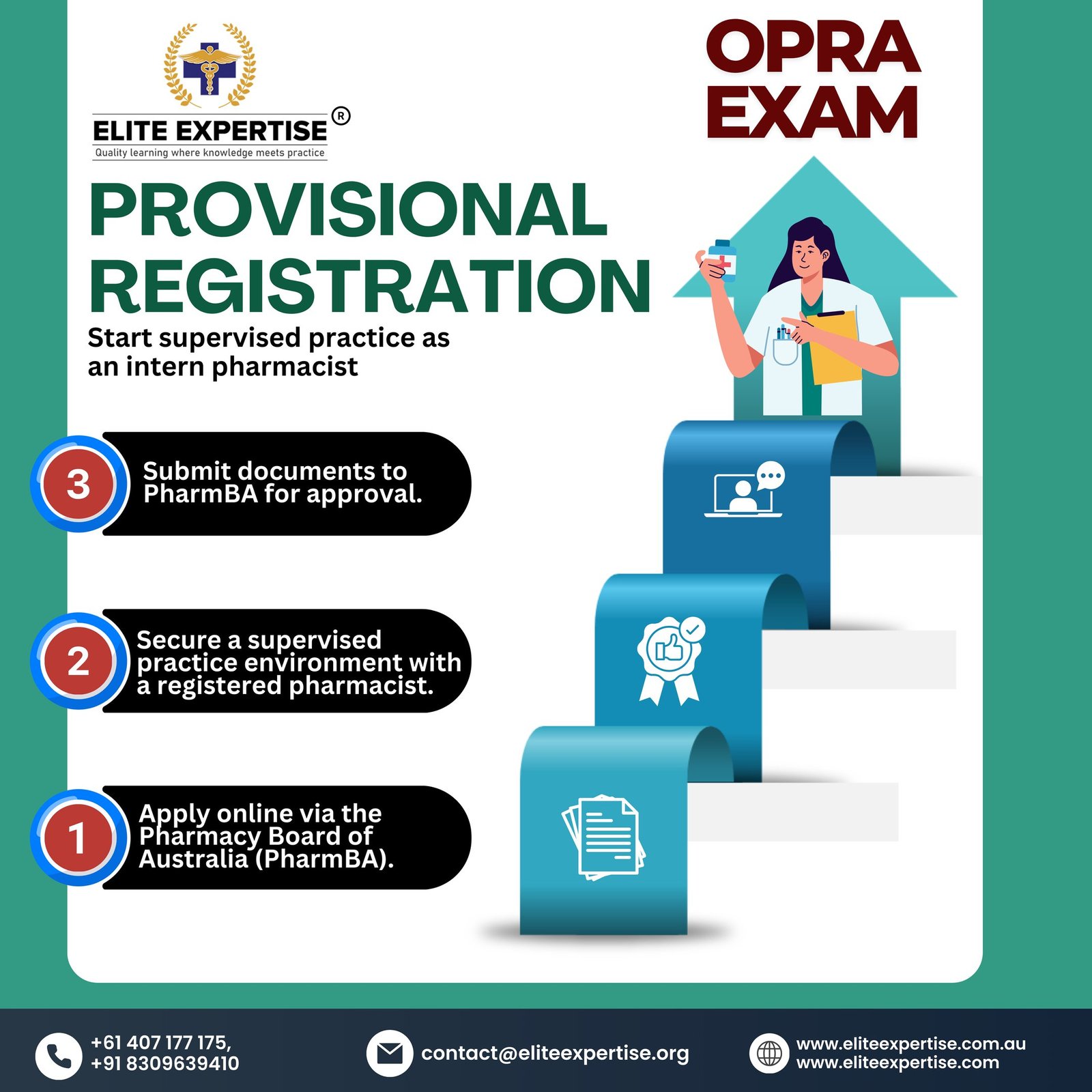
    You can apply for temporary registration or provisional registration with the Pharmacy Board of Australia (PharmBA) after passing the OPRA exam. You can start your supervised practice as an intern pharmacist with provisional registration.

    Steps for Temporary Registration:

    Apply Online: Fill out the PharmBA website’s online application.

    Create a Practice Environment Under Supervision: In order to complete your supervised practice under the supervision of a registered pharmacist, you must locate a pharmacy.

    Send PharmBA the documentation: Once your supervised practice environment has been secured, send in the necessary paperwork for approval.

    Await approval: You can begin your supervised practice as soon as you are approved.

    Step 4: Practice Under Supervision

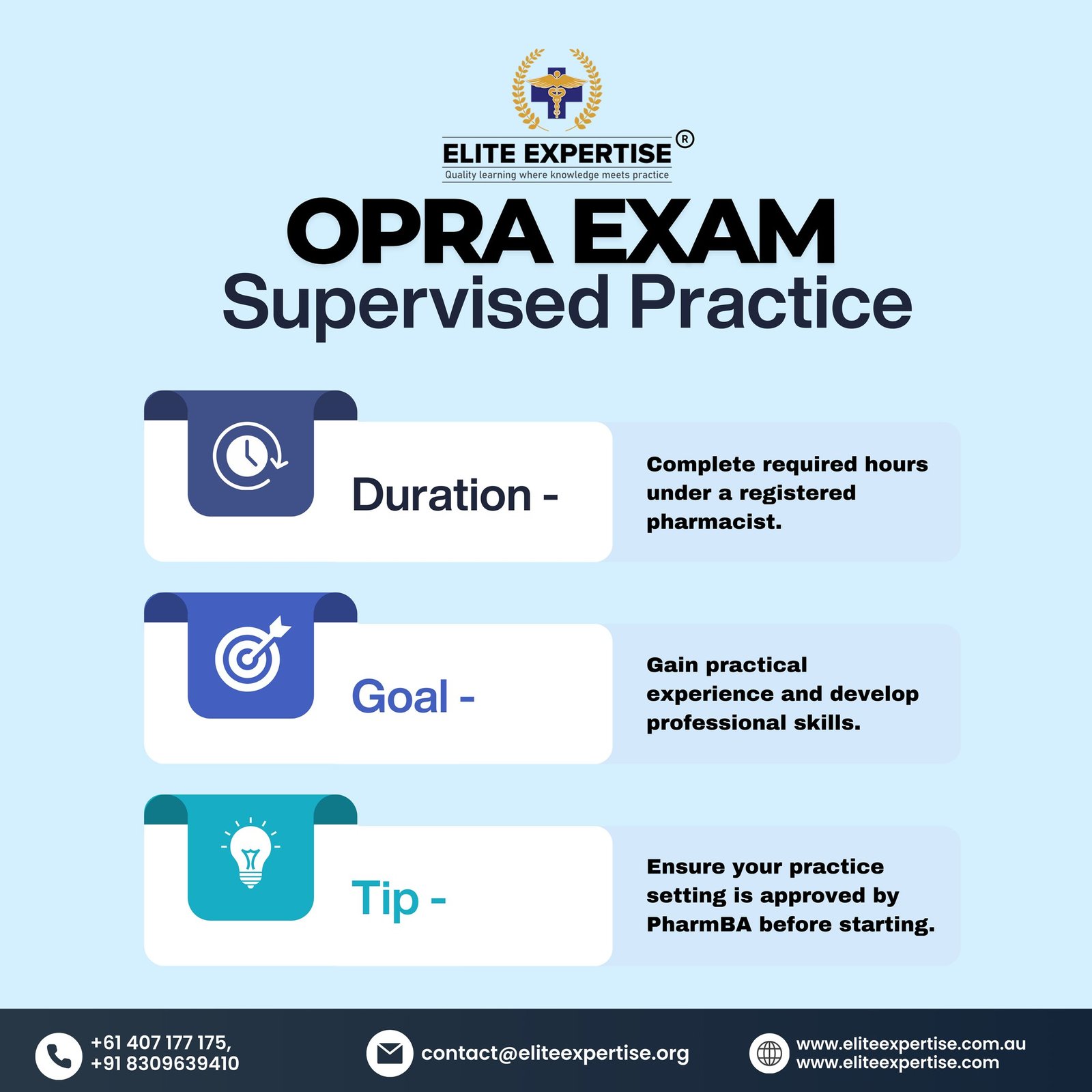
    An essential component of the procedure is supervised practice. As a pharmacy intern, you will obtain hands-on experience in pharmacy practice while working under the supervision of a registered pharmacist. The experience aids in the development of the abilities required to obtain full registration as a pharmacist in Australia.

    Important Note: Make sure your practice setting has been approved by PharmBA before starting your supervised practice. Until your registration and setting are confirmed, you cannot begin working as an intern.

    Step 5: Exams for Board Registration

    You will be required to take the written and oral exams for the internship after completing seventy-five percent of the required supervised practice hours. These tests evaluate your preparedness to work in Australia as a fully licensed pharmacist.

    • PharmBA conducted the oral exam for the Australian intern.

    You can apply for general registration as a pharmacist after passing these tests.

    Step 6: Complete Pharmacist Registration

    Following your successful completion of your supervised practice and Australian Intern written and Oral exams, PharmBA will grant you general registration as a pharmacist. You can now operate as a fully licensed pharmacist in Australia and offer the general public necessary pharmacy services.

    Locating a Practice Environment Under Supervision

    It can be difficult to find an appropriate supervised practice environment, but there are a few strategies to try:

    • Make connections with trade associations and professional associations.

    • To find out about opportunities, get in touch with pharmacy businesses directly.

    • Make use of your professional or personal connections in the healthcare sector.

    • For additional information on locating a suitable placement for supervised practice, get in touch with Aphra.

    Conclusion

    As an international student, becoming a pharmacist in Australia is a goal that is both structured and attainable. You can become a registered pharmacist in Australia by passing the eligibility check and OPRA exam and then obtaining provisional registration. Once you pass the Australian pharmacist intern written and Oral exams, after finishing supervised practice you will be registered as a pharmacist in Australia. International pharmacy graduates can have a rewarding career in Australia’s healthcare system with commitment, diligence, and careful planning.

    For those who are dedicated to meeting Australian standards and have a strong passion for pharmacy, the seemingly lengthy journey is well worth it.