Blog

  • PSI Ireland Exam for Indian Pharmacists

    For Indian pharmacist aspiring to practise abroad, Ireland provides with great opportunities. If you are aiming to build a successful pharmacy career abroad, the Pharmaceutical Society of Ireland (PSI) is the regulatory body responsible for the registration of pharmacists in Ireland. This process falls under “Third Country Qualification Recognition (TCQR) pathway.” For overseas-qualified pharmacists—including those from India—this a multi-step process where clearing the PSI’s qualification recognition process is an essential step towards working as a licensed pharmacist in Ireland.

    Key aspects that you’ll here:

    • PSI Eligibility

    • Application steps

    • Why Ireland is the choice for Indian pharmacists

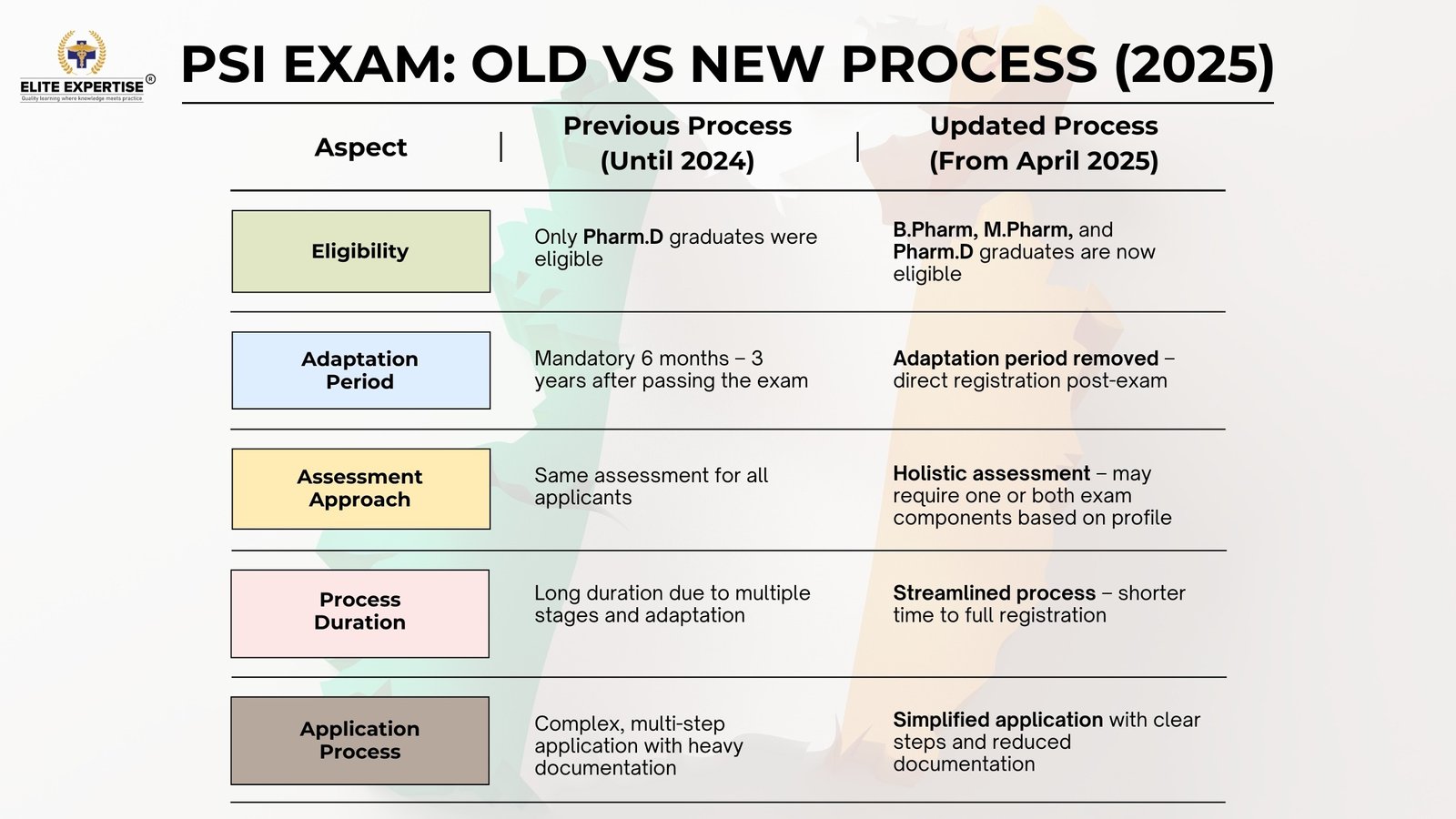
    • Differences in the old and new process.

    • Exams for PSI registration.

    • Tips for Indian pharmacists planning to register in Ireland.

    Why Choose Ireland for Your Pharmacy Career?

    There are many reasons for Indian pharmacists to get attracted towards a pharmacy career in Ireland and a few of them are listed for you to guide you through the decision of why choose Ireland:

    • Unlike India, Ireland offers competitive salaries and quality work-life balance

    • High standards of living when compared to India.

    • Even in the economic turndowns, the healthcare sector in Ireland is has been robust and resilient.

    • The shortage of skilled professionals like Pharmacists have a great demand in both urban and rural regions.

    • Opportunities in hospital, community, and clinical pharmacy

    • The registration process of Ireland via the PSI is more streamlined, easy and less time consuming in comparison to the other countries.

    • A gateway to work opportunities across the EU (post-registration)

    • It is a global hub of the pharmaceutical companies. It is the home country of about 85 pharma companies with 19 out of top 20 companies operating here.

    • Approximately 50 FDA-approved manufacturing plants are present in Ireland proving its dedication and commitment to international quality standards in pharmaceutical production.

    💡 Related Read:

    8 Benefits of Passing PSI Exam for Pharmacists in 2025 | Elite Expertise

    Step-by-Step Pathway for Indian Pharmacists
    1. Eligibility Check
    • Indian pharmacy graduates with a Bachelor of Pharmacy (BPharm) or MPharm or PharmD degree from a recognised institution are eligible

    • A valid pharmacist registration in India (e.g., from PCI or State Pharmacy Council)

    • English language proficiency (IELTS Academic, TOEFL iBT, CAE or OET Pharmacy accepted)–could add this as TOEFL iBT and CAE are also accepted

    2. Apply for Qualification Recognition: Stage 1

    As a first step you need to submit an application to the PSI for recognition of your qualifications. This is a mandatory step for not only Indian pharmacists but all the countries fall under the TCQR pathway or Third Country Qualification Recognition Pathway.

    For those do don’t know about the TCQR pathway, it’s the official process managed by the Pharmaceutical Society of Ireland (PSI) for pharmacists who obtained their pharmacy degree and training in a country outside of the European Union (EU) or European Economic Area (EEA).

    Documents required:
    • Academic transcripts

    • Degree certificates

    • Proof of registration as a pharmacist in India

    • Passport copy

    • Statement of professional experience (if any)

    You will submit these through the PSI Recognition of Non-EU Qualification process.

    To Apply for qualification process please download the relevant application forms from the following links:

    TCQR1 Application Form

    TCQR2 Statutory Declaration Form

    TCQR3 Certificate of Identity Form

    TCQR4 Regulatory Data Form

    3. Holistic Assessment:

    What happens after I submit my application?

    Stage 2: Holistic assessment where if an applicant possesses a qualification appropriate for practice, independent external assessors will carry out holistic paper-based assessments of the application and supporting documentation.

    The assessment will consider three components:

    Input component: assess the qualification of the applicant and training that they have gone through during education.

    Quality component: The quality assurance components of the regulatory system in place in the country where the applicant’s qualification was obtained, for example, whether the applicant’s primary qualification was accredited

    Output component: Assesses th applicant’s relevant post-graduate education, work experience and continuing professional development.

    • The input and quality component are assessed by external assessor.

    • If they are considered equivalent to Irish standards next step is assessing the Output component.

    After reviewing your documents, PSI may:

    • Grant automatic recognition (rare for non-EU degrees)- PATH A

    • Direct you to take an equivalency exam- PATH B

    • Refer you to the Third Country Qualification Recognition (TCQR) process, which includes a written exam and practical assessment

    Indian pharmacists are usually required to complete the TCQR process.

    4. PATH B:

    If there are any deficiency in your application you can go through examination stage

    If required, you will be asked to appear for:

    • Multiple-Choice Questionnaire (MCQ) test: Computer-based test covering pharmaceutical knowledge, clinical practice, and Irish pharmacy law.

    • Objective Structural Clinical Examination (OSCE): May include practical style clinical stations assessing the simulated real life case studies.

    5. Certification of registration:

    After successfully completing all exam you can apply for full registration with the PSI.

    Once registered, you can work as a pharmacist in Ireland and even explore mobility across the European Union under mutual recognition agreements.

    English Language Requirements

    Majority of the Indian pharmacists find difficulty with the language as English is not the native language. Therefore, one must prove the English language proficiency through tests accepted by PSI as communication is the key for this job role.

    Indian pharmacists must demonstrate proficiency in English via:
    • IELTS Academic: Overall score ≥ 7.0, no band < 6.5

    • OET Pharmacy: Minimum B grade in all sub-tests

    Job Prospects in Ireland for Pharmacists

    Once registered, you can apply for roles such as:

    • Community Pharmacist

    • Hospital Pharmacist

    • Clinical Pharmacy Specialist

    • Regulatory Affairs roles

    • Academic and Research positions

    Tips for Indian Pharmacists

    • Keep all your academic and registration documents in order

    • Start preparing early for PSI’s written and clinical assessments

    • Improve communication skills for patient-facing roles

    • Consider guidance from professional coaching or mentoring platforms like Elite Expertise for exam and adaptation support

    How Elite Expertise Can Help

    • At Elite Expertise, we support Indian pharmacists with:

    • PSI exam guidance

    • Comprehensive material for preparation

    • Guidance with document evaluation

    • Career counselling for Ireland and other countries (Australia, Canada, New Zealand) just to support the students. Avail this service talk to our 24*7 available admin team to get best options for you

    • One to one doubt consultation sessions

    • Mock tests curated for PSI exams

    Conclusion

    Working abroad is every man’s dream in India. The respect for the pharmacists attracts the Indian even more. The process is tough but you could achieve it with right guidance and preparation. Indian pharmacists can successfully register and build a rewarding career in Ireland via the TCQR process. With high demand for skilled professionals, Ireland remains one of the most promising destinations for internationally trained pharmacists.

    ⚠️ Disclaimer

    This blog is for informational purposes only and reflects our views and interpretations. While we strive for accuracy, licensing requirements and regulations may change. Readers are advised to verify information with official sources such as the Pharmaceutical Society of Ireland (PSI) and the Health Products Regulatory Authority (HPRA) before making any decisions. We do not assume responsibility for any actions taken based on the information provided.

    About the Author

    Sahana Rao

    Sahana Chinthapatla is renowned for her expertise in scientific and medical writing, backed by an MPharm in Pharmacology and years of experience in research analysis and scientific writing.

    As the Head Business Writer at Elite Expertise, she provides insightful and well-researched content on KAPS, OPRA, PEBC, PSI and global pharmacy pathways, guiding aspiring pharmacists in their professional journeys.

    Follow On

    Head Business Writer | Elite Expertise

  • Beta Blockers pharmacology A key topic in the OPRA Exam prepaparation

    Beta blockers are a class of medications that reduce blood pressure and heart rate by blocking beta

    What are Beta Blockers pharmacology: A key topic in the OPRA Exam

    Let’s learn about the Beta blocker pharmacology:

    Beta blockers are a class of drugs every overseas pharmacist must understand who are preparing for the OPRA exam (Overseas pharmacists Readiness Assessment) . This exam is conducted by Australian Pharmacy Council (APC) for evaluating overseas trained pharmacists who are aiming to become a registered pharmacist in Australia. These medications play a central role in managing cardiovascular disorders, making them a frequently tested topic in competitive exams like OPRA. This blog topic provides details about OPRA related overview of beta blockers, including their pharmacology, clinical use and potential side effects.

    What are beta-blockers?

    Beta blockers, also known as beta-adrenergic antagonists, are medication that blocks the effects of epinephrine (adrenaline) on the beta receptors. They are primarily used in cardiovascular diseases to manage conditions like hypertension, arrhythmias, angina, heart failure, and post myocardial infarction care

    Understanding the beta blocker
    Beta -1 receptor

    Primarily in heart and kidney

    • Increases heart rate (positive chronotropic effect)

    • Increases force of contraction (positive inotropic effect)

    • Increase renin release from kidney

    Beta-2 receptor

    Smooth muscles of bronchi, blood vessels etc

    • Bronchodilation

    • Vasodilation

    • Uterine relaxation

    • Glycogenolysis in liver

    Beta-3 receptor
    • Adipose tissue

    • lipolysis

    What is the Classification of beta blockers?

    Beta blockers are categorized based on their receptor selectivity and additional properties

    Non-selective beta blocker (Beta-1+beta-2)
    • Affect both heart and lungs

    • Medication should be used with caution in asthma or COPD

    • Examples: Propranolol, nadalol, timolol

      Cardioselective beta blockers
    • Act mainly on heart

    • Safer for patients with respiratory conditions

    • Examples: atenolol, metoprolol, bisoprolol

      Beta blockers with additional actions
    • With alpha-1 activity-Carvedilolo, labetalol

    • With intrinsic sympathomimetic activity-acebutolol, pindolol

    What is the mechanism of action of beta blockers?

    Beta blockers competitively inhibit beta-adrenergic receptors, leading to:

    • Decrease in heart rate and myocardial contractility (decreased cardiac output)

    • Decreases renin secretion, thus decreases secretion of angiotensin resulting in lowering of blood pressure

    • Decreased sympathetic stimulation of heart

    This mechanism underlies their role in treating cardiovascular and other sympathetic mediated disorders, a must for the OPRA Exam.

    What are the adverse effects of beta blockers?
    • Bradycardia

    • Hypotension

    • Fatigue or dizziness

    • Bronchospasm (especially in non-selective agents)

    • Cold extremities

    • Depression or vivid dreams

    • Masking of hypoglycemia symptoms in diabetics

    What are the contraindications of beta blockers?
    • Asthma or severe COPD (non-selective agents)

    • Severe bradycardia or heart block

    • Uncontrolled heart failure

    • Hypotension

    What are the common drug interactions with beta blocker?
    • With verapamil/diltiazem: increases the risk of bradycardia or heart block

    • With NSAIDs: may reduce the antihypertensive effect

    • Hypoglycemic against: masks the symptoms of low blood sugar

    • With clonidine: risk of rebound hypertension if both stopped abruptly

    Watch this :

    OPRA Exam Study Tips: Focus on Beta Blockers
    • Memorize the receptor selectivity and match with clinical indications

    • Understand the link between beta receptors and adverse effects

    • Know the therapeutic uses, especially in cardiovascular and nervous system conditions

    • Practice MCQs on mechanism of cation, adverse effects, and contraindications

    • Learn drug-specific differences

    Final thoughts

    Beta blockers represent a core content area in OPRA syllabus-understanding the pharmacology of the beta blockers make a significant difference in your exam performance. Master the mechanism of action, therapeutic roles, and safety profile to confidently approach related questions in OPRA exam

    Ready to start your OPRA Preparation:

    Join Elite Expertise, your trusted partner in pharmacist exam preparation. Our expert led OPRA coaching ensures complete coverage of clinical pharmacology topics, with structured lessons, practice tests, and personalized guidance.

    Krupa Karamchand is a B. Pharm graduate and KAPS-qualified pharmacist with over 7 years of experience in the pharmaceutical field. As an experienced SEO content writer, she combines her in-depth healthcare knowledge with proven digital strategies to create informative, engaging, and search engine–optimized blogs. Krupa is passionate about making complex medical topics easy to understand and accessible to all readers.

    Follow On

    Krupa Karamchand

    About the Author

    Content Writer | Elite Expertise

  • Understanding Parkinson’s Disease: Causes, Symptoms, Diagnosis & Treatment

    Parkinson’s Disease (PD) is a progressive neurodegenerative disorder that affects movement, coordination, and balance. It occurs when the brain cells that produce dopamine, a chemical essential for smooth muscle activity, start to deteriorate. The disease develops slowly and primarily affects people over the age of 60, although it can occur earlier (called early-onset Parkinson’s).

    With millions affected globally, understanding the basics of Parkinson’s disease is vital not just for healthcare professionals but also for caregivers and the community.

    Key Facts About Parkinson’s Disease (PD)
    • Parkinson’s is growing fast. Did you know that the number of people affected by Parkinson’s Disease is rising globally, leading to more disability and deaths.

    • Clinical diagnosis of PD by trained, non-specialized healthcare workers and simplified treatment guidelines offer better management in primary care settings.

    • The number of Parkinson’s disease cases globally is estimated to increase by 112% from 2021 to 2050.

    • The raise in population aging was forecasted to be the greatest contributor for this.

    • Over 25 million people globally will be living with Parkinson’s disease by 2050, according to a new analysis published in BMJ.

    Causes and Risk Factors of Parkinson’s Disease

    Although the exact cause of Parkinson’s isn’t known, genetic and environmental factors could be the possible triggers.

    Potential Causes:
    • Loss of dopamine-producing neurons in a part of the brain called the substantia nigra

    • Abnormal protein deposits (Lewy bodies) in brain cells

    • Mitochondrial dysfunction or oxidative stress

    • Inflammation in the brain

    Risk Factors:
    • Age: Mostly occurs in population over the bae of 60.

    • Gender: This disease is predominantly seen in Men than women (more common in men)

    • Family history also plays a major role in occurance of Parkinson’s disease.

    • Exposure to toxins, such as pesticides or heavy metals

    • Any history of Head trauma or brain injury might also be a trigger for Parkinson’s disease.

    Common Symptoms of Parkinson’s Disease

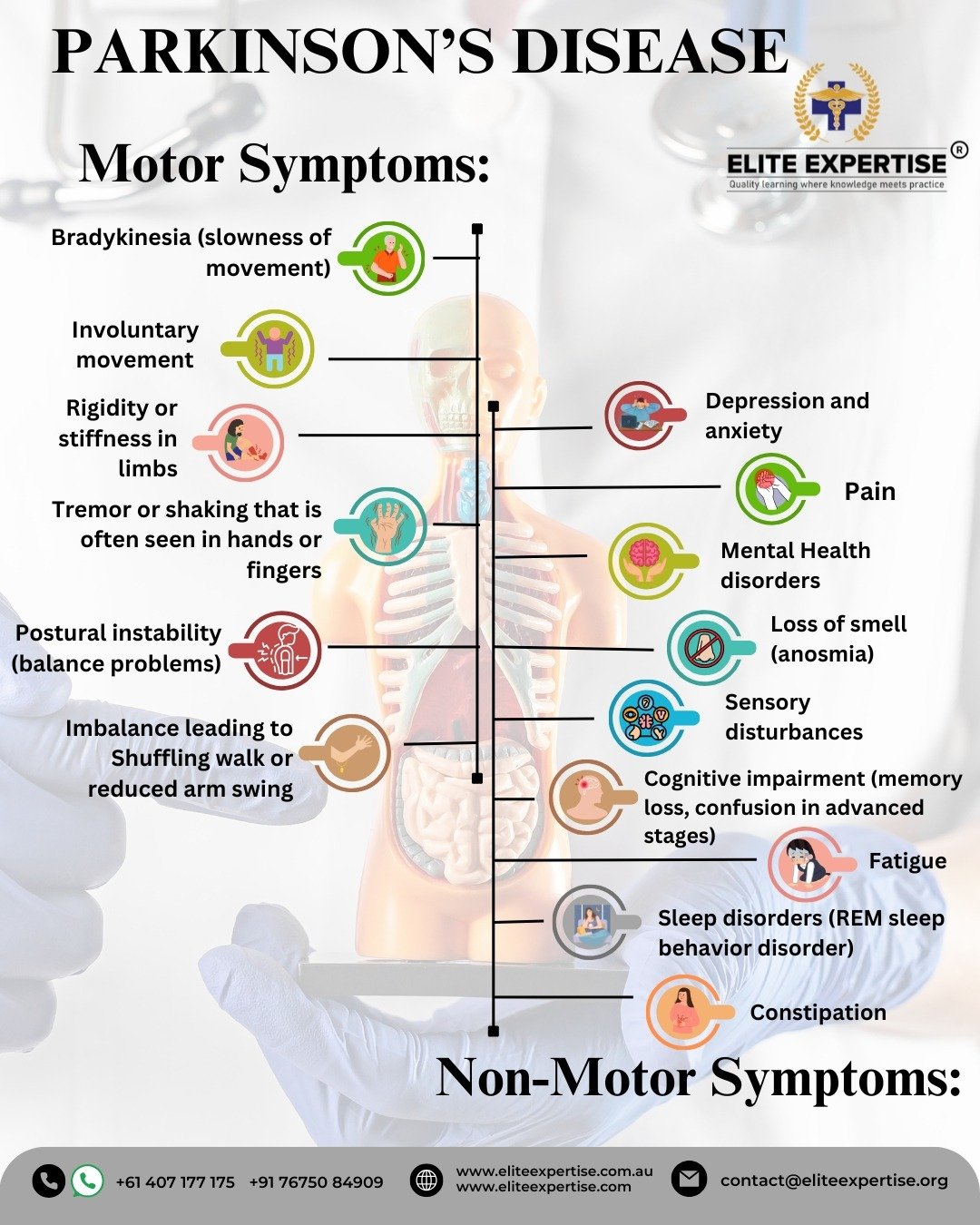
    Parkinson’s symptoms get worse over time. They usually begin on one side of the body and can be classified as motor (movement-related) or non-motor symptoms.

    Motor Symptoms:
    • Slow movement

    • Tremor or shaking that is often seen in hands or fingers

    • Bradykinesia (slowness of movement)

    • Involuntary movement

    • Rigidity or stiffness in limbs

    • Postural instability (balance problems)

    • Imbalance leading to Shuffling walk or reduced arm swing

    Non-Motor Symptoms:
    • Depression and anxiety

    • Pain

    • Mental Health disorders

    • Sleep disorders (REM sleep behavior disorder)

    • Loss of smell (anosmia)

    • Fatigue

    • Sensory disturbances

    • Constipation

    • Cognitive impairment (memory loss, confusion in advanced stages)

    Early symptoms like loss of smell or sleep issues can precede movement problems by years.

    How is Parkinson’s Disease Diagnosed?

    There’s no single test for Parkinson’s disease. Diagnosis is typically clinical and based on history, symptoms, and a neurological examination.

    Current estimates suggest that, in 2019, PD resulted in 5.8 million disability adjusted life years (DALYs), an increase of 81% since 2000, and caused 329 000 deaths, an increase of over 100% since 2000.

    Common Diagnostic Steps:
    • Neurological exam by a movement disorder specialist

    • Response to Parkinson’s medications (like levodopa)

    • MRI/CT scans to rule out other conditions

    • DaTscan imaging (in specialized cases) to assess dopamine activity

    Treatment Options for Parkinson’s Disease

    Global estimates in 2019 showed over 8.5 million individuals with PD. Parkinson’s has no cure, but symptoms can be managed effectively with medication, lifestyle changes, and therapies.

    Drugs for Managing Motor Symptoms in Parkinson’s Disease:

    1. Medications
    • Levodopa-Carbidopa – This is a gold standard for dopamine replacement

    • Dopamine agonists – These drugs mimic dopamine effects

    • MAO-B inhibitors – These drugs prevent breakdown of dopamine

    • COMT inhibitors – These drugs prolong the effect of levodopa

    2. Surgical Treatments
    • Deep Brain Stimulation (DBS): The motor symptoms can be reduced by Electrodes implanted in specific brain areas.

    3. Supportive Therapies
    • Physiotherapy – Improves balance and flexibility

    • Occupational therapy – improves the daily living skills

    • Speech therapy – Guides with speech and swallowing issues

    • Diet and exercise – Boost strength and mood

    Latest Research & Innovations

    • Gene Therapy Advancements: gene therapies are developed to target mutated genes associated with this disease.

    • Neuroprotective medications: New drugs in clinical trials aim to slow down or stop the aggravation of the neuronal damage rather than just managing the symptoms.

    • Stem cell therapies: Researchers are trying their best to explore stem cell therapies for dopamine-producing neuron regeneration and restore the lost brain function.

    • Wearable devices and AI monitoring: to monitor symptoms and medication effects

    • Research into gut-brain connection and the role of the microbiome in Parkinson’s progression

    Parkinson’s Awareness: Why It Matters

    Did you know that every year, the month of April is recognized as Parkinson’s Awareness Month, but this not just restricted to this moth and requires a year-round awareness. The quality of life of those affected with Parkinson’s can be improved with early detection, community support, and ongoing research.

    Conclusion: Living with Parkinson’s – Hope and Progress

    Parkinson’s Disease does affect the patient suffering with it but the entire family and friends would be affected emotionally. This is a life-changing diagnosis, but it doesn’t define a person’s life. With the right combination of early diagnosis, personalized treatment, and support, people with Parkinson’s can lead meaningful and active lives.

    As science advances, so does hope. Continued education, awareness, and innovation will pave the way toward better care—and eventually, a cure. This topic is an important topic when it comes to the licensing like OPRA/KAPS (Australia, New Zealand), PEBC (Canada), PSI equivalence exam (Ireland) and also pharmacy related tests like GPAT (India). Elite Expertise, helps with providing information on topics related to pharmacy and the syllabus content areas for the above-mentioned exams. Therefore, do subscribe to out website blogs to be current with the pharma insights.

    Also read topics like: What Is Mounjaro (Tirzepatide) and How Does It Work? | Elite Expertise

    Dementia: Causes, Symptoms, Types & Care Options | Elite Expertise

    Anemia: Causes, Symptoms, Types & Treatment Options | Elite Expertise

    ⚠️ Disclaimer

    The information provided in this article is for educational and informational purposes only and is not intended as a substitute for professional medical advice, diagnosis, or treatment. Always seek the advice of your physician, pharmacist, or other qualified healthcare provider with any questions you may have regarding a medical condition or treatment, including Parkinson’s disease. Never disregard professional medical advice or delay in seeking it because of something you have read here. The mention of specific countries or product approvals is accurate to the best of our knowledge at the time of writing but may change as regulatory decisions evolve.

    About the Author

    Sahana Rao

    Sahana Chinthapatla is renowned for her expertise in scientific and medical writing, backed by an MPharm in Pharmacology and years of experience in research analysis and scientific writing.

    As the Head Business Writer at Elite Expertise, she provides insightful and well-researched content on KAPS, OPRA, PEBC, PSI and global pharmacy pathways, guiding aspiring pharmacists in their professional journeys.

    Follow On

    Head Business Writer | Elite Expertise

  • What is Metabolic Acidosis? What are the types, causes & treatment?

    Metabolic acidosis is a significant topic in medical and clinical practice, especially in critical care and nephrology. It can arise from various health conditions and requires timely recognition and appropriate management. Understanding its different types, the root cause, and knowing the available treatment strategies are essential for effective patient care. This blog concisely overviews metabolic acidosis, focusing on its classification, common triggers, and standard treatment regimen.

    What is Metabolic acidosis?

    Metabolic acidosis is a serious acid-base disturbance that occurs when the body produces too much of acid, loses too much of bicarbonate, or when the kidneys fail to excrete enough acid. It results in a low blood pH (<7.35) and reduced serum bicarbonate levels (<22 mEq/L). This condition indicates that the body is struggling to maintain its normal acid-base balance, which is critical for proper cellular functions and overall metabolic processes.

    Metabolic acidosis is not a disease but rather a symptom of an underlying problem, and identifying the root cause is essential for effective treatment.

    What are the categories of metabolic acidosis?

    Metabolic acidosis is commonly categorised based on the Anion Gap (AG), which helps differentiate the cause:

    1. High Anion Gap Metabolic Acidosis (HAGMA)

    In HAGMA, an accumulation of acids that are normally present in the blood is not measured in routine blood tests, hence the increase in the gap.

    Causes of HAGMA are: (Mnemonic: MUDPILES)

    • Methanol

    • Uremia (chronic kidney)

    • Diabetic ketoacidosis

    • Paraldehyde or propylene glycol

    • Isoniazid or iron oversee

    • Lactic acidosis

    • Ethylene glycol

    • Salicylates (aspirin overdose)

    👉Also Read: Anemia: Causes, Symptoms, Types & Treatment Options

    What are the key factors that cause metabolic acidosis?

    1. Increased acid production

    • Lactic acidosis: seen in conditions like sepsis, hypoperfusion, shock, or intensive exercise

    • Ketoacidosis: in diabetes (DKA), alcohol use (AKA), or starvation stress

    • Ingested toxins: Methanol, ethylene glycol, or aspirin can produce acidic metabolites

    2. Loss of bicarbonate ions

    • Gastrointestinal loss: chronic diarrhea, pancreatic fistula

    • Renal loss: In renal tubular acidosis, bicarbonate reabsorption is impaired

    3. Decreased renal acid excretion

    • Chronic kidney disease reduces the kidneys’ ability to excrete hydrogen ions and regenerate bicarbonate.

    • Obstructive uropathy or acute renal injury may contribute.

    What are the major symptoms of metabolic acidosis?

    Symptoms vary depending on the severity and underlying conditions, but some common symptoms are:

    • Respiratory compensation: rapid and deep breathing as the body tries to blow off Carbon dioxide

    • Neurological symptoms: confusion, drowsiness, lethargy, headache

    • Gastrointestinal: Nausea, vomiting, abdominal pain

    • Cardiovascular: hypotension, arrhythmias, shock

    • Fatigue and weakness

    • In severe cases, if not treated, it can lead to coma and death.

    What is the Diagnostic approach?

    Accurate diagnosis involves a combination of laboratory tests and clinical evaluations

    1. Arterial Blood Gas (ABG)

    • Confirms acidemia (pH:<7.35)

    • Shows low bicarbonates

    1. Anion Gap Calculation

    • Normal AG: 8-12 mEq/L

    • High AG indicates the accumulation of unmeasured acids

    1. Serum Lactate and Ketones:

    • Elevation in lactic acidosis and ketoacidosis, respectively

    1. Renal function tests:

    • Accelerated creatinine

    1. Urine pH & Urinary Anion Gap

    • Helps to identify the tubular cause

    1. Toxicology screening poisoning is suspected of poisoning.

    What are the common treatments?

    1.Treat the underlying cause.

    • In case of Diabetic ketoacidosis: Administer insulin, IV fluids, correct electrolytes

    • Lactic acidosis: improve tissue perfusion, oxygenation, and treat sepsis

    • Toxin ingestion: use antidotes, perform dialysis if needed

    • Diarrhea: Rehydrate, and replace bicarbonates if severe

    • Renal failure: may require dialysis

    2.Restore Electrolyte balance

    • Correct potassium, calcium, and magnesium imbalances

    • Monitor fluid status closely

    3. Monitor blood gases and pH

    • Adjust treatment based on responses.

    • Use serial ABGs for critical cases.

    When to consider bicarbonate treatment?

    Bicarbonate therapy is not always indicated and may sometimes worsen the outcome if misused. Consider IV sodium bicarbonate if:

    • Severe acidemia (pH <7.1) causing cardiac dysfunction or arrhythmias

    • Renal failure where bicarbonate regeneration is impaired

    • Hyperkalemia coexisting with acidosis

    Caution:

    • Avoid in lactic acidosis unless pH is dangerously low

    • Rapid correction may cause alkalosis, hypokalemia, or fluid overload

    👉Also Read: ACE inhibitors (Angiotensin-Converting Enzyme Inhibitors)

    What are the supportive and ongoing care?

    Once stabilized, the focus shifts to preventing recurrence and long-term management.

    • Manage chronic kidney disease, diabetes, or other causative conditions

    • Regular monitoring of electrolytes and ABGs

    • Educate patients about diet, hydration, and medication compliance

    • For inherited or chronic causes (RTA), oral alkali therapy may be required long-term

    Summary

    Metabolic acidosis is a critical condition that reflects a disruption in the body’s acid-base equilibrium. Whether due to excess acid, loss of bicarbonate, or impaired renal function, it requires timely identification, accurate diagnosis, and targeted treatment. Understanding the underlying cause is essential to guide the therapy.

    With appropriate interventions, most cases of metabolic acidosis are reversible, and treatment improves with early detection and management.


    About the Author

    Krupa Karamchand

    Content Writer | Elite Expertise

    Krupa Karamchand is a B. Pharm graduate and KAPS-qualified pharmacist with over 7 years of experience in the pharmaceutical field. As an experienced SEO content writer, she combines her in-depth healthcare knowledge with proven digital strategies to create informative, engaging, and search engine–optimized blogs. Krupa is passionate about making complex medical topics easy to understand and accessible to all readers.

    Follow On

  • Pharmacy Careers Summit 2025: Why You Should Attend

    The Pharmacy Careers Summit (PCS25) is Australia’s virtual event, where leaders from all pharmaceutical industries unite to deliver insights on career opportunities. This summit, which is entirely free and online and scheduled for July 4, 2025, is free and online.

    This summit will have 50+ experts, interactive workshops, and live booths to meet and talk with pharmacy leaders and employers.

    What is the Event About?

    In 2024, the event received 1,900 registrations, winning the Best Virtual Summit award at the Eventeer Awards.

    Whether you are looking to start your pharmacy journey, pharmacist employment opportunities, or pharmacist jobs, PCS25 will offer meaningful networking.

    Let’s look at what’s more in store:

    • Industry trends, evolving roles from across the community, hospital, regional, and international pharmacy

    • Practical sessions on developing CVs and interviews

    • Win prizes and climb the leaderboard by interacting with the exhibitors, attending sessions, and participating in discussions.

    • Gain 3 CPD hours, such as training courses, workshops, and other learning experiences

    What are the Event Features?

    • Acknowledgment of Country and Summit Overview

    • Panel Talks by Pharmacy Guild, PSA, AdPha, and more

    • Discover opportunities in rural pharmacy in rural regions.

    • Career Workshops on resumes, interviews, internships, and the pharmacy business

    • Meet leading employers, interact with them, and get to know their hiring opportunities

    • Learn the current stage of wages and conditions for pharmacists

    • Pathways offered from Australian and New Zealand universities leading to careers, post-graduate options, and practical aspects of pharmacy education

    • Discover the National Australian Pharmacy Students’ Association (NAPSA). Get involved and understand policies, professional development, community from them

    • Clinical innovation, research insights, and entrepreneurship in pharmaceutical practice

    • Explore training and recognition programs that can build a career path and gain recognition for your pharmacy expertise across Australia.

    • Learn about hospital pharmacy – the journey, challenges, roles, and rewards.

    • Live Virtual Expo with recruiters and educational providers

    Who Can Attend This Event?

    • Undergraduate/Postgraduate pharmacy students

    • Intern pharmacists

    • Candidates exploring pharmacist employment opportunities

    • International pharmacy graduates aiming to work in Australia

    • Pharmacy employers & training institutes

    How to Register?

    The registration for PCS is straightforward and simple. It doesn’t require any password authentication, so you can log in smoothly and at any time.

    1. Visit the Register section at the official website.

    2. Fill in your details, like student status or pharmacist intern.

    3. Confirm your registration via email.

    4. Join the virtual event on July 4, 2025

    Meet the Exhibitors – Elite Expertise

    Elite Expertise is a standout exhibitor and training provider dedicated to international pharmacists aiming to work in Australia, New Zealand, Ireland, Canada, the UK, and the USA.

    They’re returning after their strong presence in 2024, here to guide again.

      Specialized Exam Prep: Providing courses like OPRA (Australia), PEBC (Canada), PSI Equivalence (Ireland), English Proficiency Courses such as PTE, tailored for those seeking licensure in Australia, Canada, Ireland, and moreGlobal Career Support: Assisting international graduates with exam prep, registration steps, and transition to practice in Australia.

    • Championing Clinical Excellence: Learn from Arief Mohammad and Harika Bheemavarapu, working as accredited consultant pharmacists in major hospitals of Australia. They help guide aspirants and make them future-ready to work as licensed pharmacists.

    • At the summit, you can:

      • Chat live with their expert team

      • Explore exam courses or alumni successes

      • Learn how to fast-track your pharmacy registration journey

      Why This Should Be on Your Calendar

      Pharmacy is rapidly evolving – from clinical roles to digital platforms, to rural care, and more. PCS25 offers a one-stop workshop-like experience covering this entire scope. It’s the perfect setting to:

      • Get inspired by industry and business leaders (e.g., Guild, PSA, AdPha)

      • Gain hands-on insights from ownership case studies and strategic career sessions.

      • Connect with training providers (like Elite Expertise), recruiters, and institutions—all without leaving home.

      Final Thoughts

      The Pharmacy Careers Summit 2025 is more than another online event – it is a pathway to gain insight into your professional journey.

      Whether you’re a student, intern, seasoned pharmacist, or international graduate, PCS25 offers guidance, opportunity, and growth, all for free and from the comfort of home.

      Don’t miss the chance to explore and connect with leading names in pharmacy. See you on July 4!

    About the Author

    Radhika

    Content Writer | Elite Expertise

    Radhika loves all things content! With a Master’s in English Literature and over 4 years of experience in digital strategies. She specializes in creating engaging content across diverse industries – including healthcare, technology, and e-commerce – always writing content that connects to its readers.

    Follow On

  • PharmD Career Outlook 2025: Key Job Opportunities in India and Abroad

    Global healthcare is evolving drastically, and the demand for skilled pharmacy professionals is on the rise. For Pharm.D graduates, 2025 will be a shaping year for full new possibilities in India and internationally. With advancements in clinical research, pharmacovigilance, digital health, and personalized medicines, the career outlook for Pharm. D graduates in 2025 are not just promising; it’s transformative.

    This blog will explore the key career opportunities for Pharm. D graduates in 2025, the skills needed to stay competitive, and strategies to advance in this dynamic profession.

    Overview of Global Job Market Trends for Pharm.D Graduates in 2025

    In 2025, several global healthcare trends are influencing the Pharm. D job market

    • Personalized & Precision medicine: The growing emphasis on patient-specific therapy is increasing demand for clinical pharmacists with expertise in genomics and pharmacokinetics

    • Telepharmacy and Digital health: virtual consultations and AI-driven drug therapy monitoring are creating roles in telepath platforms and health-tech startups

    • Aging populations & Chronic disease: Countries with aging demographics (e.g., the US, Canada, and Japan) need more clinical pharmacists in ambulatory care, geriatrics, and chronic care management.

    • Regulatory affairs & Global trials: With increased international clinical trials, Pharm.D graduates are being recruited in roles involving regulatory writing, pharmacovigilance, and drug safety monitoring

    What is the Current Job Market for Pharm D Graduates in India?

    • Hospital pharmacies and clinical roles: Pharm. D graduates are increasingly recruited into private hospitals for clinical pharmacy services, medication reconciliation, and patient counseling.

    • Pharmacovigilance & Drug safety: Major pharma companies and CRO’s in India are hiring Pharm D for adverse drug reaction (ADR) monitoring, signal detection, and safety reporting

    • Academia and training: Growing Pharm. D programs have opened teaching opportunities for advanced graduates and PhD students.

    👉 Also Read: Job opportunities for Pharm D students Overseas

    What are the Emerging Trends in 2025?

    • Government Healthcare schemes: initiatives like Ayushman Bharat may soon integrate clinical pharmacists into primary healthcare setups

    • Digital Health Startups: India’s expanding health-tech ecosystem is hiring a Pharm. D professionals for roles in digital therapeutics, e-pharmacy regulations, and AI-assisted medication management.

    What are the New growing Job roles for Pharm. D graduates (India & Abroad)in 2025?

    What are the key skills and knowledge Pharm. D graduates must acquire by 2025?

    To remain globally competitive, Pharm. D graduates should develop both Clinical competencies and global health skills.

    Essential skills:

    • Clinical pharmacology and therapeutic decision making

    • Adverse event monitoring and drug safety

    • Strong grasp of international regulatory guidelines (eg, FDA, EMA, ICH)

    Digital skills

    • EHR software knowledge, pharmacy management tools awareness

    • Data analytics and health informatics

    • Exposure to AI/ML applications in pharmacy

    Communication skills

    • Scientific writing and patient communication

    • Cross-cultural professional interactions

    • English language fluency (for abroad licensure attempt exams like: OET, PTE, IELTS)

    What Are the Strategies to Excel in Pharm. D Career in 2025?

    1. Get certified: Specialisation courses in pharmacovigilance, regulatory affairs, or clinical trials from globally recognised platforms like DIA, Coursera, or Medvarsity.

    2. Plan licensing exam if planning to become a registered pharmacist abroad: OPRA (Australia, New Zealand), PEBC (Canada), NAPLEX (USA), PSI (Ireland), DHA/MOH (UAE)

    3. Gain practical exposure: Intern with hospitals, research centres, or CRO’s to build clinical knowledge.

    4. Build global networks: Connect with international professionals and mentors using platforms like LinkedIn, pharmacy forums, and alumni networks.

    5. Stay updated by subscribing to journals like Clinical Pharmacists, Journal of Pharmacy Practice, and Pharmacotherapy and attending related webinars, conferences, and virtual workshops.

    👉 Also Read: Global Career Opportunities for Pharm.D Graduates

    Conclusion:

    In 2025, Pharm D graduates will have more career choices than before, with strong demand both in India and internationally. Whether you aim to become a clinical pharmacist, regulatory expert, drug safety officer, or explore telepharmacy and digital health, the opportunities are expanding fast.

    With the right skills, certifications, and global mindset, Pharm D graduates can carve a rewarding career path that contributes meaningfully to modern healthcare, anywhere in the world.

    About the Author

    Krupa Karamchand

    Content Writer | Elite Expertise

    Krupa Karamchand is a B. Pharm graduate and KAPS-qualified pharmacist with over 7 years of experience in the pharmaceutical field. As an experienced SEO content writer, she combines her in-depth healthcare knowledge with proven digital strategies to create informative, engaging, and search engine–optimized blogs. Krupa is passionate about making complex medical topics easy to understand and accessible to all readers.

    Follow On

  • How to Become a Pharmacist in Australia – 2025 Guide

    Why Australia needs more pharmacists

    In Australia, there is a strong demand for pharmacists due to the expansion in the healthcare sector, particularly in regional areas like Victoria or New South Wales, which together need 60% of the national pharmacist workforce. The evolving role of pharmacists, including expanded prescribing rights in some states, further increases the need for skilled pharmacists in this field.

    Which are the Australian Regulatory bodies?

    Pharmacy Board of Australia (PharmBA): This regulatory body is responsible for registering pharmacists and students, developing professional standards, and handling notifications and complaints

    Australian Health Practitioner Regulation Agency (APHRA): It works in partnership with the National Boards to ensure that Australia’s registered health practitioners are suitably trained, qualified, and safe to practice

    Australian Pharmacy Council (APC): Assess the skills of overseas pharmacists and accredits educational programs in Australia and New Zealand.

    What are the Eligibility Criteria for Overseas Pharmacists?

    Recognised Qualifications: Pharmacy degrees from Australia, Canada, Ireland, New Zealand, the UK, or the USA are considered recognized.

    Non-Recognized Qualification: Degrees from other countries require a skills assessment through the APC’s Knowledge stream.

    Key requirements are:

    Candidates who are planning to attempt the OPRA Exam australia must meet the following requirements:

    Educational Qualification:

    Candidates must hold a B. Pharm, M. Pharm, or Pharm. D degree from a recognized university.

    The qualification must be equivalent to at least 4 years of full-time academic study obtained after January 1, 2006.

    You must be eligible for registration as a pharmacist in your home country

    Also Read: M.Pharm in Australia vs OPRA Pathway: Best Route to Become a Pharmacist in 2025

    What are the steps involved in the Australian Pharmacist registration Process: Step-by-step

    Submit Qualifications for Assessment via APC: Apply for a skills assessment outcome through the APC’s process. Submit all your documents, and APC will evaluate if the qualification meets the Australian standards and will provide a positive outcome.

    Sit for the OPRA Exam: The Overseas Pharmacists Readiness Assessment Exam tests whether overseas pharmacy graduates are equivalent to Australian standards by testing their knowledge and readiness to work in pharmacies.

    Apply for APHRA Provisional Registration: After passing the OPRA Exam, you can apply for a provisional license to work as an intern pharmacist in Australia.

    Complete an Internship year under supervision: Undertake a supervised practice period to gain practical knowledge from a fully registered pharmacist in Australia.

    Sit for the Australian Intern Written and Oral exam: These exams assess the skills, knowledge, and experience gained during the internship period. Successfully clearing these exams makes a candidate ready to work in Australian Pharmacies with quality and safety.

    Obtain General registration as a Pharmacist: After successfully completing all these steps, candidates can apply for general registration and work as fully licensed pharmacists in Australia.

    Overview of the OPRA Exam:

    The OPRA exam is a computer-based multiple-choice exam conducted three times a year (March, July, and November). It assesses the foundational and applied pharmaceutical knowledge of overseas-trained pharmacists to ensure alignment with Australian standards. It is often seen as the stepping stone towards becoming a registered pharmacist in Australia.

    Important dates for the OPRA Exam

    OPRA Exam Pattern: What to Expect

    The OPRA is outcome-based and tests applied clinical knowledge, communication, and patient-centered decision-making. It includes:

    • 120 MCQs in a single paper

    • Time limit: 2.5 hours

    • Format: Computer-based, closed-book exam

    OPRA Exam Structure & Format

    Exam content breakdown:

    Scoring Method of the OPRA Exam: Rasch Methodology

    The OPRA Examination is scored by Rasch Methodology. It is a globally respected psychometric model. It ensures:

    • Objective, fair scoring based on question difficulty

    • Equal assessment of candidates regardless of test version

    • Consistency in performance measurement

    This method supports a competency-based approach, focusing on readiness for real-world pharmacy practice in Australia.

    Also Read: OPRA Exam Syllabus Details

    Cost Breakdown & Timeline

    Succeed your OPRA journey with Elite Expertise

    Preparing for the OPRA Exam is not just about hard work but also about competent guidance and targeted OPRA exam preparation. That’s where Elite Expertise plays a crucial role.

    Elite Expertise is a premier global training institute that specializes in licensure exam preparation for countries such as Australia, Canada, Ireland, and New Zealand.

    Our Educators:

    Mr. Arief Mohammad: Consultant clinical pharmacist- Melbourne, Australia

    Mrs. Harika Bheemavarapu: Consultant clinical pharmacist, Melbourne, Australia

    As highly experienced clinical pharmacists, they bring practical knowledge and real-life-based learning into the classroom. Their personalized mentorship, structured study plan, and interactive teaching method make complex topics accessible.

    Also Read: Exploring Global Career Opportunities for Pharmacists

    Why choose Elite Expertise for your exam preparation?

    • 80+ Expert-led live lectures and recordings

    • Real-time exam simulation and mock tests

    • Personalized monitoring

    • 100+ Case study discussions

    • Success-proven strategies aligned with APC standards

    Thousands of overseas pharmacists trust Elite Expertise every year to help them fulfill their dream of practicing in Australia.

    Join Elite Expertise and turn your goals into reality with guidance from world-class educators, a structured roadmap, and unwavering support.

    Also Read: Pharmacist Registration in Australia: Step-by-Step Guide for Overseas-Trained Pharmacists

    Final Thoughts

    Embarking on the journey to become a registered pharmacist in Australia is a significant commitment in terms of time and resources. However, the increased demand for pharmacists in Australia and the opportunities to contribute meaningfully to Australia’s healthcare system make this pathway a rewarding career choice.

    ⚠️ Disclaimer

    This blog is for informational purposes only and reflects our own views and interpretations. While we strive for accuracy, guidelines and requirements may change. Readers are advised to verify information with official sources such as the Australian Pharmacy Council (APC) and Ahpra before making any decisions. We do not take responsibility for any actions taken based on the information provided.

    About the Author

    Krupa Karamchand

    Content Writer | Elite Expertise

    Krupa Karamchand is a B. Pharm graduate and KAPS-qualified pharmacist with over 7 years of experience in the pharmaceutical field. As an experienced SEO content writer, she combines her in-depth healthcare knowledge with proven digital strategies to create informative, engaging, and search engine–optimized blogs. Krupa is passionate about making complex medical topics easy to understand and accessible to all readers.

    Follow On

  • How to Prepare for the OPRA Exam – Guide for Overseas Pharmacists

    The Overseas Pharmacist Readiness Assessment (OPRA) exam helps candidates become registered pharmacists in Australia and New Zealand. Although the process of becoming one might seem overwhelming, it is not impossible.

    This guide will cover how to prepare and things to look for when appearing for the exam so that your career doesn’t take a backseat.

    What is the OPRA Exam?

    The OPRA exam full form stands for Overseas Pharmacist Readiness Assessment exam. It assesses a candidate’s knowledge of biomedical, pharmaceutical, and clinical sciences to practice pharmacy in Australia and New Zealand.

    The OPRA exam is a faster, more affordable route to practice pharmacy in Australia. Passing this exam shows the applicant’s understanding of the regulations and readiness to integrate into the Australian healthcare system as a registered pharmacist in Australia.

    In addition to this, you must register for the English language proficiency test. English language requirements are strict. You will need to demonstrate good English language proficiency to effectively communicate at work. For this, you can take an online preparatory course.

    You can find a detailed guide about the exam here.

    What are the Key Changes in the OPRA Exam Format?

    Earlier applicants used to appear for the KAPS exam, which used to assess their skills to work as a registered pharmacist in Australia. Since March 2025, it has now been replaced by the OPRA exam. According to the Australian Pharmacy Council (APC), the OPRA exam format has key changes.

    • Shorter than the KAPS exam (2 papers), while OPRA has a single paper. All questions will be multiple choice.

    • Although the content is similar between the two exams. It has been moderately revised. OPRA focuses more on therapeutic and application of knowledge questions.

    • Updated the way of scoring

    • Cost is reduced

    It’s important to stay updated with the latest OPRA Exam dates and syllabus changes, which are usually announced by the APC well in advance.

    What Has NOT Changed in the OPRA Exam?

    Despite the evolving nature of pharmacy practice, several core elements remain consistent in the OPRA exam in Australia:

    • The difficulty of the exam remains the same

    • The eligibility and registration process remain unchanged

    • It will be conducted in test centres only

    • No changes in the number of attempts or validity of results

    How to Prepare for the OPRA Exam?

    Earlier, candidates were required to appear in the KAPS exam; however, OPRA has replaced it since March 2025. Preparing for the OPRA Exam requires a structured approach and access to quality resources.

    The OPRA exam is a closed-book, computer-based assessment conducted at authorised testing centres.

    Before moving forward with the strategy, let’s look at what the exam entails:

    • The exam has 120 multiple-choice questions, one of which is correct and the other three are incorrect.

    • The time to finish the exam is 2 hours and 30 minutes.

    • You are allowed only 5 minutes before the exam to read and accept a non-disclosure agreement and 10 minutes to go through a tutorial about the exam software.

    • After the exam, a feedback survey that takes 5 minutes to complete is available for you.

    • Such surveys will not affect your total exam time. The timer runs from the moment you start a question.

    • Each exam session consists of multiple live test versions, assigned randomly. All questions are also shown in random order.

    Let’s look at the strategy:

    Understand the Pattern

    One single paper, 120 questions, lasts 2.5 hours. Keeping this in mind will ensure a good understanding of this exam.

    Know the Syllabus

    Study the most recent and updated syllabus of the exam. Identify core topics and competencies and prioritise your time accordingly

    Practice Regularly

    Use mock tests and past papers. Try to practice within the 2.5-hour time limit. This will improve your time management and concentration skills.

    Understand the Rasch Methodology

    The Rasch method assesses a candidate’s answer, the difficulty of the question, and then decides the score. This ensures performance-based evaluation. Familiarise yourself with this to develop adaptability.

    Join a Coaching Program

    Enroll in a reputable OPRA Exam preparation course such as Elite Expertise. Our experts are clinical pharmacists in Australia with 10+ years of teaching experience.

    Most importantly, ensure you meet the OPRA exam eligibility criteria, including educational qualifications and language proficiency.

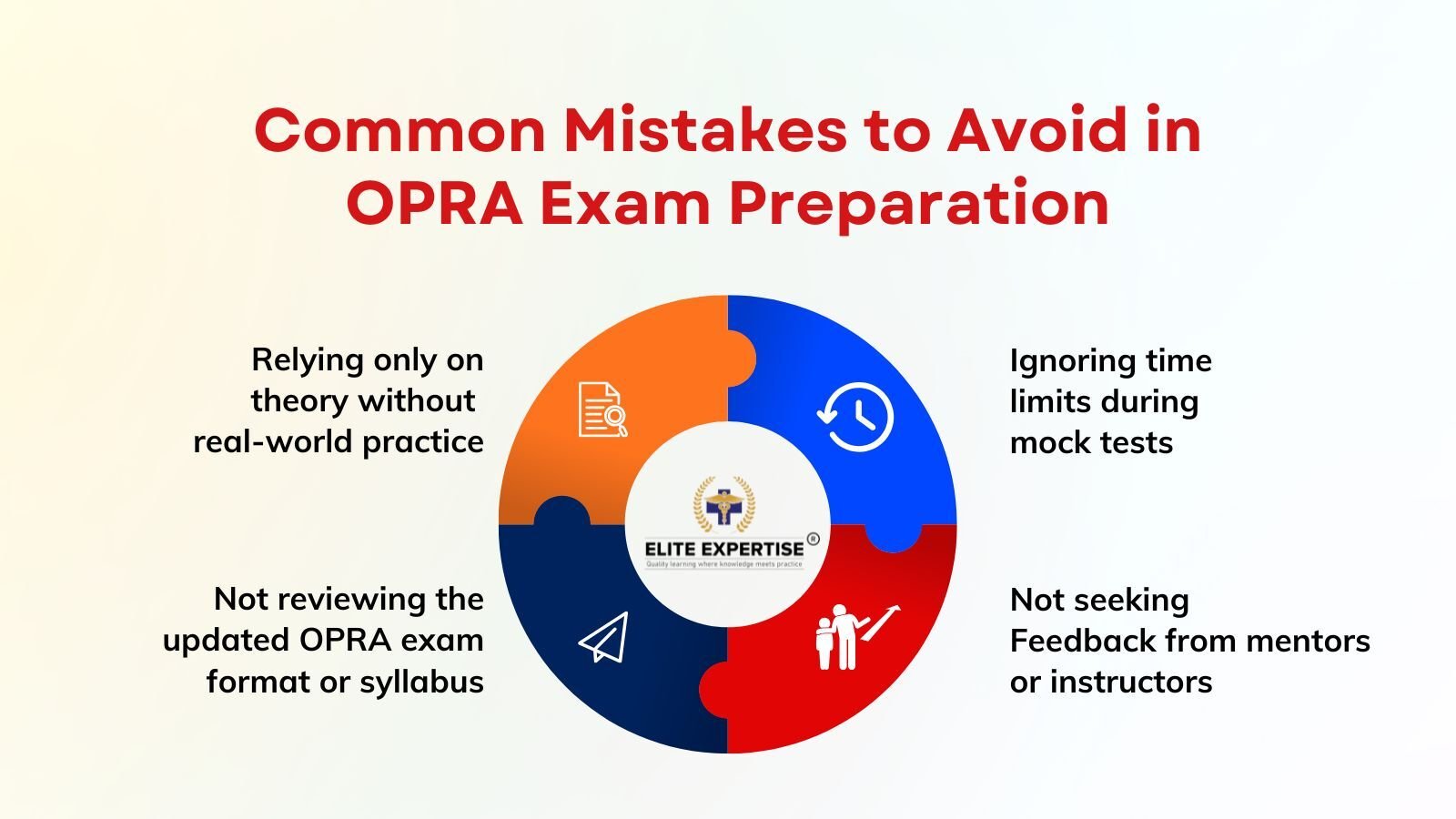
    What are the Common Mistakes to Avoid?

    Many candidates underestimate the intensity of the OPRA Exam and make preventable mistakes during preparation, such as:

    • Relying solely on theory without practicing hands-on skills

    • Not reviewing recent changes to the OPRA Exam format or syllabus

    • Ignoring time limits during practice sessions

    • Failing to seek feedback from experienced mentors or instructors

    It’s important to understand that self-study alone may not be enough to pass the exam. To succeed, you’ll likely need comprehensive explanations and proper guidance to prepare for and tackle the exam effectively.

    How Much Does the OPRA Exam Cost?

    The cost is different for each stage in the exam.

    How Elite Expertise Can Help You Prepare

    At Elite Expertise, we specialize in preparing overseas pharmacists for the OPRA exam. Our expert-led programs are designed to give you the knowledge, skills, and confidence needed to excel.

    Our services include:

    Live and recorded video tutorials for 3.5 months

    Mock exams that simulate real test environments

    Personalized feedback and performance analysis

    Access to up-to-date study materials and question banks

    We understand the challenges faced by international pharmacists and tailor our curriculum accordingly.

    Whether you’re looking for guidance on OPRA exam eligibility, cost-effective preparation options, or insights into upcoming OPRA exam dates, Elite Expertise is your one-stop solution.

    Conclusion

    Your path to success is not a distant dream. Preparing early for the OPRA exam and avoiding common errors are essential so you can progress in your career without any hindrances.

    Begin early, keep yourself updated, and get good training. We at Elite Expertise are with you all the way to help you reach your goals and be successful in your journey to become a licensed pharmacist in Australia.

    ⚠️ Disclaimer

    The information provided on this blog is for informational purposes only. While we strive to provide accurate and up-to-date information about the OPRA exam, the official resources from the Australian Pharmacy Council and the Pharmacy Board of Australia are the definitive sources of information.

    About the Author

    Radhika

    Content Writer | Elite Expertise

    Radhika loves all things content! With a Master’s in English Literature and over 4 years of experience in digital strategies. She specializes in creating engaging content across diverse industries – including healthcare, technology, and e-commerce – always writing content that connects to its readers.

    Follow On

  • OPRA Exam Age Limit Explained: 2025 Guide for International Pharmacists

    OPRA exam age Limit

    The OPRA exam, or the Overseas Pharmacists Readiness Assessment, is the licensing exam for international pharmacists who aspire to practise in Australia. One of the “frequently asked questions” by international pharmacists is “What is the age limit for the OPRA exam?” So, let’s understand the keys aspects of age limit, how they might impact your application, also discussing how to prepare for the OPRA exam effectively.

    What is the OPRA exam age limit?

    The OPRA exam is conducted by the Australian Pharmacy Council (APC) to assess whether the candidate meets Australian Healthcare standards. When it comes to opting for a pharmacy career overseas, the international pharmacists often have a series of questionnaire on what is the eligibity, how many years is the exam valid, licensing pathway and age limit. Amongst all these the most common one is on the age limit.

    To answer this fortunately “No! There is no official age limit for attempting the OPRA exam in case of international pharmacists either in Australia or New Zealand.” Whether you are experienced pharmacists planning to migrate to Australia or a candidate who just finished your graduation you’ll be eligible to give the exam as long as you the meet the other criteria like academics and professional requirements.

    This reflects the APC believes in the evaluating the pharmacists on the basis of the skills and competencies required for Australian Healthcare system rather than age.

    What matters more than “Age?”

    For the OPRA exam eligibility the following are considered:

    • A minimum four-year recognised pharmacy degree

    • Must be either registered as a pharmacist in the country of graduation or eligible to register or registered as a pharmacist in another country where the registering authority is recognised by APC.

    • Skills assessment by the APC

    • You must be a candidate from countries other than:

    Australia, Canada, Ireland, New Zealand, the UK or the USA.

    Step-by-step licensing process for international pharmacists to practise in Australia:

    • Check your eligibility through skills assessment process and submit all the required documents for the same.

    • Once eligible clear the OPRA exam

    • The Skill assessment outcome letter and proceed to visa application and take the English language proficiency test.

    • Migrate to Australia

    • Get yourself registered as provisional pharmacists with the board

    • Apply for Internship under the supervision of a preceptor.

    • After completion of 75% of the intern hours you become eligible for the Australian pharmacist’s intern written and oral exam.

    • Once you complete the rest of the intern hours and clear the intern exams apply for full registration as a pharmacist with Pharmacy board of Australia.

    How many times is the OPRA exam conducted yearly?

    Now that you have understood the process the next question is “will I get enough time for my preparation if I decide to give the OPRA exam?” and “how many times will this exam be conducted all through year?”

    Well, the exam is conducted thrice a year and allowing maximum number students to write the exam.

    Mentioned below are the important dates related to OPRA exam, the registration dates and the result dates. Having an awareness of this well ahead of time will allow you to start your preparation at the earliest.

    OPRA Exam Format:

    This the exam that evaluates whether candidates have the necessary knowledge and understanding of the biomedical, pharmaceutical, and clinical sciences underlying the practice of pharmacy in Australia. This exam is a replacement for the KAPS exam or in full Knowledge Assessment of Pharmaceutical Sciences from March 2025 where the first OPRA exam was conducted by the APC.

    This exam is:

    • Computer-delivered

    • Multiple choice Question (MCQ) based

    • With 120 questions

    • To be completed in 2.5 hours

    • Exam fees is AUD 2190

    • And assesses 5 main content areas, here is the blue print:

    Also read: OPRA Exam Syllabus Details | Elite Expertise

    Self-study or Coaching for OPRA exam?

    OPRA exam preparation could be quite exhausting considering the vast syllabus. But with better mentoring and guidance this process could be easier with lesser efforts, especially if you are working professional or have long gap in your academics and work pertaining to pharmacy. Here are a few things explaining why self-study is better than Coaching.

    Why Choose Elite Expertise?

    • Best trainers for OPRA exam considering the success rate for both OPRA and KAPS exam.

    • Best trainers available, Mrs Harika Bheemavarapu and Mr Arief Mohammad, who are both consultant Clinical pharmacists in Australia.

    • One payment and we take the responsibility until you pass the exam giving unlimited access to all the facilities until you pass the exam.

    • One-to-one doubt solving session

    • Online coaching, reducing the hassle of travel

    • 300 plus hours of training

    • Curated mocks

    • Comprehensive training with access to all the study materials and handouts

    • Once you are done with OPRA exam we provide guidance for Ahpra registration and intern written and oral exam too.

    Conclusion:

    OPRA exam is not easy to clear but with right guidance and smart preparation, things get easier and the journey seems joyful. There is no specific age limit for the OPRA exam, meaning anyone who fulfil the eligibility criteria are free to attempt for a pharmacist dream in Australia.

    Why wait start your OPRA exam Preparation with Elite Expertise today. Register Now!

    This blog is for informational purposes only and reflects our own views and interpretations. While we strive for accuracy, guidelines and requirements may change. Readers are advised to verify information with official sources such as the Australian Pharmacy Council (APC) and Ahpra before making any decisions. We do not take responsibility for any actions taken based on the information provided.

    ⚠️ Disclaimer

    About the Author

    Sahana Rao

    Sahana Chinthapatla is renowned for her expertise in scientific and medical writing, backed by an MPharm in Pharmacology and years of experience in research analysis and scientific writing.

    As the Head Business Writer at Elite Expertise, she provides insightful and well-researched content on KAPS, OPRA, PEBC, PSI and global pharmacy pathways, guiding aspiring pharmacists in their professional journeys.

    Follow On

    Head Business Writer | Elite Expertise

  • Latest Changes to the PEBC Exam (2025 Update)

    The Pharmacy Examining Board of Canada (PEBC) has announced significant updates to the Pharmacist Evaluating Examination, which is all set to take effect in June 2025. These changes, once set into motion, will mark an important evolution in how internationally trained pharmacists are being assessed before beginning their practice in Canada.

    The basic goal is just one – to ensure transparency and competency when registering internationally-trained pharmacists, so that the healthcare system of Canada recruits only the best and smartest of all pharmacists out there.

    This educational update is based on the latest educational standards and curriculum changes in Canadian pharmacy schools and aims to improve the alignment between pharmacy education and professional practice. So, whether you are an international graduate preparing for your licensing exam, or an advisor helping candidates navigate the PEBC process, this article will walk you through the key updates, their implications, and what to expect.

    Why Did PEBC Revise The Exam?

    The previous blueprint, published by PEBC, and last revised in 2015, was based on a system where most Canadian pharmacy schools offered a four-year Bachelor of Science in Pharmacy degree.

    Since then, every accredited pharmacy program in Canada has transitioned to a more robust and clinically focused entry-level Doctor of Pharmacy (PharmD) degree.

    This evolution in pharmacy education meant that the PEBC had to adapt its evaluating exam to reflect:

      The updated Pharm.D. curriculumThe changing scope of pharmacy practice

    • Emerging healthcare priorities such as equity and cultural safety

    Key Changes To The 2025 PEBC Evaluating Exam

    Given below is a detailed breakdown of the changes made to the PEBC Pharmacist Evaluating Examination:

    Removal of Biomedical Sciences

    One of the most prominent changes is the removal of Biomedical Sciences as a distinct subject area. This includes subjects like anatomy, physiology, microbiology, and pathology.

    Why? These topics are now considered ‘prerequisites’ to the Pharm.D. programs in Canada. As such, they are no longer directly tested in the PEBC Evaluating Exam, and hence have been taken off the charts for good.

    Redistribution of Exam Content

    With the exclusion of Biomedical Sciences, the exam’s content has been redistributed across three main subject areas, with added emphasis on Pharmacy Practice and Social Determinants of Health.

    This redistribution of testing subjects supports the growing importance of patient-centered care, cultural competence, and health system navigation skills.

    Inclusion of New Topics

    The revised blueprint of PEBC also expands to incorporate modern public health themes, which are now important to pharmacy practice in Canada.

    The new and updated content of PEBC includes:

      Health equitySocial determinants of healthCultural diversity and safety

    • Indigenous health

    • This inclusion reflects the Canadian healthcare system’s commitment to delivering inclusive and equitable care, particularly for marginalized communities.

    New Subject Area Weights:

    Changes in Exam Structure and Duration

    Previously, the PEBC Evaluating Exam contained 150 multiple-choice questions (MCQs). As of June 2025, this number will be reduced to 140.

      The exam will still be divided into two sections.Each section will have 70 questions.

    • Candidates will be given 90 minutes per section, for a total duration of 180 minutes.

    • The reduction in exam length is designed to maintain the energy of the candidates while minimizing fatigue, improving the overall test-taking experience.

      Understanding The Three-Step PEBC Certification Process

      For internationally trained pharmacists, the pathway to PEBC certification includes three major steps:

      Step 1: Document Evaluation

      PEBC reviews your educational and professional background to determine your eligibility.

      • Some candidates (e.g., from other foreign universities, such as the Qatar University, Lebanese American University) may qualify for a streamlined process, skipping Step 2.

      Step 2: Pharmacist Evaluating Examination

      The Pharmacist Evaluating Exam has undergone key changes:

      New Blueprint (June 2025):

      • Now, the exam will consist of 140 MCQs (down from 150), split into two 90-minute sections.

      • Biomedical Sciences removed.

      • Greater focus on Pharmacy Practice (55%), Pharmaceutical Sciences (25%), and Behavioural, Social & Administrative Sciences (20%) including topics like Indigenous health, health equity, and cultural safety.

      Also read: PEBC Evaluating Exam Update: May 2025 Eligibility Changes for IPGs | Elite Expertise

    New Streamlined Pathway (Effective May 13, 2025):

    Many international graduates no longer need to take the Evaluating Exam. You may be exempt if:

    • You graduated from an ACPE or CCAPP-accredited program, or

    • You have worked in direct patient care (1+ year, unrestricted license) in countries like the US, UK, Ireland, Australia, New Zealand, or South Africa.

    If you are not an eligible candidate, then you must complete this exam before taking the Qualifying Exams.

    Please have a look at this video for better understanding: PHARMACIST IN CANADA 2025 PEBC EXAM 2025 NEW UPDATES CANADA PHARMACIST INDIA #shorts #india #canada

    Step 3: Pharmacist Qualifying Examination

    This has two parts:

    Part I (MCQ): Tests application of knowledge

  • Part II (OSCE): Objective Structured Clinical Examination to test practical skills.

  • How Will These Changes Affect Candidates?

    All in all, the revised blueprint is not expected to significantly affect pass rates, since the changes are largely a reallocation of familiar topics.

    However, now, the candidates will need to adjust their preparation strategies to reflect the:

      New emphasis on pharmacy practiceGreater focus on health systems, policy, and equity

    • Less importance placed on biomedical sciences

      Recommended Preparation Strategies:

    • Use updated review guides aligned with the new blueprintFocus on case-based questionsBe aware of public health and policy discussions in Canada

    • Practice cultural safety scenarios

    Why Is This Change Important For Canadian Healthcare?

    Pharmacists are a key part of the frontline healthcare workforce in Canada. With increasing complexity in medication therapy and a growing need for preventive care, the role of pharmacists is expanding.

    The new exam blueprint ensures that future pharmacists are well-prepared to:

      Communicate effectively with diverse populationsProvide safe and evidence-based care

    • Understand broader healthcare and social policies

    • This also aligns with the Truth and Reconciliation Commission’s Calls to Action in Canada, particularly in recognizing the role healthcare professionals play in promoting cultural safety and Indigenous health equity.

    At A Glance: 2025 PEBC Exam Changes

    Role of Elite Expertise in PEBC Exam Preparation

    Elite Expertise is a reliable and trusted educational platform brand when it comes to training pharmacy professionals, particularly the internationally-trained ones, to pass the PEBC examinations.

    Established by Mrs. Harika Bheemavarapu and Mr. Arief Mohammad, Elite Expertise has assisted hundreds of international pharmacy graduates with a systematic, thorough process of licensing in Canada.

    This is the way in which Elite Expertise supports future pharmacists:Blueprint-Aligned Curriculum: The courses are currently modified to the most recent 2025 PEBC blueprint, and there is a significant emphasis on Pharmacy Practice and the knowledge of the Canadian healthcare system.

    Practice-Oriented Learning: Students work on actual case scenarios and practice mock tests that are designed keeping the real exam in mind.

    Live And Recorded Sessions: The ability to flexibly access lectures means that professionals across all time zones can take part. Candidates have the option of availing both online and offline lectures, which further adds to the comfort of accessing these lectures from within their homes.

    Professional Faculty And Mentorship: The trainers at Elite Expertise are certified pharmacists, who know the exam, back to front. They are also aware of the way the candidates are likely to be questioned in the exam, and therefore, make sure that all the candidates are prepared accordingly for the exam.

    Emphasis on New Subjects: Subjects such as Indigenous health, cultural safety, and health equity are incorporated into the course content.

    Led by the charismatic personalities of Mrs. Harika Bheemavarapu and Mr. Arief Mohammad, Elite Expertise has quickly established itself as a destination of choice among the candidates seeking personal attention and high-quality teaching that is geared towards PEBC success.

    You can find out more about their programs by visiting the official page of Elite Expertise or by getting in touch with them to enroll in their programs.

    Final Thoughts

    The PEBC’s 2025 exam blueprint brings Canadian pharmacy assessment into alignment with modern education and healthcare priorities. For candidates, this means preparing not only for drug knowledge but also for public health, cultural sensitivity, and system navigation.

    Resources like Elite Expertise offer structured, expert-led guidance that can make the journey easier and more effective.Get ready, stay focused, and take advantage of support systems designed to help you succeed in your Canadian pharmacy career.

    This blog is for informational purposes only and reflects our views and interpretations. While we strive for accuracy, licensing requirements and regulations may change. Readers are advised to verify information with official sources such as the Pharmacy Examining Board of Canada (PEBC) and the National Association of Pharmacy Regulatory Authorities (NAPRA) before making any decisions. We do not assume responsibility for any actions taken based on the information provided.

    ⚠️ Disclaimer

    About the Author

    Sahana Rao

    Sahana Chinthapatla is renowned for her expertise in scientific and medical writing, backed by an MPharm in Pharmacology and years of experience in research analysis and scientific writing.

    As the Head Business Writer at Elite Expertise, she provides insightful and well-researched content on KAPS, OPRA, PEBC, PSI and global pharmacy pathways, guiding aspiring pharmacists in their professional journeys.

    Follow On

    Head Business Writer | Elite Expertise