Blog

  • How Do I Become a Pharmacist in Ireland

    Pharmacist in Ireland

    Key Highlights

    • PSI registration is a must for all pharmacists in Ireland.

    • Graduates from the EU/EEA apply under the EU professional recognition.

    • Graduates from non-EU/EEA countries (for example India, Pakistan) have to take the Third Country Qualification Recognition (TCQR) path.

    • Only when PSI finds missing parts in the training is the Equivalence Exam required.

    • Fees: Application (€500), Assessment (€1,000), Exam if required (€3,000), Appeal (€300).

    • The topics covered in the curriculum are pharmaceutical sciences, law, clinical pharmacy, and communication.

    • The salary of a pharmacist in Ireland is between €60,000 and €80,000 per year.

    Pharmacy in Ireland is an excellent career, where a pharmacist from abroad can make a valuable contribution to the healthcare system which is highly regarded in Europe. Nevertheless, just as you would have to register with the PSI (Pharmaceutical Society of Ireland) – the regulatory body that looks after the profession and ensures the safety of patients – you cannot start working before your registration.

    The exact way to become a pharmacist in Ireland is determined by the country of your qualification. We will compare the step-by-step processes of a graduate from an EU/EEA university and a graduate from a non-EU/EEA university, mentioning not only the fees but also the requirements and means of preparation.

    PSI & the MPharm – Foundation for All Candidates

    Pharmacy education in Ireland is mainly built around the five-year integrated Master’s in Pharmacy (MPharm) programme which is accredited by PSI. The core of the program is advanced pharmaceutical sciences supplemented with intensive practical placements in community, hospital, and industrial pharmacy. Through the APPEL consortium, students are guaranteed access to placement opportunities to experience real-world exposure from year 2 onwards.

    PSI is comparing your degree and training with the standards of this MPharm programme to make a decision if your qualification is equivalent, if you are an international candidate.

    For EU/EEA Citizens & Graduates

    Degree Recognition

    Those who hold degrees from the EU/EEA countries submit their applications according to Directive 2005/36/EC for automatic professional recognition.

    Adaptation (If Necessary)

    PSI may decide that the training is so different that they will choose an adaptation period (supervised practice) or an aptitude test to overcome the difference.

    English Proficiency

    Graduates from the EU/EEA must demonstrate their competence in English (e.g., IELTS 6.5 overall or OET Grade B) before they can be registered with PSI.

    Registration with PSI

    First-time registration which is the process that allows you to practise in Ireland, is made when you are eligible to register after recognition and English requirements.

    For Non-EU/EEA Graduates (India, Pakistan & Others) – TCQR Pathway

    Step 1: Application Submission

    The candidate must submit necessary documents, including a degree certificate, full transcripts, supervised practical training records, a certificate of good standing from your home regulator, and a valid ID. Payment of the application fee of €500.

    Step 2: Holistic Assessment

    PSI assesses and compares your educational qualifications with the Irish MPharm standards. Fee: €1,000.

    Result:

    • Path A: The degree is equivalent → hence, go on with the registration directly.

    • Path B: The identification of gaps → the candidate is given the Equivalence Exam.

    Step 3: Equivalence Exam (If Path B)

    A candidate may be required to attend one or both of the exams:

    • Written Exam (MCQs + Case-Based Questions): The knowledge of the candidate is tested regarding sciences, law, and clinical pharmacy.

    • OSCE (Objective Structured Clinical Examination): The practice stations present the skills of communication, dispensing, patient counselling, and ethics.

    Fee: €3,000

    Watch now : https://youtu.be/q_IzfWQ8sj0

    English Proficiency

    English language requirements and evidence are essential at the registration stage for Non-EU/EEA applicants. English language test results such as IELTS (overall 6.5 minimum) or OET (Grade B) are usually acceptable.

    Adaptation Period (If Required)

    Mostly non-EU candidates are assigned exams; however, PSI keeps the prerogative to decide on the necessity of an adaptation period on the grounds of a thorough assessment.

    Professional Registration Examination (PRE)

    Along with recognition, the candidates’ group may be required to take PRE, the Professional Registration Examination in Ireland. The point of PRE is to ensure that all newly registered individuals’ knowledge and skills are at the standard level for safe practice in Ireland, regardless of whether they are from the EU or a non-EU country.

    Final PSI Registration

    The application for first-time registration can be made once the TCQR, exams (if any), and English requirements are met. Registration entitles you to be employed as a pharmacist in Ireland legally.

    PSI Exam Syllabus Overview

    The examination is a reflection of the Irish MPharm programme results. PSI offers a provisional syllabus and a reading list that includes:

    • Pharmaceutical Sciences – pharmacology, pharmaceutics and medical chemistry

    • Clinical Pharmacy – Therapeutic decision making, case-based learning and drug monitoring

    • Pharmacy law & practice- Controlled substance, Irish pharmacy legislation and ethics.

    • Public health & Patient Care – Adverse Drug Reaction reporting, vaccination & patient counselling.

    Recommended books are Aulton’s Pharmaceutics, FASTtrack Clinical Pharmacy, Rang & Dale’s Pharmacology, and Pharmacy and Medicines Law in Ireland.

    PSI Fees Breakdown

    Salary of a Pharmacist in Ireland

    The salary level of pharmacists in Ireland is in the top range of the healthcare sector.

    • Entry-Level: €60,000 – €70,000/year

    • Experienced Pharmacists: €75,000 – €85,000/year

    • Pharmacy Managers/Specialists: €90,000+

    • Average Annual Salary: ~€82,000 with additional allowances or bonuses of ~€2,000.

    This is one of the main reasons why Ireland is at the top of the list of the most attractive destinations for healthcare professionals from India, Pakistan, and other countries who are looking for opportunities abroad.

    Final Thoughts

    Pharmacists in Ireland need to be developed step by step and be in compliance with the PSI guidelines. Generally, EU/EEA graduates can achieve this goal without much hassle since their professional qualifications are recognised directly. The Indian or Pakistani and other non-EU/EEA trained professionals have to take the TCQR route and possibly. The equivalence exam to be considered at par with the Irish pharmacists.

    The whole process is very difficult and overwhelming with the right preparation or syllabus familiarity and professional advice can pave the way for success. Ireland not only pays well to pharmacists but also provides them with world recognition and a rewarding profession.

    About the Author

    Aditi Pathak

    Content Writer | Elite Expertise

    Aditi Pathak is an experienced SEO content writer with over 4 years of expertise in crafting engaging, well-researched, and search engine–optimized content. Currently pursuing her Master’s in English, she brings together strong academic knowledge and creative writing skills to deliver blogs and articles that are both informative and reader-friendly. Aditi is passionate about simplifying complex topics into clear, accessible content that resonates with diverse audiences. Her focus lies in creating value-driven content strategies that enhance online visibility while keeping readers informed and engaged.

    Follow On
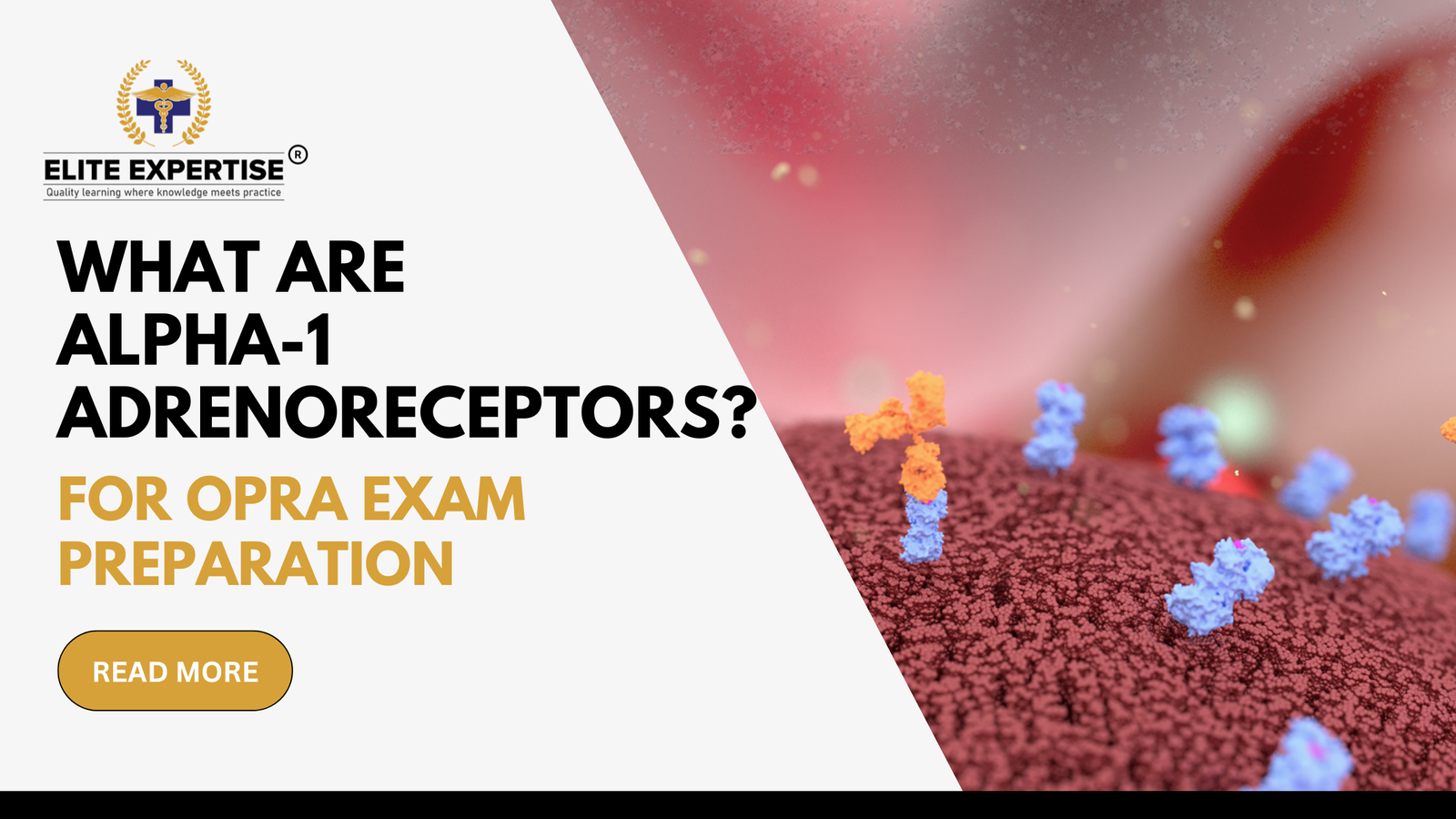
  • What are alpha-1 adrenoreceptors: Core topics for OPRA Exam preparation 2025

    Key takeaways

    • Adrenergic receptors (alpha 1) are a group of receptors that are seen in various smooth tissues, including the brain, heart, kidney, and smooth muscles.

    • They are part of the fight-or-flight responses.

    • These alpha receptors mainly respond to epinephrine and norepinephrine

    • Two types of drugs will affect the alpha receptors: Alpha-1 stimulators (agonists), Alpha-1 blockers (antagonists)

    • For competitive exams like OPRA, understanding the pharmacology, mechanism of action, and clinical significance of alpha receptors plays a significant role

    Alpha adrenergic receptors are primarily found in smooth tissues of the brain, heart, kidney, and visceral smooth muscles. Understanding the vital role of these receptors is very significant for healthcare professionals.

    For competitive exams like OPRA, understanding pharmacology, the mechanism of action, and clinical significance plays a crucial role.

    For the OPRA Exam, Pharmacology and therapeutics come under high-yield topics. Questions related to the mechanism of action, classification, and clinical relevance are often asked in exams like OPRA. The Overseas Pharmacists Readiness Assessment exam is a competitive examination that evaluates the core knowledge of overseas pharmacists in accordance with Australian standards. Such topics are crucial for pharmacists who work closely with patients, providing them with first-class care that is both safe and effective.

    What are Alpha-adrenoreceptors?

    Adrenergic receptors (alpha 1) are a group of receptors that are seen in various smooth tissues, including the brain, heart, kidney, and smooth muscles.

    • These come under the category of the sympathetic nervous system

    • They are part of the fight-or-flight responses.

    • Significant actions of these receptors are tissue contraction and cell cycle progression.

    • These alpha receptors mainly respond to epinephrine and norepinephrine (Cetecholamines).

    • The alpha-adrenergic antagonists produce arterial smooth muscle relaxation, vasodilation, and a reduction in blood pressure. Excessive vasodilation causes hypotension and can lead to reflex tachycardia.

    • They are G-protein-coupled receptors.

    What is the location of Alpha-1 receptors?

    They are mainly seen throughout the body. Especially in the smooth tissues of the brain, heart, kidney, and smooth muscles of the viscera

    What are the physiological effects of alpha-1 receptors?

    When these receptors get stimulated, they result in:

    • Cardiovascular effect: causes vasoconstriction, causes increased peripheral resistance in blood vessels, increasing BP

    • In eye: Causes pupil dilation (mydriasis)

    • It will trigger the sphincters in the urinary tract, causing them to contract, resulting in urinary retention.

    • It will increase the glycogenolysis in the liver, thus increasing the glucose level in the blood.

    What is the clinical significance of Alpha-1 receptors?

    Pharmacists need to know alpha-1 reactions because many drugs target them.

    • Causes Hypertension: Alpha-1 blockers lower BP by vasodilation

    • Used in Benign Prostatic Hyperplasia (BPH): Alpha-1 blockers relieve urinary symptoms

    • For Hypotension: Alpha-1 agonists act as vasopressors to raise BP.

    • In Ophthalmologic procedures, Agonists are used for pupil dilation.

    There are some side effects also to be noted:

    • Side effects of alpha-1 blockers: postural hypotension, reflex tachycardia, and dizziness.

    • Side effects of alpha-1 agonists: hypertension, rebound congestion (nasal sprays).

    What are the drugs acting on Alpha-1 adrenoreceptors?

    Two types of drugs affect the alpha receptors. They are:

    • Alpha-1 stimulators (agonist)

    • Alpha-1 blockers (antagonists)

    Alpha-1 stimulators – these drugs show the same effects as those of norepinephrine/epinephrine

    Alpha-1 blockers – these drugs prevent norepinephrine from binding to its receptors, resulting in vasodilation or relaxation.

    OPRA Exam preparation tips for core subjects

    Candidates should expect some MCQs based on case study scenarios in the OPRA Exam.

    Some examples are:

    • A patient with hypertension and BPH is prescribed a drug that blocks alpha-1 receptors. Which drug is most likely used?The answer is: Doxazosin

    • Which alpha-1 agonist is used in nasal sprays for congestion? Phenylephrine

    • What is the first-dose phenomenon? Severe postural hypotension after the first dose of prazosin

    Conclusion:

    For Candidates who prepare for the OPRA Exam, Alpha-1 adrenoreceptors are a core pharmacology concept to consider. It is an essential classification of drugs in hypertension, BPH, and ophthalmology. They have direct clinical uses for various purposes such as BPH, Hypertension, Hypotension, etc. A strong understanding of mechanisms, drug classes, and side effects is essential for students preparing for exams.

    About the Author

    Krupa Karamchand

    Content Writer | Elite Expertise

    Krupa Karamchand is a B. Pharm graduate and KAPS-qualified pharmacist with over 7 years of experience in the pharmaceutical field. As an experienced SEO content writer, she combines her in-depth healthcare knowledge with proven digital strategies to create informative, engaging, and search engine–optimized blogs. Krupa is passionate about making complex medical topics easy to understand and accessible to all readers.

    Follow On

  • Best Online Exam Coaching for PEBC Exam

    Key takeaways:

    • The PEBC exam is licensing exam and gateway for international pharmacists aiming to be registered and practice in Canada.

    • PEBC exam is one of the toughest exams to crack amongst the licensing exam for pharmacists globally. Preparing for PEBC requires more than just dedication — it demands structured study plans, updated resources, and expert guidance.

    • Online training makes life easy as its flexible, economic, no travelling hurdles and global choice for selecting the faculty.

    • All the hurdles related to PEBC preparation can be answered with the best online coaching that helps students stay on track with a clear roadmap, access to mock tests, and focused preparation aligned with the official PEBC blueprint.

    • Selection of an online PEBC preparation training centre can be difficult. Therefore, choose an institution with good faculty, provide interactive learning with both live and recorded classes, case-based practice, and feedback systems and tools that boost both knowledge and exam confidence.

    • It is important to choose a training partner with mock tests that can simulate real exam conditions, improve time management, and enhance their chances of success in the first attempt.

    • The vast syllabus makes the self-study exhausting. Therefore preparing for these exams requires not just dedication but also the right coaching, comprehensive resources like study materials, and expert guidance.

    • That’s where Elite Expertise stands out as one of the best online PEBC exam coaching institutions for the PEBC exam offering best faculty, syllabus training adhering to PEBC blueprint, quality practise papers, curated mock tests and time management simulating the PEBC exam

    How to Start Preparation for PEBC?

    • Not to alarm you but be cautious before the preparation PEBC as this is one of the toughest exams related to the pharmacy licensing exams.

    • If that is the case why is Canada everyone’s choice for a pharmacy career. To answer this: best work-life balance, shortage of pharmacists and stability and growth in career.

    • This means once you clear the exam and have good chances for getting a job in Canada.

    • The journey begins with understanding the exam structure.

    • The PEBC Evaluating Exam and Qualifying Exam test your knowledge across biomedical sciences, pharmaceutical sciences, clinical practice, and communication skills.

    • Many students struggle to figure out where to start, but a guided study plan from experienced mentors makes this process easier.

    • Elite Expertise helps students begin their preparation step by step with a clear roadmap—right from registration to final practice tests.

    Also watch: Pharmacy Evaluating Exam Canada | PEBC Tips, Exam Pattern & Syllabus Breakdown

    PEBC Curriculum and Coverage

    • The PEBC syllabus is vast and candidate preparing might be lost in the process of understanding which are most important topics to prepare from and the reference related to them.

    • A strong curriculum is the foundation of exam success.

    • Elite Expertise offers a curriculum or syllabus that is structured and covers all domains tested by the PEBC, making sure no topic is left out.

    • From pharmacology and pathophysiology to patient care and case-based scenarios every aspect must be covered.

    • The coverage is updated regularly to reflect the latest exam trends and guidelines.

    Also read: What to Expect in PEBC Exam – Full Syllabus Breakdown | Elite Expertise

    Faculty and Experience

    • Behind every successful candidate is a strong mentor. And her at Elite Expertise, faculty includes pharmacists Mrs Harika Bheemavarapu and Mr Arief Mohammad, both with years of professional and teaching experience.

    • Their expertise ensures that students receive not only academic knowledge but also practical insights into tackling exam questions.

    • Faculty-led doubt-clearing sessions and one-on-one mentoring make learning more personal and effective.

    • Their Teaching is case study based so the candidate not just prepares for the PEBC exam but for the knowledge is retained all through their professional journey.

    PEBC Study Materials and Practice

    Preparation is the key to your success. And this requires quality resources. Elite The best coaching must include candidates with:

    • Exam-focused study materials that understand which are the main topics to be included and which to be left for the last.

    • Live and Recorded lectures and notes, making life easy and allowing the candidate to prepare at their own pace.

    • Enough time for revision.

    • Mock tests and quizzes that are similar the actual exam experience.

    • Case-based practice sessions not just to sharpen problem-solving skills but allowing the candidate to retain the subject for a longer time.

    This combination of learning materials and practice ensures that students build both knowledge and confidence before appearing for the PEBC exam.

    Interactive Features

    Coaching for PEBC can be provided by anyone, but what important is, allowing and interactive session capturing the interest of the students. Online coaching isn’t just about attending classes, it’s about engagement and understanding the pulse of the student. Elite Expertise provides an interactive learning environment with features like:

    • Live interactive sessions where students can get to know the faculty and can ask questions and clarify their doubts.

    • Groups and discussion forums to connect with peers preparing for the same exam. This way they can work on improving their knowledge and help candidate in the same journey allowing the subject to retain with them longer.

    • Progress tracking tools to monitor improvement over time. This allows the student to know the weak areas and work on them.

    • Personalized feedback to identify strengths and weaknesses. One to one sessions where the candidate can freely discuss about the unsolved questions about the syllabus and get a better grip on them.

    These interactive features make preparation more dynamic and help students stay motivated throughout their journey.

    Why Choose Elite Expertise for PEBC Preparation?

    Elite Expertise is the solution to all the above-discussed problems, they provide:

    • Best training with comprehensive material in alignment with PEBC’s requirements.

    • Best faculty who are clinical pharmacists, sharing their experience and giving the best solutions to your preparation via their experience.

    • Lifetime access until you clear the exam.

    • Flexible online learning—accessible from anywhere in the world.

    • Best progress tracking tools

    • Curated Mock tests and practice papers

    • Enough time for revision.

    • Dedicated support team to guide you through every step of the process.

    • Document evaluation assistance which is the first step in PEBC journey is provided by Elite Expertise.

    Conclusion:

    PEBC exam preparation is not easy via self-study. This could be daunting therefore requires proper support making your life and vision easy to achieve. With online coaching your dream of becoming a registered pharmacist becomes much easier.

    About the Author

    Sahana Rao

    Sahana Chinthapatla is renowned for her expertise in scientific and medical writing, backed by an MPharm in Pharmacology and years of experience in research analysis and scientific writing.

    As the Head Business Writer at Elite Expertise, she provides insightful and well-researched content on KAPS, OPRA, PEBC, PSI and global pharmacy pathways, guiding aspiring pharmacists in their professional journeys.

    Follow On

    Head Business Writer | Elite Expertise

  • PSI Equivalence Exam Preparation 2025

    Key Takeaways

    • The PSI Equivalence Exam is a part of the TCQR route that is only necessary when a holistic assessment report shows gaps.

    • The exam can be a written paper(MCQ), an OSCE or both.

    • The practice should concentrate on Irish pharmacy law, clinical pharmacy, communication and core sciences.

    • PSI issues a syllabus and a suggested reading list, which the candidates must follow closely.

    • The fees are composed of €500 for the application, €1,000 for the holistic assessment, €3,000 for the exam (if needed) and €300 for the appeal.

    • The planned support by Elite Expertise raises the first-time success rate as a result of the expert-led teaching and mock exams.

    The Pharmaceutical Society of Ireland (PSI) regulates through the pharmacy profession. It is responsible for regulating patient safety across the whole country. International pharmacists who obtained their qualifications outside the EU/EEA are required to go through the Third Country Qualification Recognition (TCQR) route.

    In this procedure, some of the candidates may be required to take the PSI Equivalence Exam. This exam checks your knowledge, skills in practice and professionalism to meet the Irish standards. Efficiently preparing is a must and organised support can be a complete game changer.

    This document is a step-by-step guide on how to plan your 2025 PSI Equivalence Exam and the reason behind the Elite Expertise preparation course is to help your success.

    What Is the PSI Equivalence Exam?

    The equivalence exam (sometimes called the aptitude test) will only be given to you if PSI’s holistic assessment of your qualification identifies significant differences between your qualification and the Irish MPharm standard.

    • Who must sit it?

    Non-EU/EEA pharmacists whose academic or practice training is not fully equivalent.

    • Format:

    Written Paper – Multiple-choice and case-based questions to evaluate pharmaceutical sciences, clinical pharmacy and practice knowledge.

    OSCE (Objective Structured Clinical Examination) – Practical, scenarios based patient counselling, law compliance and clinical decision-making skills.

    • Purpose:

    To verify the ability of a person to practice safely, independently in Ireland.

    Watch it now : https://youtu.be/q_IzfWQ8sj0

    PSI Equivalence Exam Fees (2025)

    The PSI TCQR fees are fixed at each stage:

    • Path A (no exam): €500 + €1,000 = €1,500

    • Path B (exam assigned): €500 + €1,000 + €3,000 = €4,500 (excluding appeal)

    How to Prepare For the Irish Pharmacist PSI Exam

    1. Understand the Structure

    The phases of clear preparation. The written paper asks for a strong theoretical background, whereas the OSCE demands practical skills and flawless interaction. Both theoretical and practical skills are a reflection of pharmacy practice in Ireland.

    2. Study the Indicative Syllabus

    The Pharmacy Society of Ireland offers the 2024 sample teaching plan and recommended reading based on the MPharm learning outcomes. The suggested study areas are:

    • Pharmaceutical Sciences – pharmacology, pharmaceutics, medicinal chemistry, pharmacognosy.

    • Clinical Pharmacy – therapeutics, case-based decision-making, medicines management.

    • Pharmacy Practice – dispensing, compounding, and patient counselling.

    • Law & Ethics – Irish pharmacy legislation, professional conduct, EU regulations.

    • Communication Skills – effective interaction with patients and healthcare teams.

    The suggested readings are Aulton’s Pharmaceutics, FASTtrack Clinical Pharmacy, Rang & Dale’s Pharmacology, Pharmacy and Medicines Law in Ireland, and Pharmacy OSCEs – A Revision Guide.

    Tips: While the PSI does not publish a “single official syllabus,” all these subject areas do align with both MCQ and OSCE expectations.

    3. Build a Structured Study Plan

    • Split the syllabus into weekly topics.

    • Use both theory and practice to complement each other.

    • Do not forget to assign more time to Irish law and ethics, as this is the common challenge for most candidates.

    4. Practise Exam Scenarios

    • Try to complete timed MCQs quickly to improve accuracy under pressure.

    • Do a mock-up with peers or mentors at the rehearsed OSCE station.

    • Do a counselling performance and look at the feedback to see whether you are being clear and professional.

    5. Focus on Communication

    Communication is just as important as accuracy. Try to explain the treatment in a very simple and empathetic manner, as it is the core of the OSCE.

    Why Elite Expertise for PSI Exam Preparation?

    Lack of support and proper guidance can cause huge distress and sole preparation for the PSI Equivalence Exam can seem overwhelming. Especially for an International Pharmacist trying to adjust to new healthcare standards. Elite Expertise understands your struggle. They bring to you their custom-built PSI Equivalence Exam Preparation Course that walks with you through each step of your journey.

    Expert Instructors

    The team is led by the pharmacologist who is familiar with the PSI procedure, and challenges faced from the ranks of the top-performing non-EU/EEA candidates.

    Full Syllabus Coverage

    This course covers the complete range of subjects involved in the pharmaceutical sciences, clinical pharmacy, law, ethics and communication skills — that is in alignment with PSI’s indicative syllabus.

    Mock Exams & OSCE Practice

    The format, including MCQs, case-based scenarios and OSCE stations, is the same as in the actual tests. It will help you perform under the exam conditions confidently.

    Flexible Learning

    You can choose from three types of classes (live, recorded, and individual) and therefore study at your own convenience.

    Proven Results

    Among all those pharmacists who were trained by Elite Expertise, a large number have gone through the TCQR procedure successfully and have been registered in Ireland.

    Smart Preparation Checklist

    Before sitting the exam, you need to ensure that you have:

    • Studied the PSI syllabus and essential readings.

    • Attempted MCQs and case-based written questions.

    • At least two complete mock OSCEs you have done.

    • You should have also revised the Irish pharmacy law and ethics thoroughly.

    • Polished your communication skills and patient counselling.

    • Enrol for getting strong preparation with Elite Expertise. It will help you through the process and keep you on track.

    Final Words

    The PSI Equivalence Exam 2025 is a key turning point for those pharmacists from outside the EU/EEA who wish to be registered in Ireland. Proper preparation with hard work makes it not just a way to get through the exam, but your gateway to a very respected and rewarding health care career.

    At Elite Expertise, pharmacists are’ best choice when it comes to passing the written and the OSCE parts of the exam. To put you in the position of being able to succeed in your first attempt, we give you expert-led teaching, personalised tactics and actual exam simulations.

    It is with the help of proper preparation that your career as a registered pharmacist in Ireland is going to start, and the first step of preparation.

    About the Author

    Aditi Pathak

    Content Writer | Elite Expertise

    Aditi Pathak is an experienced SEO content writer with over 4 years of expertise in crafting engaging, well-researched, and search engine–optimized content. Currently pursuing her Master’s in English, she brings together strong academic knowledge and creative writing skills to deliver blogs and articles that are both informative and reader-friendly. Aditi is passionate about simplifying complex topics into clear, accessible content that resonates with diverse audiences. Her focus lies in creating value-driven content strategies that enhance online visibility while keeping readers informed and engaged.

    Follow On

  • Australia vs Ireland for PharmD Graduates Which Country Is Best To Work

    Key Points

    • In both countries, Australia and Ireland, pharmacists from abroad will have to pass a licensing exam and undergo supervised training.

    • Some of the Roles offered: community, hospital, clinical, consultant, research, and aged care pharmacists.

    • While Australia is known for offering higher salaries, Ireland has a great hospital/community sector and the cost of living is lower.

    • Australia is the right choice for a long-term stay, whereas Ireland provides the possibility of travelling around Europe.

    Many graduates are dreaming of moving abroad for better opportunities after completing a PharmD. Australia and Ireland stand out among the top destinations for their strong healthcare systems, high global demand for pharmacists and rewarding career paths. Both are strong and stable healthcare systems with high demand for pharmacists but which one is better for you?

    Let’s find out both the options in terms of their registration process, salaries, career roles and lifestyle.

    Registration Pathway

    Australia

    • It’s overseen by the Australian Pharmacy Council (APC).

    • You must pass the OPRA exam.

    • Internship training must be completed.

    • Pass the Intern Written and Oral Exams.

    • Register with AHPRA to practice.

    Ireland

    • It is regulated by the Pharmaceutical Society of Ireland (PSI).

    • The Third Country Qualification Recognition (TCQR) process is necessary.

    • Need to pass successfully in the equivalence exam.

    • Practice under the supervision of a professional.

    • Complete the final PSI assessment for registration.

    Australia follows a step-by-step exam process while Ireland relies more on equivalence and practical training.

    Career Opportunities

    Pharmacists are in demand in both countries in all spheres:

    • Community Pharmacy – Dispensing, counselling, and managing retail pharmacies.

    • Hospital Pharmacy – Working with healthcare teams for the selection of treatment.

    • Clinical Pharmacy – Managing the therapies to be effective and safe.

    • Consultant Pharmacy – Advanced medication reviews, mainly in aged care etc.

    • Research Pharmacy – Involvement in clinical trials and pharmaceutical development.

    • Aged Care Pharmacy – Focused on the elderly care a field that is rapidly growing in both countries

    Australia provides more opportunities in clinical and aged care pharmacy, whereas Ireland is leading in hospital and community roles.

    Salary Snapshot (2025)

    The salary insights in Australia but Ireland provide slightly lower living costs in certain regions and competitive pay.

    Lifestyle & Work Environment

    • Australia: Among other things, the country is famous for its vibrant multicultural cities of Sydney and Melbourne, top healthcare infrastructure, and a strong emphasis on work-life balance. Besides remuneration, a large number of pharmacists decide to move to Australia for the long-term lifestyle choices it offers, such as obtaining permanent residency. It is a fantastic climate to hold a clinical position and be able to move to any of the metropolitan or rural areas with a multitude of positions available.

    • Ireland: Represents a very close community within the healthcare sector and the pharmacists there are highly regarded. The country has excellent hospital and community pharmacy positions and is perfect for those who want to be in touch with the rest of the European continent. The cost of living in Ireland is going up, yet healthcare professionals have a steady income, a great working environment, and can travel freely within the EU for their next career step.

    If settling down and continuous development are your priorities, then Australia is the place to be. On the contrary, if you want to get a European exposure and work in a hospital-based pharmacy setting, then Ireland will be a better fit for you.

    Final Words

    In 2025, graduates with a PharmD degree will be able to choose between Ireland and Australia as two of the best destinations to grow their careers. Australia will be the right place if you are looking for better pay, a more organised career progression, and the availability of clinical opportunities. On the other hand, Ireland would be attractive with its range of hospital and community roles, the possibility to gain exposure to other European countries, and being a country with many cultural similarities. Your ambitions, monetary targets, and leisure preferences will be the deciding factors in making the final decision.

    Regardless of your choice, both countries will give you a pleasing and honourable profession in pharmacy.

    About the Author

    Aditi Pathak

    Content Writer | Elite Expertise

    Aditi Pathak is an experienced SEO content writer with over 4 years of expertise in crafting engaging, well-researched, and search engine–optimized content. Currently pursuing her Master’s in English, she brings together strong academic knowledge and creative writing skills to deliver blogs and articles that are both informative and reader-friendly. Aditi is passionate about simplifying complex topics into clear, accessible content that resonates with diverse audiences. Her focus lies in creating value-driven content strategies that enhance online visibility while keeping readers informed and engaged.

    Follow On

  • What is Epilespy? A complete OPRA Exam preparation guide

    Key Takeaways:

    • Epilepsy is caused by repeated seizures happening due to abnormal electrical signals produced by damaged brain cells. It is a chronic disease.

    • Patients of any age, region or sex, can develop epilepsy.

    • Epilepsy disrupts this rhythmic electrical impulse pattern in the brain.

    • Epilepsy Diagnosis is done through EEG, MRI, and clinical history.

    • antiepileptic drugs (AEDs), surgery, and lifestyle management are the treatment options

    • Pharmacists play a major role in dose adjustment, drug interactions, and patient counseling.

    • For a Pharmacist preparing for OPRA Exam, understanding this core topic is crucial as questions from neurology, clinical pharmacy and patient care can integrate to this topic

    Epilepsy is a disorder that is caused due to repeated seizures. It happens due to abnormal electrical signals produced due to damaged cells in the brain.

    Understanding epilepsy is crucial for pharmacists preparing for the OPRA exam. This topic will get questions from various sections like neuropharmacology, clinical pharmacy, and patient care. This guide will teach you about the causes, symptoms, diagnosis, and treatment of epilepsy. Correct knowledge of high eyelid topics like this will ensure you that the preparation of the exam is going well.

    What are the causes of Epilepsy?

    • Epilepsy can be caused by various reasons such as:

    • Due to Genetic factors such as Inherited conditions affecting neuronal excitability.

    • Due to Brain injuries, tumors, congenital malformations.

    • Disorders such as hypoglycemia or electrolyte imbalance can be the metabolic causes of epilepsy

    • Infections such as Meningitis, encephalitis, neurocysticercosis also can be a cause

    • In nearly 50% of patients, the cause of this disorder is yet to be identified.

    What are the types of Epilepsy?

    How is the diagnosis of epilepsy done?

    For an accurate diagnosis of epilepsy there are several methods used.

    Some of them are :

    • Detailed account of seizure events through patient history taking

    • Detects abnormal brain wave activity using EEG

    • Identifies structural brain abnormalities with Neuroimaging (MRI/CT scans)

    • Will find out the metabolic causes like hypoglycemia or infections through blood tests

    How is epilepsy treated?

    To control seizures with minimal side effects there are several methods used. Common methods are:

    • Using Anti-epileptic drugs: Phenytoin, Carbamazepine, Valproate, Lamotrigine, Levetiracetam.

    Common anti-epileptic drugs are:

    • Phenytoin

    • Carbamazepine

    • Valproic acid (Valproate)

    • Ethosuximide

    • Lamotrigine

    • Levetiracetam

    • Topiramate

    • Gabapentin / Pregabalin

    • For drug-resistant epilepsy, surgical methods like temporal lobectomy is used

    • Make lifestyle changes like Regular sleep, avoiding alcohol, stress management.

    • Ketogenic diet, vagus nerve stimulation are adjunctive therapies used

    • Monitoring drug levels, counseling on adherence, managing interactions is the role of a pharmacist in managing epilepsy

    Conclusion:

    For the pharmacy aspirants who are preparing for the OPRA exam, Epilepsy is a critical topic. It covers causes, diagnosis, and pharmacological treatment. Most of the patients can live seizure-free with proper treatment and medications. For aspiring international pharmacists, understanding epilepsy ensures both exam success and clinical excellence in patient care

    About the Author

    Krupa Karamchand

    Content Writer | Elite Expertise

    Krupa Karamchand is a B. Pharm graduate and KAPS-qualified pharmacist with over 7 years of experience in the pharmaceutical field. As an experienced SEO content writer, she combines her in-depth healthcare knowledge with proven digital strategies to create informative, engaging, and search engine–optimized blogs. Krupa is passionate about making complex medical topics easy to understand and accessible to all readers.

    Follow On

  • Pharmacist in Australia 2025 | Salary, OPRA Exam & Career Guide

    Key Takeaways

    • Skilled force like Pharmacists is in high demand in 2025. This shortage is especially in regional and rural regions of Australia where workforce shortages is very evident.

    • Attractive pay scale which is around AUD70000–$85000 incase of early career pharmacists, and around AUD120000 in case of experienced professionals in clinical or leadership roles.

    • The OPRA exam is the main entry requirement for overseas pharmacists This is the gateway to Australia for all the overseas-trained pharmacists. This exam is a mandate to prove their skills and competencies are on par with the Australian Healthcare system.

    • Pharmacists have the advantages of professional respect, career stability, high earning potential, and the chance to make a meaningful impact in healthcare.

    • Preparation is the key to your success in the OPRA exam. The vast portion of the exam makes it difficult to prepare via self-study. A structured study plan, guidance, and practice with case-based questions, are important which could be attained through training from experts in industry like Elite Expertise.

    • Better Work-life balance is enjoyed by many pharmacists be it flexible hours of work, community roles, and opportunities

    • No fixed passing marks — competency is measured using the Rasch method

    • Regional jobs = higher pay + visa sponsorship opportunities

    • Pharmacy is one of the most stable and rewarding careers in Australia

    Also watch: Average Salary of An Intern Pharmacist in Australia

    Pharmacist in Australia 2025 – What You Should Know

    If you’re a pharmacist thinking about moving to Australia, 2025 is actually one of the best times to do it. The demand for pharmacists has been climbing steadily — not just in big cities, but especially in regional areas where healthcare shortages are real.

    On top of that, salaries are competitive, pharmacists are being given more responsibility under government reforms, and there’s a very clear process for international graduates to get licensed.

    In this article, let’s look at what you can expect in terms of salary, work environment, the OPRA exam, and the step-by-step process to become a registered pharmacist in Australia.

    Why Australia?

    Australia is the choice for many of the Pharmacists abroad when it comes to career aspects. It offers both career growth and a better quality of life hand in hand. What makes Australia stand out?

    • A stable healthcare system with clear opportunities for pharmacists

    • Good salaries (we’ll get into numbers in a minute)

    • Visa sponsorship options, especially in rural areas

    • Expanded scope of practice — pharmacists can now prescribe for some conditions

    • A healthier work–life balance compared to other countries

    If you want a career that’s respected and future-proof, pharmacy in Australia is a great path.

    Pharmacist Salary in Australia 2025

    Money matters, right? On average, pharmacists in Australia are doing well compared to many other countries.

    • Intern Pharmacist: around AUD $70,000–$85,000 a year

    • Registered Community Pharmacist: roughly $95,000–$110,000

    • Pharmacy Managers: often cross $120,000, and in some cases go up to $130,000

    • Hospital Pharmacists: start near $90,000, but senior roles (oncology, ICU, or clinical specialists) can reach $140,000–$150,000

    And here’s a tip — if you’re open to moving away from major cities, regional jobs often come with higher pay and sponsorship opportunities. Employers there are actively looking for pharmacists.

    Also read: How much does pharmacist earn in (2025): A Comprehensive Guide | Elite Expertise

    The Process to Work as a Pharmacist in Australia

    Getting registered as a pharmacist in Australia isn’t something that happens overnight, but the pathway is well-structured. Here’s a simplified version:

    1. Qualification Check – First, the Australian Pharmacy Council (APC) reviews your degree and documents.

    1. OPRA Exam – The Overseas Pharmacist Readiness Assessment (OPRA) is the entry exam. It used to be called KAPS, but since 2025, the exam has been updated. It doesn’t have a fixed pass mark like “60%.” Instead, it uses something called the Rasch method, which checks whether you’ve reached the required competency.

    1. English Proficiency – You’ll need to prove your English with IELTS, OET, PTE, or TOEFL.

    1. Internship – Work under supervision in an Australian pharmacy for the required hours.

    1. Intern Written Exam – Tests your practical and professional knowledge.

    1. Oral Exam – Focuses on communication and clinical reasoning.

    1. General Registration – Once you clear all this, you’re fully licensed to work.

    It sounds like a lot (and yes, it takes around 18–24 months), but thousands of international pharmacists have successfully gone through it.

    Work Life for Pharmacists in Australia

    Pharmacists here aren’t limited to just “dispensing medicines.” There amny opportunities that you could choose from like:

    • Work in community pharmacies, counseling patients and even prescribing for conditions like asthma or hormonal contraception.

    • You can work in hospital teams, working in collaboration with doctors and nurses to manage therapies.

    • Move into industry or research, contributing to clinical trials or regulatory affairs.

    • Go into teaching or government, helping shape future pharmacists or policies.

    With the 8th Community Pharmacy Agreement (8CPA), pharmacists are now officially allowed to prescribe for 23 health conditions. That shows how the role is growing and becoming more clinical.

    Advantages of a Pharmacy Career in Australia

    • Strong pay with the potential to grow over time

    • High demand in both cities and regional areas

    • Visa pathways like subclass 491 or 190 for skilled migrants

    • Expanded responsibilities, including prescribing rights

    • Work–life balance that supports both career and lifestyle goals

    Conclusion:

    Australia is undoubtedly one of the best options for the pharmacists abroad due to the shortage of skilled workers, lucrative salaries, good work-life balance, job stability and so on. But to migrate to Australia the gateway is OPRA Exam and this could be cracked with proper guidance and perseverance. It’s not easy but training could do the charm to be more focussed, disciplined, manage your time effectively, study materials etc.

    Make your Australian dream come true!

    About the Author

    Sahana Rao

    Sahana Chinthapatla is renowned for her expertise in scientific and medical writing, backed by an MPharm in Pharmacology and years of experience in research analysis and scientific writing.

    As the Head Business Writer at Elite Expertise, she provides insightful and well-researched content on KAPS, OPRA, PEBC, PSI and global pharmacy pathways, guiding aspiring pharmacists in their professional journeys.

    Follow On

    Head Business Writer | Elite Expertise

  • Pharmacist in Canada: PEBC Exam Document Evaluation

    Key Insights:

    1. Any international pharmacy graduate or IPG must pass the PEBC document evaluation and PEBC exams to be registered in Canada.

    2. A permanent tracking number called the NAPRA ID or national ID is provided when you register with Pharmacists’ Gateway Canada

    3. Document evaluation is done to review the candidates’ educational documents (pharmacy degree, transcripts, licensing certificates) and to ensure they are comparable to the Canadian standards

    4. Document evaluation is a multi-step process:

    • Register with Pharmacists’ Gateway Canada

    • Get your NAPRA ID

    • Create a portal or a PEBC account

    • Pay the document evaluation fee and submit required documents (degree, transcripts, proof of licensure, ID)

    • Wait for PEBC acceptance to proceed further

    5. Once you the clearance from the PEBC start preparing for the PEBC exam

    6. Toughest known pharmacist licensing exam coaching or training is a must

    What’s PEBC?

    The Pharmacy Examining Board of Canada (PEBC) is the national body that ensures that pharmacists entering Canada are competent, safe, and meet the Canadian Healthcare system and is responsible for assessing the qualifications of international pharmacy graduates aiming to build a dream career in Canada.

    Step 1: Register with Pharmacists’ Gateway Canada (NAPRA ID)

    • The very first step in applying for PEBC Document Evaluation is to create an account with Pharmacists’ Gateway Canada.

    • Once registered, you will receive a NAPRA ID (National Association of Pharmacy Regulatory Authorities ID)

    • This is mandatory for all future applications.

    Step 2: Apply for Document Evaluation

    Create an account on the PEBC website. Once your account is set up, log in and fill in your profile using your personal details and NAPRA ID.

    Next, provide your educational and licensing details. Make sure all the information is accurate and complete.

    Then, agree to the terms and conditions and proceed to pay the fee of 705 CAD.

    Once these steps are completed, your PEBC ID will be generated and sent to your email.

    After obtaining your PEBC ID, the next step is Document Submission.

    Documents required by PEBC:

    • Document Evaluation Application- You can download this form from the PEBC website and take a printout and fill in the required details.

    • Photograph: The photograph you submit must meet the specific dimensions mentioned on the website. Make sure to follow these guidelines carefully to avoid any delays or rejections.

    • Identification documents

    • University Transcripts

    • University Degree certificates

    • Licensing statements

    All the documents you submit to PEBC must be properly attested by the acceptable witnesses.

    Some documents must be sent directly to the PEBC office via courier, while others can be uploaded through the portal.

    A very crucial first step in this process of becoming a registered pharmacist in Canada is the Document Evaluation. This is a multi-step process that validates the candidate’s pharmacy degree and ensures it meets Canadian standards.

    Step 3: PEBC Review Process

    • Once you successfully complete all these steps, PEBC will review your submission. They will notify you by email about any approvals or rejections, including the reasons for any rejections. If any documents are rejected, you should resubmit the corrected documents to PEBC. The entire process, including PEBC’s approval, typically takes about 8 weeks.

    • After completing the document evaluation process, you can apply for an Educational Credential Assessment (ECA) report. The fee for this report is 100 CAD. Once processed, all the details will be uploaded to your digital wallet. Once approved by PEBC you will be eligible to proceed to the Evaluating Examination.

    Also watch: PEBC DOCUMENT EVALUATION COMPLETE PROCESS||How to start on PEBC portal | Documents Evaluation

    Why Is Document Evaluation Important?

    • It validates your educational background.

    • It allows you to officially enter the PEBC licensing pathway.

    • It confirms that you meet the minimum eligibility criteria to practice as a pharmacist in Canada.

    • This is a mandatory step without which you cannot move forward with the Evaluating Exam or subsequent PEBC qualifying exams.

    Note: To check your eligibility for the Evaluating exam also read PEBC Canada 2025 (Evaluating Exam) Update for Indian Pharmacist | Elite Expertise

    Why choose Elite Expertise as Your Partner in the PEBC Journey

    At Elite Expertise, we provide complete guidance for international pharmacists including

    • Document evaluation assistance

    • PEBC exam coaching

    • Our team ensures that you don’t miss any critical details or deadlines that could delay your licensing process.

    • One to one doubt solving session · Learn from Overseas working Pharmacists Mrs. Harika Bheemavarapu and Mr Arief Mohammad

    • Online interactive classes along with recorded sessions for ease of learning

    • Unlimited access until you pass the exam

    • Comprehensive study material

    • 400 plus hours of training

    • Mock tests to practise and perfect your skills

    Final Thoughts

    The journey of becoming a pharmacist in Canada starts with understanding what’s PEBC and successfully completing the steps for document evaluation. By registering for a NAPRA ID and submitting your credentials for Document Evaluation, you are laying the foundation for a rewarding pharmacy career in Canada.

    With the right guidance, you can move through the process smoothly and confidently take the next steps towards Canadian licensure.

    About the Author

    Sahana Rao

    Sahana Chinthapatla is renowned for her expertise in scientific and medical writing, backed by an MPharm in Pharmacology and years of experience in research analysis and scientific writing.

    As the Head Business Writer at Elite Expertise, she provides insightful and well-researched content on KAPS, OPRA, PEBC, PSI and global pharmacy pathways, guiding aspiring pharmacists in their professional journeys.

    Follow On

    Head Business Writer | Elite Expertise

  • Canadian Pharmacist Exam: PEBC Preparation 2025

    Key points:

    • The Pharmacy Examining Board of Canada (PEBC) exam is a compulsory exam for IPGs to become a licensed pharmacist in Canada.

      PEBC Exam Format mainly has two stages:

    • Evaluating Exam and Qualifying Exam (MCQ- Part I & OSCE- Part II), which test the pharmacy knowledge and practical skills required.

    • Eligibility Requirements: A minimum of B Pharm or M Pharm or PharmD candidates are considered eligible for the PEBC exam.

    • Document evaluation is a key first step.

    • A Canadian Pharmacist earns anywhere between CAD 80,000 to CAD 120,000 annually (approximately). This could differ with the experience, province etc.

    • Preparation Strategies: Clearing the PEBC exam needs tremendous focus, structured study plan, practice, mock tests, and time management skills. All these are difficult with self-study and are possible with right guidance and coaching.

    What Is the PEBC Exam?

    The Pharmacy Examining Board of Canada (PEBC) is the regulatory body that’s conducts the national certification process for pharmacists aspiring to practice in Canada, via the PEBC exam.

    There are two stages to this:

    • Evaluating exam

    • Qualifying exam: which involves

    • Part I (MCQ – Multiple Choice Questions)

    • Part II (OSCE – Objective Structured Clinical Examination)

    Exam Dates & Fees

    The following are the exam dates and fees for 2025, please do check with website before appearing the exam as the data may change with time :

    Evaluating exam eligibility criteria:

    Effective May 2025, the candidates who meet the following requirements are not eligible for the Evaluating exam and can directly appear for the Qualifying exam:

    • Graduated from a pharmacy program with CCAPP or ACPE international accreditation.

    • Graduated from countries like UK, Australia, New Zealand, Republic of Ireland, or South Africa that are recognized by PEBC.

    • Graduated other than these countries, but have a full, unrestricted pharmacist license in the past 3 years, from one of the approved countries or the US and practiced for at least 1 year in direct patient care.

    Introduction

    Pharmacy career in Canada is one of the most fulfilling and respected professions in the healthcare sector. Canada offers excellent opportunities for growth, stability and PR pathway to the international pharmacy graduates (IPGs). For this all you need to do is passing the PEBC exam.

    PEBC Exam Format

    Salary Expectations in Canada for PEBC-certified Pharmacists

    • At Entry-level pharmacists earn around CAD 80,000–95,000 annually.

    • And salaries exceed CAD 100,000 basis the experience or in hospital/clinical roles.

    • Salaries vary across provinces and job settings.

    Also read: Pharmacist Salary Abroad in 2025: Top-Paying Countries Ranked (Australia, Canada, UK & NZ) | Elite Expertise

    Preparation Pathway:

    Preparation Strategy: Why Elite Expertise?

    PEBC exam, requires a focused, structured approach. It is not an easy exam to crack which makes training very important. Being one of the toughest pharmacy licensure exams makes might scare you but once you clear the exam the opportunities that Canadian Healthcare provide are many considering the shortage of skilled workers.

    Here’s how Elite Expertise helps:

    Comprehensive Exam Prep

    • Comprehensive study material that focuses and aligns with PEBC blueprint, the PEBC exam format and question style.

    Online and recorded classes:

    • Being online cuts down the travel costs and chaos that come along and recorded classes make it easy for you to revise and relearn at your own pace

    Official Syllabus Reference

    • We stick to training the PEBC Evaluating Exam Syllabus mentioned by PEBC.

    Best trainers

    • Our trainers Mrs Harika Bheemavarpu and Mr Arief Mohammad are Clinical pharmacists with years of teaching and clinical experience targeting case-study based learning encouraging the students to learn quickly and easily.

    Mock Tests

    • Build your confidence with simulated timed MCQ sessions

    Support for International Pharmacists

    • Trusted students base globally

    Tailored support for document evaluation

    • We also provide document verification support to candidates

    Watch this:

    Conclusion

    The PEBC exam preparation journey requires meticulous planning, focus, discipline, time management strategies and familiarity with the PEBC exam format and blueprint. With Elite Expertise, you don’t just prepare—you enjoy the journey of your dream career. Our mock tests are one of the best which could lead you to improve throughout the journey with one to one doubt clearing sessions.

    Register with Elite Expertise and turn your PEBC exam dream into reality in 2025!

    About the Author

    Sahana Rao

    Sahana Chinthapatla is renowned for her expertise in scientific and medical writing, backed by an MPharm in Pharmacology and years of experience in research analysis and scientific writing.

    As the Head Business Writer at Elite Expertise, she provides insightful and well-researched content on KAPS, OPRA, PEBC, PSI and global pharmacy pathways, guiding aspiring pharmacists in their professional journeys.

    Follow On

    Head Business Writer | Elite Expertise

  • What’s Next After Pharmacy in India? Top Global Paths & Salaries for 2025

    Key Takeaways :

    • The worldwide growth in the pharmaceutical industry is great news for the careers of Indian pharmacy graduates.

    • Some of the most common international routes are study programs, taking licensing exams and working in the healthcare sector.

    • Compared to India, the salaries abroad are much higher and thus one has the potential to make 5-10 times more.

    • Having a proper plan, being guided by a mentor and being strategic in your preparation are the main ingredients for achieving an international career.

    After completing a Bachelor’s of Pharmacy (B.Pharm) or Doctor of Pharmacy (Pharm.D) in India is an achievement. But the next big question for many graduates is: what’s next?

    A growing number of Indian Pharmacists are looking abroad for higher education, professional licensing or research opportunities while some choose to work in India. This year brings many new opportunities for graduates from India and the global demand for skilled pharmacists is increasing. This blog explains the most powerful pathways for international pharmacy graduates after completing pharmacy in India.

    Why Think Beyond India?

    After the research it shows that there is an increasing need for pharmacy professionals all over the globe. The pharmaceutical industry across the globe has a market value of more than USD 1.48 trillion in 2024 with an expected growth to USD 1.9 trillion by 2027.

    Such an escalation in demand ushers in a wide range of opportunities in different areas such as clinical research, hospital pharmacy, healthcare policy-making and also in the pharmacy regulatory sector.

    Work in India vs Work Abroad

    What’s Next After Pharmacies in India? Exploring Global Opportunities in 2025

    Pathways to Explore After B.Pharm in India

    1. Advanced Study Program Abroad

    • MPharm in Ireland or the UK

    • MS in Clinical Research or Pharmaceutical Sciences in the USA

    • MPH (Public Health) in Australia or Canada

    • PhD programs worldwide

    All of these programs offer international exposure, cutting edge training and access to research led careers.

    2. Licensing & Registered Pharmacist Roles

    Graduates must pass local exams to practice as pharmacist abroad such as:

    • OPRA in Australia

    • PEBC in Canada

    • NAPLEX in the USA

    • PSI Exam in Ireland

    All of these credentials save the way to clinical roles and patient care focus.

    3. Alternative Careers in Pharmacy

    You can venture beyond traditional pharmacy roles into:

    • Clinical Research

    • Regulatory affairs

    • Pharmacovigilance and drug safety

    • Communication and medical writing

    • Healthcare management & Public health

    These sectors get worldwide traction especially among Indian graduates with robust academic training.

    Salary Comparison: India vs Abroad (2025 Averages)

    Refer to:

    Why Indian Pharmacy Graduates Are Valued Globally

    • A strong academic background in pharmacology and therapeutics

    • Ability to communicate well in English and to adapt to different cultures

    • The increasing worldwide need for highly trained healthcare professionals

    • The development of new areas in clinical research, regulation, and safety is the source of numerous fascinating professional careers

    Becoming a Licensed Pharmacist Abroad

    If you are dreaming of working as a registered pharmacist then you will need to clear the licensing exam of the country you move to:

    How To Kickstart Your Path Abroad

    1. Choose your future pathways: licensure, future studies or alternative careers

    2. Begin early English proficiency exams (IELTS/ TOEFL)

    3. Gather information on licensing deadlines and requirements.

    4. Join preparatory community groups and look for mentorship

    5. Preparing strategically for global success demands planning and focusing your efforts.

    Final Thoughts

    Pharmacy graduates in India have the potential to access more global opportunities in 2025. It doesn’t matter if they want to continue their studies at the Master’s level. It takes the necessary exams to get licensed or work in the area of clinical research or regulatory affairs. In fact, they are free to do anything that they want.

    It is very important to decide in advance, choose the proper direction and prepare strategically. Your degree in pharmacy from India with focus efforts can lead you to an enjoyable global career.

    About the Author

    Aditi Pathak

    Content Writer | Elite Expertise

    Aditi Pathak is an experienced SEO content writer with over 4 years of expertise in crafting engaging, well-researched, and search engine–optimized content. Currently pursuing her Master’s in English, she brings together strong academic knowledge and creative writing skills to deliver blogs and articles that are both informative and reader-friendly. Aditi is passionate about simplifying complex topics into clear, accessible content that resonates with diverse audiences. Her focus lies in creating value-driven content strategies that enhance online visibility while keeping readers informed and engaged.

    Follow On