Category: Uncategorized

  • Australia’s New Skills in Demand Visa: Your Pathway to Permanent Residency

    Introduction:

    Australia’s skilled visa program has undergone significant changes from December 7, 2024, with the introduction of the Skills in Demand (SID) Visa. This new visa is replaced by the Temporary Skills Shortage (TSS) Visa, offering streamlined processes, shorter experience requirements, and a clearer pathway to permanent residency for international workers.

    Key Features of the Skills in Demand (SID) Visa:
    1. Three Flexible Streams:

      • Core Skills Stream: Created to help fill workforce shortages for most applicants.

      • Specialist Skills Stream: For highly skilled migrants driving innovation and job creation.

      • Labour Agreement Stream: Set to transition into the upcoming Essential Skills Stream.

    2. Reduced Work Experience Requirement:

      SID visa applicants need only one year of work experience in their nominated or related occupation, compared to the TSS visa’s two-year requirement.

      Direct Pathway to Permanent Residency:

      Every work period with an approved employer counts toward eligibility for permanent residence, ensuring stability for both workers and employers.

      Updated Occupation List:

      The new Core Skills Occupation List (CSOL) consolidates several older lists and includes over 450 occupations in high-demand sectors such as construction, healthcare, cybersecurity, and agriculture.

    3. Improved Salary Thresholds:

      • Core Skills Stream: Minimum salary set at AUD73,150.

      • Specialist Skills Stream: Requires earnings of at least AUD135,000, ensuring parity with Australian workers in similar roles.

    4. English Language Requirement:

      Remains consistent with the TSS visa medium-term stream standards.

      What This Means for Employers and Migrants:
      • For Employers: A simplified process to recruit skilled workers to meet critical demands, boosting business growth and innovation.

      • For Migrants: A simpler process and quicker path to permanent residency, making Australia ideal for skilled workers.

      Transition Process:

      Applications for the TSS visa lodged before December 7, 2024, will be processed under the old system. However, TSS nominations without an associated visa application will automatically transition to the SID nomination.

      Core Skills Occupation List (CSOL):

      The CSOL replaces multiple skilled occupation lists, targeting sectors identified through labour market analysis and stakeholder input by Jobs and Skills Australia. This updated list applies to the SID Core Skills Stream and the Employer Nomination Scheme (subclass 186) visa, enabling skilled workers to live and work in Australia permanently.

      Benefits of the Skills in Demand Visa:
      • Streamlined Pathways: Simplified processes for skilled migrants and their employers.

      • Enhanced Job Opportunities: Access to roles in high-demand industries.

      • Clear Residency Path: A direct route to permanent residency ensures long-term stability.

      The Skills in Demand visa shows Australia’s focus on solving workforce shortages, boosting economic growth, and offering great opportunities for international workers.

      Why Choose Elite Expertise?

      At Elite Expertise, we keep you informed about the latest visa changes and offer expert guidance to skilled migrants aiming to work and settle in Australia. Our dedicated team provides personalized support to help you transition smoothly into your new career. For the latest visa updates, trust Elite Expertise!


  • OPRA Exam Syllabus Details

    The OPRA (Overseas Pharmacists Readiness Assessment) exam is a comprehensive evaluation for pharmacists aspiring to practice in Australia. Success in this exam requires a robust understanding of core pharmaceutical concepts, practical application of knowledge, and familiarity with patient care practices. This guide provides an in-depth look at the syllabus, preparation tips, and a student-focused perspective to excel in this examination.

    Key Areas of Study in the OPRA Exam

    The OPRA exam tests knowledge across multiple domains. Here’s a breakdown of the syllabus content areas:

    1. Biomedical Sciences
    Overview: Understanding normal and abnormal body functions and how diseases alter these processes.
    Key Topics:
    • Physiology: Functions of systems like cardiovascular, respiratory, digestive, endocrine, and more.

    • Pathophysiology: Causes and effects of disease, including genetic, environmental, and infectious factors.

    • Medical Microbiology: Pathogenesis of infections caused by bacteria, viruses, fungi, and parasites.

    • Immunology: Immune defense mechanisms and vaccines.

    • Fluid and Electrolyte Disorders: Metabolic and acid-base disorders, blood conditions, and their diagnostic indicators.

    Student Tip: Focus on foundational knowledge in biochemistry and physiology. Build strong concepts in pathophysiology for disorders like asthma, cardiovascular diseases, and infections etc.

    2. Medicinal Chemistry and Biopharmaceutics
    Overview: Principles of drug design, development, and delivery.
    Key Topics:
    • ADME Principles: Drug absorption, distribution, metabolism, and excretion.

    • Drug Formulation: Materials and methods for dosage forms (oral, pulmonary, transdermal, etc.).

    • Pharmaceutical Microbiology: Sterilization processes and preservation techniques.

    Student Tip: Chemistry content has been reduced and integrated with biopharmaceutics. Focus on understanding ADME concepts and their impact on drug delivery.

    3. Pharmacokinetics and Pharmacodynamics
    Overview: Factors influencing drug actions and elimination.
    Key Topics:
    • Drug Metabolism: Biochemical pathways for drug processing.

    • Pharmacokinetic Calculations: Bioavailability, clearance, loading doses, and adjustments for renal or hepatic dysfunction.

    • Therapeutic Applications: Use pharmacokinetic data to design personalized treatment plans.

    Student Tip: Solidify your understanding of core pharmacokinetics concepts like half-life and steady-state to simplify dosage calculations.

    4. Pharmacology and Toxicology
    Overview: Mechanisms of drug action, adverse reactions, and management of toxic effects.
    Key Topics:
    • Drug Mechanisms: Agonists, antagonists, dose-response relationships.

    • Therapeutic Categories: Central nervous system drugs, antihypertensives, cancer therapies, and more.

    • Drug Interactions: Enzyme inhibition/induction and clinical relevance.

    • Toxicology: Signs, symptoms, and antidotes for drug overdoses.

    Student Tip: Focus on pharmacology as a primary area of study. Understanding drug interaction and mechanisms of actions will also simplify therapeutic decisions.

    5. Therapeutics and Patient Care
    Overview: Application of pharmaceutical knowledge in clinical settings.
    Key Topics:
    • Dose Calculations: Adjustments based on weight, age, and pharmacokinetics.

    • Primary Healthcare: Non-prescription management for conditions like migraines, skin rashes, and infections.

    • Special Populations: Safe medication use in children, the elderly, pregnant, or breastfeeding patients.

    • Health Promotion: Strategies for disease prevention and wellness.

    Student Tip: Stay updated on over-the-counter products and their indications. Practice scenario-based questions to develop patient care skills. One of the most important and newly introduced topics so have a thorough preparation in this area.

    OPRA Question Format
    The OPRA exam tests three cognitive levels:
    1. Recall (55%): Remembering facts and concepts.

    1. Understanding (30%): Explaining principles or categorizing information.

    1. Application (15%): Solving problems using learned concepts.

    Student Tip: Allocate more time to recall-based preparation but ensure understanding and application are part of your study routine.

    Preparation Tips for OPRA
    1. Build a Study Schedule: Allocate time to each syllabus area based on weightage and your personal strengths.

    1. Focus on High-Yield Areas: Prioritize pharmacology, therapeutics, and patient care as they are core to pharmacy practice.

    1. Practice Questions: Solve past papers or practice questions to familiarize yourself with the exam pattern.

    1. Group Study: Collaborate with peers to discuss challenging topics and share knowledge.

    1. Mock Tests: Attempt timed tests to improve speed and accuracy.

    Preparing for the OPRA exam can undoubtedly be an overwhelming journey, especially given the new syllabus and evolving patterns. This uncertainty often leads to unanswered anxiety among students attempting the test for the first time. That’s where Elite Expertise steps in, providing a structured and supportive learning environment designed to ease these concerns.

    Our mentors, Arief Mohammad & Harika Bheemavarapu, bring real-time expertise as practicing pharmacists. Their industry experience enables them to break down complex concepts into simple, digestible lessons from a student-centric perspective. They prioritize understanding over rote learning, ensuring that every topic, regardless of its difficulty, becomes accessible and clear.

    Why Choose Elite Expertise for OPRA Preparation?
    • Streamlined Learning: Our experts focus on organizing the syllabus in a logical, streamlined manner, helping students approach the content methodically and build confidence.

    • Expert-Led Sessions: With pharmacists as instructors, students gain practical insights and strategies to tackle real-world scenarios alongside exam content.

    • Student-Centric Approach: Lessons are tailored to meet the learning pace of students, ensuring clarity in all fundamental concepts.

    • Exam-Ready Preparation: By the end of the course, students will have mastered all essential areas of the OPRA exam, enabling them to approach test day with confidence.

    At Elite Expertise, we don’t just teach; we empower our students to face challenges head-on, equipped with the knowledge and confidence needed to excel. With us, you are not just preparing for an exam—you are preparing for a rewarding career as a pharmacist in Australia and New Zealand.

  • Choosing the Right Path to Become a Pharmacist in Australia: OPRA vs CAOP

    Introduction :

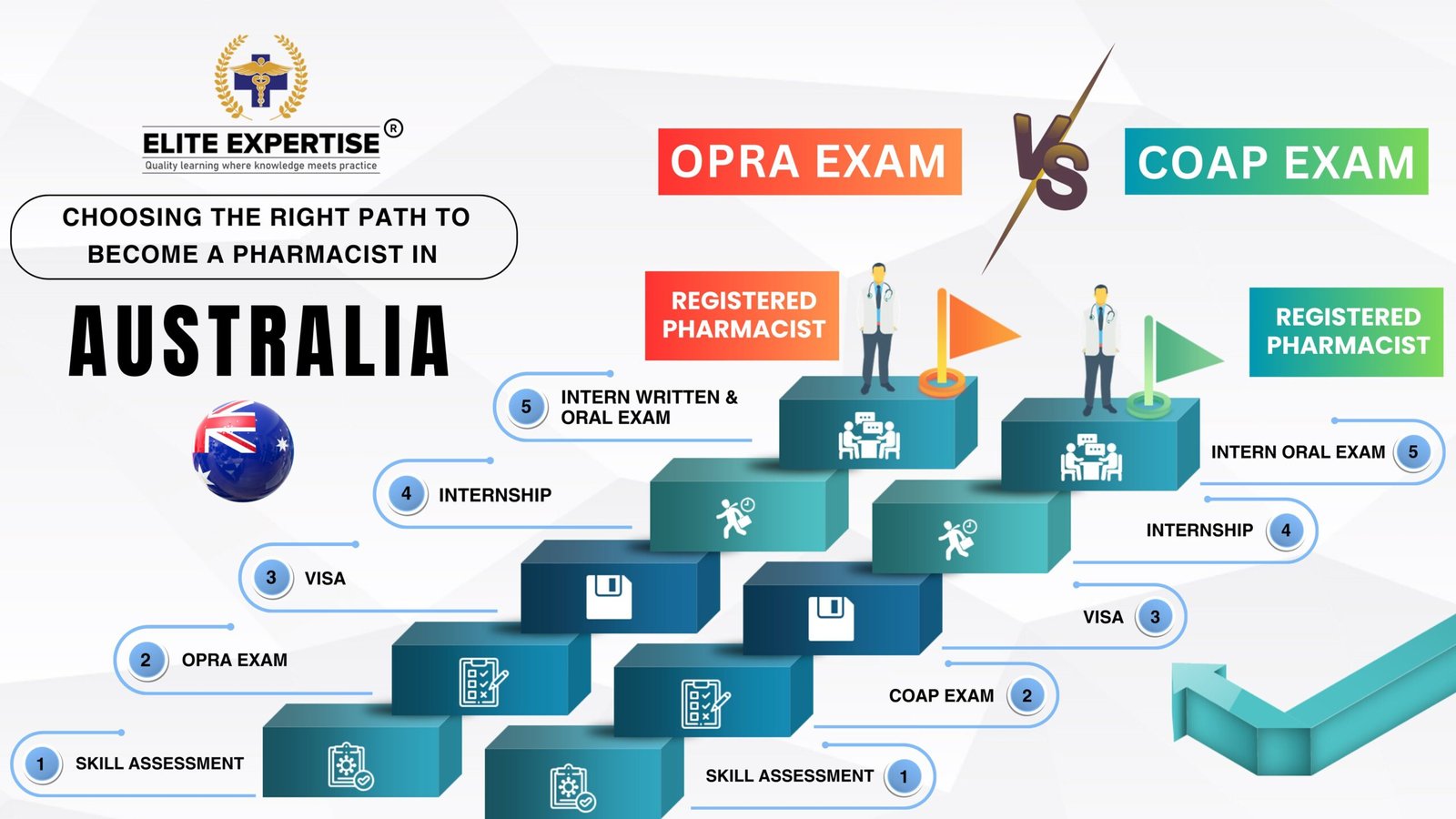
    As an aspiring pharmacist looking to practice in Australia, you must pass one of two key exams: the OPRA or the CAOP exam. Deciding between these two options can be tricky, but understanding the specific requirements and processes of each will help you make the best decision for your career. This guide will provide you with everything you need to know about both streams, ensuring you choose the path that aligns with your goals.

    Stream A: OPRA Exam

    The OPRA exam is designed for pharmacists who have completed their pharmacy education outside Australia, and who are not yet registered in Australia. This pathway is ideal for those who need to demonstrate their competency in pharmaceutical sciences before they can begin practising in Australia.

    Eligibility Requirements

    To be eligible for the OPRA exam, you must meet the following criteria:

    • Completed Pharmacy Qualification: Your pharmacy degree must be from an institution recognized by the Australian Pharmacy Council (APC).

    • Registration Status: You must be either already registered, eligible for registration, or in the process of registration in the country where you obtained your qualification.

    What Does Stream A Involve?

    Stream A consists of three key components:

    1. Overseas Pharmacist Readiness Assessment (OPRA)

      • The OPRA exam assesses your knowledge in pharmaceutical sciences, covering topics like drug interactions, pharmacology, and medication management.

      • This step ensures that your knowledge aligns with Australian healthcare standards and prepares you for further practice in the country.

    2. Supervised Practice

      • After passing the OPRA exam, you must complete a period of supervised practice in Australia. This practice allows you to gain hands-on experience under the supervision of a registered pharmacist, helping you understand local pharmacy practices and regulations.

    3. Board Registration Examination

      • The final step involves passing the Board Registration Examination, which evaluates your readiness to practice as a pharmacist in Australia. This exam tests your practical knowledge and ensures you are prepared for the professional environment.

    Why Choose OPRA?

    The OPRA stream is ideal if you are an international pharmacist seeking to practice in Australia. It offers a comprehensive approach, assessing both theoretical knowledge and practical experience. If you’re ready to immerse yourself in the Australian healthcare system and gain relevant experience, the OPRA exam is a crucial first step.

    Stream B: CAOP Exam

    Stream B is aimed at experienced pharmacists who have already been practicing in countries such as the United Kingdom, United States, Canada, or Ireland. This route is more straightforward and designed for those who are already registered pharmacists in their home countries.

    Eligibility Requirements

    To qualify for the Competency Assessment of Overseas Pharmacists (CAOP), you must meet these requirements:

    • Completed Pharmacy Qualification: Your degree must come from a recognized institution in the UK, US, Canada, or Ireland.

    • Current Registration: You should be currently registered as a practicing pharmacist in the country where you obtained your qualification.

    What Does Stream B Involve?

    In contrast to Stream A, Stream B offers a more streamlined approach for pharmacists from specific countries:

    1. Competency Assessment of Overseas Pharmacists (CAOP)

      • Instead of a series of exams, you will complete the CAOP, which assesses your clinical skills, knowledge, and your ability to apply pharmaceutical practices in the Australian context. The focus is on practical competencies, making this process faster for those already experienced in international settings.

    Why Choose CAOP?

    If you are a pharmacist from the UK, US, Canada, or Ireland, the CAOP stream offers a quicker path to practice in Australia. The process is designed for professionals who already possess a strong foundation in pharmaceutical sciences and need only a competency assessment to prove their ability to adapt to Australian practices.

    Important Considerations Before Choosing Your Path

    Choosing between the OPRA and CAOP exams depends on various factors, such as your qualifications, professional experience, and the country where you obtained your pharmacy degree. Here are a few things to consider:

    • Visa Requirements: Regardless of the stream you choose, you will need to meet the visa requirements to live and work in Australia. Be sure to research the appropriate visa options to legally practice as a pharmacist.

    • Career Goals: Your choice should align with your long-term career goals. If you’re looking for a comprehensive path with the chance to gain hands-on experience, OPRA might be the best fit. If you’re looking for a quicker transition, the CAOP route may be more suitable.

    Conclusion: Choosing the Right Path

    In summary, whether you opt for the OPRA or CAOP exam depends largely on your educational background and professional experience. The OPRA exam offers a more comprehensive and practical path for those seeking to gain full registration in Australia, while the CAOP exam provides an accelerated pathway for experienced pharmacists from the UK, US, Canada, or Ireland.

    Whichever path you choose, it’s essential to ensure that you meet the eligibility criteria and understand the steps required for success. If you need personalized guidance through the process, Elite Expertise offers expert-led preparation programs to help you clear the OPRA exam with confidence. Our specialized resources, study materials, and one-on-one consultations are designed to set you up for success.

    Are you ready to start your journey toward becoming a pharmacist in Australia? Contact Elite Expertise today for a free consultation and take the first step toward achieving your professional goals in Australia.

  • Steps to Become a Pharmacist in New Zealand

    Steps to become pharmacist in newzeland

    Introduction :

    The process of becoming a pharmacist in New Zealand as an overseas-qualified individual involves several key steps. Let’s break them down:

    1. Initial Skill Assessment by the Pharmacy Council of New Zealand (PCNZ)

    Before you can sit the OPRA exam, you’ll first need to have your qualifications assessed by the Pharmacy Council of New Zealand (PCNZ). This is to determine whether your academic background and registration status meet the eligibility criteria for the exam.

    Cost: NZD 777

    2. New Zealand OPRA Exam

    The OPRA exam is conducted online, and you can take it at one of the test centres available in New Zealand or India. The exam is held three times a year, typically in March, July, and November. It consists of a single paper with 120 multiple-choice questions, and you have 2.5 hours to complete it. Note that you’ll be allowed two attempts to pass the exam.

    Cost: AUD 2,190

    Test Centres in India:

    Test centers in India

    For better preparation, I recommend enrolling in the New Zealand OPRA Exam Coaching and Preparation Course, which provides you with the resources to pass the exam on your first attempt.

    3. New Zealand Pharmacy Legislation (NZPL) Course

    Once you’ve passed the OPRA exam, the next step is to complete the New Zealand Pharmacy Legislation (NZPL) Course. This online course will give you an understanding of New Zealand’s professional, legal, and ethical pharmacy requirements.

    Duration: 3 months
    Cost: NZD 2400
    Enrollment is available once a year, so make sure to plan accordingly.

    4. Registration as an Intern Pharmacist

    After completing the NZPL Course, you can apply for registration as an Intern Pharmacist. This step is essential for gaining practical experience under supervision.

    Cost: NZD 957 (after May assessment) and NZD 340 (after November assessment)

    5. EVOLVE Internship Programme

    The EVOLVE Internship Programme is where you’ll gain hands-on experience in a supervised environment. This training period runs from February 1st to November 7th each year and includes workshops, appraisals, and assignments designed to enhance your skills and professional competencies.

    Cost: NZD 8,950

    6. Complete Registration

    Once you’ve completed the EVOLVE internship and all the necessary assessments, you’ll be eligible to apply for full registration as a pharmacist with the Pharmacy Council of New Zealand.

    Cost: NZD 1312 and NZD 695.33 (post-November)

    Final Thoughts

    The OPRA exam is an important milestone for overseas pharmacists who wish to practice in New Zealand. The updated exam format, with its more concise structure and focus on practical knowledge, makes it an essential step toward registration. By following the steps outlined in this blog, you’ll be well on your way to achieving your goal of becoming a licensed pharmacist in New Zealand.

    If you need further guidance or are looking for comprehensive coaching, feel free to reach out. I also recommend checking out our New Zealand OPRA Exam Coaching and Preparation Course, which offers everything you need to succeed.

  • Visa Points for Pharmacy Career in Australia

    Introduction :

    The General Skilled Migration (GSM) program provides overseas-trained pharmacists with a fantastic pathway to live and work in Australia permanently. This program includes different visa subclasses based on individual circumstances:

    • Subclass 189 (Skilled Independent Visa): No sponsorship required.

    • Subclass 190 (Skilled Nominated Visa): Requires state or territory nomination, offering 5 extra points.

    • Subclass 491 (Skilled Work Regional (Provisional) Visa): Ideal for regional work and provides 15 additional points when nominated by a state or region.

    Below is a detailed guide to earning and maximizing your visa points:

    1. Age Criteria

    Points are awarded based on your age:

    • 18-24 years: 25 points

    • 25-32 years: 30 points (maximum for age)

    • 33-39 years: 25 points

    • 40-45 years: 15 points

    • Above 45 years: 0 points

    2. English Language Proficiency

    Higher proficiency in tests like PTE, IELTS, or TOEFL can significantly increase your points:

    • Superior English (PTE 79+ in all modules / IELTS Band 8): 20 points

    • Proficient English (PTE 70-78 / IELTS Band 7): 10 points

    • Competent English (PTE <65 / IELTS Band 6): 0 points

    3. Work Experience

    Overseas Work Experience:
    • 3 years: 5 points

    • 5 years: 10 points

    • 8 years: 15 points

    Australian Work Experience:
    • 1 year: 5 points

    • 3 years: 10 points

    • 5 years: 15 points

    • 8 years: 20 points

    4. Skills Assessment (OPRA Exam)

    The OPRA is essential for overseas pharmacists. It validates your qualifications and is mandatory for registration in Australia.

    5. Qualifications

    Points based on academic achievements:
    • Doctorate: 20 points

    • Bachelor’s or Master’s degree: 15 points

    Qualifications closely aligned with pharmacy enhance success prospects.

    6. Regional Study

    Studying for at least two years in regional Australia earns 5 points. This also opens doors to Regional Sponsored Migration Schemes (RSMS).

    7. Professional Year in Australia

    Completing a Professional Year (PY) program related to pharmacy in Australia adds 5 points.

    For those on a Subclass 407 Training Visa, completing the training in Australia allows you to claim 5 points for your Permanent Residency (PR) application.

    8. Partner Points

    • Single or married to an Australian partner: 10 points

    • Partner’s occupation on the Skilled Occupation List (meeting age and English language proficiency criteria): 10 points

    • Partner with competent English only (PTE 60+ or IELTS Band 6+): 5 points (even if their occupation is not on the Skilled Occupation List).

    9. State Sponsorship Points

    Conclusion: Achieve Your Pharmacy Career Goals in Australia

    To increase your chances of qualifying for a GSM visa, focus on improving your English language proficiency, gaining work experience, and completing regional study or a professional year in Australia. These steps not only boost your points but also position you for success in Australia’s in-demand pharmacy sector.

    At Elite Expertise, we provide tailored support for the OPRA exam and guidance through every step of the registration and migration process. Take the first step toward building a thriving pharmacy career in Australia today!

  • PTE Academic

    Introduction :

    The Pearson Test of English (PTE) Academic has become a popular choice among international students and professionals aiming to prove their English proficiency for study, work, or immigration. Known for its convenience and fast results, PTE is a computer-based test that evaluates your listening, reading, speaking, and writing skills. This blog will explore everything you need to know about the test and how to ace it.

    What is PTE Academic?

    PTE Academic is an English proficiency test designed for non-native speakers. It’s widely accepted by universities, governments, and organizations worldwide, particularly in countries like Australia, New Zealand, Canada, the UK, and the USA.

    Key Highlights of PTE Academic:

    • Fully computerized test

    • AI-driven scoring system for impartial results

    • Results available within 48 hours

    • Accepted for visa and migration applications

    PTE Academic Format

    The test is divided into three parts:

    1. Speaking & Writing (54–67 minutes)
    • Personal introduction

    • Read aloud

    • Repeat sentences

    • Describe images

    • Summarize spoken texts

    • Essay writing

      2 . Reading (29–30 minutes)
    • Multiple-choice questions

    • Reorder paragraphs

    • Fill in the blanks

      3. Listening (30–43 minutes)

    • Summarize spoken text

    • Highlight correct summary

    • Select missing words

    • Write from dictation

    Why Choose PTE Academic?
    1. Convenience: Available throughout the year at test centers worldwide.

    1. Fast Results: Receive results typically within two days.

    1. Fair Scoring: Automated scoring ensures accuracy and eliminates bias.

    1. Wide Acceptance: Recognized by top institutions and governments globally.

    1. No Ambiguity: AI-powered assessment ensures consistent and transparent grading.

    Top Tips to Ace PTE Academic

    Understand the Test Format Familiarize yourself with each section of the test to know what to expect.Practice Regularly Use PTE preparation resources, including practice tests and question banks, to improve your skills.Focus on Time Management With limited time for each section, practice completing tasks quickly and accurately.Work on Weak Areas Identify sections where you struggle, such as pronunciation or grammar, and dedicate extra practice to improve them.Leverage Technology Tools like PTE mock tests and AI-based scoring systems can help simulate the actual test environment.

    Benefits of PTE for International Aspirants
    1. Study Abroad Opportunities: Accepted by thousands of universities.

    1. Immigration Pathways: Valid for permanent residency applications in countries like Australia and New Zealand.

    1. Enhanced Career Prospects: Demonstrating English proficiency can open doors to global job opportunities.

    How Elite Expertise Can Help You with PTE

    At Elite Expertise, we offer comprehensive PTE preparation services tailored to your needs. Our courses include:

    • Personalized coaching from experts

    • Mock tests with AI-based scoring

    • Study materials for all four skills

    • Detailed feedback and improvement plans

    Whether you’re a student or a professional aiming to achieve your desired score, our team will guide you every step of the way.

    Conclusion

    PTE Academic is a flexible and reliable option for demonstrating your English proficiency. With proper preparation and the right resources, you can achieve the score you need to unlock new opportunities in education, work, and migration.

    If you’re ready to start your journey to PTE success, reach out to Elite Expertise today for expert guidance!


  • Pharmacist Salary in the UK

    Introduction :

    Are you considering a career as a pharmacist in the UK? Understanding the salary structure is crucial when planning your professional journey. In this blog, we’ll explore the pharmacist salary in the UK across different sectors, experience levels, and locations to give you a clearer picture of what to expect. Whether you’re just starting or looking to advance your career, this guide covers everything you need to know.

    Table of Contents

    Pharmacist Salary in the NHS

    The National Health Service (NHS) is one of the most common employers for pharmacists in the UK. Pharmacist salaries within the NHS are structured according to the Agenda for Change (AfC) pay scale, which is divided into bands. Here’s a breakdown of what NHS pharmacists typically earn:

    Band 6 (Starting Salary):
    • Salary range: £31,365 to £37,000 per year

    • Key role: Entry-level for newly qualified pharmacists

    Band 7 (Experienced Pharmacists):
    • Salary range: £38,890 to £44,503 per year

    • Key role: Experienced pharmacists with a few years in the field

    Band 8 and Beyond (Senior Roles):
    • Salary range: Up to £114,949 per year

    • Key role: Senior or consultant-level pharmacists

    Pharmacist Salary in the Private Sector

    While the NHS is the largest employer of pharmacists, the private sector also offers competitive salaries. Salaries in this sector vary depending on the type of employer. Here’s a look at private sector pharmacist salaries:

    Community Pharmacy (e.g., Boots, Lloyds):
    • Starting salary: £36,600 annually

    Hospital Pharmacists:
    • Starting salary: £37,000+, increasing with experience

    Pharmaceutical Companies:
    • Salary range: £40,000 to £60,000, depending on the company and job function

    Location-Based Salary Differences

    Another key factor influencing pharmacist salaries in the UK is location. Pharmacists working in London and the Southeast typically earn more due to the High-Cost Area Supplement. This supplement is designed to offset the higher living costs in these regions, boosting salaries by several thousand pounds. As a result, salaries in London can be 10-15% higher than the standard NHS pay scale.

    Salary Growth and Career Progression

    The salary for pharmacists in the UK generally increases with experience and further qualifications. Pharmacists who pursue specialization or take on managerial responsibilities often see their earning potential rise. Some may even go on to work in consultant roles, which come with greater responsibilities but also higher pay.

    As part of their career development, many pharmacists also have the opportunity to progress through different sectors or work internationally. This makes pharmacy a dynamic and rewarding career choice, with a range of opportunities for growth.

    Conclusion

    The salary of a pharmacist in the UK can vary widely based on experience, sector, and location. Whether you choose to work in the NHS, the private sector, or even in research and industry roles, the pharmacy profession offers competitive salaries and excellent career prospects.

    At Elite Expertise, we are committed to equipping pharmacists with the knowledge and skills necessary to excel in their careers. Understanding the salary structure and career progression opportunities in the UK is a vital step for anyone planning to enter this rewarding profession.

    Whether you’re an international pharmacist preparing for licensure or exploring pathways to advance your career, Elite Expertise provides tailored guidance and resources to help you succeed. Our comprehensive programs (like KAPS, OPRA, PEBC, Australian intern written and oral exams) ensure that you’re well-prepared for every stage of your journey, from exams to interviews and beyond.

    Start Your Pharmacy Career Today!

  • OPRA Exam Vs OSPAP Exam

    OPRA Vs OSPAP

    INTRODUCTION :

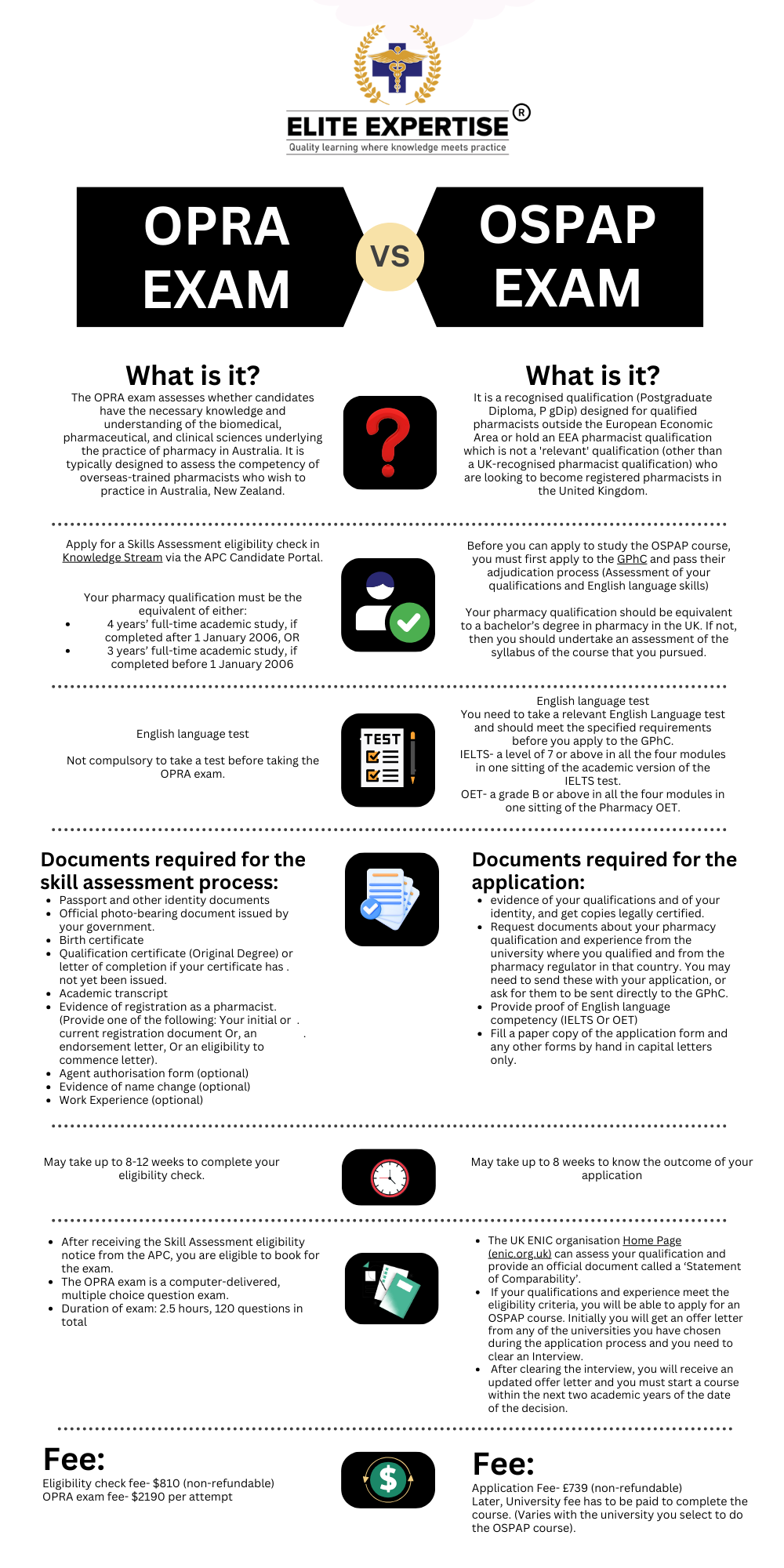
    Navigating the pathway to becoming a registered pharmacist in a foreign country can be both challenging and rewarding. For overseas-trained pharmacists, the Overseas Pharmacists Readiness Assessment (OPRA) in Australia and New Zealand, and the Overseas Pharmacist Assessment Programme (OSPAP) in the United Kingdom, serve as crucial steppingstones to achieving professional licensure. These programs evaluate and build on the skills and knowledge of pharmacists to ensure they meet the standards required for safe and effective practice. In this blog, we delve into the key details of these programs, including eligibility criteria, required documents, exam formats, and fees, to guide aspiring pharmacists on their journey. So, let’s get started:

    CONCLUSION :

    Whether you’re pursuing registration through the OPRA Exam in Australia or the OSPAP program in the United Kingdom, understanding the processes and meeting the requirements is essential for success. Both pathways are designed to support overseas pharmacists in integrating into their respective healthcare systems, enhancing their professional growth and expanding their career opportunities. AT Eliteexpertise, we are committed to empowering pharmacists with the knowledge, skills, and guidance necessary to excel in these assessments and achieve their professional aspirations. With the right preparation, your journey to becoming a licensed pharmacist in a new country can be a fulfilling and successful endeavor.

  • OPRA Exam Preparation Course – Pharmacist

    Arief Mohammad

    Our Path to Becoming a Registered Pharmacist in Australia and New Zealand: Everything You Need to Know About the OPRA Exam

    Introduction:

    Are you an overseas-trained pharmacist aiming to practice in Australia or New Zealand? One of the most important steps on your journey is the OPRA exam. This exam, designed by the Australian Pharmacy Council (APC), is crucial for assessing your knowledge and ensuring you meet the standards required to become a registered pharmacist in these countries.

    At Elite Expertise, we are here to guide you through the process and ensure you’re fully prepared for the OPRA exam. In this blog, we’ll break down everything you need to know about the OPRA exam, including what it is, how it’s structured, and how to prepare effectively.

    Table of contents:

    1. What is OPRA EXAM

    1. Structure of OPRA EXAM

    1. Syllabus of OPRA EXAM

    1. OPRA EXAM TESTING METHOD

    1. OPRA EXAM DATES

    2. OPRA EXAM PREPARATION COURSE FOR PHARMACITS

    What is the OPRA Exam?

    The OPRA exam (Overseas Pharmacist Registration Exam) is a computer-based test designed to evaluate the knowledge of overseas-trained pharmacists. The exam ensures that you have the necessary skills and expertise to practice as a pharmacist in Australia and New Zealand.

    The OPRA exam assesses your understanding of biomedical, pharmaceutical, and clinical sciences, which are crucial for safe and effective practice. While the exam doesn’t cover local laws or pharmacy practice specifics (which are covered during your internship), it’s an essential step in the licensing process.

    Structure of the OPRA Exam

    The OPRA exam consists of 120 multiple-choice questions. You will have 2.5 hours (150 minutes) to complete the exam. The exam is available at test centres worldwide, and it’s a closed-book exam, meaning you can’t refer to any materials during the test.

    Here’s an overview of what to expect:

    • Format: Computer-based, multiple-choice questions

    • Duration: 2.5 hours

    • Number of Questions: 120

    • Fee: AUD 2,190 (check for any updates)

    Key Content Areas

    The OPRA exam covers several important topics that every pharmacist should know. Here’s a breakdown of the key content areas:

      Biomedical Sciences (20%) This section covers biological processes like anatomy, physiology, microbiology, and pathophysiology.Medicinal Chemistry and Biopharmaceutics (10%) Focuses on the chemical properties of medicines, including formulation, solubility, and stability.Pharmacokinetics and Pharmacodynamics (10%) Tests your understanding of how drugs are absorbed, metabolized, and affect the body.Pharmacology and Toxicology (15%) Covers drug interactions, side effects, and toxicity.Therapeutics and Patient Care (45%) The largest section, testing your ability to apply your knowledge to real-life patient care scenarios.

      How the Exam is Scored

      The OPRA exam uses a scaled scoring system. You will either pass or fail the exam. If you pass, you will receive feedback on your performance in each content area to help guide your future studies. If you don’t pass, you can re-register for the next available exam period.

      Registration and Important Dates

      It’s important to be aware of the registration periods and exam dates for the OPRA exam. Here are the upcoming dates for registration and exams:

      • 9 Jan – 31 Jan 2025: Exam from 3 – 5 Mar 2025

      • 8 Apr – 16 Jun 2025: Exam from 14 – 16 Jul 2025

      • 19 Aug – 27 Oct 2025: Exam from 24 – 26 Nov 2025

      Make sure to complete your eligibility check before registration closes to ensure you meet the requirements.

      Preparing for the OPRA Exam

      At Elite Expertise, we understand that preparing for the OPRA exam can be challenging, but with the right resources, you can succeed! Here are some tips to help you prepare:

      • Understand the Exam Format: Get familiar with the structure and types of questions. We recommend practicing with sample questions to get comfortable with the exam format.

      • Cover All Key Topics: Review all content areas, especially the Therapeutics and Patient Care section, which is the largest part of the exam.

      • Focus on Critical Thinking: Since the exam includes clinical scenarios, practice applying your knowledge to real-world situations to strengthen your problem-solving skills.

      • Join Our Preparation Courses: At Elite Expertise, we offer comprehensive preparation courses designed to guide you through the exam. Our courses include study materials, practice tests, and expert-led sessions to ensure you’re fully prepared.

      On the Day of the OPRA Exam

      On exam day, be sure to:

      • Arrive Early: Arriving early will help reduce any stress and ensure you’re ready to start the exam on time.

      • Bring Valid ID: You’ll need to present a valid ID at the test center.

      • Familiarise Yourself with the Test Software: You’ll have a brief period before the exam begins to get familiar with the software.

      Conclusion:-

      The OPRA exam is a crucial step on your path to becoming a registered pharmacist in Australia or New Zealand. At Elite Expertise, we are here to guide you every step of the way, providing you with the support and resources you need to succeed.

      If you’re ready to take the OPRA exam, start preparing today! Our expert-led courses and study materials can help you feel confident and well-prepared. With our help, you’ll be on your way to a rewarding career in pharmacy in Australia or New Zealand.

      For more information or to enroll in our OPRA exam preparation courses, get in touch with Elite Expertise today. We’re here to help you achieve your dreams of becoming a registered pharmacist.

      Tags: –OPRA EXAM PHARMACIST AUSTRALIA

  • WHO: 17 Pathogens, Urgent Vaccines

    Introduction :

    Vaccines have been one of the most effective tools in combating infectious diseases and saving millions of lives globally. Recognizing this, the World Health Organization (WHO) has identified 17 pathogens that urgently require new vaccines. These pathogens, chosen for their devastating impact on global health, include antibiotic-resistant bacteria such as Group A Streptococcus and Klebsiella pneumoniae, as well as viruses like dengue and bacteria causing diseases like tuberculosis. This initiative aligns with the Immunization Agenda 2030, a global roadmap to ensure equitable access to vaccines, aiming to eliminate preventable diseases and improve healthcare outcomes worldwide.

    As a leader in healthcare education and training, Elite Expertise is committed to empowering future healthcare professionals with the knowledge to address these pressing challenges.

    The Global Need for New Vaccines

    Pathogens on the WHO’s priority list was selected based on their ability to cause severe illness, death, and long-term health issues. The increasing resistance to antibiotics has made treating infections caused by these pathogens, such as Klebsiella pneumoniae, a significant challenge. Vaccines targeting these threats can reduce the burden on healthcare systems, save lives, and prevent outbreaks that could have widespread economic and social impacts.

    Expert Insights from WHO

    Dr. Kate O’Brien of the WHO underscores the urgency of this initiative, emphasizing the need for vaccines to save lives, particularly in vulnerable populations. By focusing on diseases that significantly affect global mortality and healthcare costs, vaccine development can transform public health landscapes.

    Educational Strategies to Promote Vaccination :

    Elite Expertise recognizes the critical role of education in advancing vaccine awareness. Here are key strategies to educate communities on the importance of immunization:Provide Accurate InformationSimplify complex medical information and rely on trusted sources like the WHO to counter misinformation effectively.Personalize MessagesShare impactful stories of individuals who benefited from vaccines, and highlight the risks of non-vaccination, such as severe illnesses or outbreaks.Engage CommunitiesHost local workshops, partner with healthcare providers, and utilize digital platforms to foster open discussions about vaccination.Build Trust with Healthcare ProvidersEncourage transparent and empathetic communication between patients and providers to address concerns and enhance vaccine confidence.Promote Herd ImmunityEducate about the importance of herd immunity and how it protects the most vulnerable in the community, emphasizing collective responsibility in preventing disease spread.

    Conclusion :

    The WHO’s identification of 17 priority pathogens represents a pivotal step in addressing the growing global health crisis posed by infectious diseases. By developing new vaccines, we can reduce the impact of these pathogens, save lives, and secure a healthier future for all. At Elite Expertise, we believe in empowering healthcare professionals with the knowledge and tools to champion vaccination efforts and improve health outcomes globally.

    Together, through education, innovation, and collaboration, we can turn the vision of a disease-free future into reality.